In Pakistan, Detainees are Vanishing in Covert Jails

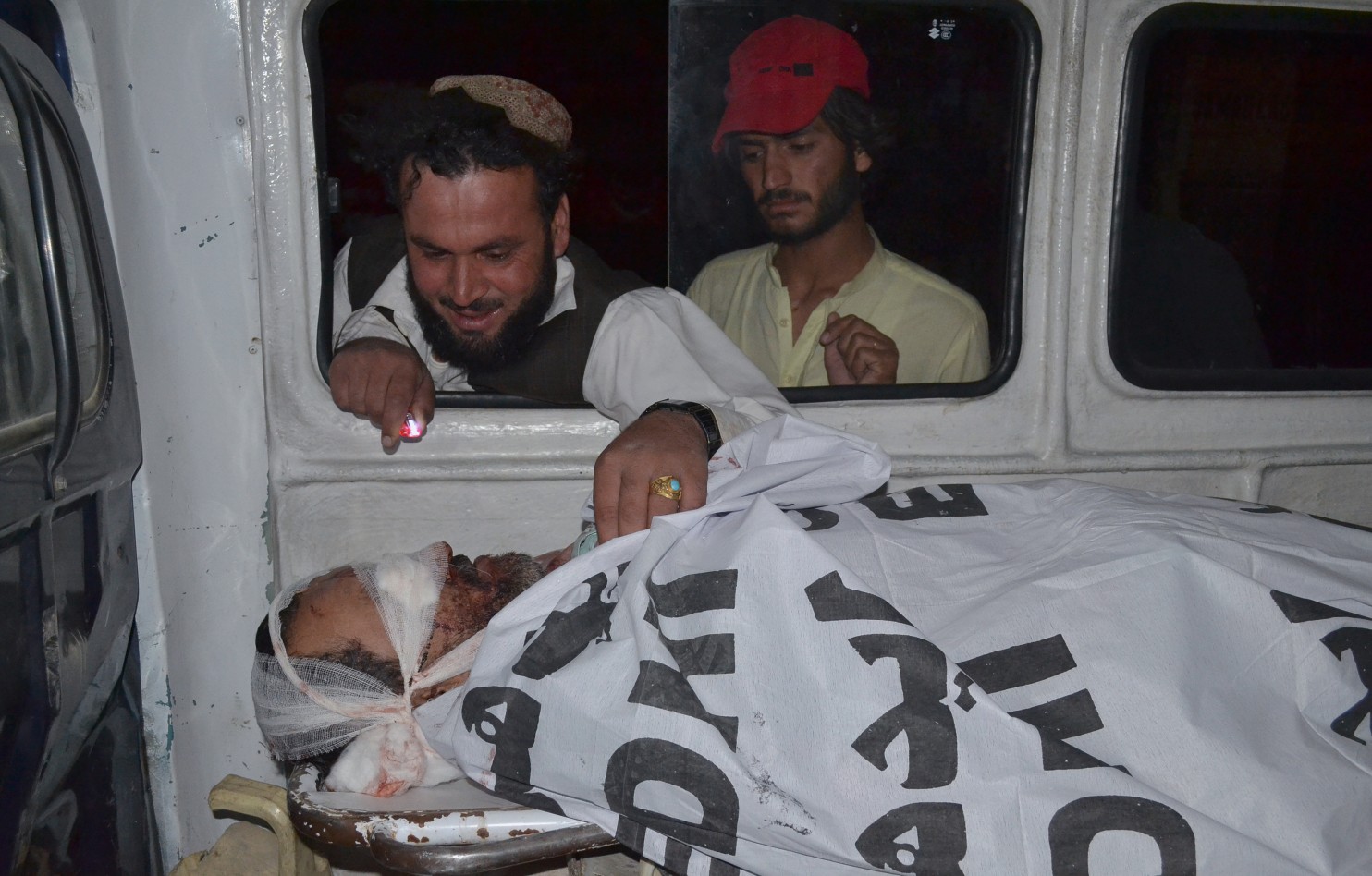
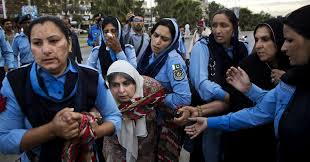
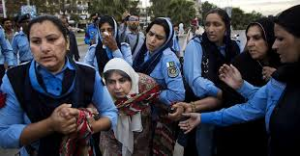
Families of disappeared protest (Credit: nytimes.com)
Families of disappeared protest
(Credit: nytimes.com)

KOHAT, July 25 — Niaz Bibi’s son disappeared into the night, whisked away by Pakistani soldiers who accused him of being a Taliban fighter. For 18 anguishing months, she could find no word of his fate. Then she got a phone call.

“Come to Kohat prison,” said the man on the other end. “Tell nobody.”

At the prison, in northwestern Pakistan, she was directed to a separate, military-run internment center where her son, Asghar Muhammad, was brought to her. They touched hands through a metal grill, and she wept as he reassured her that he would be home soon.

But when the phone rang again, one month later, an official delivered crushing news. “Your son is dead,” he said. “Come collect his body.”

Mr. Muhammad was one of dozens of detainees who have died in military detention in Pakistan in the past year and a half, amid accounts of torture, starvation and extrajudicial execution from former detainees, relatives and human rights monitors. The accusations come at a time when the country’s generals, armed with extensive new legal and judicial powers, have escalated their war against the Pakistani Taliban by sweeping into their strongholds and detaining hundreds of people.

Critics warn that those gains may be coming at the cost of human rights, potentially weakening Pakistan’s fragile democracy and, ultimately, undermining its counterterrorism effort.

“People live in abject fear of speaking out about what the military is doing,” said Mustafa Qadri of Amnesty International, which received reports of more than 100 deaths in military custody in 2014.

At issue is a network of 43 secretive internment centers dotting Khyber Pakhtunkhwa Province and the tribal belt. Little is known about the centers, formally established in 2011 and given greater powers by a tough antiterrorism law passed last year. Most are based in existing jails and military bases and operate far from public view. The total number of detainees has not been made public.

Relatives of missing people have filed 2,100 cases with the Peshawar High Court, seeking news of their fates.

In many instances, the first news comes when a body is sent home.

Last year, for instance, a man from the Kurram tribal district told the court that three of his six sons who were detained in Kohat had died in custody. The man’s lawyer said he had not brought a criminal complaint against the military out of fear that his remaining sons would meet a similar fate.

The chief military spokesman, Maj. Gen. Asim Bajwa, did not respond to a detailed list of questions about conditions at the internment centers.

Classified documents leaked last year by the former National Security Agency contractor Edward J. Snowden made clear that American officials were aware of widespread human rights violations by the Pakistani military, even as billions of dollars in American military aid kept flowing to Pakistan.

Pakistani military officials tortured and killed people suspected of being militants “with the knowledge, if not consent, of senior officers,” said one American assessment in 2011.

Advertisement

Continue reading the main story

“The military took care to make the deaths seem to occur in the course of counterinsurgency operations, from natural causes, or as the result of personal vendettas,” said the document, first cited by The Washington Post.

The Obama administration, which has gradually improved its relationship with Pakistan this year, has been muted in its public criticism of the violations and has not invoked a provision of American law that limits assistance to foreign militaries guilty of human rights abuses.

Instead, the administration approved more weapons for the Pakistani military: In April, it approved almost $1 billion worth of helicopters and laser-guided Hellfire missiles for use in counterterrorism operations.

State Department officials say they have warned the Pakistani military that the accounts of rights violations could lead to future restrictions on military assistance.

Until recently, accusations of such abuses by Pakistani soldiers and intelligence officers have been sharpest in western Baluchistan Province, where the army has faced accusations of abducting, torturing and killing people suspected of being Baluch nationalists as part of a decade-old effort to quell a separatist rebellion there.

The deaths at internment centers have come in conjunction with the military’s battlefield gains — in the past year, it has seized control of much of North Waziristan — and a general hardening of public opinion against the Pakistani Taliban.

Tough new antiterrorism laws have given the army greater legal powers, and the number of deaths in military custody has declined in recent months since a military court system, authorized by Parliament in January, became active. Fayaz Zafar, a journalist in the Swat Valley, counted 48 bodies being returned to that area in 2014 and five so far this year, the latest on June 2.

Experts say the military-run courts fall far short of international standards, and their authority is being challenged in Pakistan’s Supreme Court. But public opposition to the courts has been muted, particularly since a Taliban massacre that killed 150 people, most of them children, in December. The authorities have taken harder action against militants on other fronts, too, lifting a moratorium on executions that has led to 178 convicts being hanged.

The executions have drawn repeated protest from the United Nations and the European Union but barely a whimper of public complaint.

By several accounts, conditions at the internment camps can be brutal. One former detainee from Swat said he had been thrashed with barbed wire, reduced to eating soap because he was fed so little and forced to give false testimony against other detainees in court.

“I felt guilty, but I knew I would be beaten if I refused,” said the man who, like others, spoke on the condition of anonymity to avoid further trouble.

Relatives of detainees who die in custody say they have been pressured into conducting hurried funerals, often at night, and sometimes coerced into declining an autopsy, even if the corpse bears signs of ill treatment. In other instances, they say, local mullahs are forbidden from offering prayers for the dead.

Asma Jahangir, a leading human rights lawyer, has brought a Supreme Court case challenging the detention of 33 men. When brought to court two years ago, two of the men said they had been tortured. They have since died in custody. “They supposedly had heart attacks,” Ms. Jahangir said.

In Swat, several women have formed a protest group to seek news of their missing relatives through street demonstrations and court actions. Their leader, Jan Saba, said in an interview that she had “knocked on every door” in search of news of her missing husband, but that she still had heard nothing.

Few dispute that many of the military detainees are linked to the Taliban. Mr. Muhammad, the detainee who died in Kohat last year, admitted to his family that he had spent eight months in the company of Taliban fighters before being arrested, relatives said.

One of his brothers, Abid, said that when the family asked Mr. Muhammad what he was doing during that time, he replied, “The less you know, the better.”

Such tales have led civilian officials to turn a blind eye to conditions at the internment centers. Jamaluddin Shah, the top civilian official in Kohat, said in an interview that he did not believe the military practiced torture or conducted executions at the center. But, he added, “even if such cases were true, why would that be an issue?”

“Have you seen them slaughtering people and distributing those videos?” Mr. Shah asked, referring to Taliban execution videos. “Do you think they deserve any human rights?”

But although the army has clearly weakened the Taliban in recent months, experts warn that reports of abuse could ultimately hurt its counterterrorism effort, in much the same way that harsh American tactics after 2001 led to global condemnation and bolstered militant recruitment.

Ms. Jahangir, the lawyer, calls the network of internment centers “Pakistan’s little Guantánamo Bay.”

“These laws risk turning Pakistan into a security state,” Ms. Jahangir said. “We cannot afford torture and killings on a mass scale, even in a time of war.”

Taha Siddiqui reported from Kohat, and Declan Walsh from London. Eric Schmitt contributed reporting from Washington, and an employee of The New York Times contributed from Pakistan.
The Benazir murder mystery

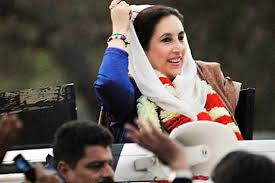
BB's last rally (Credit: dunyanews.com)
BB’s last rally
(Credit: dunyanews.com)
ON the recent occasion of Benazir Bhutto’s 62nd birth anniversary, her husband and PPP’s co-chairman spoke about her murder and said: “We cannot withdraw the FIR, no matter how much pressure you exert on us and how much you fight for that.”

Heraldo Munoz of Chile, the head of the UN commission that probed Benazir Bhutto’s murder concluded as follows: “Probably no government will be able or willing to fully disentangle the truth from the complex web of implication in Benazir Bhutto’s assassination.”

I read the former Chilean diplomat’s personal account in his book Getting Away With Murder with great sadness because the Federal Investigation Agency (FIA) under my command on Aug 6, 2009 was entrusted with the responsibility of taking over the investigation from Punjab police. The Special Investigation Group was given the task of putting together a joint team of various law-enforcement and intelligence agencies to carry out further investigation and interrogate possible suspects.

The investigation into Benazir Bhutto’s murder has hinted at a complex web of implication.

I distinctly recall that night of Oct 18, 2007 when as inspector general police, Balochistan, I was glued to the TV watching the huge procession Ms Bhutto was leading in Karachi after finally returning home from a nine-year exile. The bombings that targeted her cavalcade that night resulted in 149 deaths and injuries to 402.

Ms Bhutto survived that deadly attack and lodged an FIR by becoming a complainant herself. Police did not register the case that she filed on Oct 21, 2007 in which she wrote: “I was informed by the government that certain militant groups wanted to attack me. After receiving this information I wrote a letter dated Oct 16, 2007 to the president of Pakistan informing him of my grave concern regarding my security and specified the forces and persons behind them whom I suspected were likely to harm me physically.”

The investigations remained stalled until she was assassinated on Dec 27, 2007. The Karsaz case was finally re-registered on Oct 17, 2008, after Gen Musharraf was forced to quit as president in August that year and Mr Zardari had become president.

Meanwhile, the UN mission started the formal probe in July 2009 and the federal government entrusted further investigation to the FIA on Aug 6, 2009. Codenamed ‘Operation Trojan Horse’, the case investigation team was tasked with collecting ocular testimony as well as documentary, forensic and circumstantial evidence prior to the Oct 18 Karsaz attack, events between Oct 19 and Dec 27, and post Dec 27, 2007 developments.

It was decided to record testimony of all those travelling in the vehicle along with BB: driver Javed; SSP Security Imtiaz Hussain; Makhdoom Amin Fahim; Naheed Khan; Safdar Abbasi; and valet Razzaq. Senator Safdar Abbasi and his wife Naheed Khan had publicly claimed that “sharp sniper fire and a typical intelligence operation” was carried out to eliminate their leader. PPP spokeswoman Sherry Rehman declared she had died from a bullet injury. These statements and the suspicious conduct of Khalid Shahenshah, a security guard who had been caught on TV footage making suspicious signals from near the stage close to BB prior to the exit from the rally where she was murdered, required a thorough probe.

We decided to start our investigations by seeking assistance from interior minister Rehman Malik, who was Ms Bhutto’s chief security officer. Accordingly, I sent across to him in writing on Aug 12, 2009 a note through his trusted staff assistant director of FIA, seeking the following: 1) copy of the letter sent by BB to Gen Musharraf on Oct 16, 2007 naming three suspects; 2) copies of emails sent by BB to Mark Siegel and others identifying threats from Gen Musharraf; 3) a copy of BB’s original will; 4) a copy of the final agreement exchanged between BB and Gen Musharraf; and 5) copies of correspondence between CSO [Rehman Malik] and the governments of Pakistan and Sindh on security-related matters. There was no response.

Meanwhile, interrogation of five arrested accused, namely Aitzaz Shah, Sher Zaman, Hussnain Gul, Muhammad Rafaqat and Rasheed Ahmed, as well as some other crucial leads led us to aim for arrest of one Ibadur Rahman resident of Malakand who, we believed, played a key role in BB’s murder. (However, this key plotter was reportedly killed in the first-ever drone strike in Khyber Agency in May 2010 or in an attack carried out by a Pakistani fighter plane.)

Another suspect was al Qaeda’s No 3 leader and financial and operational chief Mustafa Abu Yazid alias Sheikh Saeed Al-Masri who was said to have claimed responsibility for “terminating the most precious American asset who vowed to defeat Mujahideen”. He was reportedly killed in a CIA drone attack on May 22, 2010 in North Waziristan.

Similarly, the crucial suspect or witness Khalid Shahenshah, the security guard hired allegedly by a trusted confidant of the party leadership, was killed in Karachi a few months after Ms Bhutto’s murder.

An important meeting of the FIA investigation team was held on Oct 28, 2009 in the interior minister’s presence. My directions were clear: place all the evidence and leads before the UN team. While the UN commission was generally critical of the conduct of relevant stakeholders, including the earlier Punjab police JIT, it did note in its report that the second JIT by the FIA “has been more vigorous in carrying out its investigations”.

In yet another important meeting held at the interior minister’s residence on Nov 25, 2009, the FIA investigators reviewed the progress and asked the agencies concerned for apprehension of key suspect Ibadur Rehman from Khyber Agency. They were also given the go-ahead to visit Madressah Haqqania in Akora Khattak for adducing further evidence. Officers were also assigned to visit the UAE, Saudi Arabia and United States for obtaining evidence from key sources that could shed further light on the conspiracy.

Within days of setting a clear direction for the investigators to move forward on the case, I was transferred from the FIA.

The case is under trial and I will avoid drawing conclusions. The UN commission submitted its report in May 2010 and their conclusions and recommendations were commented upon by me as a professional in a confidential letter addressed to the then prime minister. The political and security establishment consigned those recommendations to the dustbin of history. Truth hopefully shall prevail eventually.

The writer is former DG, FIA.

Peshawar suspect in market bombing attack arrested in Rome

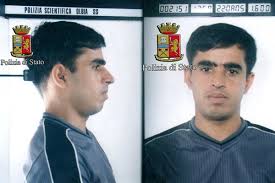
Peshawar suspect (Credit: timesofoman)
Peshawar suspect
(Credit: timesofoman)
ROME, June 27: A Pakistani suspected of involvement in the Peshawar market bombing — one of the country’s bloodiest attacks — has been arrested in Rome, Italian police said on Friday.

The man, who has been living in Italy, is accused of taking part in the attack in 2009 in which 134 died, including many women and children.

He was held at Rome’s Fiumicino airport after stepping off a flight from Pakistan.

Anti-terrorist police believe he also hid a “suspected suicide attacker who was supposed to carry out an attack” in Italy.

In April, Italy claimed to have dismantled an Islamist terror cell on the island of Sardinia led by two former bodyguards of Osama bin Laden who were plotting a possible attack on the Vatican.

Arrest warrants were issued for 18 people, several of whom are also suspected of being part of militant networks in Pakistan.

Nine were arrested across Italy, including three on Sardinia.
The Vatican has played down the threat to the pope’s life.

After Pakistan bus attack, worry an insurgency growing worse

Pashtun looks at deceased relative (Credit: washingtonpost.com)

QUETTA, May 30 — As hundreds of mourners on Saturday protested the killing of 22 people in deadly bus hijackings in western Pakistan, the assaults raised new fears that a long-simmering insurgency there could be growing more violent.

The country’s restive Baluchistan province has seen two major attacks in the span of a month, including an April assault on a dam project that killed at least 20 people and Friday’s bus hijackings. In both, gunmen let Baluch people flee while killing others, signaling a worrying ethnic bent to an insurgency seeking independence for the oil- and mineral-rich region that’s also home to Islamic extremists.

Mureed Baluch, a militant who identifies himself as the spokesman of United Baluch Army, which has attacked security forces in the past, claimed the bus attacks Saturday.

The attacks Friday night, which happened in the province’s mountainous Mastung district, saw gunmen wearing security force uniforms stop the buses, then check ID cards to determine the ethnicity of their captives, one survivor told private satellite news channel Geo TV.

Local Pashtun leader Allah Dad told The Associated Press that the gunmen made Pashtun passengers stand in a line, then shot them dead.

“What was the fault of the Pashtun passengers who were killed in the attack on the buses?” Dad asked. “We want assurance from the government that the attackers will be arrested and they will be punished.”

On Saturday, hundreds of Pashtuns, who make up about 35 percent of Baluchistan’s 9 million residents, placed 16 coffins with the bodies of their dead in front of the governor’s house in the provincial capital, Quetta. The protesters later dispersed peacefully after meeting with Abdul Malik Baluch, the province’s top elected official.

The country’s paramilitary Frontier Corps said Saturday that 200 troops were taking part in an operation to find the gunmen, while Baluchistan Home Minister Sarfaraz Bugti said security forces already killed two of the attackers.

Separatists in Baluchistan, which borders both Afghanistan and Iran, want a substantial share of revenue from gas and mineral resources and complete autonomy from Islamabad. In the mid-2000s, Gen. Pervez Musharraf’s government launched a crackdown on insurgents there, with Baluch and human rights activists say Pakistani forces detained their people for years without bringing them to court, sometimes killing them and dumping their bodies in the desert.

The current violence is the deadliest to target civilians in the region in recent years. Kalim Ullah, a retired history professor who lives in and has extensively studied Baluchistan, said he worries the insurgency may be growing increasingly violent and spark further ethnic tension.

“There is a need to wisely handle the situation following yesterday’s attack on Pashtun people as this is something that is very dangerous,” Ullah said. “The government must take immediate steps to avoid such incidents in future because Baluchistan could plunge into a deep turmoil if Baluch and Pashtun people clashed.”

School Curriculum Advisor Flees from Extremist Threat

Dr Bernadette Dean (Credit: dawn.com)
The coercion worked. Fearing for her life, Dr Bernadette Dean, an eminent Pakistani educationist and one of the 12 members of the Government of Sindh’s advisory committee on school curricula reform, has fled the country. She is a victim of a decades-long effort by religious extremists to control our education system.

The driving force behind the campaign against her has been the Jamaat-i-Islami (JI). On March 28, 2015, its student wing the Islami Jamiat-i-Talaba (IJT) organised a multiparty conference on curriculum change. JI’s Sindh emir, Dr Meraj-ul-Huda Siddiqui, declared as “intolerable” the Sindh advisory committee’s efforts to remove mandatory religious lessons from general knowledge, Sindhi, Urdu and Pakistan Studies textbooks
Singling out the only non-Muslim member of the committee, the JI and IJT launched a personal attack on Dr Dean. Karachi was plastered with inflammatory banners targeting her. She was accused of being “a foreigner woman who has single-handedly made changes to the curriculum and textbooks that made them secular” and called an enemy of Islam. The truth is that she was targeted for trying to ensure that school textbooks meet the requirements of the Pakistani Constitution.

Empowered by the 18th Amendment, the Sindh government set up an expert advisory committee in October 2013 to reform the existing school curricula. The committee was mandated to review “the curriculum of primary schools, from class one to five, in order to identify the missing links, gaps and concepts in it … While proposing changes in curriculum the committee will also point out the duplication, overlapping, repetition, bias and other negative values affecting the learning, growth and worldview of the students”.
It was inevitable that in reviewing the curriculum, the committee would confront the fact that the National Curriculum 2006 and public school textbooks based on it clearly violate Article 22(1) of the Constitution. This article says: “No person attending any educational institution shall be required to receive religious instructions, or take part in any religious ceremony, or attend religious worship, if such instruction, ceremony or worship relates to a religion other than his own.”

Article 22(1) of the Constitution clearly means that teaching any particular faith as part of the curriculum must be restricted to students of that faith and such teaching must not be imposed on students of other faiths. It is a simple protection of religious freedom. In practice, this means that the teaching of Islam should be confined to Islamiat classes and textbooks, and should be studied only by Muslim students. Islamic teachings should not be included in classes and textbooks on Urdu, English, social studies, etc which are used by all students, including children from non-Muslim families.

Despite the constitutional obligation, the National Curriculum 2006 required children of all faiths from classes one to three to be taught to “recite and memorise Kalima Tayyaba with its meaning”, and “memorise and recite Darood Sharif with translation” and “memorise and recite prayers for starting and ending fasts in Ramzan”.

Then there are outright expressions of hate against people of other faiths in parts of the curriculum and textbooks covering independence and partition.

The advisory committee was performing its task according to the terms of reference it received. It was trying to purge the curriculum and textbooks of this kind of material. Dr Dean explained that the new textbooks which tried to be consistent with the Constitution had Muslim authors and that she was only a co-author. She also explained that all the books were reviewed multiple times before being approved by the authorities. Regardless, the Sindh government did not come to her defence.

It is not just in Sindh that Islamist parties and activists and their supporters are trying to protect an intolerant national curriculum that violates the Constitution. In Punjab, textbooks written and approved in the past few years continue to violate Article 22(1). In KP, the JI has allied with the Pakistan Tehreek-i-Insaf government to reverse reforms in textbooks that had been initiated by the previous Awami National Party government.

Thirty years ago, in 1985, Pervez Hoodbhoy and I had written an essay Rewriting the History of Pakistan in which we argued that Gen Zia and his political ally the JI “view education as an important means of creating an Islamised society” and that this effort included “the revision of conventional subjects to emphasise Islamic values”. We had warned then, “the full impact … will probably be felt by the turn of the century, when the present generation of schoolchildren attains maturity”. The religious violence the country is now suffering, directed especially at religious minorities, is one result. Without urgent fundamental reform of our education system, this terrible war may last at least another generation.

The writer is a retired physicist who taught at Quaid-i-Azam University and LUMS.

Gunmen kill 43 in bus attack in Karachi, Pakistan

Ismailis attacked (Credit: nbcnews.com)

KARACHI, May 13  – Gunmen on motorcycles boarded a bus and opened fire on commuters in Pakistan’s volatile southern city of Karachi on Wednesday, killing at least 43, police said, and militants affiliated with Islamic State claimed responsibility.

The pink bus was pockmarked with bullet holes and blood saturated the seats and dripped out of the doors on to the concrete.

“As the gunmen climbed on to the bus, one of them shouted, ‘Kill them all!’ Then they started indiscriminately firing at everyone they saw,” a wounded woman told a television channel by phone.

Police Superintendent Najib Khan told Reuters there were six gunmen and that all the passengers were Ismailis, a minority Shi’ite Muslim sect. Pakistan is mostly Sunni.

Militant group Jundullah, which has attacked Muslim minorities before, claimed responsibility. The group has links with the Pakistani Taliban and pledged allegiance to Islamic State in November.

“These killed people were Ismaili and we consider them kafir (non-Muslim). We had four attackers. In the coming days we will attack Ismailis, Shi’ites and Christians,” spokesman Ahmed Marwat told Reuters.

Later a Twitter account from militants identifying themselves as Islamic State claimed responsibility. It was not possible to verify their claims and they did not provide details of the attack.

“Thanks to God 43 apostates were killed and close to 30 others were wounded in an attack by the soldiers of Islamic State on a bus carrying people of the Shi’ite Ismaili sect … in Karachi,” said a statement distributed on Twitter by a group calling itself Khorasan Province Islamic State.

Several Pakistani splinter groups have pledged allegiance to Islamic State, and some individuals claim to have been to the Middle East to meet IS militants. But so far there are few signs of major operational, financial or personnel links.

At least 43 people were killed in the bus attack and 13 wounded, provincial police chief Ghulam Haider Jamali told media.

Outside the hospital where the wounded were taken, and where the bus was parked, scores of young men formed a human chain to block everyone but families and doctors.

Emails and Facebook posts on Ismaili pages encouraged the community not to respond or say anything that might further endanger them.

Prime Minister Nawaz Sharif said he was saddened by the attack.

“This is a very patriotic and peaceful people who have always worked for the wellbeing of Pakistan,” he said. “This is an attempt to spread divisions in the country.”

MILITANT THREATS

Uzma Alkarim, a member of the Ismaili community, said the bus took commuters to work every day. The Ismailis had faced threats before, she said.

“Around six months ago, our community elders had alerted us to be careful because of security threats but things had calmed down recently,” she said.

English leaflets left in the bus were headlined “Advent of the Islamic State!” and used a derogatory Arabic word for Shi’ites, accusing them of “barbaric atrocities … in the Levant, Iraq and Yemen”.

The leaflets also blamed Shi’ites for a deadly sectarian attack in Rawalpindi, near the capital Islamabad, and raged against extrajudicial killings by police, naming a local officer.

In January, 60 people were killed when Jundullah bombed a Shi’ite mosque in the southern province of Sindh. The Taliban bombed another Shi’ite mosque in the northwest city of Peshawar weeks later.

Both the Taliban and Jundullah claimed the bombing of Wagah border crossing last year, which killed 57 people. Jundullah also claimed a church bombing that killed more than 80 people in Peshawar in 2013.

Many religious minorities accuse the government of not doing enough to protect them. Police are underpaid, poorly equipped and poorly trained.

(Reporting By Katharine Houreld)


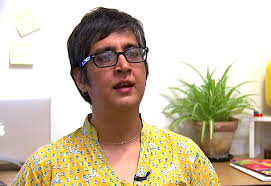
Progressives in Pakistan see dark future after Sabeen’s murder

Sabeen's murder sends shock waves (Credit: news.yahoo.com)
Sabeen’s murder sends shock waves (Credit: news.yahoo.com)

ISLAMABAD, April 27: The killing of Sabeen Mahmud – a prominent rights campaigner – on Friday has sent shockwaves through the country’s progressives, as those who speak out against alleged abuses by the state say they are under increasing threat.

Mahmud, the 40-year-old director The Second Floor cafe in Karachi which regularly hosted debates and arts events, was killed when gunmen attacked her car as she left the venue minutes after hosting a seminar on abuses in Balochistan.

The same talk – featuring prominent Baloch activist Mama Qadeer who has campaigned for the “missing people” of Balochistan – had been cancelled by the prestigious Lahore University of Management Sciences weeks earlier after members of faculty reported pressure from intelligence agencies.

Police say they are examining whether she was targeted because of her work at the cafe, which held talks against religious extremism as well as state brutality.

“She had no personal enmity so there is much possibility that she might have been targeted because of her intellectual activities. She was getting threatening calls from some unknown callers. We are working (out) who they might be,” senior police official Jamil Ahmed said Sunday.

Her death led to an outpouring of grief with hundreds of mourners attending her funeral Saturday, as the United States and the European Union joined Prime Minister Nawaz Sharif in officially condemning the killing.

But most analysts say there is little chance her murderers will ever be brought to justice given the recent history of impunity among those who target the country’s marginalised liberals.

Last year, prominent TV host Raza Rumi narrowly escaped a gun attack on his car in Lahore that killed his driver, while another anchor, Hamid Mir, survived being shot in the stomach in Karachi shortly after hosting a TV programme about Balochistan.

No perpetrators have been brought to justice in either case.

TV anchor Mir, whose brother quickly pointed the finger at the Inter Services Intelligence agency (ISI) for the attempt on his life, said he saw several parallels with the attack on Mahmud.

“The most common factor was Mama Qadeer Baloch because I received threats when I invited him on my show,” Mir told AFP.

“I got six bullet injuries, she got maybe four. I was attacked by the people who were riding a motorcycle, she was too. My attackers were guided by some people who were sitting in a car and this was the same case in her incident.”

Hashim Bin Rashid, a leftwing columnist and activist, says that there is a growing atmosphere among the country’s urban middle classes that encourages the silencing of dissenting voices.

“The overall atmosphere of fascism… is much more worrying – where anyone is offering any dissent is going to be called a traitor,” he said.

Activists who write about the rights of Baloch people on social media, or condemn the killing of minorities, are often loudly berated and receive death threats that are never investigated, while on the other hand the government blocks pages belonging to progressive groups on Facebook, he added.

Mir said the room for freedom of expression on Balochistan had significantly narrowed in the mainstream media.

“Since I was attacked last year, the media has been facing a lot of pressure,” said Mir, who now travels with an armed escort.

“They feel they are helpless, they cannot express their views in the media openly, they cannot get justice. They feel anyone who speaks truth or people who become voice for the voiceless will be silenced. This is not good for democratic society.”

Abid Hussain, a Karachi-based journalist who attended Friday’s seminar and had known Mahmud for more than a decade, described her loss as “unquantifiable”.

“I truly hope we are able to rally around her and do our best to continue her legacy and what she taught us… but the sceptic in me says that it won’t be possible,” he said.

The first test, he said, would be whether a talk on Baochistan scheduled to be held at the University of Karachi next month is allowed to go ahead – and safely.

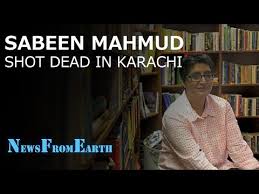
Sabeen Mehmud, Pakistani rights activist, shot dead

Sabeen Mehmud (Credit: nytlive.nytimes.com)

Islamabad April 27: A leading member of Pakistan’s small band of liberal social activists has been gunned down outside the pioneering Karachi arts venue she founded, in an apparent bid to silence discussion about the country’s brutal efforts to smother separatism in the restive province of Balochistan.

The murder of Sabeen Mahmud on Friday sent shockwaves through Pakistan’s embattled intelligentsia both because she was much loved but also because the killing happened immediately after an event she organised with Mama Abdul Qadeer, an elderly Baloch activist campaigning on behalf of so-called “missing people” abducted by the state security apparatus.

Witnesses said she was shot several times by unknown gunmen in her car just after she left the talk at The Second Floor, or T2F as her cafe and arts space is known. Her mother was also critically injured in the gunfire and rushed to hospital.

On Saturday Pakistan’s army spokesman Asim Bajwa decried the killing of Mahmud as “tragic and unfortunate”.

Intelligence agencies had been “tasked to render all possible assistance to investigating agencies for apprehension of perpetrators and bringing them to justice,” General Bajwa said.

Although Mahmud had also made enemies among religious militants – not least with her counter-protest against Islamist attempts to stop Karachites marking Valentine’s Day – many of her friends believe the country’s “deep state” is responsible.

Pakistan’s military establishment is extremely touchy about the issue of Balochistan, where a nationalist movement has developed into a potent insurgency in the last decade.

The separatists are demanding independence from a Pakistani state they claim is oppressive and only interested in extracting the province’s energy and mineral resources.

Authorities are particularly sensitive about Qadeer, the 73-year-old who in 2013-14 walked 1,200 miles from the Baloch capital of Quetta to Islamabad to protest about missing people, including his own son who was found dead and mutilated in 2011 having vanished in 2009.

In March he was banned from travelling to the US to attend a human rights conference in the US.

This month the Lahore University of Management Sciences, one of the country’s most prestigious colleges, was forced to cancel an event to which Qadeer had been invited.

Senior faculty members told Dawn, a leading Pakistani newspaper, they had been forced to scrap the “Un-Silencing Balochistan” talk on the orders of the Inter-Service Intelligence directorate, the military’s powerful spy wing.

Following the cancellation of the LUMS talk Mahmud was all too aware of the risks and asked her circle of friends on Facebook about what “pre-emptive measures” she should take before hosting what she called “Un-silencing Balochistan (Take 2)”.

“A lot of people did say there would be blowback but nobody thought they could shoot someone dead like that,” said Taha Siddiqui, an outspoken journalist and one of Mahmud’s many friends on Pakistan’s liberal-left.

“Shooting dead seemed a little too brutal, something that happens only in remote areas of Balochistan,” Siddiqui said. “But now they are doing in in Karachi.”

The country is extremely sensitive to the threat from nationalists, given it lost half its territory when East Pakistan seceded to form Bangladesh in 1971.

Authorities are especially keen to quell the insurgency now the province is slated to play a critical role in the grand strategic plan to turn Pakistan into a land corridor connecting China with Arabian Sea.

Last week Chinese president Xi Jinping made an important stat visit to Pakistan where he signed off on a multi-billion dollar spending splurge which hopes to turn Gwadar, a town on the coast of Balochistan, into one of the world’s great trading hubs.

Many Pakistani activists and journalists have learned that it is best not to publicly scrutinise the Balochistan issue.

Hamid Mir, the country’s most famous television news presenter, was seriously wounded by gunmen in Karachi following a confrontation with the army over his coverage of Qadeer.

Mahmud’s funeral procession began on Saturday at T2F, the cafe she established to organise debates and art events.
Local novelist Mohammed Hanif described T2F as “a space for Karachites to come and play and create”.

“The deep state already controls media in reference to Balochistan coverage,” said the acclaimed writer and journalist. “Now Baloch voices can’t be heard in private spaces.”


Keep smiling, Sabeen

Sabeen Mahmud (Credit: article.wn.com)

KARACHI, April 25: Those who knew her will remember her smiling. Sabeen Mahmud was a bastion of art in a forsaken city, a city where 20 million live a life of death. In a city of lifeless droves, Sabeen was alive. Today, she is more alive than ever. She is alive because one cannot imagine she is not. She is alive because if she isn’t, are we? No, we’re dead. She’s alive.

She turned the T2F into a haven of art. If you wanted a space to have a stimulating conversation over a cup of coffee, you went to T2F. If you wanted a space to perform, you went to T2F. If you wanted to rehearse with your bandmates for your upcoming gig, you went to T2F. If you wanted to get away and read a book, you went to T2F. And when you went to T2F, you saw Sabeen smiling. You saw her cherishing the art she had surrounded herself by, reaching out to amateurs, reassuring the professionals. I cannot imagine going there and not seeing her warm, smiling face.

One cannot overstate Karachi’s loss. It has lost its voice; it has lost the best of its inhabitants. One cannot help but despair, to sit in stupor ― silent, catatonic. But knowing Sabeen, this is not how she would want to have us be. No. She would want us to speak up, louder than before. Louder, so that those who silenced her can hear. Louder, lest they think they have won. Louder, so that they are deafened by the noise. Louder, so that they may never silence anyone again.

Even in their immediate grief, Karachi’s shrinking community of artists and intellectuals is taking stock. “It can frighten some people, but it can also inspire others to take a stand as she did, with courage and bravery. We have to keep fighting for our freedom of speech and expression and not let this city become a dead city. Arts and culture ― dance, drama and music ― are the best methods to combat violence,” classical dancer Sheema Kermani told The Express Tribune.

Musician Louis J Pinto, aka Gumby, has played at some of the grandest venues of the world. Yet, his new band decided to have its first performance at T2F recently. For artists, young and old, this was the space where there was no other. Sabeen made sure of that. “Her contribution to society is her legacy, which we should continue to move forward. As an artist, I think we should all continue doing what we do best. It’s the right thing to do and that’s what Sabeen would have wanted,” said the drummer.

Dancer Joshinder Chaggar agrees. “As an artist in Karachi, Sabeen is so intimately woven into our lives. But for me, this has only magnified her presence and cause. I am in awe of this woman who really, truly lived. She lived large, passionately; she supported others. I mean she was a magician. In terms of taking her legacy forward, we need to start living like her. Really LIVING, and singing our song and standing up for what we believe in. Sabeen is still alive; her soul is resonating through the city and vibrating in our hearts.”

Assistant Professor and Chairperson of the Social Sciences & Liberal Arts department at the Institute of Business Administration (IBA), Dr Framji Minwalla says of her, “This is a devastating loss. Every life we lose is a devastating loss. I have met few people like Sabeen: brave, honest, genuinely caring and committed, an idealist who found astonishing ways to ground those ideals in concrete action. It’s difficult for me to imagine Karachi without her in it. She made at least my work and world easier to manage. She made me a better, more engaged thinker, and for that and much more I am immeasurably grateful. The deliberate targeting of activists, thinkers, people of conscience, people working hard to make this country saner, progressive, more equitable will not silence the growing anger we feel. The work will continue because the many people Sabeen touched will make certain it continues.”

Today, Karachi is draped in despair, but the heavens must be rejoicing. To them has returned a curator nonpareil. We’ll meet at the seventh floor, Sabeen.

(Additional input by Hasan Ansari and Saadia Qamar)


Nuclear Fears in South Asia

The world’s attention has rightly been riveted on negotiations aimed at curbing Iran’s nuclear program. If and when that deal is made final, America and the other major powers that worked on it — China, Russia, Britain, France and Germany — should turn their attention to South Asia, a troubled region with growing nuclear risks of its own.

Pakistan, with the world’s fastest-growing nuclear arsenal, is unquestionably the biggest concern, one reinforced by several recent developments. Last week, Pakistan’s prime minister, Nawaz Sharif, announced that he had approved a new deal to purchase eight diesel-electric submarines from China, which could be equipped with nuclear missiles, for an estimated $5 billion. Last month, Pakistan test-fired a ballistic missile that appears capable of carrying a nuclear warhead to any part of India. And a senior adviser, Khalid Ahmed Kidwai, reaffirmed Pakistan’s determination to continue developing short-range tactical nuclear weapons whose only purpose is use on the battlefield in a war against India.

These investments reflect the Pakistani Army’s continuing obsession with India as the enemy, a rationale that allows the generals to maintain maximum power over the government and demand maximum national resources. Pakistan now has an arsenal of as many as 120 nuclear weapons and is expected to triple that in a decade. An increase of that size makes no sense, especially since India’s nuclear arsenal, estimated at about 110 weapons, is growing more slowly.

The two countries have a troubled history, having fought four wars since independence in 1947, and deep animosities persist. Prime Minister Narendra Modi of India has made it clear that Pakistan can expect retaliation if Islamic militants carry out a terrorist attack in India, as happened with the 2008 bombing in Mumbai. But the latest major conflict was in 1999, and since then India, a vibrant democracy, has focused on becoming a regional economic and political power.

At the same time, Pakistan has sunk deeper into chaos, threatened by economic collapse, the weakening of political institutions and, most of all, a Taliban insurgency that aims to bring down the state. Advanced military equipment — new submarines, the medium-range Shaheen-III missile with a reported range of up to 1,700 miles, short-range tactical nuclear weapons — are of little use in defending against such threats. The billions of dollars wasted on these systems would be better spent investing in health, education and jobs for Pakistan’s people.

Even more troubling, the Pakistani Army has become increasingly dependent on the nuclear arsenal because Pakistan cannot match the size and sophistication of India’s conventional forces. Pakistan has left open the possibility that it could be the first to use nuclear weapons in a confrontation, even one that began with conventional arms. Adding short-range tactical nuclear weapons that can hit their targets quickly compounds the danger.

Pakistan is hardly alone in its potential to cause regional instability. China, which considers Pakistan a close ally and India a potential threat, is continuing to build up its nuclear arsenal, now estimated at 250 weapons, while all three countries are moving ahead with plans to deploy nuclear weapons at sea in the Indian Ocean.

This is not a situation that can be ignored by the major powers, however preoccupied they may be by the long negotiations with Iran.