Tahira Shah ‘The martyr of the Indus’

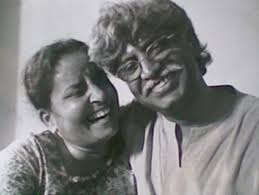
Tahira & Mohammed Ali Shah (Credit: dawn.com)
Tahira Ali Shah, long time social activist and rights campaigner for Pakistan’s fisherfolk community, passed away this month in a car accident in Sindh.

I remember when I first met her, at my first official meeting after joining the Pakistan Fisherfolk Forum (PFF) in January 2010, at the PFF’s Secretariat, Ibrahim Hydri – the largest village of fishing community in Pakistan.

I noticed a simple yet graceful lady in her mid-40s, taking notes of the discussion, and humbly raising her hand when she wanted clarification on some points.

She seemed to be very serious about the issues of fisherwomen; their education and health; their role at the unit (village), district and central governing body of the PFF. One of the senior colleagues told me that she was elected Senior Vice Chairperson of the PFF.

That was the first occasion where I observed the leader in her.
Born in a middle class Syed family, it was hard for Tahira to even get an education. But even harder for her was to get married – against social norms and her family’s wishes – to Muhammad Ali Shah, who belonged to a comparatively lower class of the fishing community.

Ultimately, Tahira took the bold, rebellious step to get married to him in court. She was confident that she knew what to do with her life.
Together, the couple started working for the rights of the fishing community at a very local level, under the platform of their first, small organisation, ‘Anjum-e Samaji Behbood’.

Later, Tahira realised that the issues of women were not being addressed appropriately and neither did the women have any effective say in the decision-making of the organisation.

That’s when she founded a separate organisation only for women, named ‘Saheriyen Sath’ (group of womenfolk).

She visited women door-to-door, organised and mobilised them, made them understand the roots of their problems and showed them a way to resolve their problems.

In 1998, the couple, along with other companions, founded a countrywide organisation of the fisherfolk community and named it the Pakistan Fisherfolk Forum (PFF).

Not only did she speak up, she made other women speak up too against the discrimination based on gender, caste and religion.

This one time, the PFF had organised a caravan journey under their ‘Keep Rivers Free’ movement. Of the hundreds of participants in this caravan, a few happened to belong to the Hindu scheduled castes. Tahira learned that some of the other women participants were discriminating against the Hindus.

She intervened at once. She mingled with the women like they were old friends, shared meals with them, did away with all the discrimination and ensured that their feelings of inferiority were washed away.
She was indeed a genuine leader.

A brave, tenacious woman
Tahira’s real struggle started with the Pakistan Rangers – the paramilitary force occupied the lakes in the coastal areas of the Badin district.
She pulled the fisherwomen out of their homes and onto the streets, organised demonstrations, observed hunger strikes and sit-ins in front of the Press Club. To lead a struggle against the illegal occupation by the Rangers like this required some bravery.

When her husband Muhammad Ali Shah was in jail, Tahira fought on to strengthen the fisherfolk community’s cause and continued to face the hardships she had willingly chosen.

Soon, everyone saw Tahira meet with success as the powerful Rangers bowed down to her even in a semi-martial law era.

In Sanghar, the journalist community was suppressed under the influence of feudal landlords. Many of my friends say it was Tahira who gave voice to the Press Club of Sanghar district, after the PFF launched a campaign against the illegal occupation of the landlords on the Chotiyarion Reservoir.

Tahira worked her magic again and led thousands in protest on the streets of Sanghar city. She made fiery speeches in front of the Press Club and openly challenged the feudals. Soon, Sanghar’s journalists were emboldened enough to cover her speeches and struggle.

Tahira was a multi-dimensional personality. Where she led with courage and organised with discipline, she also worked as hard as an ordinary worker of the organisation. She could always be seen meticulously taking notes during discussions and preparing reports of community meetings.
In the community events of the fisherfolk, she sang folk songs and danced. In workshops and seminars, she was a great listener and always polite, though those who have heard her speeches in processions and rallies know very well that she was a great, fiery orator too. Most of all, she was a rock; an upright leader who would never leave her companions alone, no matter how dangerous the situation.

Tahira was generous enough to support a number of poor families. Every person she met has their own story with her. Everybody in the fishing community across Pakistan calls her Jeeji (mother).

Jeeji was simple. She never wore jewelry or make up, even at ceremonies and festivals, where other women would insist that she put on some make up. But Tahira always preferred to wear her natural smile instead.

During the PFF’s struggle for the protection of mangroves, two of our comrades had been martyred by notorious land grabbers. Tahira never hesitated to openly call out the names of the murderers every time she spoke at a forum.

I considered that to be extremely risky. I approached her and requested, “Jeeji! Please avoid becoming overbold; it can be dangerous at this time.”
She replied, “I would never want to die a death of suppression. I would be proud to rather sacrifice my life for the truth and for this struggle.”

That was not the first time she did so. I recall a number of occasions when we asked her to take time out for some rest, or to visit the doctor when we she was unwell. Her reply was the same: “I want to die in the fight for the rights of my community, not on the bed in illness.”

Even the day before her demise, our senior colleague Dr Ely Ercelan noticed that her blood pressure was high and suggested that she avoid continuous travelling. She responded the same way:
“I shall go in a glimpse, not in inches.”

And she did.

She went in a blink and right in the center of the path of the struggle, for she was travelling to Badin with her husband to lead a rally there, celebrating the International Rivers Day. They had an accident and their car plunged into a deep pond, proving fatal for Tahira. Considering her sacrifices and struggle for the restoration of environmental flow in the Indus river, she has been titled by the civil society as ‘The Martyr of the Indus’.

She may not be with us physically, but her vision, dedication and courage are always be. She lived as she wanted and she died as she wished.
Live long Jeeji Tahira, Live long the PFF.
Women’s groups campaign in D.C. to help victims of forced marriages

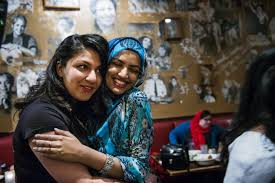
Mariam embraces colleague (Credit: washingtonpost.com)

Mariam was a sixth-grader in Toronto when her family started pressuring her to get engaged. They sent her on a summer trip to their native Pakistan, ostensibly to study but actually to meet a fiance chosen by her aunt. When she protested after returning home, she said, her mother kept insisting and wearing her down.

“She cried a lot. She prayed loudly to God that I would change. She refused to speak to me for days. She told me the family’s honor was at stake,” recounted Mariam, now 20, who asked that her last name not be published. “I wanted to finish school and go to college, but at times I almost said yes, just so she would stop crying.”

Finally, when she turned 17, Mariam decided to leave home — an unthinkable act in her culture. With encouragement from a women’s rights group, she slipped out early one morning, taking a small bag. No shelter would accept her, because she had not been physically abused, and she felt racked with guilt and loneliness. Eventually, though, she found housing, friends and a measure of emotional independence.

Today, Mariam is active in a growing movement in the United States and Canada to promote public awareness and legal protections for victims of forced marriage. She visited Washington last week as part of a nationwide tour organized by the Tahirih Justice Center, a legal aid and advocacy group in the Virginia suburbs that helps immigrant women facing abuse.

According to officials at Tahirih, a 2011 survey of social agencies and other experts reported as many as 3,000 suspected or confirmed cases of forced marriage in the United States over the previous two years. They said the practice is found in many immigrant communities, especially among South Asians, from the Washington suburbs to ethnic enclaves in cities including Houston, New York and San Francisco.

Kathana R., 24, left and Aruba A., 20, right, rehearse, “When We Leave,” a play that explores the complexities of family violence, including forced marriage, at a Busboys and Poets in Washington. (Amanda Voisard/For the Washington Post)

Nevertheless, they said, there is no U.S. law against the practice, and laws that could help victims in some regions, including the District and Virginia, are more geared to victims of kidnapping or physical violence. Moreover, many shelters and welfare agencies are unfamiliar with forced marriage and ill-equipped to help young women fleeing it.

Many traditional societies observe the custom of arranged marriage, in which family relationships matter more than individual choice. Such weddings forge lifelong alliances between families and are seen as ensuring that young couples have compatible backgrounds. The intended bride and groom meet, spend time together and consent to the union.

Forced marriage is less common and illegal in most countries, but it is harder to define or prove. A daughter may be ordered to marry someone she may not know or like, such as an older relative, a stranger or someone who is owed a debt. If she is extremely young, she may not know the arrangement has been made. Even if she finally agrees under pressure, activists assert that such marriages are neither fair nor legitimate.

“Families use a range of coercive tactics, and there is a lot of emotional blackmail,” said Jeanne Smoot, the legal director at Tahirih. “If a mother says to her daughter, ‘You will be dead to your parents,’ or ‘This will kill your grandmother’ or ‘I will kill myself if you don’t marry him,’ ” Smoot said, “that is as coercive as a gun to the head.”

Tahirih has been working for the past three years with a coalition of women’s groups in North America on the campaign to curb forced marriage. They met with White House officials last week, asking for national legislation similar to a new law in the United Kingdom that makes forced marriage a crime, and they have put on dramatic readings and skits in five U.S. cities this spring that tell the stories of girls like Mariam.

Although better laws can help young women resist family pressure or report physical abuse, they can also backfire in complicated domestic situations and add to public prejudice against certain immigrant groups. Many young victims of forced marriage are loath to bring charges against their parents because of the shame it would bring.

“It is important for us not to criminalize all of South Asian culture, to suggest that the West is a safe place where girls flee from terrible oppression,” said Aaliya Zaveri, an official of a South Asian women’s aid group in New Jersey called Manavi. “In cultures where family duty and honor are so important, this is not what the girls themselves want.”

Chenthoori. M, 22, enters the “Honoring Our Heartbeats: A Tour to End Forced Marriage in the U.S” event at a Busboys and Poets in Washington. (Amanda Voisard/For the Washington Post)

What victims do want, the advocates said, is a way to escape from intolerable, even if well-intentioned, pressure to marry. But they often face dead ends, because most shelters and service agencies do not view such pressure as an abusive emergency and local laws fall short of offering full protection, even if a girl is about to be flown abroad to marry against her will.

In one such case in Virginia, Tahirih officials said, a high school student sought help from school counselors, saying her parents had arranged her marriage back in their homeland and were punishing her for resisting. The local child protective services office declined to take her case, so Tahirih lawyers appealed to a judge to protect her. The girl was sheltered in a private house, and the judge confiscated her family’s passports.

“Legally, we were skating on thin ice,” said Layli Miller-Muro, executive director at Tahirih, explaining that child protection laws in Virginia, Maryland and the District are geared more for kidnapping and trafficking than family conflicts. “If the judge hadn’t bent over backwards, we could have been charged with aiding a delinquent minor. This is why we need laws that are clearly designed for scenarios of forced marriage.”

In a case in Texas, a counselor said she could do nothing to help a young woman who called as her parents were preparing to fly her to Pakistan for a wedding. She came back married and called the counselor again, saying her parents were now pressuring her to sign immigration papers for the groom.

“They wanted her to sponsor a spouse she had never wanted to marry,” said Nusrat Ameen, the case manager at a women’s legal aid center in Houston. “They stopped paying her school fees and took away her car. She keeps calling me, and I tell her to be assertive about her rights, but there are a lot of gray areas and strong cultural feelings that you have to obey your parents. It can be very hard to define abuse.”

In many such families, disputes over early marriage can be part of broader generational conflicts in which Asian-born parents seek to control and protect their Western-raised daughters, who yearn for modern freedoms such as dating boys, staying out late, and wearing makeup and party clothes.

But advocates at Tahirih and other agencies said they have made few inroads into family counseling or public education within immigrant communities, partly because of cultural resistance and partly because they place a higher priority on rescuing or protecting the young women who call their hotlines for help.

“Many times, families are not interested in intervention,” said Usha Amachandran, who runs a women’s aid program in San Francisco. “In the South Asian community, no one wants to talk about things like domestic violence or forced marriage. But we are in the business of talking about uncomfortable things, and it is very much needed.”

In Washington last week, Mariam and several other young women performed skits at a Busboys and Poets cafe in the District that reflected their contradictory feelings about parental demands. One played both herself and her parents calling her a slut and a “bad daughter.” Another held an imaginary phone conversation with her mother, saying she believed “family comes first” but insisting that if she stayed at home and acquiesced to marriage, “I’ll have to bury part of myself.”

Mariam said she eventually overcame her guilt and sorrow about leaving home. She was able to enroll in college and earn money making clothes, and she plans to become a fashion designer while keeping up her activism. She never fully reconciled with her parents but said she keeps in touch with them “on my own terms.”

“For me, it is important to talk to victims who are in situations like I was, to let them know they do have options,” she said. “The system failed me, and it fails many girls.”


Indian Bride Walks out of Marriage Ceremony after Groom Fails Math Test

A marriage ceremony in India ended in a most unconventional of ways: the bride tested the groom’s math skills, and he failed, police confirmed.

The groom-to-be was allegedly asked what 15 plus six is, to which he incorrectly answered 17.

The bride then left, and despite all the best efforts of the groom’s family to coax her into returning, she refused. She said she has been misled regarding the groom’s education.

“The groom’s family kept us in the dark about his poor education,” the bride’s father, Mohar Singh, said.

“Even a first grader can answer this.”

Rakesh Kumar, a local police officer in the area where the incident took place, confirmed that all jewellery and gifts exchanged before the wedding had been returned by both sides following mediation by the police.

Afghan men don burqas to highlight women’s rights

Burqa clad Afghan men (Credit: fedgeno.com)
KABUL, March 8: A group of Afghan men marched through Kabul on Thursday to draw attention to women’s rights by donning head-to-toe burqas. The men marched under a leaden sky, with the bright blue burqas falling over their heads down to muddy sneakers and boots.

The demonstrators, associated with a group called Afghan Peace Volunteers, said they had organised the march ahead of International Women’s Day on March 8.

“Our authorities will be celebrating International Women’s Day in big hotels, but we wanted to take it to the streets,” said activist Basir, 29, who uses one name. “One of the best ways to understand how women feel is to walk around and wear a burqa.”

The march by about 20 men drew a mixed reaction.

Traffic policeman Javed Haidari, 24, looked bemused and slightly annoyed.

“What’s the point of this?” he wondered. “All of the women in my family wear burqas. I wouldn’t let them go out without one.” Several of the men said wearing a burqa felt “like a prison”. They carried signs reading “equality” and “Don’t tell women what to wear, you should cover your eyes”.

Some men stopped to watch, laughing and heckling. Some were confused; others said women’s rights encouraged prostitution.

Some female passersby were also nonplussed. “We don’t need anyone to defend our rights,” said Medina Ali, a 16-year-old student wearing a black veil that showed only her eyes and woolly gloves on a cold morning.
“This is just a foreign project to create a bad image for the burqa and Afghanistan. They’re trying to make those of us who cover our faces feel bad.”

An older woman, who wore a burqa herself, was less affronted. “My husband and son tell me I should take my burqa off,” said Bibi Gul, who thought she was around 60.

“But I’m used to it. I’ve been wearing this for 35 years.”

Every woman has a story

Women driver in Saudi Arabia (Credit: saudiwomendriving.blogspot.com)

Islamabad, March 8 – Challenging male dominated politics in Jhang was not an easy step. Taking a lead role in a conservative Afghan society was not a bed of roses. Speaking against female genital mutilation was no simple task. Branding women’s transformed role through advertisements was not a welcome step. Putting women in active political roles in Sri Lanka was not entirely rewarding. Using music for social causes wasn’t a sweet song either.

Six women – from Pakistan, India, Afghanistan, Sri Lanka, Bangladesh and the US – shared their success stories, fraught with challenges but also with achievements, with a 300-strong audience at the International Women’s Empowerment Conference-15 in Islamabad on March 6 as part of Women’s Day celebrations.

As the panelists took turns, it emerged women’s oppression keep on changing its form with the change of places; the only thing that remained permanent was some women’s resilience and courage to fight back.
The panelists included former ambassador and minister Syeda Abida Husain, Scroll.in journalist from India Aarefa Johari, lecturer Tania Aria from Kabul University, attorney-in-law in Colombo Selyna Peiris, Sara Ali a businesswoman from Bangladesh and musician-cum-social activist from US Mary McBride.

Abida Husain started off her political career as a Member of the Provincial Assembly (MPA) in the 1970s. After Ziaul Haq’s martial law, she took part in local council polls and was elected ‘chairman’ of the Jhang District Council.

“Some people asked me to use ‘chairperson’ instead of ‘chairman’ and I told them that let me chair the men, not persons,” Abida said.
During her political career, she launched several development projects such as farm-to-market roads, schools and health facilities in rural areas, which ultimately brought about development and empowerment for women. But the more obvious and clear mark her politics left was a woman’s courage to come out for equal rights in a male-dominated society.

Aarefa Johari has taken it upon herself to raise awareness against female genital mutilation (FGM), a common, ancient and religious practice among her Dawoodi Bohra community in India and elsewhere.

In the community, every seven-year-old girl has borne this ritual, called khatna or circumcision. She said that like other girls, she had to undergo this ritual. With the passage of time, the pain and memory of the horrendous surgery faded, Aarefa said, adding that education helped her realise that the future generation must not go through the painful experience. She says women from her community have a strong belief that religion allows FGM which suppresses women’s sexual pleasure.
Aarefa says strangely most men are unaware of the practice as only clerics and women have carried the practice forward “to save their virtue”. She said the frustrating thing was that clerics have chosen not to respond to facts, which she says she and other people have started debating.

“The satisfactory part is that I’ve stirred a debate and people are listening to me, though in disbelief,” Aarefa said.

Selyna Peiris says she believes in women’s economic independence. She runs handlooms where 1,000 women are employed. She says she belonged to a privileged Sri Lankan family and at the age of 16 flew to Britain and returned after receiving a law degree.

After launching and succeeding in handloom products, Selyna decided to go and ask women what they needed.

“As the country was passing through a post-war era, I decided to take civic liberty causes and set up a legal aid centre for women,” she said.
Unlike Selyna, Tania Alia has seen displacement and migration from Afghanistan to Pakistan, the Taliban’s anti-women regime and education in schools which lacked in facilities from chairs to drinking water. Tania said she was only two when her parents decided to leave Afghanistan for Pakistan and returned to Kabul 13 years later. She remembers when she was traveling with her mother in a bus and a Taliban squad pulled in.
“A Taliban militant started beating a woman for not wearing her burqa properly,” said Tania.

Time went by, the Taliban regime fell and the new government took over. She said the initial days were hard when her family home had electricity for five hours a day after every two days. Tania attended university and completed her graduation after which she was offered a job as a lecturer at the same institution. With her ceaseless struggle, Tania has secured scholarships of prestige and has worked with Trade Accession and Facilitation for Afghanistan (USAID), International Relief Development (USAID) and Public Finance Management Reforms (World Bank). Her journey goes on.

Sara Ali, a Bengali businesswoman from the advertisement industry, went for social activism when she married a man who was not of her religion. After breaking the taboo, she decided to launch awareness among women to understand the issues of their own daughters.

Sara used social media as a tool to reach millions of women. “Female contraceptive was an untouchable subject, but not anymore,” she said, explaining how she used social media to help women improve their health through birth control.

Mary McBride, unlike most singers, talks at social fora and writes songs that incorporate social themes. Her band is on international tours most of the time during which she uses music to highlight issues confronting women.

Six women, six stories — but that is not the limit. Every woman has a story, of successes and failures, narrating a journey that documents her struggle to claim her space in a society which may have had little to offer her in the first place.

‘Nothing will stop us’: Afghan women cycling team pushes past roadblocks

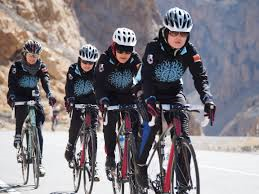
Afghan women cyclists (Credit: mountain2mountainwordpress.com)

Kabul, March 7: Malika Yousufi lined her bike up alongside her teammates on a lonely road outside the Afghan capital, getting ready for her weekly training ride away from the disapproving stares of Kabul.

Yousufi is part of Afghanistan’s Women’s National Cycling Team, a group that has been breaking new ground for women’s sports in Afghanistan and pushing the boundaries of what is — and is not — acceptable for young women in the conservative country.

Under the Taliban in the 1990s, women in Afghanistan were excluded from public life, banned from going to school or stepping outside their home without a male family member.

Women’s rights have made gains since the hardline group’s ouster in 2001, but observers worry that progress is at risk as violence against women persists and women remain under-represented in politics.

“We are resolved to keep our commitments to women and we will protect and reinforce our achievements,” President Ashraf Ghani’s office said in a statement released after the president made a speech ahead of International Women’s Day on March 8.

While Afghanistan’s national men’s cricket and football teams have enjoyed the spotlight, women’s sports have made more halting progress, with athletes facing family pressure and patchy public support. Last year, the women’s cricket team was quietly dissolved amid Taliban threats and a shortage of players.

The women’s cycling team is pushing ahead, despite not having been paid for several months, a problem for many Afghan athletes.

To clock the distances needed for training, team members pile their bikes in cars and drive outside the capital, where their uniform of loose-fitting tops and long pants won’t draw stares.

During the ride, the coach leads the pack in a car.

“The coach is like a shield for us,” Yousufi said. “If he wasn’t there, we couldn’t ride.”
Even so, drivers sometimes shout profanities at the riders, and their team captain grapples with a back injury from a crash after a man on a motorbike reached out to grab her.

Abdul Sadiq Sadiqi, the coach and president of the Afghan Cycling Federation, is not overly concerned.

“These are people who don’t let their children go to school,” Sadiqi said.
More than 40 women train with the group, and the core team has competed in several international competitions.

On a recent morning, team members leaned into the curves in the road, whizzing past a checkpoint where a group of soldiers watched them pass.
Yousufi said she was determined to become the first Afghan woman to compete in the Tour de France, a cycling race dominated by men since its first event in 1903.

“Nothing will stop us,” she said.

Afghan refugee on 1984 National Geographic cover embroiled in ID row

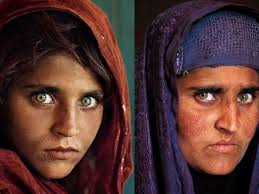
 Sharbat Bibi (Credit: tribune.com.pk)
Sharbat Bibi (Credit: tribune.com.pk)

Islamabad, Feb 25 – The image of Sharbat Gula that featured on the cover of National Geographic magazine in 1984. In 1984 a photo of a green-eyed girl staring out of the front cover of National Geographic became an icon of the plight of Afghan refugees forced by war into Pakistani refugee camps.

Three decades on and a new picture of Sharbat Gula, this time a cheap mugshot of a middle-aged woman, has come to symbolise the hostility many Pakistanis feel towards people they believe have outstayed their welcome.

On Tuesday the national media published the photograph from Gula’s computerised national identity card (CNIC), a vital document that she should not have been able to acquire as a foreign national.

That one of the most famous of the nearly 3 million Afghan refugees living in Pakistan should have been able to get the card underlined for many the corruption that riddles much of government.

© National Database and Registration Authority Sharbat Gula’s photograph on her Pakistani national ID card. As an Afghan refugee she is officially not entitled to hold such a document. Afghans can only buy property, open a bank account and be confident they will be able to remain indefinitely in a country that wants rid of its refugee population by having a CNIC, usually acquired with fake documents and bribes.

Faik Ali Chachar, a spokesman for the national database and registration authority (NADRA), said Gula’s card had been detected and blocked in August and that four officials had been suspended for their suspected involvement.

He said the agency has so far found more than 22,000 cards illegally held by Afghans.

That two men said to be her sons were also able to get CNICs further highlighted the deep roots Afghans have put down in Pakistan, where many have established businesses and families.

Afghans first began moving to Pakistan following the Soviet invasion of their country in 1979, and generations have grown up without ever having visited their ancestral homeland.

The refugee population continued to grow after the withdrawal of Russian troops in 1989 as Afghanistan descended into civil war.

Millions of Afghans have returned to their homeland since the international community uprooted the Taliban regime in 2001, but more than 2.5 million are thought to remain – the second largest refugee population in the world.

They have long been unpopular, with many Pakistanis blaming them for crime and terrorism.

“We need them to leave Pakistan because we are badly suffering,” said Hamid-ul-Haq, an MP who represents Peshawar, the north-western city where many Afghans are settled. “All our streets, mosques, schools are overloaded because of them. It is time for them to leave Pakistan honourably.”

There have been several half-hearted attempts to force more of them to quit the country, including a threat to cancel their refugee status, but official deadlines have repeatedly been ignored or allowed to slip.

The government has also attempted to clear slums in Islamabad that are populated by Afghans.

Action against Afghan refugees has intensified following last December’s attack by the Pakistani Taliban on the army public school in Peshawar, in which more than 130 schoolboys were killed.

In the month after the attack more than 33,000 undocumented Afghans flocked across the border according to the International Organisation for Migration – double the figure for the whole of 2014.

Those arriving in Afghanistan have claimed to have been beaten by police, arrested and evicted from their houses.

Human Rights Watch (HRW) this week called on Pakistan to stop trying to coerce refugees to return.

“Pakistan’s government is tarnishing the country’s well-deserved reputation for hospitality toward refugees by tolerating the punitive and potentially unlawful coercive repatriation of Afghan refugees,” said HRW’s deputy Asia director, Phelim Kine.

Gulzar Khan, a politician and former commissioner for Afghan refugees, said Pakistan could not expect such a large number of people to leave overnight.

“The current Afghan government is in a very vulnerable situation both economically and politically. If roughly two millions refugees are pushed back the Afghan government will have a major crisis on its hands,” he said.

Saudi Oil Blurs Criticism of its Human Rights Violations

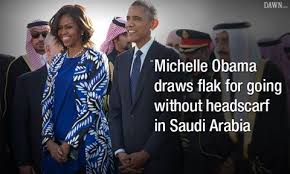
Michelle Obama in Saudi Arabia (Credit: facebook.com)
It is clear that any attempt to draw the West’s attention to Saudi Arabia’s history of glaring human rights violations, would require an urgent amendment to the terminology we regularly use to describe the Saudi regime.

The most genial words have been pouring in from across the world for King Abdullah, the “reformer”.

President Obama cancelled his trip to the Taj Mahal to fly to Saudi Arabia.

In his statement on the death of King Abdullah, Obama spoke about the king’s initiatives “that will outlive him as an enduring contribution to the search for peace in the region”.

The National Defense University in the US announced an essay competition to pay tribute to the deceased Saudi monarch.

The Japanese government praised him as a “peacekeeper”.

Perhaps the most baffling commendation came from the IMF’s Christine Lagarde, who called King Abdullah “a strong advocate for women”.

The four adult daughters reportedly house-arrested by King Abdullah, just to keep them from returning to his ex-wife were apparently not available to rebut Lagarde’s tribute.
Nor were the millions of other Saudi women who, regrettably, could not leave their homes without their husbands’ permission.

David Cameron applauded the Saudi monarch for his “commitment to peace and for strengthening understanding between faiths”. This, in spite of a leaked diplomatic cable in which Abdullah personally prodded the US to invade Iran; and in spite of his support for extremist outfits engaged in what can only be described as a ‘Shia genocide’.

While praise has been pouring in from nearly every corner of the world, there’s a reason for us foregrounding the West’s adoration of Abdullah in particular.

There is a stark contrast between these countries’ official advocacy for democracy and freedom, and the kind of non-democratic rulers they choose to lionise.

Many Western nations, particularly the United Kingdom, have visible sympathy for monarchism. Never mind the fact that the unelected monarch is basically a ‘dictator’, the British have nevertheless taken great comfort in their country’s “symbolic dictatorship”.

This ‘soft corner’ for monarchism is periodically displayed with utmost zeal, as the common Englishmen proceed to curtsy before the men and women of supposedly superior bloodlines.

Monarchism – which is basically the arbitrary division of humans into peasants and high-borns, based simply on the accident of birth – is systematically glorified in art, music, children’s literature, and even mainstream politics in a surprising number of countries.
It’s easy to imagine why the word ‘King’ may appear less threatening to the denizens of such nations.

“Dictators” are men like Saddam Hussein and President Bashar Al-Assad. Kings and Queens are decorated, well-starched, and assuredly benign figures that inspire us with their radiant smiles and gentle waves.

Problematically, the Elizabethan/Disney description of a monarch gets projected onto the assuredly non-benign figures of the Middle East, and beyond.
These diplomatic geniuses have always used the simple power of linguistics to route and reroute global outrage, however they find profitable – subjectively sifting out the ‘rebels’ from the ‘terrorists’, and a ‘coup’ from a ‘takeover’.

We say the word “killed” when we want to provoke outcry, and the word “died” where an outcry is politically inconvenient.

Yes, “died”, like from high cholesterol or old age.

Now, with the ideological boundaries between the brutal Saudi administration and ISIS growing blurrier by the day, we find ourselves engaged in Olympics-grade verbal gymnastics, trying to wedge them apart.

Let’s not do that.

An unelected ruler of a country that publicly decapitates and lashes its citizens – often hastily and for archaic, moralistic reasons – and exports fanatical ideas to many politically volatile corners of the world, may be safely described with a word less lenient than “King”.

Parveen Rahman – Symbol of Resistance against Land mafia

Late Parveen Rahman (Credit: expresstribune.com)

ISLAMABAD, Nov 12: Sindh Police have started probing land grabbers allegedly involved in the murder of Orangi Pilot Project (OPP) former director Parveen Rahman.

“A questionnaire has been sent to the Board of Revenue Sindh to find out the details of Katchi Abadis, record of land grabbers and land mafia,” Deputy IG west zone Karachi has said in the progress report submitted in the Supreme Court on Wednesday.

The report has also provided details of the 5th session of the Joint Investigation Team (JIT) held on October 15 regarding the murder case, the copy of which is available with The Express Tribune.

Giving details of the JIT meeting, the report says a representative of Intelligence Bureau (IB) briefed that the process of regularisation of Katchi Abadies and goths was stalled since Rahman’s assassination, pointing to the involvement of those benefitting from land mafia.

Similarly, representative of special branch briefed the JIT and said that investigations had revealed that land grabbers affiliated with the Tehreek-e-Taliban Pakistan (TTP), Naseebullah Kakar and Thorani Afghani did not like Rahman because she was active against land grabbers, tankers mafia and also supported NGOs in the anti-polio vaccination campaign.

Rehman was murdered in Karachi on March 13, 2013.

The special branch representative further said that the place of Rahman’s murder, near Pakhtoon market in Manghopir, is under the influence of Abid Muchar and Shamsur Rahman groups of the TTP, who were also apprehensive of Rahman’s growing social activities.

Meanwhile, the three-judge bench of the apex court headed by Chief Justice Nasirul Mulk while resuming the case hearing on Wednesday directed the Sindh Police to arrest all culprits involved in the murder within a month.

Justice Dost Muhammad Khan observed that there were clues that land mafia is involved in Rahman’s murder but no investigation had been carried out in this regard previously.

He asked the police to investigate groups against regularisation of Katchi Abadies.

During the hearing, DIG CID Sultan Khawaja told the bench that IB was asked about the details of nine people suspected to be involved in the case.

Khawaja added that Pakistan People’s Party leader Taj Haider had told to the investigation team that Rahman had with her a map of land which had been allegedly occupied by wings of different political parties.

The chief justice, though, asked the DIG to focus on the murder case only.

The DIG further said that a person named Raheem Sawati was obstructing her social welfare work but he has left Karachi now, adding that police was trying to trace him.

The chief justice observed that no doubt, the case is difficult but not impossible.

The court directed that the investigation should continue, with a focus on finding the real culprits. It asked for another progress report to be filed in the next hearing scheduled for December 15.

A game of land?

Human Rights Commission of Pakistan and 11 other petitioners had, through their counsel Reheel Kamran Sheikh, previously submitted that they suspected the JIT was deliberately ignoring the presence of land mafia because of vested interests of a range of ‘influential parties’.

The petitioners pointed out that the JIT had failed to take into account the fact that Rahman was collaborating with the government of Sindh for identification, survey and mapping of various settlements in parts of Karachi for their regularisation and that all regularisations came to a halt following her murder.

“Nearly 1,063 settlements were regularised by the Sindh government through the efforts of Rahman, whereas more than 1,000 were left,” the application said.

“When a settlement is regularised it becomes difficult to evict the residents as they become lawful lessees. Consequently, the price of the land also increases. Both these factors make it difficult for the land mafia and the real estate developers to grab land through forced eviction or fraudulent/coercive transactions,” it adds.

The application added that residents of various settlements were approaching Rahman seeking her assistance in regularisation.

“Rahman had, therefore, become a symbol of resistance against the land mafia and real estate developers,” it says.

Why I can’t celebrate Malala’s Nobel Peace Prize

The Nobel Peace Prize was awarded this Friday to India’s Kailash Satyarthi and Pakistan’s Malala Yousafzai for their struggles against the suppression of children and for young people’s rights, including the right to education. That is great news, and it might almost mean Nobel Peace Prize makes sense again, after being awarded to Barack Obama in 2009 “for his extraordinary efforts to strengthen international diplomacy and cooperation between peoples”, and to European Union in 2012 “for over six decades contributed to the advancement of peace and reconciliation, democracy and human rights in Europe”.

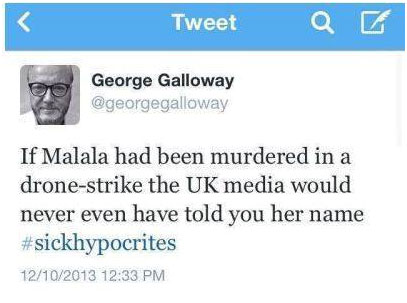
Still, there is something that really troubles me. How come we (meaning the West) always recognize the “devils” of the East, the torments children like Malala had to and have to go through (in her case, with the Taliban), but always fail to recognize our own participation in creating those “devils”? How come we never talk about the things our governments are doing to the children of Pakistan, or Syria, or Iraq, or Palestine, or Yemen? Let’s just take drone strikes as an example. Last year’s tweet by George Galloway might illustrate this hypocrisy.

TWEET

Galloway is absolutely right. We would never even know her name. But, since Malala’s story fits into the western narrative of the oriental oppression (in which the context underlying the creation of the oppression is left out), we all know Malala’s name. Like Assed Baig writes:

“This is a story of a native girl being saved by the white man. Flown to the UK, the Western world can feel good about itself as they save the native woman from the savage men of her home nation. It is a historic racist narrative that has been institutionalised. Journalists and politicians were falling over themselves to report and comment on the case. The story of an innocent brown child that was shot by savages for demanding an education and along comes the knight in shining armour to save her. The actions of the West, the bombings, the occupations the wars all seem justified now, ‘see, we told you, this is why we intervene to save the natives.’”

The problem is, there are thousands of Malalas West helped create with endless wars, occupations, interventions, drone strikes, etc. InLast Week Tonight with John Oliver, one can hear how little we know about the drone strikes – its aims, targets, results. “Right now we have the executive branch making a claim that it has the right to kill anyone, anywhere on Earth, at any time, for secret reasons based on secret evidence, in a secret process undertaken by unidentified officials. That frightens me.” This is how Rosa Brooks, a Georgetown professor and former Pentagon official under President Obama, explained the US policy on drone strikes during a congressional hearing last year.

The following photo presents the piece that was installed in Khyber Pakhtunkhwa (KPK) province, close to Pakistan’s northwest border with Afghanistan, by an art collective that includes Pakistanis, Americans and others associated with the French artist JR. The collective said it produced the work in the hope that U.S. drone operators will see the human face of their victims in a region that has been the target of frequent strikes.

That is the reality we are not being presented with. Another reality is the story of Abeer Qassim Hamza al-Janabi, 14-year-old Iraqi girl, who was gang raped by five U.S. Army soldiers and killed in her house in Yusufiyah (Iraq) in 2006. She was raped and murdered after her parents and six-year-old sister Hadeel Qasim Hamza were killed. Also not irrelevant to mention is that Abeer was going to school before the US invasion but had to stop going because of her father’s concerns for her safety.

And while the West applauds Malala (as they should), I am afraid it might be for the wrong reasons, or with a wrong perspective.  It feels like the West wants to gain an agenda that suits them or the policies they want. That is also why Malala’s views on Islam are rarely presented. She uses her faith as a framework to argue for the importance of education rather than making Islam a justification for oppression, but that is rarely mentioned. It also “doesn’t fit”.

So, my thoughts were mixed this Friday when I heard the news about the Nobel Peace Prize. On so many levels. They still are. We’ve entered a new war, and peace prize award ceremonies seem ridiculous after looking at this photo.

Sure, we must acknowledge the efforts of those who are fighting for a better world, but when it is done in a way that feels so calculated, unidimensional, loaded with secret agendas and tons of hypocrisy – I just can’t celebrate it.