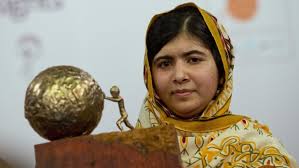
Malala wins Nobel peace prize (Credit: wiki-feet.com)
Take that, Islamic extremists, anti-Muslim bigots, Pashtun-bashers and misogynists! Malala Yousufzai has become the youngest person to win any Nobel prize and, fittingly, did not appear before the media to respond for several hours because it was a school day, and the girl’s got priorities.
A year ago the Guardian sent me to interview Malala in Birmingham, where she still lives, and I asked her why she thought the Taliban felt so threatened by her. At first she laughed. Then she said: “I don’t know, but many people say that they’re afraid of education,. They’re afraid of the campaign we’re doing for girls’ rights.”
But as she continued to speak – her ideas enlarging, in contradiction to my expectation of someone who would already have stock responses to all the obvious questions – she said: “I believe it’s my life and it’s my choice how to live it. The Taliban thinks that everyone should be in and under their control. I am not a slave. I am not their follower … I will use my mind.”
Listening to the interview again, I am more struck than previously by her understanding that the Taliban’s power comes from their ability to terrify those who oppose them. In the last few months Islamic State (Isis) has made it impossible to keep from thinking about how anyone is supposed to stand up to brutality instead of responding with acquiescence or flight. It’s a question to which Malala had to find an answer as a child.
When she was 13, two years before she was shot in the head, a Pakistani journalist asked her if she was frightened of the threats the Taliban directed at her. “Yes,” she said, “but I don’t let anyone see it.” When I put the same question to her, she said: “Fear was spread all over the valley of Swat, but we [she and her father] were not afraid of fear. At nights our hearts were beating fast, but in the morning we were like normal people, and we said we’ll continue our campaign. Our courage was stronger than fear.” She says a thing like that, and there’s no question of doubting her.
In Pakistan, news of the Nobel prize has led to an outpouring of accolades from official figures, led by the prime minister, Nawaz Sharif, who called her “the pride of Pakistan”.
Also among the praise-singers is the director general of Inter-Services Public Relations (ISPR), the public relations wing of the military. All this is as it should be. But officialdom has refrained from commenting on the fact that the pride of Pakistan is unable to return to Pakistan because the Taliban remain too great a threat.
As of June this year, Pakistan’s military has been engaged in an anti-Taliban offensive, during the course of which it captured 10 men who are allegedly members of the group that planned the attack on Malala.
But it’s hard to gauge the success of the operation, and difficult not to think about what Malala said to me about an earlier military operation against the Taliban: “In the military operation they didn’t target the Taliban leaders – they fled. But suppose a Talib went to a shop and asked for a comb – then the shopkeeper would become a [military] target, and be killed. They [the military] are doing nothing to the leaders.”
Malala isn’t the first Pakistani to win a Nobel – that accolade goes to Abdus Salam, joint winner of the 1979 physics prize.
Like Malala, Salam was in exile from Pakistan when the Nobel prize was announced. His was a self-imposed exile in protest at the Bhutto government’s decision to pass a law declaring members of the Ahmadiyya community, to which he belonged, non-Muslims. Salam never returned to live in Pakistan again.
When I listen to Malala talk about her home of Swat, it’s hard not to hope history will turn out differently this time.
It isn’t when she describes Swat as “paradise” that her heartbreak is evident, but later in the interview, when she remembers the river near her house. “I miss that river. It smelled a lot. It was full of garbage. But still, I miss it.”
KARACHI, Aug 9: Anita Ghulam Ali, one of the country’s most famous teachers who served twice as education minister of Sindh, died in a hospital here on Friday after protracted heart problems. She was 76.
“She had been in the hospital since July 28 for cardiac problems and breathed her last at about 2.20pm today,” said one of her colleagues at the Sindh Education Foundation (SEF) that she had quit a few months ago after a 24-year stint.
Born in Karachi in 1938 in the house of a former judge and a family of intellectuals and linguists, Ms Ghulam Ali was an out-and-out Karachiite, and an athlete who captained her university’s netball team and a champion table tennis and badminton player.
St Lawrence Girls School near what used to be Cincinnatus Town and now is called Garden East was just a stone’s throw away from her grand house and became the first destination of her arduous trek that made her an epitome of education in the country.
Her house was not far from the hilly area where the Quaid-i-Azam was later buried. She told a subordinate how she saw people moaning and beating their chests during the funeral procession of the Father of the Nation.
Ms Ghulam Ali often bunked botany classes in Dayaram Jethamal (DJ) College on Saturday afternoons to watch the movies that cinemas showed at concessional rates to students once a week.
She would rip pages from her college books to create room in her bag to bring her table tennis racquet and shoes.
Her restless soul finally found a niche in the Karachi University where she found pull in microbiology and left the campus as a topper – a fact that put everyone who knew her from the beginning in a pleasant shock.
She was also a popular English newscaster at Radio Pakistan until Islamabad became the federal capital.
“I can’t be shy to say that a third class student can become a first class teacher,” she would often say after joining the Sindh Muslim College in 1961 where she remained a revered faculty member till 1985 despite being a tough taskmaster.
She used to box the ears of her students, pulled their hair, ripped up their pockets. “I think this is the kind of communication skill that develops once you show them that you care for them,” she repeatedly said.
A large number of her students are in government, police and top vocations abroad.
Late Anita was a leader in the teachers’ movement in 1970 during which she was beaten with police batons and briefly put behind bars. The movement was to get the private colleges nationalised to ensure that teachers, who lived pathetically while working for private masters, could receive handsome and uninterrupted salaries.
After leaving the SM College, she headed the Teachers’ Foundation and then became managing director of the SEF after its inception.
She served as a provincial education minister in Mumtaz Ali Bhutto’s interim government in 1996 for three months and then in 1999 after retired Gen Pervez Musharraf seized power.
She quit Gen Musharraf’s government when the military ruler announced a controversial referendum to consolidate his power.
Among various other distinctions, Prof Anita was the recipient of the Sitara-i-Imtiaz for her lifetime contribution to education and community development.
She refused a further extension in her tenure by the provincial government and retired from the SEF on Jan 23 this year.
She, as she often said, is survived by ‘thousands and thousands’ of her students.
KUNDUZ, Afghanistan, July 19 — It was bad enough that the alleged rape took place in the sanctity of a mosque, and that the accused man was a mullah who invoked the familiar defense that it had been consensual sex.
But the victim was only 10 years old. And there was more: The authorities said her family members openly planned to carry out an “honor killing” in the case — against the young girl. The mullah offered to marry his victim instead.
This past week, the awful matter became even worse. On Tuesday, local policemen removed the girl from the shelter that had given her refuge and returned her to her family, despite complaints from women’s activists that she was likely to be killed.
The case has broader repercussions. The head of the Women for Afghan Women shelter here where the girl took refuge, Dr. Hassina Sarwari, was at one point driven into hiding by death threats from the girl’s family and other mullahs, who sought to play down the crime by arguing the girl was much older than 10. One militia commander sent Dr. Sarwari threatening texts and an ultimatum to return the girl to her family. The doctor said she now wanted to flee Afghanistan.
The head of the women’s affairs office in Kunduz, Nederah Geyah, who actively campaigned to have the young girl protected from her family and the mullah prosecuted, resigned on May 21 and moved to another part of the country.
The case itself would just be an aberrant atrocity, except that the resulting support for the mullah, and for the girl’s family and its honor killing plans, have become emblematic of a broader failure to help Afghan women who have been victims of violence.
The result challenges hopes that Western aid and encouragement can make lasting headway on behalf of Afghan women, particularly in remote parts of the country where traditional customs are still stronger than modern law. Here, Taliban insurgents and pro-government elements often make common cause in their hatred of progress in women’s rights, most of which has come about with international funding and pressure.
Most of the anger in Kunduz has been focused not on the mullah but on the women’s activists and the shelter, which is one of seven operated across Afghanistan by Women for Afghan Women, an Afghan-run charity that is heavily dependent on American aid, from both government and private donors.
“People know this office as the Americans’ office,” Dr. Sarwari said. “They all think the shelter is an American shelter. There isn’t a single American here,” she said.
“W.A.W. is not American-run,” said Manizha Naderi, its executive director. “Every single staff member is an Afghan. They are from the communities we work in. Our only concern is to make sure women and girls are protected and that they get justice.”
As the Western withdrawal from Afghanistan has accelerated, rights advocates are seeing a sharp difference in their funding. “We already see the signs of losing the support of the international community,” said Ms. Geyah, in an interview before she resigned. “No one’s funding new civil society programs anymore. None of the foreigners show up anymore; they’re all in hiding. And I think what gains we have achieved the last 13 years, we’re slowly losing all of them.”
The accused mullah, Mohammad Amin, was arrested and confessed to having sex with the girl after Quran recitation classes at the mosque on May 1, but claimed that he thought the girl was older and that she responded to his advances.
The girl’s own testimony, and medical evidence, supported a rape so violent that it caused a fistula, or a break in the wall between the vagina and rectum, according to the police and the official bill of indictment. She bled so profusely after the attack that she was at one point in danger of losing her life because of a delay in getting medical care.
After the two women’s officials began speaking out about the case, they started receiving threatening calls from mullahs — some of them Taliban, others on the government side — and from arbakai, or pro-government militiamen. One of their claims was that the girl was actually 17, and thus of marriageable age, not 10.
Photographs of the girl that Dr. Sarwari took in the hospital clearly show a pre-pubescent child, and the doctor said the girl weighed only 40 pounds. Few Afghans have birth records, and many do not know their precise ages. But the girl’s mother said she was 10, and a forensic examination in the hospital agreed, saying she had not yet started menstruating or developing secondary sexual characteristics.
In the photographs, which Dr. Sarwari displayed on her laptop computer recently, the girl has beautiful alabaster features and inky black hair cut in a pageboy style. She lay in her hospital bed under a quilted blanket with cartoon characters on it.
Ms. Geyah said she showed photos of the girl to government officials and prosecutors to prove that she was much too young to have consented. Dr. Sarwari said, “We wanted to give her a face, to make her real to them.”
Ms. Geyah said: “I went to the hospital when they brought her there. I was sitting next to her bed when I overheard her mother and aunt saying that her father was under tremendous pressure by the villagers to kill the girl because she had brought shame to them.”
Such honor killings in rape cases are common in Afghanistan, and are often more important to the victim’s family than vengeance against the attacker. Human rights groups say about 150 honor killings a year come to light, and many more probably go unreported.
When Dr. Sarwari, who is a pediatrician, arrived to pick up the girl at the hospital, a crowd of village elders from Alti Gumbad, the girl’s home village on the outskirts of the city of Kunduz, were gathered outside the hospital; the girl’s brothers, father and uncle were among them. Inside, Dr. Sarwari encountered the girl’s aunt, who told her she had been ordered by her husband to sneak the girl out of the hospital and deliver her to the male relatives outside. “She said they wanted to take her and kill her, and dump her in the river,” Dr. Sarwari said.
Efforts to reach the girl’s relatives by telephone were unsuccessful, and insurgent activity around Alti Gumbad made the village too dangerous for journalists to visit. “The girl’s family gave us a guarantee that they would not harm her,” said Sayed Sarwar Hussaini, head of the Kunduz police criminal investigation division. “We would not hand her back unless we were sure.”
In the hospital room, the doctor found the girl’s mother holding her child’s hand, and both were weeping. “My daughter, may dust and soil protect you now,” Dr. Sarwari quoted the mother as saying. “We will make you a bed of dust and soil. We will send you to the cemetery where you will be safe.”
Even mothers here often believe that there is no choice but to kill rape victims, who are seen as unmarriageable and therefore a lifelong burden to their families, as well as a constant reminder of dishonor. “Their men feel they have to wash their shame with blood,” Dr. Sarwari said.
The doctor took the girl away to the shelter. Afterward, Dr. Sarwari and several women’s affairs officials were threatened by the girl’s family, and by other mullahs. “They call me and curse me, and threaten to kill me and my family, and say they know where I live,” Dr. Sarwari said. “They say, once your American husbands leave Afghanistan, we will do what we want to you.” (Her husband is an Afghan doctor and war veteran.)
Dr. Sarwari has accused prosecutors and religious officials of siding with the accused rapist and ignoring the child’s plight.
“There are a lot of powerful people behind the mullah,” Dr. Sarwari said. The girl’s family knows they cannot do anything to Mr. Amin, she said, but “the girl is easy. They can get to her; she’s their daughter.” She said she feared the girl would either be killed, or forced to recant her accusations against the mullah.
Women for Afghan Women arranged for the girl to get medical treatment, and after she healed, she was returned to the shelter in Kunduz, about two weeks ago, until the police returned her to her family last Tuesday. Those caring for the girl said she had been terribly homesick and wanted to return to her family, but no one had the heart to tell her they had been conspiring to kill her.
Habib Zahori contributed reporting from Kunduz, and Jawad Sukhanyar from Kabul, Afghanistan.
MINGORA, July 4: A teenage girl, whose nose had been chopped off by her husband on May 16, wants the accused punished under the Qisas (retribution) laws.
Talking to reporters here, Shahida, 18, said that was only seven years old when she was married to the accused, Sahibzada, after his sister married with her brother. She alleged that she had been subjected to torture since her marriage, adding that her husband once broke her hand and also hanged her from ceiling fan in her house.
The victim girl said that she was also confined in a room for 20 days. She said that she managed to escape from her husband’s house at Manja area in injured condition and got admitted to Saidu Sharif Hospital for treatment.
Shahida said that when she informed her father about the torture he got registered an FIR against the accused in Kabal police station, adding that after registration of the case, her husband intensified torture on her.
The Kabal police arrested Sahibzada, a special policeman, on June 5.
The victim demanded of the government to give to her custody her two and half year old son and also provide her free treatment as she couldn’t afford expenses on the treatment of her nose.
Bakhti Raj, mother of the victim, and Zahir Shah, her father, also appealed to the government to take notice of the gory act and provide justice to them.
Speaking on the occasion, chairperson of Khuyando Tolana NGO, Tabassum Adnan, demanded ban on child marriages, saying that the government should make legislation aimed at protecting minor girls from being victimised.
Meanwhile, Swat deputy commissioner Mahmood Aslam Wazir on Wednesday sent 22 traders to jail for fleecing consumers, and also fined 48 shopkeepers Rs92,000 during surprise raids in different bazaars of Swat.
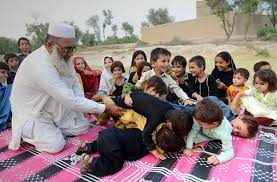
Gulzar Khan & children (Credit: hindustantimes.com)
BANNU: The ongoing military operation may be making headway in clearing militant hideouts, but it has shattered the dream of one father of 36 children — to take a fourth wife.
Gulzar Khan is one of hundreds of thousands of people who have fled the North Waziristan tribal area since the army moved in to clear longstanding bases of Taliban and other militants.
Escaping the military advance meant leaving the 35-room house he shares in the North Waziristan village of Shawa with around 100 family members, including wives, children and grandchildren.
The 54-year-old grumbled that paying to transport his brood used up the cash he had set aside for his fourth marriage.
“The money I had saved was consumed in relocating my family from Shawa to Bannu and now I have again started saving and waiting for the operation to conclude,” he told AFP.
After giving birth to a dozen children each, Khan said, his wives had told him enough was enough.
“I was planning to have a fourth marriage because now my wives have boycotted me and told me ‘no more children’,” Khan said.
“They do not allow me to go near them, but I have desires I want to fulfill.
Khan was 17 years old when he married his 14-year-old cousin in Shawa. They had eight daughters and four sons, but after eight years, Khan got married again, to a 17-year-old.
“I was not satisfied and needed more of it — I mean the love-making,” Khan told AFP at his 17-room house in the northwestern town of Bannu, where the bulk of people displaced by the military operation have taken refuge.
“I do not indulge in adultery and sinful acts so I satisfy my natural desires lawfully by marriage,” said Khan, who worked as a taxi driver in Dubai from 1976 to 1992.
Khan’s third wedding came when he married his brother’s widow when he was killed in a dispute just a month after tying the knot himself.
Two of his sons now work as drivers in Dubai and the money they send home helps support the extended family, along with income from Khan’s farmland in Bannu and Shawa.
“My sons send up to Rs50,000 every month from Dubai and we make ends meet with this money,” Khan added.
He said there were no disputes between his three wives, all living under the same roof, but he admitted he struggled to remember who was who’s mother.
“I can tell you that he or she is my child, but I cannot tell with all of them who is his or her mother,” Khan said.
As tribal custom forbids women from speaking to men outside their family, AFP’s reporter was unable to obtain the views of Khan’s wives on the matter.
Khan said he had no problem feeding and clothing his family, but with so many people around, there was little privacy.
“Often there are two to three kids lying around me when I go to sleep, so it’s difficult to have a private moment with my wives,” Khan said.
Asked if he used any drugs like Viagra to perform, Khan said that he never felt the need.
“I had a heart attack 12 years ago and also have an ulcer, and my doctor had advised me to stay happy,” Khan told AFP.
“I am happy only when I perform my conjugal rights.”
Pakistan’s 180 million-strong population is growing by more than two per cent a year, according to the United Nations Population Fund, which said in late 2012 that a third of Pakistanis have no access to birth control.
Some observers have warned that unless more is done to slow the growth, the country’s natural resources — particularly water — will not be enough to support the population.
But Khan’s 14-year-old son Ghufran has no such fears.
“God willing I will also have several marriages and produce even more kids than my father,” he told AFP.
Personal laws that govern matters related to marriage, divorce, custody of children and inheritance have been an issue of great concern and debate in Pakistan. There have been demands for decades now for new legislation because personal laws did not exist for some religious minorities, whereas for others they were outdated and incompatible with standards of gender equality and justice.
The UN Committee of Independent Experts, which monitors the implementation of the Convention on the Elimination of all forms of Discrimination against Women (Cedaw) reviewed the situation in Pakistan in March 2013. The Cedaw Committee specifically recommended that the impending legislation regarding the Hindu Marriage Act and the Christian Marriage Act should be adopted as early as possible. Pakistan’s National Commission on the Status of Women had prepared drafts on these laws after a consultative process involving legal experts from their respective communities in 2011.
Now that the bill concerning Hindu marriages – introduced by Dr Darshan Ramesh Lal – is being reviewed by the Standing Committee on Law, Justice and Human Rights of the National Assembly, it is important to ensure that it satisfies international standards of human rights. Although the bill primarily concerns one religious community yet it deserves broader consultation for technical and professional input due to its national importance and commitments under international human rights law.
The move is appreciable on the whole and the bill covers some important features like establishing a minimum age (18) for marriage, free consent for marriage and a ground for divorce and procedures for registration of marriage. However some parts of the bill need more attention to avoid criticism or complications that might come if the bill is passed in the present form.
For instance, Section 5, on conditions for marriage, bars marriage of a wife who “cannot conceive (a child) and medically declared to be so.” The proviso is objectionable, because one’s capacity to reproduce should not be a bar for contracting marriage. That would be a clear violation of the rights of individuals under Article 16 of the Universal Declaration of Human Rights, which states; “Men and women of full age, without any limitation due to race, nationality, or religion, have the right to marry and to found a family. They are entitled to equal rights as to marriage, during marriage and at its dissolution.”
The use of the word ‘wife’ places the intention of law in jeopardy because it implies that husbands suffering from impotency can be allowed to marry or remarry while women will be married only if they are fit for procreation. The proviso not only undermines the fundamental concept of marriage as a marital union of entitled and freely consenting parties but also has misplaced emphasis on procreation as the primary purpose of marriage. The choice of the term ‘wife’ together with mention of the word ‘conceive’ also suggests that it can be grounds for ineligibility for second marriage of women only.
Parts 3 and 4 (vii) of the Shaadi Pattar or marriage certificate given in the bill have four options to record the marital status of the bride and the bridegroom – single, married, widow/ widower or divorced. Allowing a married person remarriage is likely to attract complications if the first marriage is yet to be dissolved, therefore permissibility of a ‘married’ person’s marriage would mean allowing bigamy or polygamy, which I believe is not the intention of the law.
Another questionable proviso is about making “mental illness and virulent disease” as one of the grounds of dissolution of marriage. This proviso is not only susceptible to abuse but also portrays the bond of marriage as merely a utilitarian union undermining the profound meaning of marriage in human, religious and social ethos. Terms with such a broad application are exactly the deadwood that new legislation should avoid.
It would be useful to look at laws on this subject in other countries as well. In an amendment bill on Hindu marriage in India that has been passed by Rajya Sabha and is under review in the Lok Sabha, a liberal procedure for divorce is being considered – but with condition of guarantees for the protection of children, women and dependents who could be affected by the divorce irreparably.
Second, even though there can be separate laws for protecting the rights of divorced women and custody of children, yet it would be advisable to use the bill under consideration to include basic protections on these matters.
Moreover, the Qanoon-e-Shihadat (1984) law is a part of the basic law and the Islamic provisos of this law might create complication for non-Muslim litigants. Therefore, the procedures for evidence should be religiously neutral as far as their application on marriage laws for minorities is concerned.
On the whole the Standing Committee needs to ensure that community specific legislation meets international standards of human rights and gender equality and provide a just solution to marital issues. In a context that is marred by discrimination and marginalisation on the basis of sex, religion and class, the new legislation must add to the protection of rights, especially for women and children.
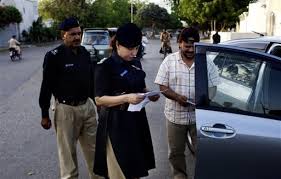
Just days into her job running a police station in Pakistan’s largest city, Syeda Ghazala had to put her training to the test: she opened fire with her .22-caliber pistol at a man who shot at police when they tried to pull him over during a routine traffic stop.
It’s not clear whether it was Ghazala’s shots that wounded the man before he was arrested, but as the first woman to run a police station in Pakistan’s often violent port city of Karachi, she’ll likely have many more chances to hit her mark.
When Ghazala joined the police force two decades ago, she never dreamed that one day she would head a police station staffed by roughly 100 police officers — all men. Her recent promotion is part of efforts by the local police to increase the number of women in the force and in positions of authority. Shortly after she assumed her new job the city appointed a second woman to head another police station.
In a country where women have traditionally not worked outside the home and face widespread discrimination, the appointments represent a significant step for women’s empowerment.
“The mindset of people is changing gradually, and now they (have) started to consider women in leading roles. My husband opposed my decision to join the police force 20 years ago,” said the 44-year-old mother of four. But by the time this job rolled around, he had come full circle and encouraged her to go for it. “It was a big challenge. I was a little bit hesitant to accept it.”
The station house is in Clifton, a posh area home to the elite of this sprawling metropolis of more than 18 million people. Crimes ranging from petty theft and muggings to terrorism or murder are all part of a day’s work, Ghazala says.
Running a station is a high-profile job in the Pakistani police, one that requires the officer to constantly interact with the public and fellow officers. It’s also a key path to advancement. Senior police officer Abdul Khaliq Sheikh, said he and others in the top brass hope Ghazala’s appointment leads to more women joining the force.
“Our society accepts only stereotype roles for women. There is a perception that women are suitable only for particular professions like teaching,” he said.
The police force is also training the first batch of female commandos, a group of 44 women going through a physically intensive course involving rappelling from towers or helicopters and shooting an assortment of weapons.
Currently, the two in Karachi are the only women running police stations in Pakistan. In Khyber Pakhtunkhwa, where women make up less than one per cent of the roughly 75,000-member police force, women only run stations specifically designed to help female crime victims.
In Balochistan, there are only 90 women on the police force and no women station heads. In Punjab, only one woman has ever run a station house, back in 2005, but currently no women hold the position.
Ghazala said most people she has encountered in her new job have been supportive, and she’s become a bit of a celebrity in the neighbourhood.
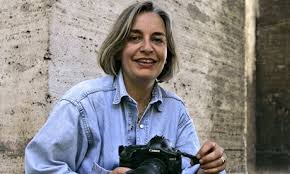
KABUL, April 4— For the two seasoned war correspondents, it was not an unusually risky trip. Getting out to see Afghanistan up close was what Anja Niedringhaus, a Pulitzer Prize-winning photographer for The Associated Press, and Kathy Gannon, a veteran reporter for the news agency, did best.
The eastern province of Khost, where Ms. Niedringhaus and Ms. Gannon traveled to cover Afghanistan’s presidential election on Saturday, is considered dangerous, still plagued by regular Taliban attacks. But they had carefully plotted their trip, arranging to move beyond the relatively safe confines of the provincial capital under the protection of Afghan Army troops and the police.
Yet it was those precautions that proved fatal for Ms. Niedringhaus on Friday morning. As she and Ms. Gannon waited outside a government compound, a police commander walked up to their idling car, looked in at the two women in the back seat, and then shouted “Allahu akbar!” — God is great — and opened fire with an AK-47, witnesses and The Associated Press said.
Ms. Niedringhaus was killed instantly, and Ms. Gannon, shot three times in the wrist and shoulder, was severely wounded. In the span of a few muzzle flashes, the two women, who had covered the war since it began in 2001, became victims of another attack that blurred friend and foe.
For both Afghans and Westerners, the list of adversaries has expanded beyond the resilient Taliban, who have staged a series of attacks in an attempt to disrupt the election. Afghan soldiers and the police have repeatedly turned on one another and their foreign allies. The squabbling between President Hamid Karzai and American officials has grown into a deep-seated animosity.
At the same time, Afghans have seen scores of their fellow citizens killed by errant American airstrikes. And even as the United States pushes for a long-term security deal that would allow it to keep troops here beyond the end of this year, it does so with the understanding that its forces will be largely hidden away behind the high walls of fortified bases.
Ms. Niedringhaus, 48, and Ms. Gannon, 60, had no desire to hunker down. The focus of their work over the past dozen years has been putting a human face on the suffering inflicted by the war. As a pair, they often traveled to remote corners of Afghanistan to report articles, and Ms. Niedringhaus also spent significant time embedded with coalition forces.
Many of their colleagues noted sadly that they were attacked by a police officer who appeared to have seen in the back seat of the journalists’ Toyota Corolla a pair of anonymous Westerners on whom to vent his rage. If Afghans have a dominant complaint about the West, it is that they are often treated as faceless, dismissed as nonentities by the people who say they are here to help.
That was not the case with Ms. Niedringhaus and Ms. Gannon.
In this March 30, 2003 photo by Anja Niedringhaus, Iraqi women lined up for a security check by British soldiers on the outskirts of Basra. Credit Anja Niedringhaus/Associated Press
“They just seemed so bravely willing to go into these kinds of situations and get to the places that you needed to get to tell stories that weren’t being told,” said Heidi Vogt, a reporter who worked for The A.P. in Afghanistan until last year.
“They’re the last two people you’d expect this to happen to,” she added. “It felt like they had a little protective force field around them.”
Ms. Niedringhaus, a German citizen who was based in Geneva, first came to Afghanistan after joining The A.P. in 2002, and she quickly formed a partnership with Ms. Gannon. They were among a band of female photographers and correspondents who persevered through many years of conflict in Iraq as well as in Afghanistan.
In the process, they helped redefine traditional notions of war reporting. Even as they covered the battlefield, they also focused attention on the human impact of conflicts known for their random, unpredictable violence against civilians.
Ms. Niedringhaus’s fascination with Afghanistan continued to grow even as she was pulled away to other trouble spots, including Iraq, where she was part of a team of A.P. photographers who won a Pulitzer Prize in 2005.
“If I’d told her, ‘You don’t need to do this anymore, you’ve earned your spurs, leave it to another generation,’ ” said Tony Hicks, a photo editor at The A.P., “the response would have been a series of expletives, then laughing and another pint.”
But, Mr. Hicks pointed out, Ms. Niedringhaus was equally at home at major sports events and other less high-stakes diversions, such as the Geneva auto show.
Hundreds of U.S. Marines gathered at Camp Commando in Kuwait in 2002. Credit Anja Niedringhaus/Associated Press
She was on the finish lines when Usain Bolt, the Jamaican sprinter, broke the world record for the 100-meter dash. And “she loved Wimbledon,” he said. “It was almost her second home.”
Ms. Gannon, a Canadian who is a senior writer for The A.P., arrived in Peshawar, Pakistan, in 1986 when the Afghan mujahedeen were battling the forces of the Soviet Union. She went on to serve as The A.P.’s bureau chief in Islamabad, and she was one of the few Western reporters whom the Taliban permitted to work in Kabul when they ruled Afghanistan.
Ms. Gannon was in Kabul during the American invasion in 2001, and she wrote of covering the Taliban’s last days in the city with her Afghan colleague, Amir Shah. The two cowered in the basement of a house during air raids, often working by candlelight or lantern. They tried to avoid members of Al Qaeda, who were much more hostile than the Taliban. When a bomb struck nearby, she was thrown across the room — and then went straight back to work.
“She knows Afghanistan very well,” said Mr. Shah, an A.P. reporter in Kabul, according to an article by the news agency. “She knows the culture of the people.”
But the divide between Afghans and Westerners has been deepening for years, and so-called insider attacks in which Afghan security forces turn on their coalition counterparts or one another have been the most visible symptom. Afghan and Western officials say they believe that most of the attacks are driven by personal animosity or anger about the war in Afghanistan, where many have come to view foreign forces as occupiers.
Though Western civilians working with the coalition have at times been killed in such attacks, the shooting on Friday was believed to be the first time an Afghan police officer had intentionally killed a foreign journalist.
Afghan security officials said they believed that the shooting was an opportunistic attack, not the work of the Taliban, who offered no comment.
A Marine on his way to pick up food supplies in June, 2001. Credit Anja Niedringhaus/Associated Press
The police commander, whom officials identified as Naqibullah, 50, was known for his anti-Western views, one official said. The officials did not believe he had advance notice that Ms. Niedringhaus or Ms. Gannon was headed his way.
The two spent Thursday night at the compound of the provincial governor in Khost, and they left on Friday morning with a convoy of election workers delivering ballots to an outlying area in the Tanai district, The A.P. and Afghan officials said.
The convoy was protected by the Afghan police, soldiers and operatives from the National Directorate of Security, Afghanistan’s main intelligence agency, said Mubarez Zadran, a spokesman for the provincial government. Ms. Niedringhaus and Ms. Gannon were in their own car, traveling with a driver and an Afghan freelance journalist who was working with the news agency.
Mr. Naqibullah, the police commander, surrendered to other officers immediately after shooting the journalists and was arrested.
Ms. Gannon was taken to a hospital in Khost. She underwent surgery before being evacuated to one of the main NATO bases in the country, where there is a hospital equipped to handle severe battlefield trauma. She was said to be in stable condition.
Yet even as Friday’s shooting provided a stark reminder of how broader tensions can set off violence at the most personal level, its aftermath also highlighted the bonds between old friends and strangers alike, be they Afghans or foreigners.
Aides to Mr. Karzai, who has known Ms. Gannon for years, said he tried to get her on the phone to see she how she was doing after he heard about the attack. He later spoke with her husband, and his office then put out a statement condemning the attack.
The doctor who first treated Ms. Gannon, Muhammad Shah, was distressed by the shooting.
“Not only me, but all Afghans are disappointed and sorry for this loss of life,” he said by phone Friday night from Khost Provincial Hospital, between operations. “She was a guest here in Afghanistan, a foreigner.”
Matthew Rosenberg reported from Kabul, and Farooq Jan Mangal from Khost Province, Afghanistan.
NEW DELHI — Ever since Malala Yousafzai recovered from her shooting by the Taliban last year, she has been universally honored: As well as a nomination for the Nobel Peace Prize, she has been given everything from the Mother Teresa Award to a place in Time Magazine’s “100 Most Influential People in the World.”
Malala’s extraordinary bravery and commitment to peace and the education of women is indeed inspiring. But there is something disturbing about the outpouring of praise: the implication that Malala is a lone voice, almost a freak event in Pashtun society, which spans the border areas of Afghanistan and Pakistan and is usually perceived as ultraconservative and super-patriarchal.
Few understand the degree to which the stereotypes that bedevil the region — images of terrorist hide-outs and tribal blood feuds, religious fanatics and the oppression of women — are, if not wholly misleading, then at least only one side of a complex society that was, for many years, a center of Gandhian nonviolent resistance against British rule, and remains home to ancient traditions of mystic poetry, Sufi music and strong female leaders.
While writing a history of the first Western colonial intrusion into the region, I heard many stories about the woman Malala Yousafzai is named after: Malalai of Maiwand. For most Pashtuns, the name conjures up not a brave teenage supporter of education, but an equally brave teenage heroine who turned the tide of a crucial battle during the second Anglo-Afghan war.
Malalai does not appear in any British account of the Battle of Maiwand, but if Afghan sources are accurate, her actions led to the British Empire’s greatest defeat in a pitched battle in the course of the 19th century.
According to Pashtun oral tradition, when, on July 27, 1880, a British force was surprised by a much larger Pashtun levy, the British initially made use of their superior artillery and drove back the Afghans. It was only when Malalai took to the battlefield that things changed. Seeing her fiancé cowed by a volley of British cannon fire, she grabbed a fallen flag — or in some versions her veil — and recited the verse: “My lover, if you are martyred in the Battle of Maiwand, I will make a coffin for you from the tresses of my hair.” In the end, it was Malalai who was martyred, and her grave became a place of pilgrimage.
Malalai was not alone. The more I read the Pashtun sources for the Anglo-Afghan wars, rather than the British ones, the more I saw that prominent women were in the story.
The Afghan monarch at the turn of the 19th century, Shah Shuja ul-Mulk — a direct tribal forebear of President Hamid Karzai — was married to a Pashtun woman, Wafa Begum, who most contemporaries judged to be the real power behind the monarchy. (The British praised her for her “coolness and intrepidity.”) When the shah was overthrown and imprisoned in Kashmir, his wife negotiated his release in return for his most valuable possession, the Koh-i-Noor diamond, the largest in the world.
She then played a crucial role in freeing him from a second captivity in Lahore. She helped organize an elaborate escape plan involving a tunnel, a sewer, a boat and a succession of horses. Wafa Begum later charmed the British into giving her asylum, thus providing members of her dynasty with the base from which they would eventually return to their throne in Kabul. She died in 1838, just before the British put her husband back on the Afghan throne. Many have attributed the ultimate failure of that enterprise to the absence of her strategic good sense.
The region also has a great tradition of peaceful resistance. In the 1930s, the North-West Frontier, under the Pashtun leader Badshah Khan, became an unlikely center of Gandhian nonviolence against the British Raj. A prominent group of activists called the Khudai Khidmatgars, or Servants of God, drew direct inspiration from Gandhi’s ideas of service, disciplined nonviolence and civil disobedience to defy the colonial authorities. They also championed education, in order to marginalize the influence of the conservative ulema — the religious scholars. As the leading modern writer on the movement, Mukulika Banerjee, has shown, the Khudai Khidmatgars have been virtually erased from the nationalist historiography of post-partition Pakistan.
The fact that all this history surprises us as much as it does is a measure of how far we have allowed the extremists to dominate our images of what it means to be a Muslim in general, and Pashtun in particular. It is certainly true that both sides of the Afghanistan-Pakistan border have been lacerated by violent extremism and misogyny — ever since the United States, the Saudis and Pakistan’s intelligence agency armed religious extremists in Peshawar in the 1980s to take on the Soviet Union. But it should be remembered that the main resistance to extremism has been the local Pashtuns themselves.
We owe it to Malala and many others who share her ideals to refuse to allow the radicals to win the battle of perceptions. It is, and has always been, possible to be a Muslim Pashtun and to embrace nonviolence and a prominent role for women in public affairs. Indeed the greatest weapon we have in the war on terrorism in that region is the courage and the decency of the vast proportion of the people who live there.
William Dalrymple is the author, most recently, of “Return of a King: The Battle for Afghanistan, 1839-42.”
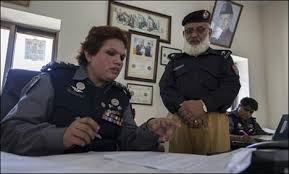
ABBOTTABAD, Oct 20: When Shazadi Gillani, the highest ranking female police officer in Pakistan’s most conservative province, wanted to join the force she had to defy her father, forego marriage and pay for her own basic training.
During the next 19 years, Inspector Gillani and her faithful sidekick Rizwana Zafar, brought up as a boy after becoming her frustrated father’s ninth daughter, have battled bandits, earthquakes and militants.
The Taliban are so pervasive in Gillani’s northern Khyber Pakhunkhwa province that she wears a burqa, a head-to-toe robe with a small mesh window for the eyes, when she travels.
Zafar dons a fake moustache to escort her.
But the women’s biggest challenge is helping new female police recruits.
Women make up just 560 of the province’s 60,000-strong force.
Police chiefs hope to double that within a year, but tough working conditions make recruitment hard.
There have been small victories.
Germany funded female dormitories at three training colleges.
Women recruits no longer wait years for basic training.
This summer, the province opened women’s complaint desks in 60 male-run police stations.
Many Pakistani women face horrifying violence and officials hope more abused women will report attacks. Tradition forbids them from speaking to male officers.
The province opened two women-only police stations in 1994.
But they have long been starved of resources and responsibility.
“We are fighting a war in the workplace,” said Zafar, whose uniform sports a karate patch. “We are supporting our juniors. There was no one to support us.”
From schoolgirls to cops
As a schoolgirl, Gillani wanted to join the army like her father. They were not recruiting, so she proposed the police instead. Her father and seven brothers were horrified.
“They said police disrespected women,” she said, auburn hair peeping out from her cap. “I had a lot of opposition.”
After a week of refusing to eat, and lobbying by her college lecturer mother, Gillani’s father gave in. He had three conditions: Be brave. Marry your job. Bring a friend.
So Gillani recruited her school friend Zafar.
Zafar cut her hair short and dressed like a boy. She taught herself to ride motorbikes, use computers and fix engines. She is Gillani’s bodyguard, assistant and friend.
“I don’t cook. I don’t have a dress. I’m not scared of anyone except God,” Zafar said. “We protect each other, we guard each other. When one is sleeping, the other is awake.”
When a colleague tried to force his way into their tent after an earthquake levelled their town, Zafar and Gillani fought him off together.
Women police were not respected when Gillani joined, but the military was.
Her army major father shoehorned them into courses and footed the bill.
Gillani’s training cost $2,000.
The money was returned eight years later.
Not everyone had a powerful father.
Rozia Altaf joined 16 years ago and waited six years and submitted more than 50 applications to get her basic training.
Now head of the women-only station in the provincial capital of Peshawar, she says things have changed, a little.
“We were neglected,” she said, waving a dismissive hand. “But now I make sure my junior officers get training and promotions on time.”
The Peshawar women-only station gets about 50 complaints a year, far less than a male-run station.
The last crime reported at the Abbottabad women-only station was in 2005.
Station head Samina Zafar sits at a bare desk in an empty room lit by a single naked bulb.
“We are not given good facilities,” she said. “I want this place to be like a man’s police station.”
Attackers rarely prosecuted
Women do prefer to confide in female officers, says professor Mangai Natarajan, who studied women police stations.
She says domestic violence accounted for two-thirds of cases reported to women’s stations in India’s Tamil Nadu state.
Police mediation reduced violence for half the complainants.
No Pakistani data exists.
The women’s desks in Khyber Pakhtunkhwa receive a complaint every few days, mostly domestic violence.
The attacker is usually simply rebuked. Victims fear a formal case will bring further violence.
But some policemen still say no woman willing to join the police is worth having.
“Women who join the force don’t care for their reputations or have nowhere else to go,” said one senior officer.
Gillani and Zafar are infuriated by such talk.
“If people see women police doing their jobs well, they will change their minds,” said Gillani, supervising the fingerprinting of a tearful accused kidnapper.
While she must wear a burqa to head home, she refuses to do so in the station.
“If we are doing the job of a man, why should we not show our faces?” she asked. “Change is a challenge for all of society, not just police.”