KARACHI, Aug 20: The former Sindh Assembly lawmaker, Raheem Baksh Jamali, who was shot and injured in a mosque in Shaheed Benazirabad (formerly Nawabshah) on Sunday, succumbed to his wounds on Monday in a Karachi hospital, Geo News reported.
Reportedly, unknown gunmen attacked a mosque-bound Jamlai, who was observing Itikaf – an Islamic practice consisting of a period of retreat in a mosque during the month of Ramadan, especially the last ten days.
According to reports, the attackers, four in number, who knew exactly where to find him, got him in the main mosque in Cooperative Housing Society in Shaheed Benazirabad at 5:30 AM in the morning.
Jamali was shot and left for dead but the doctors in a local hospital where he was rushed to saved him form dying immediately before advising he be shifted to Karachi for further treatment.
Bullets had damaged his vital organs including pancreas, stomach and a kidney, which led to his death.
He was elected member Sindh Assembly in 1988 as a Pakistan Peoples Party candidate.
The alarming decline in a critically endangered species of vulture in Pakistan appears to have been halted, according to surveys of the birds. They indicate the population of the long-billed vulture (Gyps indicus) is stabilising.
The species had declined rapidly in the late 1990s because of the deadly effect of the cattle drug diclofenac. The birds died after eating carcasses contaminated with the drug.
Now fieldwork carried out in the Nagarparkar desert in Sindh, south-east Pakistan, by The Peregrine Fund, has shown that the population of the long-billed vultures has stablised over the past four breeding seasons with no obvious signs of decline. The 2006 annual report by the US-based TPF had reported 103 occupied long-billed nests, down from 290 in March 2003. WWF-Pakistan verified the same. In 2010/11 it counted 172 long-billed vultures in the same area.
TPF’s Munir Virani, now working as an ornithologist for the National Museum of Kenya, says banning diclofenac and increased awareness of the role of vultures in the ecosystem has proved effective.
Diclofenac was banned in 2006 and replaced by Meloxicam. However, the form of diclofenac given to human patients is still available and is sometimes given to animals.
Meanwhile, Pakistan’s wild life authorities haven’t been able to reverse the decline in the population of the white-backed vultures (Gyps bengalensis).
In 2007, WWF-Pakistan had set up Vulture Conservation Centre in Changa Manga forest to retain and increase the population of white backs. About 22 birds from the wild were put in centre. However, the aviary has still not succeeded in breeding any from its stock. Last year a few eggs laid turned out to be infertile. Authorities are hoping the October egg-laying season this year would be different.
The forest, 50 miles southwest of Lahore, in Punjab, was once a stronghold of these birds with as many as “1400 active nests till the late 1990s” said Uzma Khan, project coordinator with the WWF.
Information gathered from 22 different sites (which had major colonies of white-backs till 2000), by the WWF in 2006 revealed only about 220 white-backed vultures remained in the Punjab. Today, Khan estimates there are not more than 100.
Early this year, the WWF also set up a 62-mile diameter vulture safe zone in the Nagarparkar desert. “The aim is to provide drug free food to the vultures close to their breeding areas,” said Uzma. It is also running an awareness programme for the local population and veterinarians informing them not to dump infected carcasses in the open and promoting the use Meloxicam.
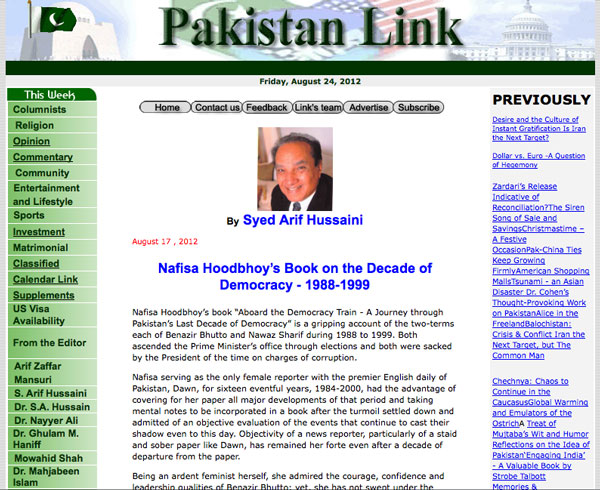
Nafisa Hoodbhoy’s book “Aboard the Democracy Train – A Journey through Pakistan’s Last Decade of Democracy” is a gripping account of the two-terms each of Benazir Bhutto and Nawaz Sharif during 1988 to 1999. Both ascended the Prime Minister’s office through elections and both were sacked by the President of the time on charges of corruption.
Nafisa serving as the only female reporter with the premier English daily of Pakistan, Dawn, for sixteen eventful years, 1984-2000, had the advantage of covering for her paper all major developments of that period and taking mental notes to be incorporated in a book after the turmoil settled down and admitted of an objective evaluation of the events that continue to cast their shadow even to this day. Objectivity of a news reporter, particularly of a staid and sober paper like Dawn, has remained her forte even after a decade of departure from the paper.
Being an ardent feminist herself, she admired the courage, confidence and leadership qualities of Benazir Bhutto; yet, she has not swept under the carpet Benazir’s arrogance, obstinacy and several other weaknesses. Nawaz Sharif has received scant attention of Nafisa despite the fact that he was one of the two PMs who ruled during the period covered by her. One may regard the book as a narrative of Benazir’s struggle to nurture the seedling of democracy she had planted in the country.
The author has revealed her unique experiences while covering the major shifts on the political landscape and her interest in uncovering the elements behind the ethnic violence in Karachi, the city of her birth, the gradual usurpation of women’s basic rights, freedom of the media, and the unfortunate travel of the society from a pluralistic and tolerant group to an ideologically driven, radical community intolerant of any change or progress. It has thus become a static, stagnant community.
By any measure, Nafisa’s book is a valuable addition to the existing literature on Pakistan. It is not a work of scholarship, like the books of Ayesha Jalal, but it is a worthwhile reference book on the events of the crucial period covered by it. Its outstanding feature is its frontline account by a person known for her objectivity in reporting. Her account is racy, piquant and riveting. The reader finds himself disinclined to put the book down till he has finished it. Being a repertoire of anecdotes and quotable quotes, it holds the attention of the reader till the very end – like a work of fiction.
Nafisa’s investigative reports on the notorious Sindh Chief Minister, Jam Sadiq Ali and the hordes of dacoits he patronized make interesting reading.
Nafisa is the younger sister of Dr. Pervez Hoodbhoy, the famous nuclear scientist who teaches at the Lahore University of Management Sciences (LUMS) and is known for his bold and forthright views often expressed through articles in leading Pakistani papers. She was born in an eminent Ismaili family of Karachi and after schooling at premier educational institutions of Pakistan, reached the US and got her master’s degree in history at an American university. On return to Karachi, she joined the widely read and prestigious English daily, Dawn, and served it as a reporter for 16 years. She is married and has lived in the US since 2,000. Aboard the Democracy Train is her first book in which she has tried to provide an insider view of the complex history and politics of her homeland. Based in the US after 2,000, she has used her vintage point to focus on American involvement in Afghanistan, its impact on Pakistan and the unique features of a war that seems to have no winners.
In her Introduction to the book, she has given highlights of her personal and family life in Karachi and the impact of the Western education on her thought process. “While the public space for women in Pakistan had shrunk, I had returned from the US with a greater taste for freedom.”
She has also mentioned how the coming into existence of Pakistan had brought waves after waves of Indian Muslim migrants to Karachi changing permanently the socio-cultural complexion of the sleepy town, turning it into a metropolis and the center of the commercial hustle and bustle of the newly formed state.
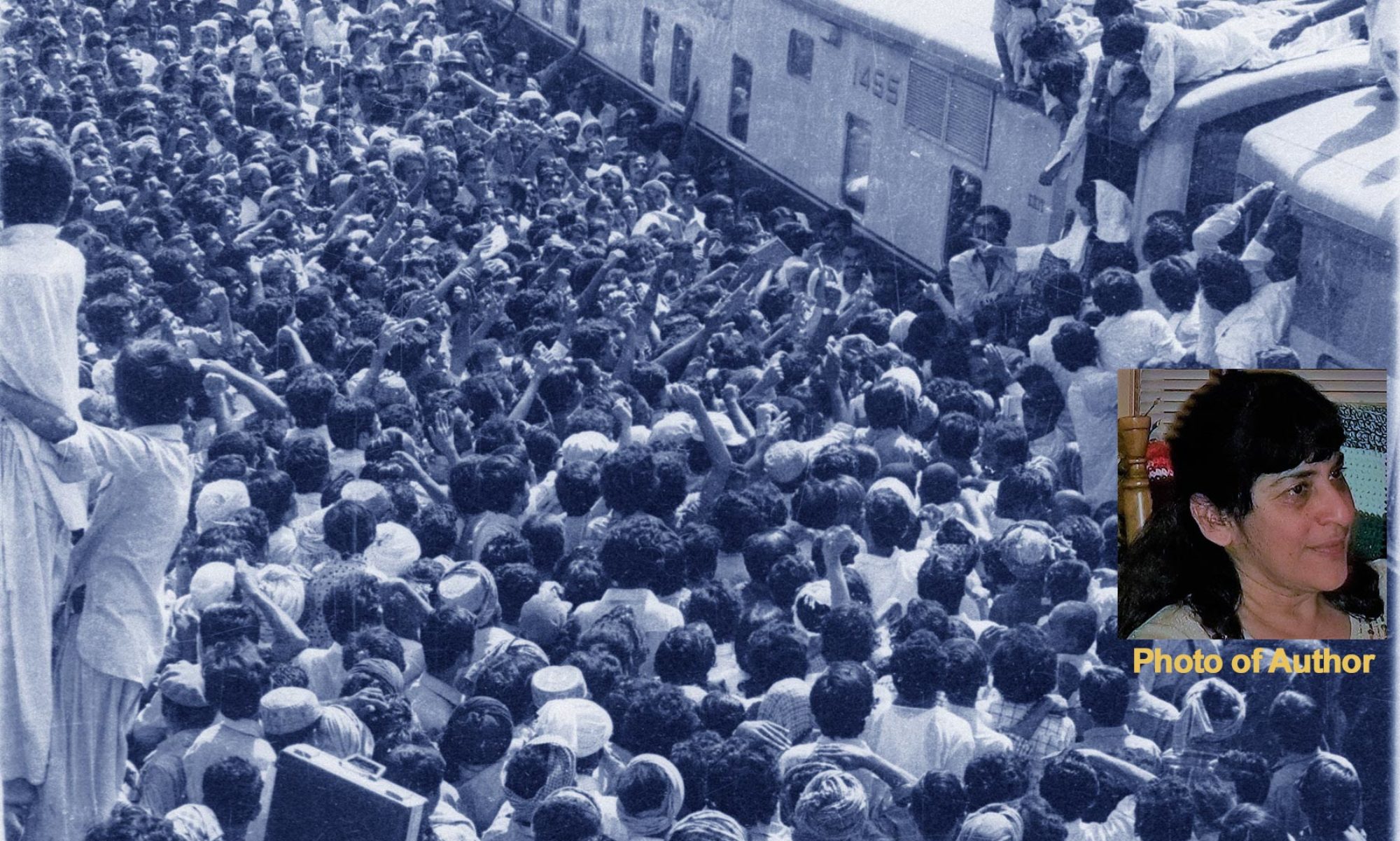
Nafisa’s distaste for military rule became more intense with Gen. Zia sending Bhutto to the gallows in a controversial case. And, her admiration for Benazir increased in a similar proportion once she wiped her tears over the “judicial murder” of her father and donned the mantel of a political gladiator to wrestle against the military might. The more her success in that direction, the more became the admiration of Nafisa for her. Her book thus strikes as a combination of the history of the tumultuous decade and an account of Benazir’s Herculean success in gaining access to power. “Seeing my enthusiasm for a woman Prime Minister, the editor of the newspaper bypassed senior male reporters and nominated me, the only female reporter of Dawn, to cover Benazir Bhutto.” She had thus to travel with Benazir on the Democracy Train through the desert of Sindh and witness the unprecedented welcome accorded to her by villagers who had walked for miles on foot to get a glimpse of the courageous daughter of their great leader Zulfikar Ali Bhutto.
During the rule of Jam Sadiq Ali, Chief Minister, Sindh was terrorized by gangs of dacoits said to be under the patronage of the Chief Minister. Nafisa, an unusually bold person, offered to do a story about them. Her visit to Matiari brought her in contact with people affected by Mohib Shidi in Matiari. She exposed the nexus between crime and politics in the province. The big landlords, Pir Pagara among them, were behind the dacoits while the small landowners, the main supporters of PPP, were punished in several ways for their support of PPP.
Covering the ethnic violence that erupted in Karachi in Aug-Sept, 1988, she discovered that the non-party election of Zia were at the root of the turmoil, since ethnicity became the binding factor in the absence of party affiliation. The MQM came into existence in 1985 shortly after Zia’s non-party elections.
She has given a vivid account of the threat of an attack on her by knife-wielding young men on September 23, 1991, within a day or so of the attack on Kamran Khan of the News, Karachi. That did in no way diminish her zeal to personally cover all such violent incidents and the mobilization of media protests against them.
A good portion of the book is devoted to the on-going struggle of enlightened women of Pakistan for their inalienable rights to freedoms denied to them on one pretext or another.
Nafisa Hoodbhoy has indeed produced a highly informative and readable book for Pakistanis at home and abroad.
ISLAMABAD, Aug 16 — Pakistani Taliban militants pulled 22 Shiites off buses and gunned them down in a remote northern mountain pass on Thursday, in the latest iteration of a pattern of attacks targeting religious minorities.
In the remote district of Mansehra, at least a dozen militants dressed in military fatigues stopped three buses carrying passengers on a rugged road from Rawalpindi to Astore. The militants checked the identification papers of passengers, singled out the Shiites and then shot them dead at point-blank range, police officials said.
The victims were mostly young men returning to their villages for Id al-Fitr, the Islamic festival that marks the end of Ramadan.
“The area is very remote and desolate,” said Rina Saeed Khan, an environmental journalist who traveled through the same route back to Islamabad on Wednesday. “The road is an alternate to the Karakoram Highway,” she said, referring to a famed road built by Chinese engineers.
The Babusar Top, where the killings took place, lies two hours from Astore. “There is no cellphone coverage, and you see no villages during the four-hour drive on a dirt road,” Ms. Khan said.
The episode on Thursday was similar to an attack in February in which 18 Shiites were killed after a bus was ambushed on the Karakoram Highway in the mountainous Kohistan district of Khyber-Pakhtunkhwa Province. Ms. Khan said that after the February attack, travelers began using this alternate route in Kaghan Valley, which was still considered safe despite its harsh terrain. “Obviously, militants kept track of it, and they knew that people were returning to their homes for Id al-Fitr,” she said.
The Darra Adam Khel faction of the Pakistan Taliban claimed responsibility for the attack on the Shiites, Reuters reported. “We have targeted them because they are enemies of Sunnis and conspire against us,” Mohammed Afridi, a spokesman for the faction, was reported as saying in a telephone interview. “We will continue such attacks in the future.”
In recent months, attacks on Pakistani Shiites have increased, particularly in northern regions. Analysts have increasingly criticized the government, saying it has allowed itself to be distracted from protecting the country’s religious minorities. The government is embroiled in political turmoil, with an increasingly assertive Supreme Court that has singled out senior officials.
Ms. Khan, the journalist, said that she found a lot of anger and resentment among the locals during her visit to several northern towns.
“People are very upset,” she said. “They are asking, ‘Where is the government? Where is the military?’ ”
“Locals say Sunnis and Shiites used to live in harmony 10 years ago,” she said. “Life is too tough there, and Shiites and Sunnis used to cooperate. Locals say it’s the outsiders who are doing the killings.”
The Pakistani military said Thursday that it had opened an investigation into a predawn attack by Taliban militants on the Kamra air force base in Punjab. There has been speculation that the military is planning an offensive in North Waziristan, a haven for the Taliban and operatives of Al Qaeda, and some analysts said that the attack could have been meant as a warning against military action.
“The Taliban are telling Pakistan’s leadership, ‘If you hit us here, we’ll hit you,’ ” said Arif Rafiq, an adjunct scholar at the Middle East Institute in Washington.
The Indian edition of ‘Aboard the Democracy Train,’ will be released in India in September 2012, courtesy Anthem Press.
Now, India may quench its curiosity about common heritage neighbor – Pakistan – carved out of its territory 65 years ago by the British.
The book has been written by the only woman reporter for the English language Dawn newspaper in the 1980s, at a time when the nation was under Gen. Zia ul Haq’s strict Islamic military rule.
It is a personal narrative of how the post partition exodus of Hindus, Christians, Zoroastrians and Jews had already begun to change the multi ethnic, multi religious fabric of the country.
The mass migration of Muslims from India into Pakistan is woven into the author’s journalistic experiences of how this transformed the ethnic and national politics of the country.
It is a story of Pakistan’s faltering democracy, with a front seat view of the rise and fall of the nation’s only woman prime minister – Benazir Bhutto.
For the contemporary Indian reader, the book gives insight into why the 11-year-old US invasion of Afghanistan appears to have driven war ravaged Pakistan to relax its anti India stance… leading to an ice thaw in the sub-continent.
Without glossing over Pakistan’s problems, the author has given a human face to the country – with the prospect of promoting better understanding between the people of Pakistan and India.
Aboard the Democracy Train: A Journey through Pakistan’s Last Decade of Democracy
By Nafisa Hoodbhoy
Available in India in September 2012
Imprint: Anthem Press
ISBN 9789380601991
September 2012 | 268 Pages | 216 x 140mm / 8.5 x 5.5 | 16+ images and maps
Price: Rs 495.00
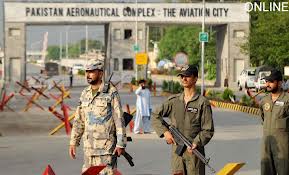
Minhas air base in Kamra (Credit: onlinenews.com.pk)
Islamabad, Aug 16: Militants targeted a major military air base some 30 miles northwest of Islamabad early Thursday morning, giving momentum within Pakistan to the prospect of a long-controversial military mission against elements in restive North Waziristan.
The battle between the military and the militants lasted for more than five hours and left nine militants and one soldier dead. Tehrik-e-Taliban Pakistan (TTP), the North Waziristan-based group, claimed responsibility for the attack.
Minhas air base at Kamra includes an aeronautical complex that produces and develops air and ground weapons. But the attack has drawn particular concern because the base has been widely reported to be equipped with nuclear weapons, though the military denies that.
Analysts in Pakistan are calling today’s attack the first of many to come in response to the reports of an operation by the Pakistani military in North Waziristan.
“The Kamra attack is an eye-opener that [the Taliban] can hit us anywhere, anytime, and the speech by the Army chief earlier had the same strategic message in it – that we need to unite against such elements and drive them out,” says a senior military official, referencing a televised speech by Gen. Ashfaq Parvez Kayani on the operation.
The TTP has strengthened itself in North Waziristan in the past five years. The area is also reported to be home to the Haqqani network, which the US government blames for orchestrating attacks inside Afghanistan.
“Thursday’s attack epitomizes the blowback of a military operation in North Waziristan. And the worrying sign is the capacity of these terrorists to attack. If still nothing is done against them, they will only grow stronger. So it reinforces what we have been hearing about, a need of an operation in North Waziristan, where these elements operate freely,” says Cyril Almeida, a columnist who writes for the largest English daily paper in Pakistan.
Defense Secretary Leon Panetta said Monday that General Kayani told US military officials that Pakistan planed to launch operations against Taliban militants in North Waziristan. Secretary Panetta acknowledged that the combat operation might not include offensives directly attacking the Haqqani network.
“We realize that the most difficult task for any Army is to fight against its own people. But this happens as a last resort. Our real objective is to restore peace in these areas so that people can lead normal lives,” the Pakistani Army chief emphasized in a speech on August 14. He then added that “no state can afford a parallel system or a militant force.”
Kayani attempted to address the popular sentiment among Pakistanis that the military was bending to America’s will. “The fight against extremism and terrorism is our own war, and we are right in fighting it,” he said in a televised speech.
However, many are skeptical about whether the operation will be effective if it does not attack the Haqqani network. “Our military is interested in acting against Pakistani-centric militants only, to stop attacks inside Pakistan like the one today,” adds Mr. Almeida.
Locals from North Waziristan also point out flaws in an operation in North Waziristan. “They have been talking about a possibility of an operation for the past three years. Do you think that the Haqqani network is going to sit around and wait?” says Safdar Dawar, president of the Tribal Union of Journalists.
According to intelligence officials who have operated in the tribal belt, the Haqqani network has more than a dozen places in Afghanistan to operate from.
“Other elements operating in North Waziristan have no place to go and can be targeted as they have been cornered into this area,” says Brig. Asad Munir, who belongs to the tribal belt and retired from military a few years ago.
Munir, who has served in key intelligence positions in the tribal belt, says the military operation will improve relations between Pakistan and America, but not for that long. And given the terrain between Pakistan and Afghanistan, security experts say it is almost impossible to seal this border.
“North Waziristan has been the most strenuous issue between the two countries, and the US believes if Pakistan acts in this area, the insurgency in Afghanistan will be controlled. But without border control from both sides, the operation may not be so successful,” the brigadier adds.
This is not the first time a military base in Pakistan has been attacked.
In 2009, the headquarters of the military came under a siege that lasted for 20 hours. And last year, an attack at a naval base in the port city of Karachi lasted for almost 15 hours.
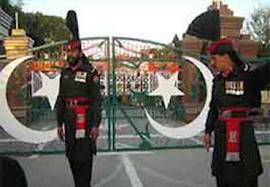
Indo Pak border at Wagah (Credit: exclusivenews.in)
NEW DELHI, Aug 15 — More than 250 Pakistani Hindus have arrived in India over the past two weeks bearing tales of religious persecution, according to Indian border officials, fueling perceptions of growing discrimination against minorities in Pakistan.
The Pakistani Hindus, who came by road and rail with valid pilgrimage visas from Sindh, Baluchistan and Punjab provinces, have reported incidents of kidnapping, looting and forced religious conversion, the officials said.
Pakistan has 2.7 million Hindus in a majority-Muslim population of 180 million. They represent those who chose to stay after the sectarian blood bath that accompanied the 1947 partition of the subcontinent at the end of British rule.
The Pakistani Hindus’ allegations of persecution and expressed desire to stay in India pose a diplomatic quandary for the New Delhi government: Should India welcome them and open the floodgates? Or should it stay aloof, treating this as an internal Pakistani matter — and shielding itself from allegations of Muslim mistreatment in India.
“As far as we know, the families have come on a pilgrimage. So far, no family that is based in Pakistan has approached us for asylum,” Preneet Kaur, India’s deputy foreign minister, told the Headlines Today news channel in New Delhi on Tuesday.
Kaur noted that India and Pakistan had agreed in 1972 not to interfere in each other’s internal affairs. But she added, “However, we do request Pakistan, on humanitarian grounds, to look after the interests of minorities.”
India does not have a national refugee law; it deals with arrivals from neighboring countries on an ad hoc basis. Thousands of Pakistani Hindus who have come here in the past two decades have still not received Indian citizenship.
But the country may be unable to maintain that detachment for long, in view of the steady stream of Pakistani Hindus who say they are being harassed by new Muslim fundamentalist groups in Pakistan’s Sindh province.
“They barge into our homes in broad daylight, snatch jewelry from the women, money from our shops, and kidnap Hindu girls and convert them to Islam,” Mukesh Kumar Ahuja, a young Hindu from Pakistan, told Indian reporters in the northern state of Punjab. “We want India to let us stay and ease visa rules for our relatives who are still in Pakistan.”
Tejinder Goggi, a hotel owner and peace activist in Punjab, said he saw at least 100 Pakistani Hindus arrive last week with bedding, pots and pans stuffed into jute sacks and cardboard cartons.
“They are worried about their daughters because 20 girls were kidnapped and married to Muslim boys in the past year,” Goggi said.
An immigration officer said that only half of those who have come to India in the past year have returned to Pakistan.
“They come for pilgrimage on a 30-day visa, and they keep extending it,” the officer said, speaking on the condition of anonymity to discuss the politically sensitive issue. “They produce medical certificates to say they are ill, or report a marriage or death in the family.”
On Monday, several Indian lawmakers raised the issue in Parliament and urged the government to take it up with Pakistan.
“If persecuted Hindus don’t come to India, where will they go?” asked Prakash Javadekar, spokesman for the Hindu nationalist opposition Bharatiya Janata Party.
Hindu protests have been growing in Pakistan. Last week, Pakistani President Asif Ali Zardari set up a three-member panel to address the Hindus’ grievances, and Interior Minister Rehman Malik has promised to examine the situation. “The government will first look into the matter and then allow them to leave Pakistan,” Malik said of those seeking visas. He did, however, question why India had given such a large number of visas to the Hindus.
Not all Pakistani Hindus want to leave. “I was born in Pakistan,” Kanhaiya Nagpal, a retired professor, said in a telephone interview from Karachi. “I like to live here. This is my country.”
Nagpal said he had participated in a demonstration organized by several Hindu groups Monday to protest harassment. But he added: “The solution is not to run away. If the rule of law is followed in Pakistan, then everything will be all right.”
Nisar Mehdi in Karachi contributed to this report.
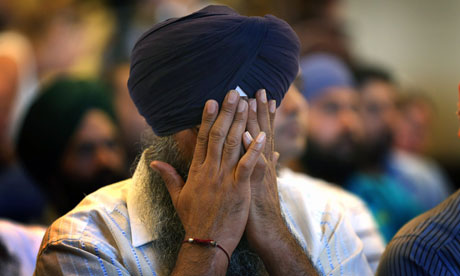
New York, Aug 6: Sikhs in New York and across the country on Monday mourned the deaths in the shooting rampage at one of their temples outside Milwaukee, and some said the killings revived bitter memories of the period just after the Sept. 11 attacks when their distinctive turbans and beards seemed to trigger harassment and violence by people who wrongly assumed that they were militant Muslims.
Nancy Powell, the American ambassador to India, where the vast majority of the world’s 25 million Sikhs live, visited a temple in New Delhi and expressed horror and solidarity. Elsewhere, Sikhs reflected on the uncomfortable fact that because their appearance sets them apart, they are sometimes mistakenly singled out as targets. Observant Sikh men often wear turbans and do not cut their hair or shave their beards.
“I have been called Osama bin Laden walking down the street, because in the popular imagination a turban is associated with bin Laden and Al Qaeda,” said Prabhjot Singh, who works in the high-tech industry near San Francisco. “But 99 percent of the people who wear turbans in the United States are Sikhs, so they face a disproportionate number of acts of discrimination.”
In collecting data about post-Sept. 11 hate crimes, the Justice Department does not draw a distinction between Sikhs and Muslims, an entirely separate religion. A report from October says, “In the first six years after 9/11, the department investigated more than 800 incidents involving violence, threats, vandalism and arson against persons perceived to be Muslim or Sikh, or of Arab, Middle Eastern or South Asian origin.”
Sikhism, a monotheistic faith that emerged from the Punjab region of India about 500 years ago, is one of the world’s youngest major religions. It emphasizes self-reliance and individual responsibility and draws its tenets from the words of 10 gurus. The last guru, named Singh, as are many Sikhs today, died in 1708.
More than many other religious practitioners, Sikh men wear a uniform: unshorn hair and a small comb covered by a turban; a steel bracelet; and, for a certain group of initiates, a sword known as a kirpan.
The religion is known for promoting women to positions of power, and has championed social justice.
British colonialists in India tended to favor the Sikhs, viewing them as more Western than the Hindus and Muslims, who made up the vast majority of the population there.
“Historically in India there has been tension between the Sikhs and the ruling elite, whether Muslim or Hindu,” said Harpreet Singh, a Sikh who is finishing a doctorate in South Asian religions at Harvard and helped found the Sikh Coalition in 2001 to help Sikhs stand up for their rights. “The gurus didn’t want to pay the non-Muslim tax. Sikhs grew in numbers and became a political force.”
The prime minister of India, Manmohan Singh, is a Sikh from Punjab, and on Monday he expressed sorrow and condemnation for the killings of six people at a Wisconsin temple on Sunday by a man who appeared to have ties to a white supremacist movement. The gunman was killed by the police.
Other recent acts of violence against Sikhs — the defacing in February of a temple in Michigan, the beating of a cabdriver in California in late 2010 — involved mistaken references to Al Qaeda or militant Islam. The first post-Sept. 11 killing classified as a hate crime took place in Arizona, where a Sikh was gunned down by a man who is now serving a life sentence.
In the Jackson Heights section of Queens on Monday, Sikh men in russet, black and peach-colored turbans swept leaves from the fronts of stores selling saris and gold jewelry, and offered discounts to passers-by. Many talked about the Wisconsin rampage.
“Very sad. I was shocked,” said Harbinder Singh, who works at a grocery. “We have not done any harm to anyone. Why are we targeted? Maybe some other religions have done harm. They think that we are the same. Maybe that’s the reason.”
Inder Mohan Singh, 73, who owns a Western Union location, lives in Woodbury on Long Island and has been in the United States for 40 years.
“I’m just an ordinary man, just like other people, just like other Americans,” he said. “I should cut my hair? No one is going to change. I’m wearing the turban. I have to do it. I don’t want to say, ‘No, now I’m not going to wear my turban because of this man.’ ”
He added: “This is our religion. We cannot leave our religion for one man.”
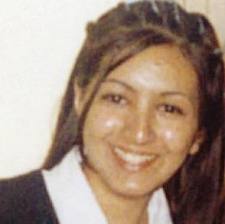
ictim of Honor Killing in London (Credit: guardian.co.uk)
LONDON, Aug 3 : A Pakistani-born couple were jailed for life by a British court Friday for murdering their “westernised” teenage daughter in an apparent honour killing.
Iftikhar Ahmed, 52, and his wife Farzana, 49, were told at Chester Crown Court in Cheshire, north-west England, that they would serve a minimum of 25 years each after suffocating their 17-year-old daughter Shafilea in 2003.
In a high-profile case, Shafilea’s sister Alesha had told the jury that her mother had said, “Just finish it here,” as they forced a plastic bag into Shafilea’s mouth in front of their other children.
Prosecutors said the Ahmeds, who lived in the town of Warrington, near Chester, killed their daughter because they felt her “western” habits such as wearing make-up and talking to boys brought shame on the family.
Passing sentence, judge Roderick Evans told the pair: “Your concern about being shamed in your community was greater than the love of your child.
“Shafilea was a determined, able and ambitious girl who wanted to live a life which was normal in the country and in the town in which you had chosen to live,” he said.
“She was being squeezed between two cultures — the culture and way of life that she saw around her and wanted to embrace, and the culture and way of life you wanted to impose on her.”
Iftikhar Ahmed stood impassively as the sentence was passed, while his wife sobbed.
The jury had unanimously found them guilty earlier on Friday after 11 hours of deliberation.
Shafilea had disappeared in September 2003, and her body was found five months later on a riverbank in Cumbria, north-west England.
The court heard that she had been drugged and taken to Pakistan in February 2003 to be forced into a marriage with a much older man.
She was so terrified of the marriage that she drank bleach, and was taken back to Britain where she spent eight weeks in hospital.
Shortly before she was taken to Pakistan, she had run away from home and asked the local authority to provide her with emergency accommodation, the court heard.
In her letter to the authorities, she said she had suffered from regular domestic violence since she was 15.
“One parent would hold me whilst the other hit me,” she wrote. “I was prevented from attending college and my part-time job.”
Her main reason for running away was that her parents “were going to send me to Pakistan and get me married to someone,” she added.
Her parents were arrested in December 2003, three months after the killing, on suspicion of kidnapping Shafilea — but they were released without charge after prosecutors found there was insufficient evidence against them.
They were re-arrested in 2010 after Alesha was caught organising an armed robbery at the family’s own home, and told police she had witnessed her sister’s murder.
Iftikhar Ahmed, a taxi driver, denied the murder and said Shafilea had run away. His wife also denied the killing, but told the jury she saw her husband beating Shafilea and believed that he killed her.
Another of their daughters, Mevish, supported their defence.
But in a remarkable twist after the trial began, one of Mevish’s friends produced writings by her that appeared to corroborate Alesha’s story.
Mevish Ahmed insisted the writings were a piece of drug-induced “fiction” that Alesha had used to base her story on.
Prosecutor Paul Whittaker paid tribute to Alesha Ahmed for having the courage to give evidence against her parents, and urged victims of honour-based violence to come forward.
“The word ‘shame’ has been heard many times during the course of this trial, but the shame is not on Shafilea, it is on her parents,” he said. (AFP)
Karachi, Aug 3 – Imagine a situation in which 4 candidates, A,B,C and D contest elections from a constituency. There are 100 voters in that constituency and the turnout is 40 percent. A,B,C and D receive 6, 9, 12 and 13 votes respectively, and thus D wins the election. If this situation prevails at most other constituencies, we will have a government with absolute majority although 68 percent of those who voted and 87 % of the total eligible voters never voted for that government. This may be summed up as madness bordering on tyranny. Technically this is also referred to as democracy.
Now imagine another situation in which three candidates contest elections from a constituency. They submit their nomination papers and make the required declarations. All three possess fake degrees, hold dual nationalities, hide their assets and have defaulted on tax payment for past several years. They have also been regular “bhatta” collectors and engaged in ‘ephedrinal’ matters over a long period of time. What is the chance that the Election Commission will disqualify any of them from contesting the election and becoming our next Prime Minister. The answer is ‘Zero’. While this may sound utterly sinister, that is exactly how the system is designed to work.
If we tax our memories hard enough, we will recall that it was only four years ago that the Election Commission of Pakistan (ECP) conducted a fake exercise code named ‘elections’ using a fake list of 37.2 million fictitious voters. It then went on to multiply the scam by introducing some 300 parliamentarians who had cheated the system by acquiring fake degrees. Not satisfied with the level of spuriousness, the ECP also forgot the vital constitutional requirement of checking for dual nationality and thus pushed in another estimated 80-100 half foreigners as our law makers. Finally the ECP preferred to look the other way even when a parliamentarian broke away from police custody, was found using stolen visa card or declared a fake degree holder by the Supreme Court.
Will the next election replicate the ECP’s dismal performance of the past? Do we realise that we have the same infra structure, the same rules and the same bureaucratic mindset of the past. In the last elections the ECP came out with a brilliant gimmick. Enter your NIC, select the province and hit the ‘send’ button to search your voter ID. As there was no corrective mechanism beyond pressing the ‘send’ button, we ended up with a voter list of 37.2 million fake names. This time too, we are told to enter the NIC number, punch 8300 and send an SMS. One promptly receives a response which describes your electoral details. But how will an estimated 15 million dead punch their NIC cards and send SMSs from locations where (fortunately) the telecom industry has no access. What happens when the response indicates a wrong name or address. Exactly like the last time, the ECP has opted for a look-good process that neither corrects nor improves the current voter list.
The decisions relating to eligibility of those contesting elections ought to be based on scrutiny of facts. The ECP in this area is designed on the pattern of a glorified post office. It must limit itself to the business of collecting and filing nomination papers. It must not use eyes, ears or neurons of its own. It must wait for a political opponent or a party to challenge the information provided by a contestant. Once elected, it must wait for the Speaker to refer a case for disqualification. While the number of delinquents ran into hundreds, how many cases for disqualification were referred to the ECP. So unless the ECP has the courage and conscience to break away from its apathetic past and act proactively, it is likely to allow the same aberrations to reappear as our second generation of law breakers.
The Supreme Court has already declared that the First-Past-the-post electoral system violates the concept of majority rule, and has asked ECP to find ways to ensure true representation of the people. Despite having been specifically directed to do so, the ECP has taken no steps to move towards ‘proportionate’ or the ‘run-off’ system of representation. Pakistan ought to opt for a system of proportionate representation, if we wish to move away from the tyranny of a minority in the garb of a majority.
Will the ECP before receiving the nomination papers of a candidate also ask for the names of his / her party office bearers. Will the ECP check if they meet the qualification requirements for being elected as parliamentarians, as required by Section 5 of the Political Parties Order. Will the ECP also remember to ensure that the office bearers of a political party do not hold an elected public office, which is rather well defined at section 9 of the Political Parties Order. How come the ECP remained in deep slumber while this law was flouted over the past four years. If the new ECP setup can do just the few things mentioned in this article, Pakistan would get a fresh opportunity to build an equitable and accountable electoral system.

 The Indian edition of ‘Aboard the Democracy Train,’ will be released in India in September 2012, courtesy Anthem Press.