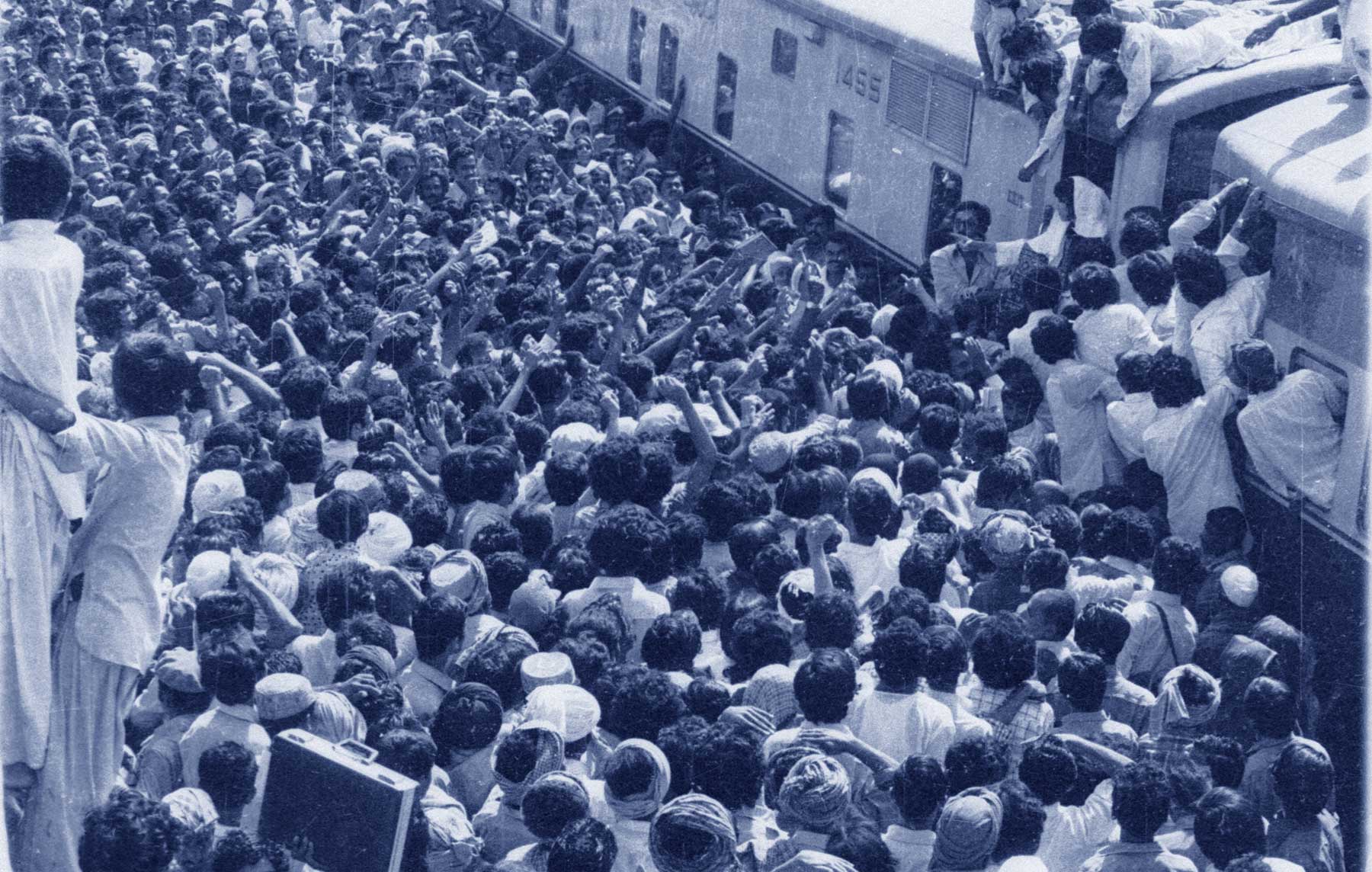
Hundreds of Copies of `Aboard the Democracy Train’ Sell Across Pakistan

The updated edition of Aboard the Democracy Train, Pakistan Tracks the Threat Within has sold hundreds of copies across Pakistan, with most of the sales having taken place in Karachi.

Published by Paramount Books, Karachi in 2016 in hard cover, the final edition brings the reader up to speed on the title originally published by Anthem Books, London in 2011.

The capture of Osama Bin Laden represented a turning point in US and Pakistan relations. Consequently, the author updated the book from her vantage point in Washington DC and had the final edition published in Pakistan.

In 2016, she launched the updated edition in Peshawar and Quetta – with the Peshawar University and Quetta Press Club events mostly focused on the attack on Army Public School and the Baloch insurgency.

Since then, the book has been purchased by schools, public libraries, military and business institutes, NGO centers and sold at book fairs and leading book stalls across the country.

The books have sold in Skardu, Bannu, Jhelum, Faisalabad, Lahore, Peshawar, Kohat, Quetta, Rawalpindi, Islamabad, Khairpur, Sukkur, Larkana, Hyderabad and Karachi.

They may be ordered online from the Liberty Book store (libertybooks.com), at the Paramount Books website (paramountbooks.com.pk) or from daraz.com.pk with cash to be paid on delivery.

Chinese workers thrash policemen in Khanewal

Chinese engineers and other staffers, engaged in the construction of M4 Motorway from Bahawalpur to Faisalabad, attacked policemen deployed for their security after the foreign workers were barred from leaving their camp’s premises without a security squad, DawnNewsTV reported on Wednesday.

Several mobile phone clips doing rounds on social media show Chinese nationals approaching the police officials in a provocative manner and attacking them. A video showed a Chinese national standing on the bonnet of a police van, another video showed several Chinese nationals trashing policemen and some local people in plain clothes.

According to police officials, Chinese engineers and other officials wanted to leave their camp in Khanewal and visit a “red-light” area on Tuesday night. They resorted to agitation when denied permission to leave the camp without being accompanied by security officials.

Later, the Chinese engineers also cut power supply to the police camp established within the main construction camp, the officials added.

On Wednesday morning, the Chinese workers stopped work on the project and abandoned heavy machinery and vehicles on various roads in the area. They also resorted to violence and attacked police in their camp.

Subsequently, the protesting Chinese engineers wrote a letter to Punjab Chief Minister Shahbaz Sharif, claiming that police officials refrained them from performing their duties and attacked them.

They also accused the security in-charge of attempting to hit the Chinese workers with his vehicle. Police officials, however, rejected the accusations and said they were fabricated.

Later in the day, Khanewal DPO Rizwan Omer Gondal held a meeting with the protesting Chinese workers following which they agreed to open the blocked roads.

Meanwhile, the police officials made it clear to the Chinese engineers that they will not be allowed to leave their camp without security arrangements.

This was not the first time when Chinese nationals in Pakistan attacked local police. In 2016, a clash occurred between the police and Chinese workers as the latter insisted on staying at a construction camp at night, but the former opposed the idea due to security reasons.

According to media reports, citing sources, some Chinese nationals associated with the Chinese army and trained in martial arts had attacked and injured police personnel deployed for their security.

However, the police had avoided taking any legal action against the Chinese to avert further conflict. In fact, the then CPO had suspended three SHOs and six other policemen for not restraining themselves from a clash.

https://www.dawn.com/news/1399531/chinese-workers-thrash-policemen-in-khanewal

The Taliban Have Gone High-Tech. That Poses a Dilemma for the U.S.

WASHINGTON — Once described as an ill-equipped band of insurgents, the Taliban are increasingly attacking security forces across Afghanistan using night-vision goggles and lasers that United States military officials said were either stolen from Afghan and international troops or bought on the black market.

The devices allow the Taliban to maneuver on forces under the cover of darkness as they track the whirling blades of coalition helicopters, the infrared lasers on American rifles, or even the bedtime movements of local police officers.

With this new battlefield visibility, the Taliban more than doubled nighttime attacks from 2014 to 2017, according to one United States military official who described internal Pentagon data on the condition of anonymity. The number of Afghans who were wounded or killed during nighttime attacks during that period nearly tripled.

That has forced American commanders to rethink the limited access they give Afghan security forces to the night-vision devices. Commanders now worry that denying the expensive equipment to those forces puts them at a technological disadvantage, with potentially lethal consequences.

For years, American commanders have been reluctant to give night-vision equipment to rank-and-file Afghan soldiers and police officers out of concern of widespread corruption among those forces.

The devices — headsets and infrared lasers — are usually given only to elite Afghan commandos and police special mission units, according to American military officials.

As some of this equipment falls into Taliban hands, the militants are joining a larger trend, said David W. Barno, a retired lieutenant general who led the war effort in Afghanistan from 2003 to 2005. Advanced equipment, such as drones and precision weapons, is being seized by other extremist groups in other global conflict zones, he said.

“It’s going to be a problem,” Mr. Barno said, “and it’s going to change how we operate.”

With the spread of the devices, infantry units on patrols have been told not to use certain marking devices that can be seen only by night-vision equipment. Helicopter crews have been made distinctly aware that their aircraft are no longer cloaked by darkness.

In one case last November, Taliban fighters wearing night-vision goggles attacked a police outpost in Farah Province, in western Afghanistan. By the time the predawn assault was over, eight Afghan officers lay dead in their beds, Haji Abdul Rahman Aka, the elder of the province’s Pule Regi area, said at the time. Only one Afghan officer survived.

The frequency and ferocity of the nighttime Taliban attacks are linked to attempts by Afghan forces, based in small checkpoints across the country, to hold territory that has been wrested away from the militants.

Previously unreported documents, obtained by The New York Times, underline concerns about the Taliban’s growing sophistication on the battlefield after 16 years of war — and American commanders’ efforts to stunt it.

The documents show that the American military has begun to send older models of night-vision hardware to regular Afghan Army units. Those headsets cost an estimated $3,000 each, officials said.

One of the first batches of night-vision equipment for conventional units in southern Afghanistan, part of a monthslong pilot program, was sent to the embattled 215th Corps in Helmand Province in the spring of 2016.

Only 161 of the 210 devices were returned, according to the military documents obtained by The Times, and the equipment was not effectively used, in part because the forces were not properly trained to use it.

Afghan troops said the missing devices were reported as “battle losses,” but could not support that claim with any proof or records to explain where or when they were left behind, according to the documents.

At the time, the commander of the 215th Corps was Maj. Gen. M. Moein Faqir. He was later arrested on sweeping corruption charges that included misuse of food money meant for his troops.

Last year, and with better results, night-vision equipment was sent to the 205th Corps, located around Kandahar, the military documents showed.

Five devices were lost between July and December, when the program ended, according to the documents. Over the summer and fall, the Afghan National Army suffered 15 percent fewer casualties around Kandahar than it had during the same period in 2016.

The documents credited the night-vision equipment for the marked reduction, concluding that the devices are “becoming an integral part of base defense plans.” The American military is now planning to equip the unit with roughly 2,500 night-vision goggles as part of what the documents described as a concept for a “permanent program.”

Despite those measured successes, it remains unclear if the American military will give the devices to the rest of the Afghan Army.

The American military headquarters in Kabul has said it equips only Special Operations units in the Afghan Army and police forces with night-vision technology.

Capt. Tom Gresback, a spokesman for United States forces in Afghanistan, declined to comment on the plans to distribute the devices to the Afghan National Army, as outlined in the military documents. He said American commanders would provide Afghan national defense and security forces “with the resources necessary to promote security throughout Afghanistan.”

But some American advisers closer to the ground fight are already trying to get the technology for their Afghan counterparts, according to a United States official. He said that would require a decision made through the leadership in Kabul and the Pentagon to allow American commanders to distribute the devices to even more Afghan security forces.

With the night-vision devices, Taliban fighters have been able to approach Afghan bases nearly undetected before attacking.

Initially, such ambushes were attributed to Taliban forces known as “Red Units” located in Afghanistan’s southern provinces. But over the last year, the night-vision devices have frequently turned up in the country’s north and east, according to two American military officials, signaling a widespread distribution into other groups of Taliban fighters.

Those officials said the Taliban were using both tightly controlled American-made devices and gear that is widely available for purchase. In some cases, American officials said, the equipment was left on the battlefield by United States or Afghan troops, including those who were killed in action.

In others, Afghan soldiers are believed to have sold the devices to the extremists.

That was disputed by Gen. Dawlat Waziri, who until recently served as spokesman for the Afghan Ministry of Defense. He said all night-vision equipment provided to Afghan troops by the American military had been “accounted for.”

“No case of night vision sold by our soldiers to the Taliban has been reported,” General Waziri said.

Zabihullah Mujahid, a spokesman for the Taliban, said fighters obtained night-vision devices after attacking Afghan bases or capturing members of the Afghan security forces.

Rank-and-file Afghan police officers are particularly under threat by increasing numbers of deadly nighttime attacks, said one of the American military officials. Those units are spread farther into sparsely populated areas across Afghanistan than are army soldiers.

Officers with the Afghan National Police, especially in the south, have been making desperate requests for the equipment for months, the official said. The police are part of the Ministry of Interior, which is suspected of rampant corruption.

In Helmand Province, Marine Corps advisers are helping a request by the 505th Zone of the Afghan National Police to receive night-vision devices, Col. C.J. Douglas, the head of the Marines’ police advising component there, said in an email.

It is unclear if the Afghan police unit will get them
Archives and Manuscripts at the Bodleian Library

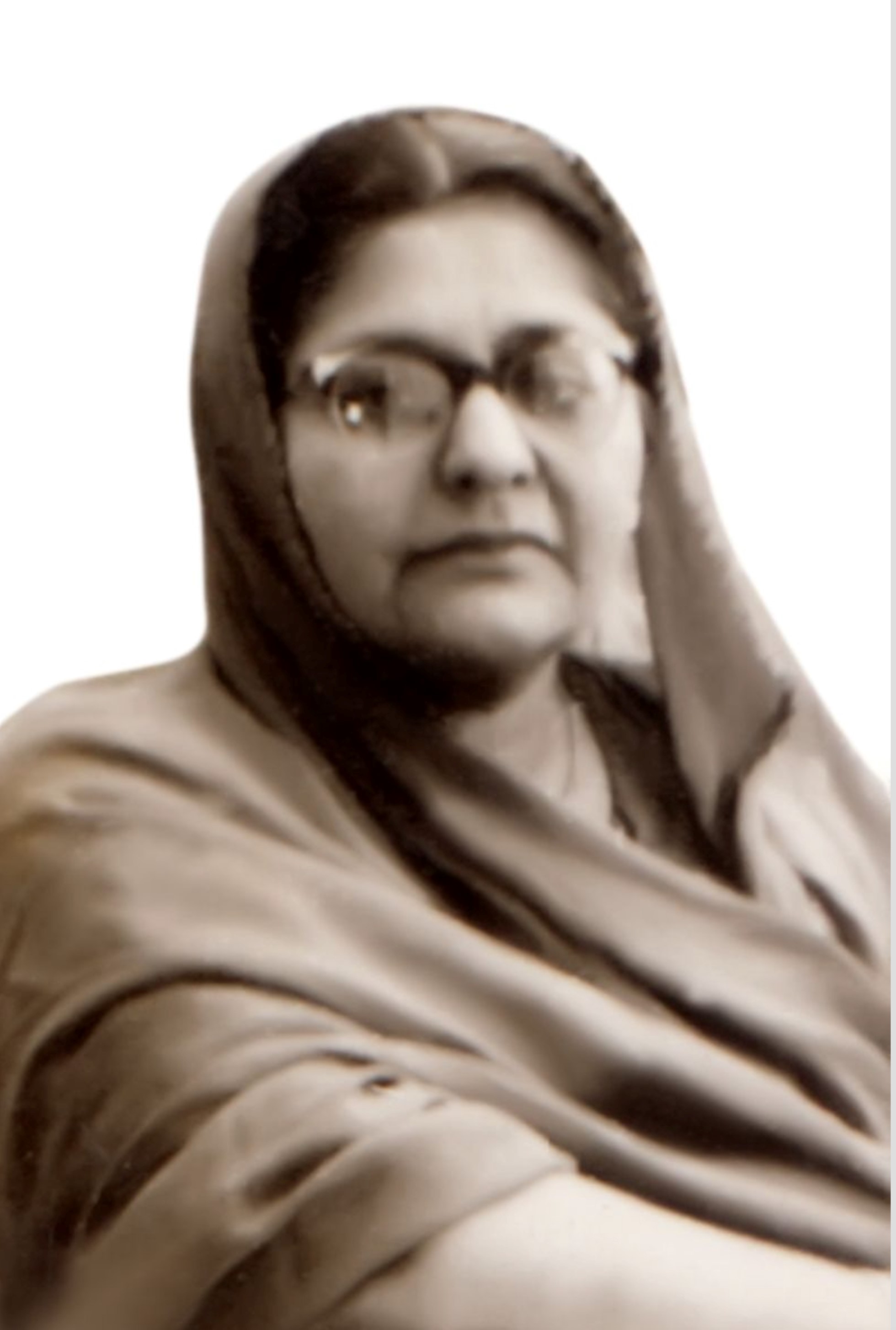
We have recently received the generous donation of an illustrated history of the Mirs of Sindh, given in memory of its author and illustrator Mrs. Amina G. Hyder Khaliqdina (1919 -1959).

Amina’s family have written an account of her remarkable story and kindly given permission for it to be posted here.

cof

Amina was born on 19th April 1919 in Hyderabad, Sindh (presently a Province of Pakistan) to a middle class educated family. Many male members of her family were well-educated, including her grandfather and uncles, and some of them were civil servants of the British government.

Amina was part of the Muslim Shia Ismaili Community, which had emphasised female education. However, in Sindh education opportunities were limited especially for women.

After losing the battle of Miani with the East India Company in 1843, the Emirate of Sindh lost its independent status and was included as a part of the Bombay Presidency. This was the punishment for Sindh confronting the East India Company and, consequently, for many years Sindh remained underdeveloped. Infant mortality was high. Amina herself was the only survivor from seven births. There were only a few educational institutions within Sindh and for higher education one had to correspond with Bombay University. This made it socioeconomically difficult, especially for women, to achieve higher education.

Within this environment Amina achieved matriculation from Bombay University – the first woman in the family – perhaps one of a very few in Hyderabad, Sindh.

cof

By 1936 Sindh had separated from the Bombay Presidency and with that a new chapter of development of Sindh began. Hyderabad again became a culturally bustling town. This was mainly due to Hindu Divans who worked on Plantations in the Caribbean and brought wealth to Sindh. They promoted art and culture. Yet female education was scarce especially for muslims.

Amina was appointed as head of Art section in Madras -Tul – Banat school. We know very little about Amina’s interest in Art and her degree/diploma related to this book due to her untimely death. According to Amina’s mother, she started the artwork in this book before she started her employment and carried on sketching long after her first two children were born. Considering the lack of resources libraries, etc., and limited access to Bombay University, her book is evidence of her perseverance. The book is written in English. It shows her competence in multifarious skills.

cof

In addition, she was a champion for promoting education, regardless of cast, religion or gender. We know that she used to gather together children from the neighbourhood, motivate them, and took them to school. There are many doctors, teachers, and artists who are her ex-students in Sindh and will testify to this fact. She was a pioneer in establishing a reading room and a library for women in Hyderabad so they could read and have literary discussions.

Amina was married on 7th May 1942 and bore seven children. She continued working until her fourth child. The concept of a working mother was not very popular in those days but her quest for knowledge and passing knowledge to others overcame all obstacles. She was a positive influence to her husband too and encouraged and supported him. He became Chief Auditor and Director of Finance for the Province of Sindh (Pakistan).

cof

Politically, the 1930s to 40s was a turbulent period in India. There was the struggle for independence on one hand and, on the other, muslims were demanding equal rights or a separate country. Fortunately Sindh was a religiously tolerant province. There was hardly any evidence of Hindu-Muslim conflict. Her own family was divided: some were supporters of Jinnah’s Pakistan, and others supporters of Gandhi and Congress. But Amina was a supporter of Sindh. She wanted generations to remember the former glorious period of Sindh, its independence, the dark period of Mir’s internal conflict, and the resulting victory of Charles Napier of East India company – who was knighted as a reward of conquering Sindh. Atrocities committed on Sindhis during the battle of Miani were truthfully acknowledged by Sir Charles Napier himself, ”If this was a rascality it was a noble rascality”

Amina’s pictorial description and historical perspective on the Mirs of Sindh is not only a tribute to her Motherland but a testimony to her intellectual vigour, academic pursuit and her artistic abilities. Sadly, her sudden and untimely death on 23rd May 1959, at the tender age of 40 years, deprived not only Sindh of one of her zealous devout daughters, but her parents lost their only child, and her seven young children lost a loving mother and her husband lost a supportive and beloved wife.

U.S. sanctions Pakistani companies over nuclear trade

ISLAMABAD (Reuters) – The United States has imposed sanctions on seven Pakistani companies over suspicion they have links to the nuclear trade, potentially hurting Pakistan’s ambitions to join the Nuclear Suppliers Group (NSG).

Pakistani government spokesmen could not be immediately reached for comment on Monday.

Relations between the United States and Pakistan have been strained in recent years over Pakistan’s alleged support for Islamist militants waging war in Afghanistan, something Pakistani officials deny.

The U.S. Bureau of Industry and Security, Commerce imposed the sanctions on the Pakistani companies on March 22 by placing them on its “Entity List”.

The companies had been “determined by the U.S. government to be acting contrary to the national security or foreign policy interests of the United States”, the bureau said in a report on a U.S. government website.

The Department of Commerce’s Entity List does not freeze assets but requires that U.S. and foreign companies doing business with those on the list first obtain a license.

Companies placed on the Entity List will need special licenses to do business in the United States.

None of the seven sanctioned Pakistani companies, which are not well known, could be immediately reached for comment, nor could a Singapore-based company which the bureau said was linked to one of the Pakistani companies.

Pakistani officials have in the past been accused of handing over nuclear secrets to North Korea.

The government has denied the accusations though Pakistan has a poor record on nuclear proliferation.

The Pakistani scientist lionized as the father of Pakistan’s atomic bomb, Abdul Qadeer Khan, in 2004 said he had sold nuclear secrets to North Korea.

A U.N. nuclear watchdog said in 2008 that Khan’s network smuggled nuclear weaponization blueprints to Iran, Libya and North Korea and was active in 12 countries.

SANCTIONED COMPANIES
Of the latest companies to be sanctioned, Singapore-based Mushko Logistics and Pakistan-based Mushko Electronics “procured items for several Pakistani entities on the Entity List”, the U.S. bureau said in its report.

Another company, Solutions Engineering, “has been involved in the procurement of U.S.-origin items on behalf of nuclear-related entities in Pakistan that are already listed on the Entity List”.

Three of the companies – Akhtar & Munir, Proficient Engineers and Pervaiz Commercial Trading Co. (PCTC) – were on the list due to “involvement in the proliferation of unsafeguarded nuclear activities that are contrary to the national security and/or foreign policy interests of the United States”.

Marine Systems was placed on the Entity list for helping other already-sanctioned bodies obtain items without a license, while Engineering and Commercial Services (ECS) was sanctioned for “involvement in supplying a Pakistani nuclear-related entity on the Entity List”.

The sanctions could deal a blow to Pakistan’s application to join the NSG, a 48-nation club dedicated to curbing nuclear arms proliferation by controlling the export and re-transfer of materials that could foster nuclear weapons development.

Nuclear-armed Pakistan applied to join the NSG in 2016 but little progress has been made.

The United States has been concerned about Pakistan’s development of new nuclear weapons systems, including small tactical nuclear weapons, and has been trying to persuade Islamabad to make a unilateral declaration of “restraint”.

Reporting by Drazen Jorgic; Editing by Robert Birse

‘May God Kill Your Own Son’: Bomb Rips Families Apart in Kabul

KABUL, Afghanistan — A suicide bomber detonated explosives in a crowd celebrating the Persian New Year in Kabul, Afghanistan, on Wednesday, killing 31 and leaving desperate family members searching among bodies and body parts for their loved ones’ remains.

The victims were strewn around the courtyard in front of the Ali Abad Hospital in Kabul, where relatives preparing for burials tried grimly to match trunks with limbs or heads with trunks, and doctors searched for anyone with a pulse.

While it was hard to know for sure, there were at least 10 dead just in that area, plus limbs, hands, and other pieces of flesh that were impossible to identify.

In one corner, lying face down on a staircase, was a boy named Mustafa of about 12, who at first glance looked alive. Then it was obvious that one of his legs was blown nearly off; a new black-and-white sneaker remained on the foot. His other leg was nowhere to be seen. For more than an hour no relatives appeared, until finally his mother and father arrived.

The father restrained his wife, trying to prevent her from seeing their son’s gruesome remains; she lashed out in anger. “Why are you alive?” she shouted at him. “Mustafa is dead, why are you alive?”

The bomber struck about noon Wednesday, according to Afghan government officials. The explosion happened right outside the hospital: The bomber was apparently stopped before reaching a Shiite shrine in the Kart-e Sakhi area of western Kabul, where Wahid Majrooh, the spokesman for the Ministry of Public Health, put the death toll at 31, with 65 others wounded.

The mother of Mustafa ripped off her head scarf in her grief, and rebuffed attempts by her husband and friends to put it back on. Beside herself, she engaged her dead son in desperate conversation.

“Mustafa, why have you left me alone? You were so happy to celebrate Nowruz, you so wanted to go. You said to me, ‘Look mother, you don’t know about style. I have dressed up, and my shirt matches my shoes.’ ” The shirt was also black and white.

The Islamic State claimed responsibility for the bombing, according to a report on its website, Amaq, cited by the SITE Intelligence Group. The Islamic State in Khorasan, the group’s local affiliate, has repeatedly targeted Shiites in the Afghan capital over the past year, most recently on March 9, when 10 people were killed in a suicide bombing at a Shiite mosque complex.

That blast set off protests by the Hazara minority, a long-oppressed ethnic group whose members are mostly Shiite.

In her soliloquy to her dead son, Mustafa’s mother reminded him of his sister, killed in an attack on the Kart-e Sakhi shrine last year. “When we lost Musqa, you came to me and you said, ‘Look mother, I am here, don’t worry, I am with you.’ But now, you are not, and what should I do without you?”

Judging from the survivors, the victims of Wednesday’s bombing were Sunnis, both Pashtuns and Tajiks, as well as Hazaras. Although the Sakhi shrine is mainly a Shiite institution, it had been regarded as a safe place because it was heavily guarded after the previous attacks on Hazaras. It had been a popular venue on Wednesday with many ethnic groups.

Nowruz is the beginning of the year on the Persian calendar, but it also serves as a celebration of the end of winter, the first day of spring and the beginning of the school year.

It’s associated with outdoor festivities and picnics, usually with many children present; it is also a traditional time to try on new clothes, and many dress in their finest to promenade in the city.

In the courtyard of the hospital, one family arrived to find three members among the dead: an older woman in a pink traditional Hazara dress; a young man named Sajad, already in a body bag; and a boy of about 4 or 5. The boy wore a new red shirt, and his father, wearing old clothes, lifted him in his arms. He seemed too shocked for words or tears as he laid him in an ambulance beside Sajad, his older brother.

Another relative came and shook the young man’s corpse, saying, “Sajad, please stand up, why won’t you talk to me? What will I say to your mother?”

A fashionably dressed young woman, about 22 years old, her hands decorated with elaborate henna tattoos, mourned an older brother; doctors lifted a corner of the sheet covering him so she could identify him.

She cried so hard that she ran out of tears, and began tearing her hair and scratching her face. “Lala jan,” she said, using the affectionate term for an older brother, “I want to come with you — I don’t want to be alive any longer.”

Many of those in the courtyard were furious, yelling at journalists to leave, and denouncing political leaders. Doctors joined in the anger, yelling for blood, for more ambulances, for medicine. Many in the crowd repeatedly chanted “Death to Hekmatyar,” referring to Gulbuddin Hekmatyar, the insurgent leader who last year made peace with the government, but is widely remembered as the “Butcher of Kabul” for his Hezb-i-Islami group’s relentless shelling of Kabul in the 1990s. There is no indication that his group was involved in Wednesday’s bombing.

Mustafa’s mother spent her ire on President Ashraf Ghani, with a maternal curse: “May God kill your own son so you will understand what it means to lose one.”

She looked confused when asked her name. “My name? I don’t remember my name, do I have a name?” Then she resumed screaming and cursing.

Her husband told her their younger son, Mujtaba, was on his cellphone. She composed herself and took the phone, telling Mujtaba not to worry, that his brother was still alive.

“Mustafa is just in the hospital, they are operating on him now, and he’s O.K.” She hung up and burst into tears again. Some young boys who knew her children were nearby, and she scolded them fiercely. “Do not tell Mujtaba his brother is dead. I don’t want him crying, too.”

Suicide attacks are now one of the biggest killers of civilians in Afghanistan, according to United Nations figures. A spokesman for the Taliban, Zabihullah Mujahid, said his group had not been responsible for the latest attack; it has similarly denied any role in previous attacks on Shiite religious targets.

The mother of Mustafa wiped her tears away with both hands, readjusted her head scarf, and resumed speaking to her dead son: “You see, Mustafa, I am O.K. now. I am not crying, like you asked me not to do when Musqa died. I’m here now, why are you not here?”

“When you left this morning, you wanted to go to the Sakhi Jan shrine, and you said you wanted to pray for your future, for a better future, for the future of our family, for Afghanistan,” she added. “Oh my Mustafa.

NGOs Convene to Discuss Matters of Survival

1

Karachi, March 18: Non governmental organizations (NGOs) and International NGO representatives gathered in Karachi on Sunday to meet with the author of the `Democracy Train,’ and express their concern at the restrictions being imposed by the government to carry on their daily activities.

The NGO representatives were especially concerned that their colleagues working with the INGOs could lose their jobs if their registration was not renewed.

The fate of several INGOs has hung in the balance since the Ministry of Interior ordered them to wind up their projects last December, on the ground that they were working against national “security interests.”

Uroosa Khatti, ActionAid Pakistan Country Program’s Regional Manager said that the failure to renew the registrations of these INGOs threatened to hamper their work against poverty alleviation, especially the assistance they rendered to poverty stricken women.

According to the Poverty Eradication Initiative’s provincial coordinator, Aijaz Ali Khuwaja, in recent years the space for NGOs has been shrinking especially where they attempt to hold seminars and meetings to increase awareness on social issues and matters of governance.

Thardeep Rural Development Program’s chief executive officer, Allah Nawaz Samoo said that there seemed to be a growing international trend toward authoritarian and dictatorial regimes, and a shift away from democracy.

Some NGO representatives wanted to hear from the author whether their voices in support of women and minorities were heard, and whether the issue of disappearances and human rights violations in Pakistan made a splash in the outside world.

They said that television tended to give little space to important trends in politics and human rights and was mostly consumed by sensationalism.

`The Changing Colors of Pakistani Politics’ – Mustafa Jarwar KTN

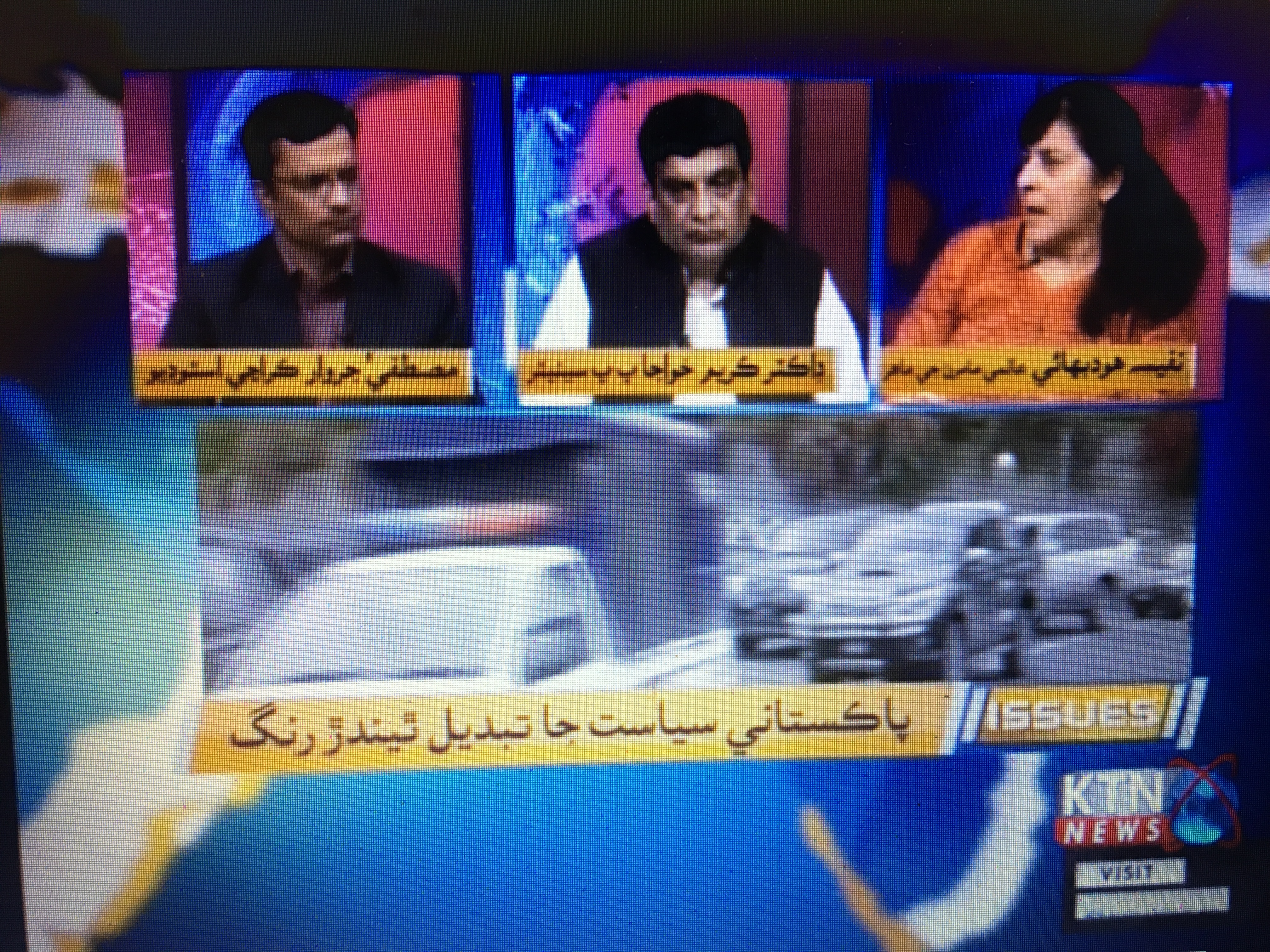
`The Changing Colors of Pakistani Politics,’ was the theme of the KTN show hosted by Mustafa Jarwar on the situation inside Pakistan and as it is affected by international events.

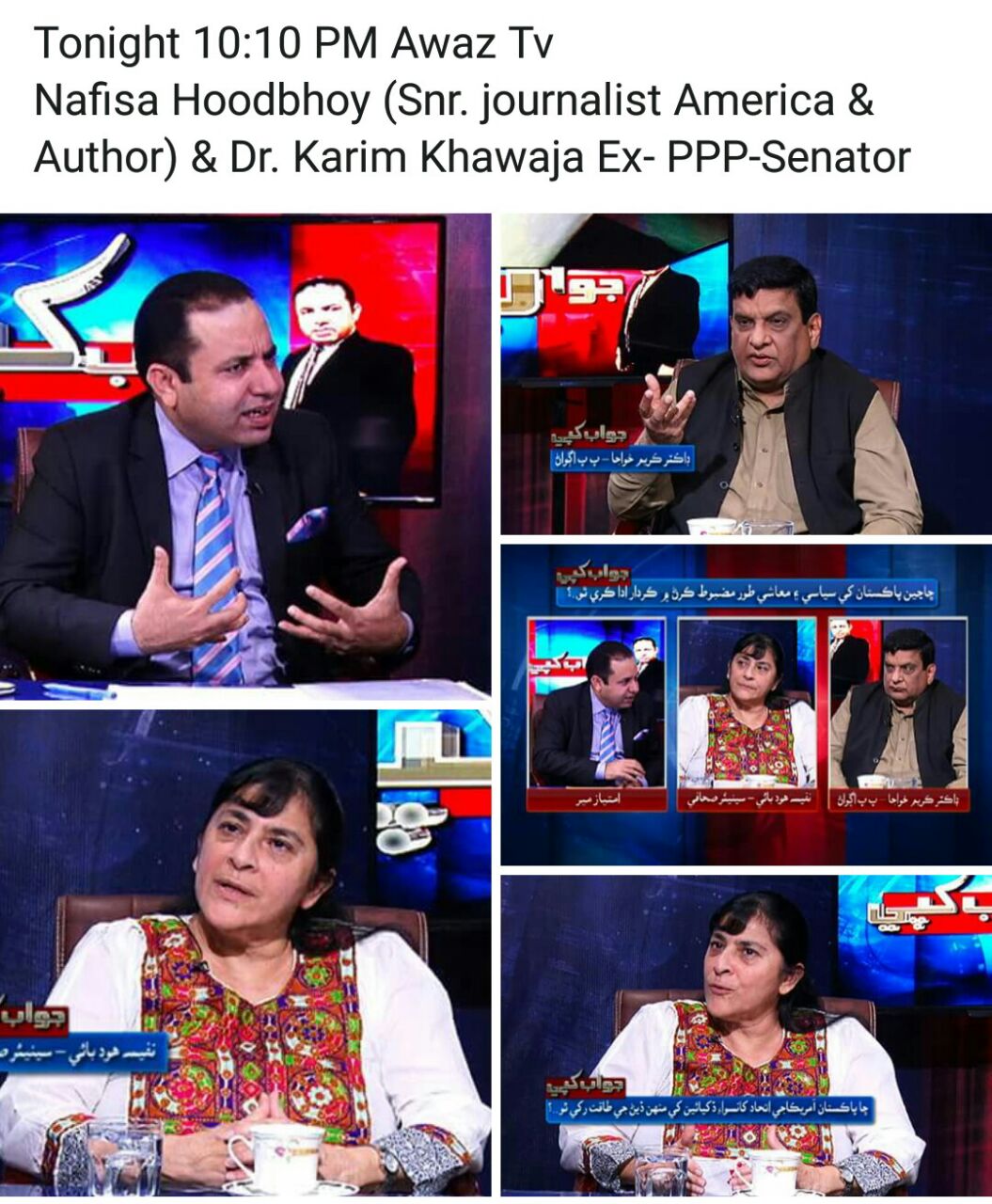
Participants including outgoing PPP Senator Dr Karim Khawaja and visiting US based journalist, Nafisa Hoodbhoy.

The discussions covered Pakistan’s growing isolation in the international community, as it relates to placing the country on the Financial Action Task Force’s `grey list’ of nations sponsoring international terrorism.

The anchor also focused on an increasing trend amongst politicians to play along for the sake of obtaining power, while abandoning any principled positions.

It may be watched at the URL below:

History of Left: `Suraj Pey Comand’ Book Launched

Karachi, March 17: The first volume of the story of the National Students Federation, its cadre and incidents reflecting the left wing history of Pakistan, `Suraj pay Comand,’ was launched at the Arts Council on Saturday.

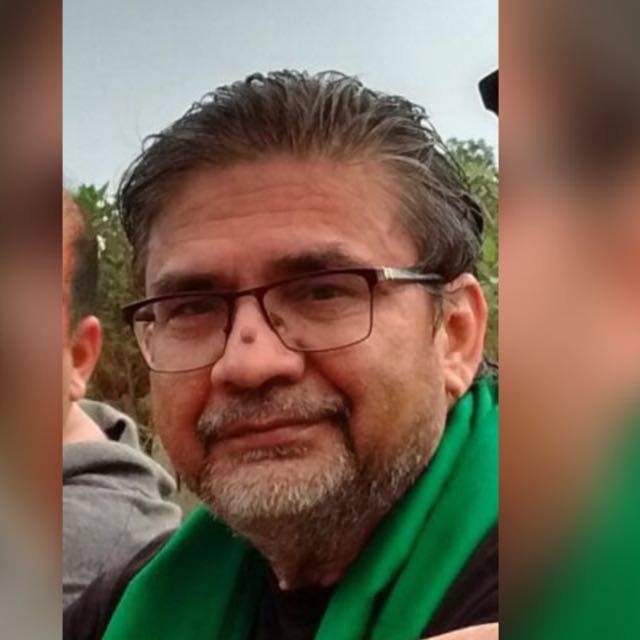
An overflow crowd came to the launch to hear about the stalwarts of the left movement who dominated four decades ago. Their snapshots have been compiled in this book in Urdu by London based ex NSF activist, Hasan Jawed (a psychiatrist by profession) and Mohsin Zulfikar.

Younger members of NSF were also in attendance to hear about the book, which takes an up close and personal look at the lives of left wing leaders. This includes subsequent reflections of the role they played for the rights of the oppressed people of Pakistan.

The event was presided over by Dr Haroon Ahmed and addressed by Ali Yavar, Lateef Chaudhry, Dr Tipu Sultan, Dr Riaz Ahmed Shaikh, Anees Baqir and Masroor Ahsan.

Former NSF president, Latif Chaudhry analyzed the issues raised in the book, namely how pro Maoist and pro Leninist ideologies led to internal fissures within the movement. In his words, the absence of tolerance for dissenting views ultimately caused the left to split.

The Dean Faculty of Education and Social Sciences in ZABIST, Dr Riaz Ahmed Shaikh said that despite the fissures, even Western writers had acknowledged the role played by the Pakistani left in dislodging dictatorships.

Anees Baqir spoke about the importance of forming a left wing political party in 2018 that could counter the `fickle and corrupt’ mainstream political parties.

Hasan Jawed introduced the author of Aboard the Democracy Train, as having an early association with NSF and then subsequently her work as a journalist, linked with former PPP prime minister Benazir Bhutto.

The updated edition of the book, Pakistan Tracks the Threat Within was sold out on the occasion.

This revised edition can now be ordered through Liberty books and other leading outlets in the country

US Foreign Policy Vis-i-Vis Pakistan – Interview on Awaz Television

US foreign policy and regional realignments were discussed in a television show hosted by Imran Mir of Awaz Television, with journalist and author Nafisa Hoodbhoy and ex PPP Senator Dr Karim Khawaja on Monday in Karachi.

The program, Jawab Do (Give an Answer) was a conversation between a PPP politician and the visiting independent analyst about why Pakistan finds itself in its current day predicament.

The full program may be viewed at the link below:

https://m.facebook.com/story.php?story_fbid=1973600922668565&id=1634281783267149