Understanding the China-Pakistan Economic Corridor

As Chinese philosophy decisively asserts, “you cannot live in a castle made of glass while your neighbour lives in the stone ages”. This maxim offers a stark contrast to the case of the United States, a highly developed state that faces tremendous migration problems from its neighbours Mexico and Puerto Rico due to the existence of a glaring development gap in the region. Instead of increasing aid to these destitute countries, the current US administration is considering the construction of a “wall” to keep migrants out. There has not been a conclusive agreement upon which side of the border will bear the financial burden of this project.

On the contrary, in accordance with the Chinese wisdom aforementioned, the Chinese mega project, One Belt, One Road (OBOR) initiative, worth approximately $900 billion, is a regional plan which will enrich the entire Euro-Asiatic region, including China.

OBOR is a regional connectivity strategy that comprises 65 countries and six economic corridors and caters to two-thirds of the world’s population. It aims to improve infrastructure in these countries and enhance the movement of goods and people, promoting trade and exchange, generating more economic activities and employment opportunities for the whole region.

This will definitely better the standard of living for people in this region of the world. The China-Pakistan Economic Corridor (CPEC) is one of the six economic corridors proposed under the OBOR initiative. It is the shortest, most convenient and most feasible corridor, among them all. It is also the flagship project, as both governments attribute high value to its success, and are striving to make it the prototype for the rest of the world.

CPEC is not a completely novel idea. It was introduced by the first Chinese ambassador to Pakistan, General Geng Biao, in the 1960s. Geng was a visionary diplomat, general, and politician. He proposed the road linkage between China and Pakistan through Khunjerab. That is how the Karakoram Highway came to fruition. This highway was a blessing for the people of Gilgit-Baltistan (G-B) because prior to its construction, locals used to travel by foot or horseback to reach Punjab and the journey often took a couple of months.

With the commencement of this road, the travel was reduced to less than 24 hours. The topography of G-B encompasses a very tough terrain, high altitudes (Khunjerab Pass lies at approximately 4000m above the sea level), solid hard rocks, mountains, and extreme climate (some of the areas have minus 50 degree Celsius). Thus, the construction of the Karakoram Highway was a miracle and it is considered the eighth wonder of the world. Due to budgetary constraints and the lack of modern technology, however, the quality of the road was rather poor, with many sharp curves and steep slopes. The average speed of a vehicle could not be more than 40 kilometres per hour. But recently, the highway has been upgraded and a decent speed of 120 kilometres per hour can be maintained. Nevertheless, some sections of the Karakoram Highway are still under construction and hopefully, within the next couple of years, it will turn into a proper motorway.

Under CPEC, a huge network of highways and motorways are in progress. The ML1 railway track from Karachi to Peshawar is being upgraded. Some tunnels and bridges are under construction to maintain the high speed of trains and shorten distances. A huge dry port linked by railway and motorway is under construction at Havelian, which will be a logistic hub for CPEC in the future.

Oil and gas pipelines are now in an advanced stage of completion throughout the country. One of them is an oil and gas pipeline from Gwadar to Nawabshah constructed by a Chinese company, and another from Karachi to Lahore is under the initial stages of construction by a Russian company. In the future, transportation of energy (oil, gas, LNG, etc) will be conveniently transported by pipelines, instead of with costly trucks that cause pollution. In the next few years, these pipelines will also be transporting oil and gas from Gwadar to inside China through Khunjerab, at a fraction of the cost of the sea containers going through Malacca Strait. Even if China imports only ten per cent of its requirements through CPEC pipelines, Pakistan will be earning billions of dollars in revenue, and this makes it a win-win situation for both countries.

Among the 51 projects signed during the visit of Chinese President Xi Jin Ping, priority was given to power projects that amounted to a total worth of 33 billion. Some of these power projects have been completed and have begun adding power to the National Grid. However, several of the mega projects will take some time to complete. Upon completion of these projects, it is expected that Pakistan will have sufficient power, and there will be no more shortage of power. The next stage of CPEC is under planning, also referred to as the “industrialisation” phase. The Chinese industrial sector is saturated and increasing labour cost is forcing Chinese industries to shift out of China. Pakistan is the best destination for the Chinese industry. Pakistan is planning industrial parks, special economic zones and science parks to facilitate the flourishing of the Chinese industry in Pakistan. After overcoming the power shortage, the shifting of Chinese industries into Pakistan will be accelerated.

CPEC will directly or indirectly generate around two million jobs. In the beginning, Chinese workforce will be hired in Pakistan, but gradually within a few years once Pakistan trains its workforce to the Chinese standard, Pakistanis will replace the workforce. Chinese industry will increase our productivity, reduce our imports, and enhance our exports. The economy will grow on an unprecedented scale. It will also improve the security situation in Pakistan as well as in the whole region. The aforementioned is possible if we unite and work hard. We need visionary and sincere leadership to execute this. The common man in Pakistan is honest, simple, hardworking and willing to devote himself to the cause of a prosperous nation.

On his 71st birthday, Trump expected a quiet morning and woke up to a shooting

WASHINGTON, June 14 — It was supposed to be a quiet morning at the White House as President Donald Trump marked his 71st birthday, with nothing on his public schedule until the late afternoon. But that was shattered by early reports that a shooter had opened fire on Republican lawmakers and staff at a baseball practice across the Potomac River in Virginia.

White House staff canceled Trump’s scheduled public events Wednesday and scrambled to bring details to the president as he watched the developments on television, including the news that the House Majority Whip Rep. Steve Scalise, R-La., and a congressional aide were shot.

Trump posted on Twitter shortly before 9 a.m. that Scalise, “a true friend and patriot, was badly injured but will fully recover. Our thoughts and prayers are with him.”

Scalise was shot in the hip on the ball field in Alexandria, Va., shortly after 7 a.m. and was taken to George Washington University Hospital in Washington for surgery.

Aides told reporters Trump would cancel his scheduled speech at the Department of Labor on Wednesday afternoon, and Trump’s senior advisers huddled to decide how the president would react to the shooting.

Vice President Mike Pence canceled a morning speech at the National Assn. of Home Builders in Washington to stay in the West Wing with Trump to help manage the administration’s response.

“The vice president and I are aware of the shooting incident in Virginia and are monitoring developments closely,” Trump said in a statement. “We are deeply saddened by this tragedy. Our thoughts and prayers are with the members of Congress, their staffs, Capitol Police, first responders, and all others affected.”

In the hours immediately after the shooting, Secret Service agents closed off large sections of Lafayette Park in front of the White House. By 10:30 am, the park was open to the public again, and tourists were taking photos in front of the White House fence.

Pakistan faces a diplomatic conundrum over the Gulf crisis (DW)

The Saudi-Qatari standoff poses a great diplomatic challenge to Pakistani authorities as they enjoy close economic and geopolitical ties with both Riyadh and Doha. Can Pakistan afford to remain neutral in the conflict?
Pakistani Prime Minister Nawaz Sharif embarked Monday on a one-day visit to the Kingdom of Saudi Arabia along with the country’s army chief Qamar Javed Bajwa and the foreign ministry staff.

The urgency of the trip shows that Sharif faces a tough diplomatic challenge in Riyadh.

Islamabad enjoys cordial relations with both Saudi Arabia and Qatar, but the diplomatic standoff in the Gulf region, which saw Saudi Arabia, Bahrain, Egypt, Yemen and the United Arab Emirates (UAE) sever ties with Qatar, means the Pakistani government now faces a predicament – to choose between Riyadh and Doha.

For now, Pakistani authorities do not want to take sides, but in the coming days, and with Saudi officials’ increasingly belligerent stance toward Iran and its allies in the region – including Qatar – remaining neutral could prove to be difficult.

“Since Pakistan enjoys good relations with Saudi Arabia, Iran and Qatar, we will try our best to resolve the differences between the Arab countries,” PM Sharif told journalists during a recent visit to Kazakhstan.
Pakistan also denied reports that it had sent some 2,000 troops to Qatar’s aid after the crisis erupted.

Foreign Office Spokesperson Nafees Zakaria stressed that “these false reports appear to be part of a malicious campaign aimed at creating misunderstanding between Pakistan and brotherly Muslim countries in the Gulf.”
Besides the obvious diplomatic dilemma, Pakistani authorities are also in a quandary because of their nation’s economic ties with Saudi Arabia, Qatar and the UAE.

The Islamic country receives large revenue from the Pakistani citizens working in the Arab countries. More than 1.9 million Pakistanis live in Saudi Arabia, while the UAE hosts 1.2 million, according to government data. Qatar hosts some 115,000 Pakistani nationals.

“The Pakistani government has close economic ties with Doha. PM Sharif signed a crucial gas deal with Qatar to ease the country’s energy crisis,” Usama bin Javed, an Islamabad-based Middle East expert, told DW.
London-based Pakistani analyst, Farooq Sulehria, says that the largest sum of Pakistan’s foreign exchange comes from Saudi Arabia. “There is a mammoth work force of Pakistani laborers in the Arab countries. It would be ‘suicidal’ to offend the Saudis,” Sulehria told DW.

Diplomatic predicament
Even if the Saudi-Qatari dispute gets resolved through regional and international efforts – the United States and the European Union have urged a quick resolution of the standoff – Pakistan’s long-term problems in relation to the Saudi-Iranian rivalry won’t go away easily. After all, Riyadh’s main concern about Doha is the latter’s alleged ties with terrorist groups that Saudi authorities say are promoting Tehran’s geopolitical agenda in the region.

Saudi authorities have leverage over Pakistan, and they have been persistent in their demands that Islamabad assists them in the Yemeni war as well as a larger regional security alliance led by Riyadh.

Despite parliament’s decision last year against becoming a party to the intensifying Saudi-Iranian conflict in the Middle East, in April Islamabad approved the appointment of Raheel Sharif, the country’s former army chief, as head of the 39-member Saudi-led military coalition. Riyadh says the Muslim nations’ alliance was formed to fight terrorism in the region, but experts point out that it is primarily an anti-Iran grouping. Naturally, Tehran is not part of the coalition.

The Pakistani government has sent mixed signals about Raheel Sharif’s position in the alliance in the past few weeks, especially after US President Donald Trump’s last month’s visit to Saudi Arabia. Media reports claim that Raheel Sharif is contemplating heading back to Pakistan as a result of Washington and Riyadh’s now official anti-Iran posture. But Raheel Sharif’s speculated departure from Saudi Arabia is as much shrouded in mystery and secrecy as was his decision to join the Saudi-led alliance.

“Pakistani armed forces are already part of the Saudi military alliance. This gives Islamabad an opportunity to mediate in the crisis. But it has to be very careful,” analyst Javed said, adding that Pakistan could not afford a prolonged Gulf crisis.

Security analyst Sabir Karbalai suggests Islamabad should take the issue to the Organization of Islamic Cooperation (OIC), a 57-member forum of Muslim-majority nations.

“If Pakistan can’t leave the Saudi alliance, it should put its activities on hold and together with Turkey try to resolve the dispute between Riyadh and Doha,” Karbalai told DW.

But it’s probably easier said than done. With Saudi Arabia-US alliance stronger than ever after Trump’s coming to power in the US, Pakistan cannot afford to cozy up with Iran. In the rapidly changing geopolitical milieu, Islamabad has aligned itself by forging closer ties with China and Russia, but it cannot afford to go all the way against Washington and Riyadh.

Sectarian strife
Pakistan’s intelligentsia and civil society have advised PM Sharif to remain neutral in the Gulf crisis as Islamabad’s support to Saudi Arabia could also increase the Sunni-Shiite tension in the South Asian country. Analysts believe that Pakistan’s Sunni militant groups already feel emboldened by the fact that the nation’s ex-army chief is linked with the Saudi security alliance.

The sectarian strife in Pakistan has been ongoing for some time now, with militant Islamist groups unleashing terror on the minority Shiite groups in many parts of the country. Most of these outfits, including the Taliban, take inspiration from the hardline Saudi-Wahabi Islamic ideology.

For Pakistan’s Islamic fanatics, the country “is already a ‘Sunni Wall’ against Shiite Iran,” Siegfried O. Wolf, an expert at the University of Heidelberg’s South Asia Institute, told DW in an interview.

Experts say that while Pakistan will try to demonstrate its neutrality in the Saudi-Iran regional rivalry, in practice and in terms of policies, its closeness to Riyadh and the hardline Sunni ideology will remain intact. But domestically, this will plunge Pakistan into a bigger security crisis than it is already in.

Additional reporting by Sattar Khan, DW’s Islamabad correspondent.

‘Grave concern’ over Chinese teachers reportedly killed by ISIS in Pakistan

China has expressed “grave concern” over reports that ISIS has killed two Chinese teachers kidnapped in Pakistan.
The man and woman, said by Chinese media to be a couple, were kidnapped by armed men on May 24 from the city of Quetta, the capital of Pakistan’s Balochistan province, on May 24 on their way to teach a Chinese language class, a senior security officer told CNN last month.

Amaq, a news agency affiliated with ISIS, said Thursday that Islamic State fighters had killed two Chinese teachers who were being held in the Mastung, Balochistan. The group also released a video, which showed two bodies shot and bleeding on some grassy ground.

“China resolutely opposes all forms of kidnapping of civilians and opposes all forms of terrorism and extreme acts of violence,” said Hua Chunying, the spokesperson for China’s Foreign Ministry, in a statement on Friday.
Pakistan’s Ministry of Foreign Affairs said it was “working to confirm authenticity of the reports of killing of two Chinese nationals, kidnapped in Quetta.”

The deaths underscore the risks of China’s growing international reach and influence. The Global Times, a state-run tabloid, said that guarding Chinese nationals overseas had become a new and serious challenge for national security.

“As China’s international influence is growing, terrorist organizations target Chinese for ransom or just to create a sensation. Cases of Chinese being kidnapped have increased,” the paper said in an editorial.

Chinese nationals have settled in Pakistan in greater numbers since the announcement of a $46 billion investment plan known as the China-Pakistan Economic Corridor (CPEC) in 2015 — part of China’s One Belt One Road initiative.

“Given Pakistan’s complex security situation, both sides need to study and formulate a more comprehensive security plan to fully cover Chinese in Pakistan,” the Global Times added.

Rescue attempt
Hua said authorities had been trying to rescue the hostages.

Pakistan’s military said Thursday that its security forces conducted an operation from June 1 to 3 in Mastung, where it said it killed 12 terrorists with links to ISIS that had been hiding in caves but didn’t mention the abducted Chinese teachers.
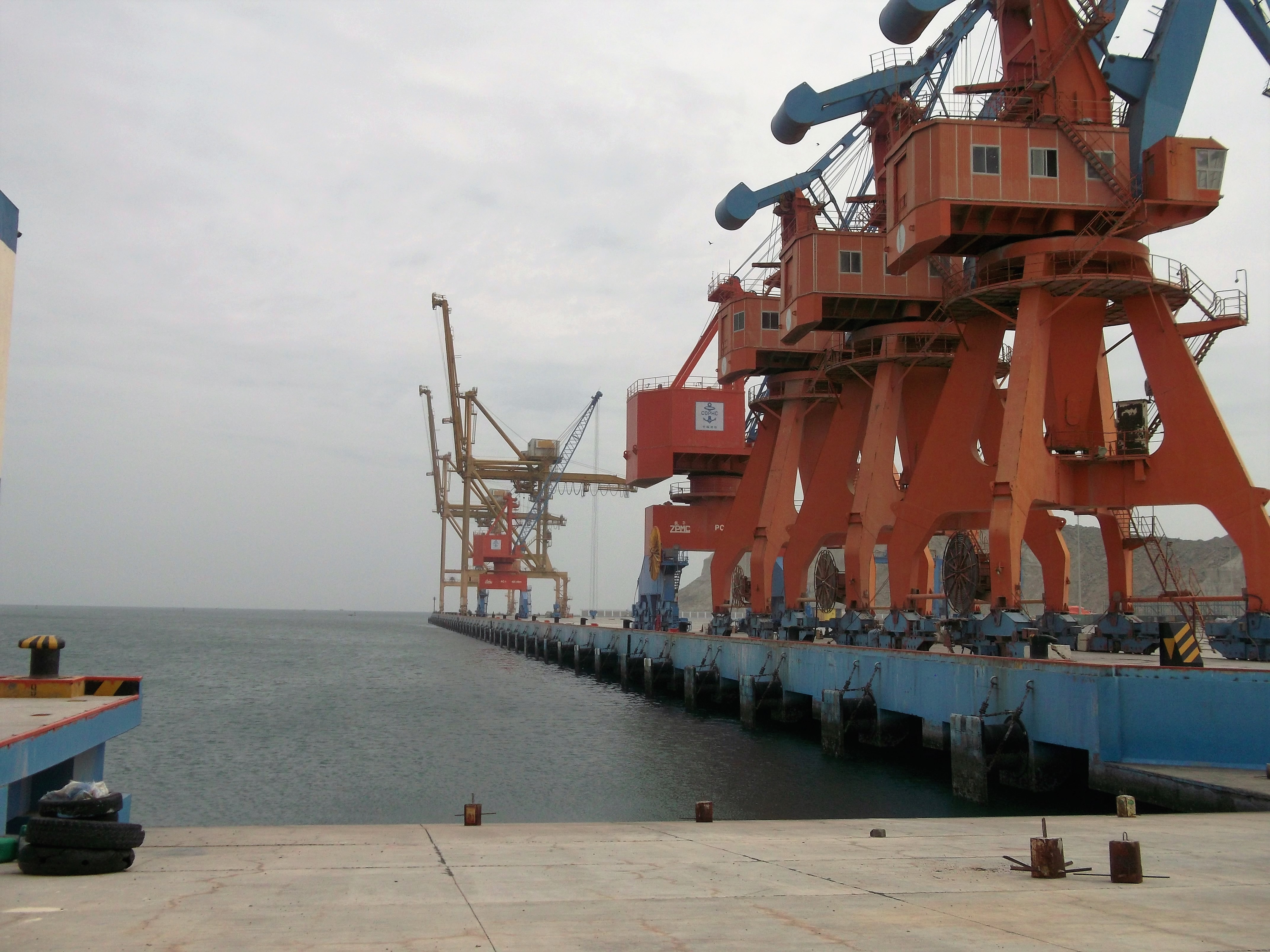
Balochistan is home to the Gwador Port Complex, a flagship project of the economic corridor, but has been plagued by violence by different militant groups including the Pakistani Taliban and a separatist movement.

Pakistan views CPEC, a combination of infrastructure projects ranging from road networks, a fiber optic cable project, railway lines, a deep-sea port, coal mines and solar farms, as a huge opportunity to develop its economy.

Pakistan is home to roughly 20,000 Chinese, according to Mustafa Hyder, chief executive of the Pakistan-China Institute.

CNN’s Serenitie Wang and Yuli Yang contributed to this report

London terror attack: UK wakes up to another day of mourning

London, June 4: The death toll has risen to seven with a further 48 injured following last night’s terror attack in central London, the second major act of terrorism to strike the United Kingdom in less than two weeks.
The attack began late Saturday night, when a white van swerved into crowds of pedestrians on London Bridge, leaving bodies lying in the roadway, according to witness reports. At least one pedestrian is thought to have jumped into the Thames to escape being hit.

The suspects are then believed to have exited the van and proceeded on foot towards the nearby area of Borough Market, one of the capital’s most popular nightlife spots.

Eyewitnesses spoke of abject panic as three men armed with “foot-long” knives burst into packed restaurants and cafes, slashing at those inside indiscriminately. Many customers fought off the attackers, using chairs, pint glasses and bottles. Others hid behind tables and inside bathrooms or attempted to flee.

In total, the marauding attack lasted approximately eight minutes, according to police, who shot dead all three known suspects at the scene. At least one of the suspects appeared to be wearing a suicide bomb vest, though this was later confirmed by police to be a hoax.

The London Ambulance Service, who dispatched upwards of 80 medics to help deal with the incident, said at least 48 people were taken to five hospitals across the capital, with many more treated at the scene. French and Australian nationals have been confirmed by their respective governments as among those affected.

A police officer who was responding to the attack on London Bridge was also stabbed. The officer received serious but not life-threatening injuries, according to an official police statement.

Heightened state of terror
The third terrorist attack to have occurred in the UK this year and the second in London, Saturday’s attack will renew the debate around the safety of the capital in light of the increased terror threat.

In a press conference Sunday morning, London Mayor Sadiq Khan praised the quick police response and asked Londoners to remain calm and vigilant. This is the second time Khan has addressed the public in response to a terror attack since becoming mayor, and he repeated his previous insistence that London remains one of the safest global cities in the world.

“We will not be cowered by terrorism and we will not let them win,” said Khan, who promised an increased police presence throughout the capital in the coming days.

For many in London, Saturday’s attack will be a grim reminder of the events on Westminster Bridge on March 22, when Khalid Masood drove a car into pedestrians, killing four and injuring 50, before stabbing a police officer to death at the entrance to parliament. The attacker — who reportedly had a criminal record and may have had connections to violent extremism — was gunned down by a police officer.

Khan is expected to join British Prime Minister Theresa May at an emergency meeting of Cobra — the UK’s emergency crisis committee — Sunday in response to the attack. May had earlier labeled the attack as “terrible incident.”

Aiming at the people
The attack began just after 10 p.m. local time on London Bridge, just north of an area famed for its cafes and bars, and near the London Bridge rail and underground interchange.

Witness Mark Roberts, who was on the bridge at the time of the attack, told CNN the van was traveling south across the River Thames at a speed and was swerving as it struck several people, knocking one person “about 20 feet into the air.”

The van swerved into oncoming lanes before hitting a bus stop and coming to a stop, Roberts said.

“Within my line of sight, there were five or six people on the ground that were not moving,” he said. “It looked to me that the van was aiming at the people.”
Roberts said he heard what sounded like gunshots about 10 minutes later. He estimated 100 people were on the bridge at the time, fewer than earlier in the night because it was getting late.

“I froze, to be honest,” Roberts said. “As I was thinking … which direction should I run, the van swerved across the other side of the bridge from me.”

Restaurant panic
Witnesses at the Elliot restaurant in Borough Market described seeing large groups of people running up the street — as it became apparent an attack was underway.

“Someone said, ‘What is going on?’ and one of the people running said, ‘There is a man with a knife up there and he is coming this way.’ There was complete panic as everyone ran to the back of the restaurant and crouched down trying to hide themselves from view,” one witness told CNN.

“A man suddenly appeared in the restaurant with a massive knife … (he) stabbed a waitress, who was hiding behind a partition, in the neck and stabbed a man in the back before running out of the restaurant,” the witness added.

Another witness said a masked man entered the nearby El Pastor restaurant and slashed a woman in the side with a knife.

Jack Applebee, who owns a restaurant one block away from Elliot’s restaurant, said he was standing outside when people came running down the street. A girl said, “They’re stabbing everyone.”

Applebee told his customers to go to the back of the restaurant. He said he started to pull down his shutters and turned around to see three men standing outside, one holding a machete.

The men just looked at the people in the restaurant said Applebee, who at that point was unsure what to do. After a brief pause, the men continued down the street, at which point Applebee and a colleague pulled down the shutters. Five minutes later they heard gunshots.

About 90 minutes later, police evacuated the restaurant, he said.

Police activity spread throughout the Borough Market area. Officers rushed into the nearby Katzenjammers bar and ordered people to sit on the floor, patron Paul Connell told CNN.

“The police were absolutely brilliant, they came in and explained the situation,” said Connell. ” Armed police came in. They told us to remain on the floor but to stay calm. We were eventually led out of the bar and some kind people working in a hotel let us come in to use the bathroom and to give us water.”

Official reaction
During a press conference in the early hours of Sunday morning, the UK’s most senior counter terrorism officer, Metropolitan Police Assistant Commissioner for Specialist Operations, Mark Rowley, praised efforts by police in confronting the attack: “At 22:08 yesterday evening we began to receive reports that a vehicle had struck pedestrians on London Bridge. The vehicle continued to drive from London Bridge to Borough Market.”

“Armed officers responded very quickly and bravely, confronting three male suspects who were shot and killed in Borough Market. The suspects had been confronted and shot by the police within eight minutes of the first call.”
England has been on edge since May 22, when a suicide bomber killed 22 people at an Ariana Grande concert at the Manchester Arena.

A benefit concert for victims of that attack was scheduled for Sunday in Manchester. On Saturday, the singer tweeted, “Praying for London.”

CNN’s Steve Almasy, Ralph Ellis, Natalie Gallon, Alex Felton, Carol Jordan, Matt Wells, Antonia Mortensen, Paul P. Murphy and Donie O’Sullivan contributed to this report.

Huge Bombing in Kabul Is One of Afghan War’s Worst

KABUL, Afghanistan — A truck bombing near the Afghan presidential palace early Wednesday killed at least 80 people and wounded hundreds, officials said. The death toll seemed certain to rise, and the attack appeared to be one of the bloodiest of the long Afghan war
.
The huge blast during the morning rush hour caused panic in much of central Kabul, shattering windows as far as a mile away. Nearly two hours after the explosion near Zanbaq Square, a crowded area in the capital that leads to the presidential palace as well as major foreign embassies, plumes of smoke were still rising from the scene.

At a time when the United States is weighing sending more troops to Afghanistan to try to halt the government’s losses, the attack on Wednesday highlighted the continued ability of militants to strike even in the most secure parts of the capital. And outside the country’s main cities, the Taliban have rapidly been seizing territory and have kept the Afghan security forces badly bloodied and on the defensive.

At a news conference in Kabul, Gen. Murad Ali Murad, the deputy interior minister, said that more than 80 people had been killed and 463 wounded.

Kabul’s police chief, Gen. Hassan Shah Frogh, said the explosives used in the blast had been in a tanker truck used to empty septic tanks. The bomb was detonated near the square just as the street turns toward the German Embassy, he said. “The blast was so huge that it dug a big crater as deep as four meters,” or 13 feet, General Frogh said.

The German Embassy was extensively damaged, with dozens of windows blown in, the public broadcaster ARD reported. It broadcast images showing stunned civilians pressing makeshift bandages to bloody limbs, stumbling through a smoke-filled street as ambulances rushed to the scene, their sirens blaring.

Germany’s foreign minister, Sigmar Gabriel, said that an Afghan security guard employed by the embassy had been killed. He also said that several Germans had been wounded, without providing details. He condemned what he called an attack on “those who are in Afghanistan working with the people there for a better future.”
“To target these people is especially despicable,” Mr. Gabriel said.

There was no immediate claim of responsibility for the blast, and it was unclear whether the embassy had been specifically targeted. A spokesman for the Taliban, whose forces are responsible for most of the intensifying violence across Afghanistan, insisted that they were not behind the attack and condemned the toll on civilians.
But even that was no sure indication of who might be responsible. In recent years, the Taliban have frequently denied responsibility for attacks that intelligence officials believe the insurgents actually did commit. And militants loyal to the Islamic State have staged more attacks in recent months, though they have been smaller.

In Germany, the blast was sure to fuel a debate over the government’s efforts to repatriate Afghans whose applications for asylum have been rejected. About 1,000 German soldiers are stationed in Afghanistan as part of the NATO force, and Germany has invested billions in military and aid to stabilize the country.

German officials have been at pains to insist that parts of Afghanistan are safe, despite an overall security situation that the interior minister, Thomas de Maizière, has described as “complicated.” Hours after the blast, the government in Berlin said that a flight carrying deportees bound for Afghanistan scheduled for Wednesday had been postponed, citing logistical reasons for embassy employees on the ground.

President Ashraf Ghani called the attack “a crime against humanity.” A statement by Gen. John W. Nicholson Jr., the commander of American and North Atlantic Treaty Organization forces in Afghanistan, applauded the Afghan security forces for preventing the truck full of explosives from entering the Green Zone, a reference to the area that houses the headquarters of the coalition forces as well as several foreign embassies.

“The attack demonstrates a complete disregard for civilians and reveals the barbaric nature of the enemy faced by the Afghan people,” the statement said.

Pictures from the scene showed smoke and chaos, with bloodied people on the ground as emergency personnel tried to evacuate victims. Video footage that witnesses filmed immediately after the blast showed vast destruction to the buildings in the area and people stuck in destroyed vehicles amid flames.

There was a heavy security presence, including forces from the United States-led coalition, and helicopters circled overhead. Dozens of people waited outside the large security cordon for news of their loved ones.

Emotions were running high among the Afghan security forces at the scene. Intelligence officers closely checked the paperwork of emergency workers shuttling between the blast site and the hospitals, fearing that they might have been infiltrated by militants planning a follow-up attack.

At one point, after a senior police official tried to pass the cordon with a large entourage of guards, a scuffle broke out, and the police officers and intelligence officers cocked their weapons at one another. But the situation was quickly defused.
]
The sheer force of the blast was staggering, though it was not unprecedented. In 2015, a similar truck bombing in the Shah Shaheed neighborhood of the city also caused hundreds of casualties and left a strip of shops leveled and houses in a wide radius damaged. Other large truck bombings have targeted the offices of an elite force that provides security to senior government officials, as well as a compound for Western contractors.

Shopkeepers as far as a mile from the scene of Wednesday’s blast were sweeping glass from shattered windows, as parents arrived to escort panicking children home from school.

“There was a big tremble, and then we heard a massive explosion,” said Ramin Sangar, a cameraman at a television channel near the site of the explosion, as he was loaded into an ambulance. “All the windows are broken. Our studios collapsed.”

Again, think more of one of the many other reasons why that it is of vital importance or crucial to ultimately find a curable vaccine for…

I’ve been part of Western efforts to defeat the Taliban and stabilize the Afghan government. I drank a lot of chai with soldiers and rug..
.
Most of the victims appeared to be civilians on their way to work during the morning rush hour. A BBC driver, Mohammed Nazir, as well as Aziz Navin, an information technology worker for the Afghan television channel ToloNews, were among those killed.

Lotfullah Najafizada, the director of ToloNews, described a painful search for his colleague’s remains. He and his co-workers examined seven mostly unrecognizable bodies at the military hospital before heading over the civilian side, where the 44th body had just arrived.

“We found Aziz in a large, dirt-colored sack, and his relatives were trying to transport him home,” Mr. Najafizada wrote on Facebook. “The ambulances were busy, and Aziz waited in the hall of the hospital for his final trip home.”

Crowds were building throughout the day outside the main hospitals in Kabul as people searched for their loved ones among the wounded or dead.

More than 300 people anxiously waited outside the Emergency Hospital, one of the main trauma centers in the city. Some were weeping and wailing, while others were trying to look up names of loved ones on the lists that employees handed out. Inside the hospital, where the windows had also been shattered by the force of the blast, doctors were attending to dozens of wounded.

Outside Wazir Akbar Khan, the main government hospital, a white-bearded man in his 60s named Azizullah searched for news of his 22-year-old son, Abdullah, who worked at a telecommunications company near the site of the blast.

“I searched all hospitals. He is nowhere,” said Mr. Azizullah, who would crouch and then get up to pace. “Abdullah has two children, a wife and an old mother. What will I tell them?”

Mr. Azizullah received a call from someone who appeared to be inside the hospital, telling him about unrecognizable bodies.

“Can you search the person whose body is cut up?” he asked the caller. “He may be my son. Try to find his documents.”

Jawad Sukhanyar contributed reporting from Kabul, and Melissa Eddy from Berlin.

Behind the News

As the Obama effect wears off and a new sheriff comes to Washington DC, Nafisa Hoodbhoy analyzes the Trump effect on the global landscape, most prominently its impact on the Pakistan region.

The interview was conducted by Sindh TV anchor Fayyaz Naich in Feb, 2017. It discusses Russia’s reinsertion in international politics and how Cold War tensions keep the US and the former super power, Russia, feuding across the globe. While Saudi-Iranian tensions and Pakistan-India rivalry feed turf wars and proxy fighting.

The conversation picks up on the updated edition of `Aboard the Democracy Train, Pakistan Tracks the Threat Within,’ printed by Paramount Books in 2016, and launched the same year in Peshawar and Quetta.

The full interview can be seen on Youtube: https://www.youtube.com/watch?v=nSfTy1N_zL4

When Bill Gates and Mark Zuckerberg sound the same dire warning about jobs, it’s time to listen

At his Harvard University commencement speech on Thursday, Facebook (FB) chief executive Zuckerberg, had some tough words for the Class of 2017. “Our generation will have to deal with tens of millions of jobs replaced by automation like self-driving cars and trucks,” he said, adding, “When our parents graduated, purpose reliably came from your job, your church, your community,. But today, technology and automation are eliminating many jobs. Membership in communities is declining. Many people feel disconnected and depressed, and are trying to fill a void.”

Gates, the founder of Microsoft (MSFT) earlier this month, sounded the same warning. Gates said he didn’t want to sound like the guy from “The Graduate,” which celebrates 50 years this year. In that movie, old Benjamin Braddock (Dustin Hoffman) was given this very famous piece of advice: “I just want to say one word to you. Just one word …Plastics,” And today? That word would likely be “robots.” Gates took his 34.8 million Twitter followers by the virtual shoulder and said “artificial intelligence” would have a huge impact. In other words, why not join the revolution? After all, that’s exactly what Zuckerberg and Gates did with social media and computer software.

But that’s not the only response to the robot revolution. Last February, Gates also told Quartz that robots should free up labor “and give graduates an opportunity to focus on jobs that only let us do a better job of reaching out to the elderly, having smaller class sizes, helping kids with special needs. You know, all of those are things where human empathy and understanding are still very, very unique.” Gates said there is a counter-intuitive way of approaching the rise of robots. “So if you can take the labor that used to do the thing automation replaces …then you’re net ahead.”

Zuckerberg too spoke about finding meaningful jobs and purpose in this new automated economy. “Class of 2017, you are graduating into a world that needs purpose. It’s up to you to create it,” he said, adding, “Taking on big meaningful projects is the first thing we can do to create a world where everyone has a sense of purpose. The second is redefining equality to give everyone the freedom they need to pursue purpose. Many of our parents had stable jobs throughout their careers.” Today’s graduates, he said, will need to carve their own path, but have the freedom to fail and to try again.

They’re not wrong: Robots are expected to create 15 million new jobs in the U.S. over the next 10 years, as a direct result of automation and artificial intelligence, equivalent to 10% of the workforce, a recent report by Forrester Research found. The downside: robotics will also kill 25 million jobs over the same period. So in one way Gates is correct. Artificial intelligence and automation is an area undergoing a seismic shift, just like computers did in the 1980s and plastics did 30 years before that, and how people around the world changed how the communicate and share information about themselves (and, yes, data about themselves) 10 years ago.

And what field will be hot 50 years from now? Some 65% of Americans expect that within 50 years robots and computers will “definitely” or “probably” do much of the work currently done by humans, according to a survey by the Pew Research Center, a nonprofit think tank in Washington, D.C. Some 38% of jobs in the U.S. are at “high risk” of being replaced by robots and artificial intelligence over the next 15 years, a separate estimate by consulting and accounting firm PwC found, which is still lower than Germany (35%) and the U.K. (30%).

But for those who don’t want to work in artificial intelligence, there are some “robot-proof” careers, at least for now. They include composers and artists, nurse practitioners, home health aides, elder care specialists, child care workers, youth directors, early educators and, finally, human resources executives, a report released earlier this month by careers firm Challenger, Gray & Christmas concluded. “Recruiting, interviewing, and hiring of new staff, plus consulting with top executives on strategic planning is hardly imitable by a robot,” it found. And, of course, robot engineers will not be replaced by robots.

Low-paying jobs appear most at risk from robots, economists predict. For those who want to avoid being replaced by robots, a college education will likely help. As MarketWatch previously reported, there’s an 83% chance that automation will replace a job that pays $20 per hour, according to a White House report released last year. It found that there’s only a 31% chance that robots will take over a job that pays between $30 and $40 per hour, and only a 4% chance that automation will replace jobs with an hourly wage over $40.

Gates also cited biosciences and energy as a good bet for the Class of 2017. Traditional energy and energy efficiency sectors employ around 6.4 million Americans, according to the 2017 U.S. Energy and Employment Report. These sectors increased in 2016 by around 5% on the previous year and account for roughly 14% of all those created in the country. Jobs in biosciences are increasing at a rate of 10% per year, the latest report on the industry by the Biotechnology Innovation Organization estimated, and employs nearly 1.7 million people in the U.S.

And Zuckerberg also had some words of wisdom for tomorrow’s entrepreneurs. “Let me tell you a secret: no one does when they begin. Ideas don’t come out fully formed. They only become clear as you work on them. You just have to get started,” he said. “If I had to understand everything about connecting people before I began, I never would have started Facebook. Movies and pop culture get this all wrong. The idea of a single eureka moment is a dangerous lie. It makes us feel inadequate since we haven’t had ours. It prevents people with seeds of good ideas from getting started.”

Salman Abedi named as the Manchester suicide bomber – what we know about him

Manchester, UK May 23: The Manchester Arena suicide bomber had made trips to Libya, Downing Street said last night, as intelligence agencies combed his connections with al-Qaeda and Islamic State in his parents’ homeland.

Salman Abedi, 22, who was reportedly known to the security services, is thought to have returned from Libya as recently as this week.

A school friend told The Times: “He went to Libya three weeks ago and came back recently, like days ago.”
Abedi born in Manchester and grew up in tight-knit Libyan community that was known for its strong opposition to Colonel Muammar Gaddafi’s regime.

He had become radicalised recently – it is not entirely clear when – and had worshipped at a local mosque that has, in the past, been accused of fund-raising for jihadists.

Abedi’s older brother Ismail had been a tutor at Didsbury mosque’s Koran school. The imam last night said that Salman Abedi, who wore Islamic dress, had shown him “the face of hate” when he gave a talk warning on the dangers of so-called Islamic State.

Born in 1994, the second youngest of four children, Abedi’s parents were Libyan refugees who fled to the UK to escape Gaddafi.

His mother, Samia Tabbal, 50, and father, Ramadan Abedi, a security officer, were both born in Tripoli but appear to have emigrated to London before moving to the Whalley Range area of south Manchester where they had lived for at least a decade.

Abedi went to school locally and then on to Salford University in 2014 where he studied business management before dropping out. His trips to Libya, where it is thought his parents returned in 2011 following Gaddafi’s overthrow, are now subject to scrutiny including links to jihadists.

A group of Gaddafi dissidents, who were members of the outlawed Libyan Islamic Fighting Group (LIFG), lived within close proximity to Abedi in Whalley Range.

Among them was Abd al-Baset Azzouz, a father-of-four from Manchester, who left Britain to run a terrorist network in Libya overseen by Ayman al-Zawahiri, Osama bin Laden’s successor as leader of al-Qaeda.

Azzouz, 48, an expert bomb-maker, was accused of running an al-Qaeda network in eastern Libya. The Telegraph reported in 2014 that Azzouz had 200 to 300 militants under his control and was an expert in bomb-making.

Another member of the Libyan community in Manchester, Salah Aboaoba told Channel 4 news in 2011 that he had been fund raising for LIFG while in the city. Aboaoba had claimed he had raised funds at Didsbury mosque, the same mosque attended by Abedi. The mosque at the time vehemently denied the claim. “This is the first time I’ve heard of the LIFG. I do not know Salah,” a mosque spokesman said at the time.

At the mosque, Mohammed Saeed El-Saeiti, the imam at the Didsbury mosque yesterday branded Abedi an dangerous extremist. “Salman showed me the face of hate after my speech on Isis,” said the imam. “He used to show me the face of hate and I could tell this person does not like me. It’s not a surprise to me.”

Salman visited the mosque on a number of occasions to pray, but the imam insisted “he was not my friend, he is not close. I could understand that he was not happy with me because I did combat Isis in that Friday sermon sometimes”.

The imam added: “When he passed by me, we Muslims greet each other and you know he is not happy with me if he doesn’t greet you.”

At the Abedi family home in Elsmore Road, a non-descript red-brick terrace, neighbours told how Abedi had become increasingly devout and withdrawn.

Lina Ahmed, 21, said: “They are a Libyan family and they have been acting strangely. A couple of months ago he [Salman] was chanting the first kalma [Islamic prayer] really loudly in the street. He was chanting in Arabic.
“He was saying ‘There is only one God and the prophet Mohammed is his messenger’.’

A family friend, who described the Abedis as “very religious”, said most of the family had returned to Libya, leaving only Salman and his older brother Ismail behind.

“They have not been there for quite a while. Different people come and go,” said Alan Kinsey, 52, a car-delivery driver who lives across the street. Mr Kinsey’s wife, Frances, 48, a care worker, said she believed that the parents had left before Christmas and just one or two young men had been living in the property.

Mr Kinsey said a huge flag, possibly Iraqi or Libyan, had been hanging from their house. “There was a large Iraqi flag hanging out the window but we never thought anything or it,” added Mr Kinsey, “We thought it was about football or a protest at home or something.”

Neighbours woke up to the reality that the quiet young man next door had blown himself up, murdering at least 22 innocent victims.

Police blasted down the door of the family home at 11.30am. According to locals, two helicopters and at least 30 police officers in camouflage, riot gear and shields arrived for the raid.

“The police were very heavily armed. All of them. It was like something out of a war scene,” said Mr Kinsey, “It was terrifying. About thirty of them arrived in camouflage and riot gear and removed the wooden fence between two properties.

“Then they attached a black strip to the door and there was a loud explosion. The door came off its hinges. The windows were shaking. The whole operation lasted about 90 seconds.

“I didn’t see them leading anyone out of the house. I believe it was empty.”

© Telegraph Media Group Limited 2017

Trump accuses Iran of fuelling ‘fires of sectarian conflict and terror’

US President Donald Trump on Sunday urged Islamic leaders to take a stand against violence done in the name of religion, describing the struggle against extremism as a “battle between good and evil”.

In a highly anticipated speech in Saudi Arabia, Trump lashed out at Iran, accusing Tehran of fuelling “the fires of sectarian conflict and terror” and calling for its international isolation.

Saying he came with “a message of friendship and hope and love”, Trump told dozens of Muslim leaders that the time had come for “honestly confronting the crisis of religious extremism”.

“This is a battle between barbaric criminals who seek to obliterate human life, and decent people of all religions who seek to protect it. This is a battle between good and evil.”

The speech came on the second day of a visit to Saudi Arabia, part of Trump’s first foreign tour that will take him next to Israel and the Palestinian territories and then to Europe.

The White House has sought to draw a clear distinction during the visit with Trump’s predecessor Barack Obama, who Saudi Arabia and its Arab allies saw as lecturing and soft on their rival Iran.

“From Lebanon to Iraq to Yemen, Iran funds, arms and trains terrorists, militias and other extremist groups that spread destruction and chaos across the region,” Trump said.

“Until the Iranian regime is willing to be a partner for peace, all nations of conscience must work together to isolate it.” He appealed to Muslim nations to ensure that “terrorists find no sanctuary on their soil” and announced an agreement with Gulf countries to fight financing for extremists.

Introducing Trump, Saudi King Salman called Iran “the spearhead of global terrorism”.

Unlike the Obama administration which would often raise concerns over civil liberties with longstanding Arab allies, Trump had made no mention of human rights during his visit so far.

“We are not here to lecture — we are not here to tell other people how to live… or how to worship. Instead, we are here to offer partnership — based on shared interests and values,” Trump said.

Some 35 heads of state and government from Muslim-majority countries were in Riyadh for the Arab Islamic American Summit, mainly from states friendly to Saudi Arabia.

Much of the focus during the summit was on countering what Gulf states see as the threat from Iran, which opposes Saudi Arabia in a range of regional conflicts from Syria to Yemen.

‘Tremendous’ first day
Trump’s speech was touted as a major event — along the lines of a landmark address to the Islamic world by Obama in Cairo in 2009.

It was especially sensitive given tensions sparked by the Trump administration’s attempted travel ban targeting several Muslim-majority nations and his previous remarks on Islam.

In December 2015, Trump told a campaign rally he was calling for a “total shutdown” of Muslims entering the United States “until our country’s representatives can figure out what the hell is going on”.

His words shocked many Americans, with Trump detractors noting that the US Constitution prohibits religious discrimination.

“I think Islam hates us. There is a tremendous hatred there. We have to get to the bottom of it,” Trump said in a March 2016 interview with CNN.

Still, Trump was welcomed warmly in Saudi Arabia, where he and first lady Melania Trump were given an extravagant reception by King Salman and the rest of the Saudi royal family.

The first day saw the announcement of hundreds of billions of dollars in trade deals, welcome news for Trump as he faces mounting troubles at home linked with the probe into alleged Russian meddling during last year’s election campaign.

Among the agreements was an arms deal worth almost $110 billion with Saudi Arabia, described as the largest in US history.

The trade deals announced on Saturday were said to be worth in excess of $380 billion, and Trump proudly declared the first day of his visit “tremendous”.

On Sunday he held a series of meetings with other Arab leaders, including Egyptian President Abdel Fattah al-Sisi, Qatar’s Emir Sheikh Tamim bin Hamad Al-Thani and Bahrain’s King Hamad.

Warm talks with ‘friend’ Sisi
The meeting with Sisi — an avowed fan of the president — was especially warm and Trump said he would “absolutely” be putting Egypt on his list of countries to visit “very soon”.

Trump referred to Sisi as “my friend” and Sisi said the US president was a “unique personality” and “capable of doing the impossible”, to which Trump responded: “I agree!” Trump even complimented Sisi on his footwear, saying: “Love your shoes.

Boy, those shoes. Man…” Sisi has faced harsh criticism of his human rights record since he led the military overthrow of Islamist predecessor Mohamed Morsi in 2013.

Trump, who travels on Monday to Israel and the Palestinian territories before visiting the Vatican, Brussels and Italy for Nato and G7 meetings, is taking his first steps on the world stage as he faces increasing scandal at home.

The last week has seen a string of major developments in Trump’s domestic woes, including the announcement that James Comey, the former FBI chief fired by Trump, has agreed to testify publicly about Russian interference in the US elections.

Reports have also emerged that Trump called Comey “a nut job” and that the FBI has identified a senior White House official as a “significant person of interest” in its probe of Russian meddling.