Explosive but Unverified Dossier Sets Off a Crisis

WASHINGTON, Jan 12 — Seven months ago, a respected former British spy named Christopher Steele won a contract to build a file on Donald J. Trump’s ties to Russia. Last week, the explosive details — unsubstantiated accounts of frolics with prostitutes, real estate deals that were intended as bribes and coordination with Russian intelligence of the hacking of Democrats — were summarized for Mr. Trump in an appendix to a top-secret intelligence report.

The consequences have been incalculable and will play out long past Inauguration Day. Word of the summary, which was also given to President Obama and congressional leaders, leaked to CNN Tuesday, and the rest of the media followed with sensational reports.

Mr. Trump denounced the unproven claims Wednesday as a fabrication, a Nazi-style smear concocted by “sick people.” It has further undermined his relationship with the intelligence agencies and cast a shadow over the new administration.

Late Wednesday night, after speaking with Mr. Trump, James R. Clapper Jr., the director of national intelligence, issued a statement decrying leaks about the matter and saying of Mr. Steele’s dossier that the intelligence agencies have “not made any judgment that the information in this document is reliable.” Mr. Clapper suggested that intelligence officials had nonetheless shared it to give policy makers “the fullest possible picture of any matters that might affect national security.”

Parts of the story remain out of reach — most critically the basic question of how much, if anything, in the dossier is true. But it is possible to piece together a rough narrative of what led to the current crisis, including lingering questions about the ties binding Mr. Trump and his team to Russia. The episode also offers a glimpse of the hidden side of presidential campaigns, involving private sleuths-for-hire looking for the worst they can find about the next American leader.

The story began in September 2015, when a wealthy Republican donor who strongly opposed Mr. Trump put up the money to hire a Washington research firm run by former journalists, Fusion GPS, to compile a dossier about the real estate magnate’s past scandals and weaknesses, according to a person familiar with the effort. The person described the opposition research work on condition of anonymity, citing the volatile nature of the story and the likelihood of future legal disputes. The identity of the donor is unclear.

Fusion GPS, headed by a former Wall Street Journal journalist known for his dogged reporting, Glenn Simpson, most often works for business clients. But in presidential elections, the firm is sometimes hired by candidates, party organizations or donors to do political “oppo” work — shorthand for opposition research — on the side.

It is routine work and ordinarily involves creating a big, searchable database of public information: past news reports, documents from lawsuits and other relevant data. For months, Fusion GPS gathered the documents and put together the files from Mr. Trump’s past in business and entertainment, a rich target.

After Mr. Trump emerged as the presumptive nominee in the spring, the Republican interest in financing the effort ended. But Democratic supporters of Hillary Clinton were very interested, and Fusion GPS kept doing the same deep dives, but on behalf of new clients.

In June, the tenor of the effort suddenly changed. The Washington Post reported that the Democratic National Committee had been hacked, apparently by Russian government agents, and a mysterious figure calling himself “Guccifer 2.0” began to publish the stolen documents online.

Mr. Simpson hired Mr. Steele, a former British intelligence officer with whom he had worked before. Mr. Steele, in his early 50s, had served undercover in Moscow in the early 1990s and later was the top expert on Russia at the London headquarters of Britain’s spy service, MI6. When he stepped down in 2009, he started his own commercial intelligence firm, Orbis Business Intelligence.

The former journalist and the former spy, according to people who know them, had similarly dark views of President Vladimir V. Putin of Russia, a former K.G.B. officer, and the varied tactics he and his intelligence operatives used to smear, blackmail or bribe their targets.

As a former spy who had carried out espionage inside Russia, Mr. Steele was in no position to travel to Moscow to study Mr. Trump’s connections there. Instead, he hired native Russian speakers to call informants inside Russia and made surreptitious contact with his own connections in the country as well.

Mr. Steele wrote up his findings in a series of memos, each a few pages long, that he began to deliver to Fusion GPS in June and continued at least until December. By then, the election was over, and neither Mr. Steele nor Mr. Simpson was being paid by a client, but they did not stop what they believed to be very important work. (Mr. Simpson declined to comment for this article, and Mr. Steele did not immediately reply to a request for comment.)
The memos described two different Russian operations. The first was a yearslong effort to find a way to influence Mr. Trump, perhaps because he had contacts with Russian oligarchs whom Mr. Putin wanted to keep track of.

According to Mr. Steele’s memos, it used an array of familiar tactics: the gathering of “kompromat,” compromising material such as alleged tapes of Mr. Trump with prostitutes in a Moscow hotel, and proposals for business deals attractive to Mr. Trump.

The goal would probably never have been to make Mr. Trump a knowing agent of Russia, but to make him a source who might provide information to friendly Russian contacts. But if Mr. Putin and his agents wanted to entangle Mr. Trump using business deals, they did not do it very successfully. Mr. Trump has said he has no major properties there, though one of his sons said at a real estate conference in 2008 that “a lot of money” was “pouring in from Russia.”

The second Russian operation described was recent: a series of contacts with Mr. Trump’s representatives during the campaign, in part to discuss the hacking of the Democratic National Committee and Mrs. Clinton’s campaign chairman, John D. Podesta. According to Mr. Steele’s sources, it involved, among other things, a late-summer meeting in Prague between Michael Cohen, a lawyer for Mr. Trump, and Oleg Solodukhin, a Russian official who works for Rossotrudnichestvo, an organization that promotes Russia’s interests abroad.

By all accounts, Mr. Steele has an excellent reputation with American and British intelligence colleagues and had done work for the F.B.I. on the investigation of bribery at FIFA, soccer’s global governing body. Colleagues say he was acutely aware of the danger he and his associates were being fed Russian disinformation. Russian intelligence had mounted a complex hacking operation to damage Mrs. Clinton, and a similar operation against Mr. Trump was possible.

But much of what he was told, and passed on to Fusion GPS, was very difficult to check. And some of the claims that can be checked seem problematic. Mr. Cohen, for instance, said on Twitter on Tuesday night that he has never been in Prague; Mr. Solodukhin, his purported Russian contact, denied in a telephone interview that he had ever met Mr. Cohen or anyone associated with Mr. Trump. The president-elect on Wednesday citednews reports that a different Michael Cohen with no Trump ties may have visited Prague and that the two Cohens might have been mixed up in Mr. Steele’s reports.

But word of a dossier had begun to spread through political circles. Rick Wilson, a Republican political operative who was working for a super PAC supporting Marco Rubio, said he heard about it in July, when an investigative reporter for a major news network called him to ask what he knew.

By early fall, some of Mr. Steele’s memos had been given to the F.B.I., which was already investigating Mr. Trump’s Russian ties, and to journalists. An MI6 official, whose job does not permit him to be quoted by name, said that in late summer or early fall, Mr. Steele also passed the reports he had prepared on Mr. Trump and Russia to British intelligence. Mr. Steele was concerned about what he was hearing about Mr. Trump, and he thought that the information should not be solely in the hands of people looking to win a political contest.
After the election, the memos, still being supplemented by his inquiries, became one of Washington’s worst-kept secrets, as reporters — including from The New York Times — scrambled to confirm or disprove them.

Word also reached Capitol Hill. Senator John McCain, Republican of Arizona, heard about the dossier and obtained a copy in December from David J. Kramer, a former top State Department official who works for the McCain Institute at Arizona State University. Mr. McCain passed the information to James B. Comey, the F.B.I. director.
Remarkably for Washington, many reporters for competing news organizations had the salacious and damning memos, but they did not leak, because their contents could not be confirmed. (Mother Jones magazine was an exception, publishing a story on Oct. 31 that described the dossier, its origin and significance, while omitting the titillating details.) That changed only this week, after the heads of the C.I.A., the F.B.I. and the National Security Agency added a summary of the memos, along with information gathered from other intelligence sources, to their report on the Russian cyberattack on the election.

Now, after the most contentious of elections, Americans are divided and confused about what to believe about the incoming president. And there is no prospect soon for full clarity on the veracity of the claims made against him.
“It is a remarkable moment in history,” said Mr. Wilson, the Florida political operative. “What world did I wake up in?”

Jonathan Martin, Mark Mazzetti and Eric Schmitt contributed reporting.

Muslim woman who voted for Trump asks Georgetown to intervene over professor’s ‘hateful, vulgar’ messages

A former Georgetown professor who wrote an opinion article in support of President-elect Donald Trump has asked the university to intervene after a current Georgetown professor responded with insults and an obscenity on social media.

After Trump was elected in November, Asra Q. Nomani, a former Wall Street Journal reporter and a co-founder of a Muslim advocacy group, wrote a Washington Post article titled, “I’m a Muslim, a woman and an immigrant. I voted for Trump.” On Thursday, Nomani filed a formal complaint with the university, alleging discrimination and harassment after comments made by Christine Fair, an associate professor in Georgetown’s School for Foreign Service.

“I am a single mother who can’t afford health insurance under Obamacare,” wrote Nomani, who taught at Georgetown from 2008 to 2012. “As a liberal Muslim who has experienced, firsthand, Islamic extremism in this world, I have been opposed to the decision by President Obama and the Democratic Party to tap dance around the ‘Islam’ in Islamic State.”

On Nov. 22, Fair responded to the post on Twitter.

“I’ve written you off as a human being,” Fair wrote in one message detailed in the complaint. “Your vote helped normalize Nazis in D.C. What don’t you understand, you clueless dolt?” Fair wrote, later adding: “YOU publicly voted for a sex assailant.” She went on to say that Nomani “pimped herself out to all media outlets because she was a ‘Muslim woman who voted for Trump.’ ”

Fair called Nomani’s appeal to her employer a “very dangerous trend.” She said Nomani, a former professor at Georgetown, has no standing at the university to complain.

“I am most concerned about the increasing appeal to employers to silence the criticism of citizens made in their private capacity as citizens,” she wrote in an email to The Washington Post. “Because most of us need our jobs, as few of us are financially independent, this is the most pernicious form of bullying of critics.”

After trading direct messages with Fair on Twitter and appealing to Fair’s supervisors last month, Nomani filed the complaint Thursday with the university’s Institutional Diversity, Equity and Affirmative Action organization.
“I am writing to share with you that, as a result of my column, Prof. Fair has directed hateful, vulgar and disrespectful messages to me, including the allegations that I am: a ‘fraud’; ‘fame-mongering clown show’; and a ‘bevkuf,’ or ‘idiot,’ in my native Urdu, who has ‘pimped herself out,’ ” Nomani wrote in a Dec. 2 email included in the complaint to Bruce Hoffman, director of Georgetown’s Center for Security Studies. “This last allegation amounts to ‘slut-shaming.’ ”

As Nomani’s complaint recounts, Fair took to Facebook on Dec. 6, saying that Nomani had published private direct messages and attacked her First Amendment rights by appealing to her employer.

“She has no right to decry criticism . . . even criticism that is in language that offends her fragile sensibilities,” Fair wrote in a Facebook post. “ ‘F–k off’ and ‘go to hell’ and ‘pimping yourself out’ for media coverage offended her . . . but not ‘I can grab their p—–s’ or the various misogynist, racist, xeonophobic [sic] race-baiting bulls–t espoused by her candidate of choice.”

Fair concluded: “So again, Ms. Nomani, ‘F–K YOU. GO TO HELL.’ ”

Georgetown officials said it was unclear what action, if any, it would take on Nomani’s complaints.

“We take these issues seriously and understand and appreciate the concern about the tone of these exchanges,” university spokeswoman Rachel Pugh wrote in an email. “As an academic community we hold dear our commitment to free speech and expression. Being committed to the free and open exchange of ideas does not mean, however, that we approve of or endorse each and every statement made by members of our faculty.”

Nomani said Wednesday that she knew Fair when she worked at Georgetown and once had dinner at her house. In her Dec. 2 email, she said she considered her a friend.

Nomani said she doesn’t want Fair to lose her job, but thinks an apology and training are appropriate.

“I honor the First Amendment, I believe in the First Amendment,” she said. “With all rights come serious responsibilities. Civil discourse is one of those responsibilities, especially for educators. We are models.”

In a Dec. 28 follow-up letter to Irfan Nooruddin, a professor in Georgetown’s School for Foreign Service, Nomani said Fair has continued to criticize her on social media, calling her an “attention mongering crybully” among other insults.

Raheel Sharif appointed chief of Islamic military alliance, confirms Khawaja Asif

Defence Minister Khawaja Muhammad Asif on Friday confirmed the recent development that former army chief General (retd) Raheel Sharif was made the chief of 39-nation Islamic military coalition formed to combat terrorism.

Speaking during a talk show at Geo TV, Asif admitted that an agreement in this regard was finalised few days back; however, the defence minister said he didn’t have much information at the moment about the details of the said agreement.

Asif said that the decision to appoint Gen (retd) Raheel, who retired in November 2016, was taken after taking the incumbent government into confidence.

“No, definitely our government’s consent must have been part of this,” he replied when asked if the decision was taken in Riyadh or Islamabad.

The defence minister said that any such assignment or posting requires proper clearance from the government and General Headquarters (GHQ) both and confirmed that the due process was followed before finalising the agreement. He was, however, unaware of the exact details.

“As you are aware that this thing was in the pipeline for quite some time and the prime minister was also part of the deliberations,” Asif said.

He was of the opinion that formation of such an alliance is a good step, as the “Muslim Ummah is in a spot of bother right now and needs unity among its ranks”.
The headquarters of the Saudi-led coalition would be based in Riyadh.

Pakistan had initially found itself in the crosshairs of Middle Eastern politics as Saudi Arabia named it as part of its newly formed military alliance of Muslim countries meant to combat terrorism, without first getting its consent.

However, after initial ambiguity, the government had confirmed its participation in the alliance, but had said that the scope of its participation would be defined after Riyadh shared the details of the coalition it was assembling.

The coalition was envisaged to serve as a platform for security cooperation, including provision of training, equipment and troops, and involvement of religious scholars for dealing with extremism.

The Saudi government had surprised many countries by announcing that it had forged a coalition for coordinating and supporting military operations against terrorism in Iraq, Syria, Libya, Egypt and Afghanistan.

Iran, Saudi Arabia’s archrival for influence in the Arab world, was absent from the states named as participants, as proxy conflicts between the two regional powers rage from Syria to Yemen.

World’s highest bridge opens to traffic in China

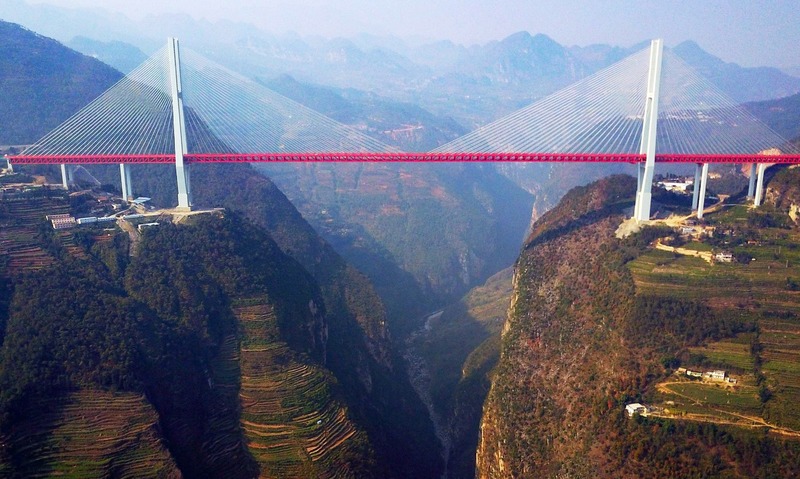
The world’s highest bridge has opened to traffic in China, connecting two provinces in the mountainous southwest and reducing travel times by as much as three-quarters, local authorities said Friday.

The Beipanjiang Bridge soars 565 metres (1,854 feet) above a river and connects the two mountainous provinces of Yunnan and Guizhou, the Guizhou provincial transport department said in a statement on its official website.

The bridge cut travel times between Xuanwei in Yunnan to Shuicheng in Guizhou from more than four hours to around one, a truck driver surnamed Duan was quoted by the official news agency Xinhua as saying after the bridge opened Thursday.

It was “very convenient for people who want to travel between these two places”, he added.

The 1,341-metre span cost over 1 billion yuan ($144 million) to build, according to local newspaper Guizhou Daily.

It overtook the Si Du River Bridge in the central province of Hubei to become the world’s highest bridge, a separate statement by the provincial transport department said earlier.

Several of the world’s highest bridges are in China, although the world’s tallest bridge — measured in terms of the height of its own structure, rather than the distance to the ground — remains France’s Millau viaduct at 343 metres.

After attack, Berlin’s refugee community braces for backlash

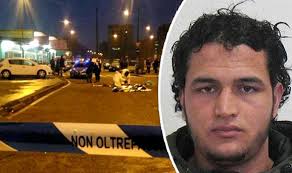
BERLIN — After police killed the asylum seeker suspected of the deadly truck rampage here, other migrants expressed relief that a terrorist was caught but also anxiety about a renewed backlash against them.

“We come from another country, so it’s difficult for us to see this happen,” Omrr Mohebzada, 26, who is from Herat, Afghanistan, said Friday after Tunisian national Anis Amri died in a shootout with police in Milan, Italy.
Mohebzada fled Afghanistan 18 months ago because his father’s logistics company works with the U.S. military and radical Taliban insurgents trying to regain control of the U.S.-backed government threatened to kill him. “Germany has been very good to us. We feel bad when we hear this news. We don’t want Germans to turn against us.”

It’s a reasonable concern in a country that accepted approximately 1 million migrants from war-torn countries in the Middle East and elsewhere during the past two years under Chancellor Angela Merkel’s open-door policy. But her welcoming stance has come under increasing assault from an anti-immigration party that has that has shown surprising strength in local elections this year.

A backlash against the flood of refugees flared a year ago, when gangs of recent arrivals were accused of mass sexual assaults of women during New Year’s eve celebrations in Cologne and other cities. Since then, there have been other attacks by migrants that have put Merkel under pressure to reverse her refugee policy.

Amri, 24, the suspect in Monday’s truck attack at Berlin’s Breitscheidplatz, which killed 12 and injured 48, spent time in jail for theft and vandalism. His German asylum application was rejected because authorities feared he had become radicalized. He avoided deportation because of a bureaucratic mix-up, and he had been under surveillance as a potential terrorist but had not done anything to justify his arrest earlier.

The truck attack occurred five months after a Syrian man killed a woman and wounded five more people with a machette. Also in July, a teenage refugee from Afghanistan injured five tourists from Hong Kong with an ax and knife on a train. In a separate incident, another Syrian blew himself up outside a bar, wounding 15 people.

Because the Berlin attack was the most deadly terror incident, it has heightened concerns among asylum seekers that they will be targeted for even more retribution than already has occurred. There have been more than 1,000 incidents, dozens of them violent, targeting refugee shelters and asylum seekers in Germany since the start of this year, according to the interior ministry.

Odeh Diab, 20, a Syrian refugee, said that in Berlin, the vast majority of his interactions with Germans have been positive and helpful but a backlash is noticeable in small ways. “Often when I get on the subway and sit down, people immediately move away from me because they think I am dangerous,” he said.

He pointed out that there was a far-right, anti-immigration demonstration at the site of the Christmas market attack on Wednesday night, but a simultaneous counter-protest was far larger.

“The idea of a huge ‘backlash’ against the refugees is being pushed by the right-wing political agenda of some of political parties and groups,” said Gregor Wendler, a Berliner with a government-funded organization that helps refugees find work in Germany’s capital. “That only works on people who don’t know how they feel about refugees.”
About two-thirds of Germans approve of Merkel’s decision to stand for a fourth term in next year’s general election, according to a poll published in late November — before the attack — by PoliBarometer.

Still, an earlier survey published by Germany’s Focus magazine found that 60% of Germans want Merkel to put a fixed limit on the number of refugees Germany accepts, a proposal she has repeatedly rebuffed. Meanwhile, the nationalist, anti-immigration Alternative für Deutschland party has seen its popularity soar in recent parliamentary elections, although it has peaked at about 15% nationwide.

“This attack is bad news for all of us refugees who live in Germany,” said Mohammad Soltani, 25, a former bodyguard for a wealthy political family in Kabul, Afghanistan.

Like fellow Afghan Mohebzada, Soltani sought asylum in Germany because the Taliban had made repeated threats to kill him and he saw no other option. “A lot of my friends in Germany are very sad about this attack,” he said. “I hope they captured the right guy. I hope the government does not change its mind about refugees.”

Mohebzada said he hopes the death of the Berlin attack suspect will allow people in Germany and throughout Europe to enjoy Christmas.

Like most asylum seekers in Germany, he and his wife and two small children are Muslim. “Wait, remind me,” he said. “What is the name of the guy with the big, white beard and red clothes?”

Inaugural planners’ biggest concern: Protesters

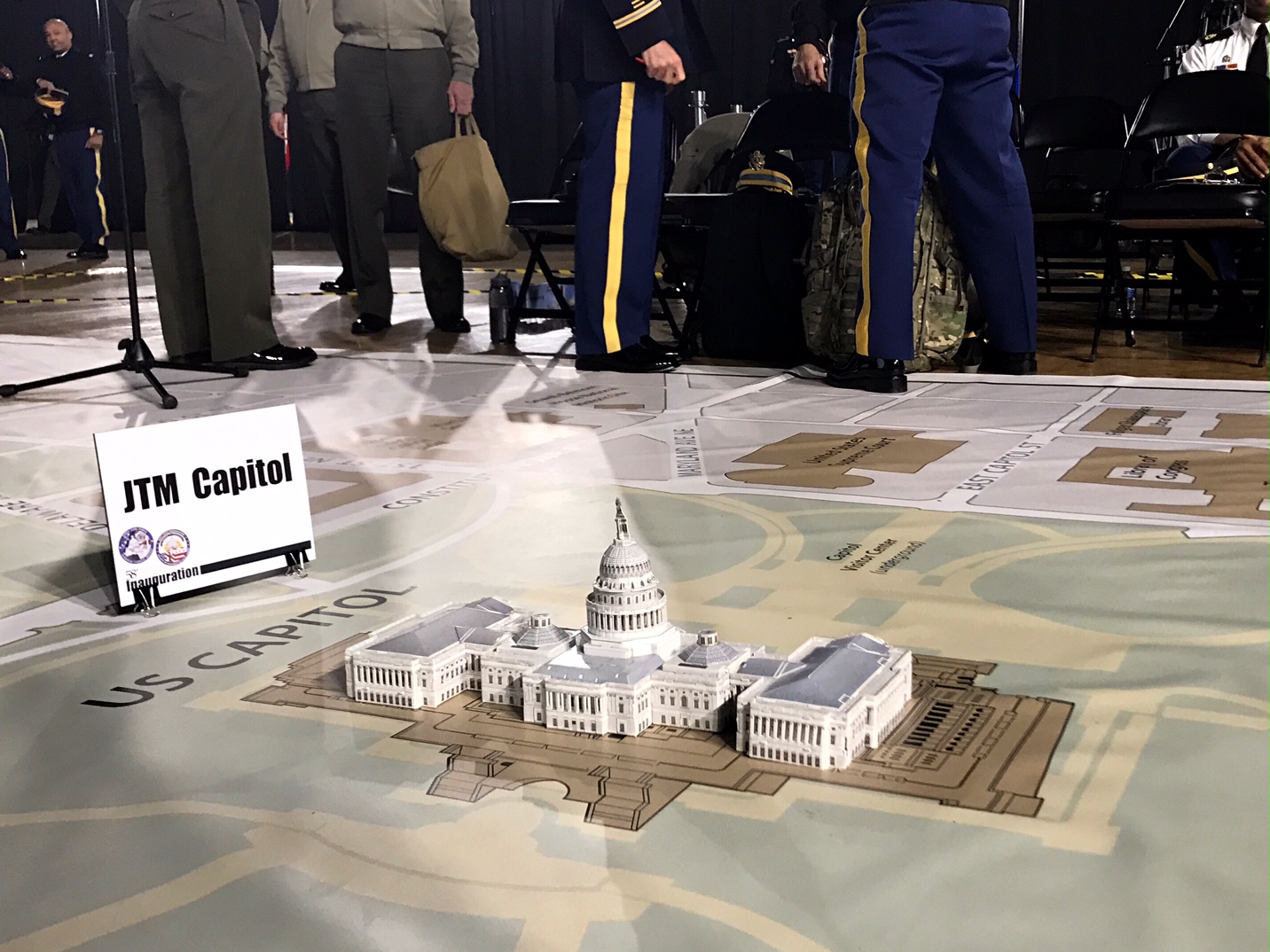
WASHINGTON, Dec 15 — Presidential candidate Donald Trump was anything but conventional — now military planners for the 58th presidential inauguration are preparing for a day that might not include traditional pomp and circumstance.

“Generally speaking, the inauguration is taking shape as it has in the past, although subject to change, as you know,” said Brig. Gen. George Degnon, the deputy commanding general for the inauguration.

In a news conference Wednesday, Degnon was asked whether military planners anticipated Trump putting his nontraditional signature on an event full of tradition.

“We’re still negotiating with the Presidential Inaugural Committee, as far as the specifics for the parade,” said Degnon. “But, with the city laid out the way it is, the number of people we’re bringing in to the city, there’s only so many ways you can make this thing happen.”

Maj. Gen. Bradley Becker, commander of the joint task force providing military ceremonial support for the inaugural events, was asked about the biggest threat to a smoothly run operation.

“At this point the biggest concern is the number of potential protesters, and how that impacts the inauguration, especially the parade itself,” Becker said.

Roped areas will be set up along the parade route for protesters, according to Baker, and Col. William Walker, of the D.C. National Guard.

It is unclear whether the new president will walk a portion of the parade route,” Becker said.

“Clearly the Secret Service has talked about it — previous presidents have done it — but at this point we just don’t know what the president-elect plans to do during the parade,” Becker said

CPEC and Russia’s quest for warm water ports

Pakistan’s point-man for China-Pakistan Economic Corridor (CPEC), Ahsan Iqbal, just concluded an exhaustive visit to Moscow. What would have been the point of a sojourn if there was no talk about the corridor and access to the warm waters of the Arabian Sea? A fortnight ago, Prime Minister Nawaz Sharif attended the Global Conference on Sustainable Transport in Ashgabat, Turkmenistan. Islamabad not only offered its land route to landlocked Central Asian states but also extended the olive branch to Russia. Moscow tried a different strategy to reach the warm waters of the Arabian Sea for three decades, but spectacularly failed courtesy the Afghans and Pakistan.

Russian foreign ministry denied any negotiations with Pakistan on joining the China-sponsored corridor to the Arabian Sea via the Gwadar port. The federal minister’s visit 10 days later offered a blunt rejoinder. On its part, the Central Asia Regional Economic Cooperation member state showed its willingness to work with Russia, thus the meeting with Maksim Sokolov, the Russian transport minister.

Turbulent ties
Islamabad and Moscow first interacted on the fringes of the UN General Assembly meeting on May 1, 1948, when Foreign Minister Sir Zafarullah Khan met his counterpart. Zulfiqar Ali Bhutto aspired to create a better bargain for Pakistan by wooing Russia, when he first visited the country in 1960 as Minister of Fuel Power and Natural Resources. Later, he remained actively engaged with Moscow as a foreign minister as well. The engagement eventually led to post-1965 war Tashkent Declaration. Kremlin backed Delhi outrightly as it sponsored Bengali secessionist militancy in 1971. Despite this, the controversial populist leader visited Moscow in 1972 as premier. Later, Russia launched a proxy war against Pakistan after it sided with the Afghan resistance against its military intervention as well as the capitalist bloc.

Moscow not mulling to join CPEC: Russian foreign ministry
Following his father’s footstep, Premier Benazir Bhutto tried to warm relations with Russia in 1994-1995. However, political infighting at home and Moscow’s annoyance over the rise of Taliban factored in adversely. Just months prior to the coup, Prime Minister Nawaz Sharif visited Russia in 1999. But General Musharraf pressed reset on almost everything the Nawaz government was pursuing, and ties with Russia were no exception.

Since Musharraf’s Russia visit in 2003, relations have steadily improved without considerable turbulence. While almost every Pakistan president or premier has visited Moscow since, none were reciprocated at the same level.
In 2015, commandoes from both sides held war-games, while their navies conducted a joint exercise in the northern Arabian Sea. These increasing comfort levels are leading the two nations to previously unchartered waters, the most notable being the sale of MiG-29’s engines, RD-33, for en masse production and likely export of JF-17 Thunder.

The move was preceded by a deal to buy Russian Mil Mi-35 gunships and electronic warfare equipment. Besides inducting initial deliveries of four rotary-wing aircrafts, Islamabad may order another 16 subject to the platform’s performance and budgetary conditions.

Partnership for mutual benefit
Russia’s prime interest in Pakistan has been investment in the energy sector, symbolised by financing of the 850km North-South (Lahore-Karachi) pipeline to securing investment in the Iran-Pakistan gas pipeline. And it remains to be seen if Moscow agrees to invest in the Thar coal field.

If the overview of complicated bilateral relations can be any guide, both the countries are steadily developing ties but are still far from becoming strategic and economic partners. Russia’s defense cooperation with India is at a far advanced level, which for now remains un-deterred by Delhi’s advances to Washington.

CPEC’s western route: Protests may erupt over unkept promises
Of late, Moscow has not shared India’s hardened position against Pakistan, may it be the BRICS summit in Goa or Heart of Asia conference in Amritsar. Islamabad’s recent abstention on the UN resolution regarding Syria was also an effort to stay out of the Pandora’s box.

The offer to join CPEC is too enticing for Russia to out-rightly reject. Its energy projects, such as the pipeline network, may eventually culminate in Russian oil being shipped to the east and the west from Gwadar port. Even if Kremlin may not benefit from the CPEC in the short term, it won’t back India’s rhetoric against the logistical corridor.

Naveed Ahmad is a Pakistani investigative journalist and academic with extensive reporting experience in the Middle East and North Africa. He is based in Doha and Istanbul.

Industrial phase of CPEC to kick off soon

FAISALABAD, Dec 11: The industrial phase of the China-Pakistan Economic Corridor (CPEC) is going to kick off soon under which Chinese investors would be allowed to set up only high tech industries, which would not have any negative impact on Pakistan’s existing industry, said CPEC Acting Project Director Hasan Dawood.

Speaking to a delegation of the Faisalabad Chamber of Commerce and Industry (FCCI), he said that CPEC has three major perspectives including geo strategic, regional integration and industrial cooperation, adding that Chinese investors cannot afford any clash at any stage with Pakistani industrialists; hence, they prefer to concentrate on Gwadar Port.

The delegation, which was headed by FCCI Vice President Ahmed Hasan, met with the director and apprised him about the reservations of the local industrialists.

Three routes have been proposed to link China with Gwadar Port including eastern, western and central routes, which are expected to be completed by the year 2018, informed Dawood.

Talking about the industrial cooperation under CPEC, he said that working groups are being established to determine the needs of both countries. Four meetings between National Development and Reforms Commission of China and Planning Commission of Pakistan have already been held, said the director.

He said that working groups will have representation of all provinces and encouraged FCCI to present its proposal through their related province for discussion in the working group.

He further told that 36 economic zones would be established under CPEC which would not only create thousands of jobs but also gear up the pace of progress and prosperity.

Published in The Express Tribune, December 11th, 2016.

Changing ties

ONE of Pakistan’s greatest diplomatic achievements during the Cold War was to simultaneously enjoy strong ties with the United States and China. With the end of the Cold War and the retreat of Soviet forces from Afghanistan, this triangular relationship has changed. Pakistan’s ties to Beijing have never been stronger, while ties to Washington are once again troubled. Nothing symbolises this shift more than CPEC.

China has offered Pakistan over $50 billion in investments for critical infrastructure projects as prospects for greater financial and military assistance from Washington dim. Washington has good reasons to be supportive — or at least not negative — about CPEC. If Pakistan can raise its game and make the most of this opportunity, CPEC will not just be one more external lending stream, it can help Pakistan achieve sustainable economic growth, one predicate for national, if not regional stability.

There are, however, challenges to be overcome before extravagant visions of CPEC can be realised. Thriving port cities depend on location and historic patterns of commerce. Habitual Pakistani frictions between provinces and civil-military relations are complicating the takeoff stage. Beijing does not have a track record of philanthropy with respect to foreign investments. CPEC is not a gift; it’s a mutual opportunity, accompanied with interest rates. And Pakistan is in no position to drive hard bargains.

The US may not compete with China for influence in Pakistan.

The upswing in China-Pakistan relations extends well beyond CPEC. Beijing is also helping Pakistan by placing road blocks before India’s entry into the Nuclear Suppliers Group and preventing the UN from adding Jaish-e-Mohammad chief Masood Azhar to its listing of terrorists. In contrast, the US Defence Authorisation Act passed by the Congress conditions half of the assistance given to Pakistan on demonstrable steps against terror groups.

Not that long ago, in 2009, Washington decided to make a major effort to improve relations with Pakistan and to bolster a newly elected civilian government. Now it is very hard to envision another major initiative by Washington, which is sceptical of Islamabad’s promissory notes, or by Pakistan, which is accustomed to being on the receiving end of Washington’s initiatives, not the other way around. Absent a source of new propulsion, bilateral ties will continue to lose altitude.

Islamabad, Washington, and even Beijing have something to lose from these dynamics. No matter how generous Chinese infrastructure and military support turn out to be for Pakistan, having one major power benefactor is half as good as having two. Washington will have less influence to change Pakistani choices for the better, and will now need more of Beijing’s help with crisis management. And while Beijing’s gains are likely to be real, so, too, will the responsibilities of being Pakistan’s top benefactor.

Washington is not inclined to compete with China for influence in Pakistan. Nor is the prospect of more Russian engagement with Pakistan likely to alter US calculations. Washington’s current mood is to continue offering assistance to support common interests — while conditioning a growing portion of aid to demonstrable steps that confirm long-promised changes in Pakistan’s national security policies. All this can be upended with another major act of terrorism that can be traced back to Pakistan.

A legitimate question is whether Washington is capable of acknowledging changes for the better in Pakistan’s national security policies after such a long period of complaint. There has been clear acknowledgement of Pakistan’s counterterrorism campaign against the Pakistan Taliban, and the sacrifices this has entailed. But there is deep scepticism that the scope of this campaign will be widened.

Some in the incoming Trump administration might be inclined to pursue the ‘nuclear option’ — declaring Pakistan a state sponsor of terrorism. This would be a grave mistake, not just for Pakistan and the United States, but also for India. Severing ties will not improve Pakistan’s choices, nor help the United States to encourage nuclear-armed neighbors to improve ties or defuse tensions. Washington does more of the latter than the former because, when New Delhi occasionally seeks to turn the page, an attack on India by cadres of groups based in Pakistan typically follows.

One challenge for Washington during the Trump administration will be to keep the door open and to recognise changes in policies that have weakened Pakistan’s well-being. A second challenge will be to not fly off the handle in ways that badly affect ties. The challenge for Pakistan is to keep moving forward rather than to fall back on bad habits. And to recognize that standard talking points will fall flat without changes in national security policy. Even in the absence of changes in Pakistani policies, the US continues to have important reasons to remain fully engaged on common interests. That sounds easy enough, but sensible steps cannot be taken for granted in the Trump administration.

The writer is co-founder of the Stimson Centre.

Russia ‘tried to help’ Donald Trump win the election, CIA concludes

The Central Intelligence Agency (CIA) has determined that Russia did in fact try to help Donald Trump win the US presidency rather than work to simply interfere with the election, according to a secret report conducted by the agency.

US intelligence officials from multiple agencies have found connections between the Kremlin and Wikileaks. The former provided the latter with countless hacked emails from the Democratic National Committee, Hillary Clinton’s campaign chairman John Podesta, and many others, the Washington Post reported.

The spectre of an ongoing email controversy lurked over Ms Clinton’s campaign from the onset of her candidacy. But in the final months, the massive leak of thousands of emails closed the gap between the former Secretary of State and Mr Trump by double digits. Cybersecurity experts, as well as intelligence officials, had found evidence that linked the hacks to Russia.

“It is the assessment of the intelligence community that Russia’s goal here was to favour one candidate over the other, to help Trump get elected,” a senior US intelligence official briefed on information shared with US senators told the Post. “That’s the consensus view.”
Still, there is some disagreement among some of the officials from all 17 intelligence agencies. They lacked evidence that showed a direct connection between Russia and Wikileaks.The actors they found were “one step” removed from the Russian government, the officials said. 

Wikileaks founder Julian Assange had said Russia was not the source of the leaks in an interview published on the state-owned broadcaster Russia Today.

“The Clinton camp has been able to project a neo-McCarthyist hysteria that Russia is responsible for everything,” he said. “Hillary Clinton has stated multiple times, falsely, that 17 US intelligence agencies had assessed that Russia was the source of our publications.
“That’s false – we can say that the Russian government is not the source.”

President Trump protests
Earlier in the day, the Obama administration ordered a “full review” of election-related hacking. 

The President’s counterterrorism and homeland security adviser, Lisa Monaco, made the announcement to reporters at an event hosted by the Christian Science Monitor. 

“We may have crossed into a new threshold and it is incumbent up on us to take stock of that, to review, to conduct some after-action, to understand what has happened and to impart some lessons learned,” she said. 

Mr Obama expects a full report before he leaves office on 20 January.

US officials from the Department of Homeland Security and the Office of the Director of National Intelligence officially accused Russia of hacking the DNC and other organisations “to interfere with the US election process”.
 
The reiterated their accusations earlier this week.

“The US Intelligence Community is confident that the Russian government directed the recent compromises of e-mails from US persons and institutions, including from US political organisations,” officials said in a statement.

“We believe, based on the scope and sensitivity of these efforts, that only Russia’s senior-most officials could have authorised these activities.”

In a perplexing response, the Trump transition team outright dismissed the validity of the report and the intelligence committee they will soon be running.

“These are the same people that said Saddam Hussein had weapons of mass destruction,” the team incorrectly said in a statement. “The election ended a long time ago in one of the biggest Electoral College victories in history. It’s now time to move on and ‘Make America Great Again’.”

Officials held a secret briefing with congressional leaders in September, but House Majority Leader Mitch McConnell doubted the legitimacy of the assessment.

Additionally, the Post says Mr McConnell made his opposition to such intelligence clear, and if the White House spoke publicly about the Russians’ role in the hacks, he would simply consider it a partisan political stunt.