Trump’s Breezy Calls to World Leaders Leave Diplomats Aghast

WASHINGTON — President-elect Donald J. Trump inherited a complicated world when he won the election last month. And that was before a series of freewheeling phone calls with foreign leaders that has unnerved diplomats at home and abroad.
In the calls, he voiced admiration for one of the world’s most durable despots, the president of Kazakhstan, and said he hoped to visit a country, Pakistan, that President Obama has steered clear of during nearly eight years in office.

Mr. Trump told the British prime minister, Theresa May, “If you travel to the U.S., you should let me know,” an offhand invitation that came only after he spoke to nine other leaders. He later compounded it by saying on Twitter that Britain should name the anti-immigrant leader Nigel Farage its ambassador to Washington, a startling break with diplomatic protocol.

Mr. Trump’s unfiltered exchanges have drawn international attention since the election, most notably when he met Prime Minister Shinzo Abe of Japan with only one other American in the room, his daughter Ivanka Trump — dispensing with the usual practice of using State Department-approved talking points.

“President Obama benefited enormously from the advice and expertise that’s been shared by those who serve at the State Department,” Mr. Earnest said. “I’m confident that as President-elect Trump takes office, those same State Department employees will stand ready to offer him advice as he conducts the business of the United States overseas.”
“Hopefully he’ll take it,” he added.

A spokesman for the State Department, John Kirby, said the department was “helping facilitate and support calls as requested.” But he declined to give details, and it was not clear to what extent Mr. Trump was availing himself of the nation’s diplomats.

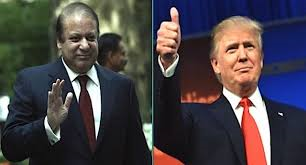
Mr. Trump’s conversation with Prime Minister Nawaz Sharif of Pakistan has generated the most angst, because, as Mr. Earnest put it, the relationship between Mr. Sharif’s country and the United States is “quite complicated,” with disputes over issues ranging from counterterrorism to nuclear proliferation.

In a remarkably candid readout of the phone call, the Pakistani government said Mr. Trump had told Mr. Sharif that he was “a terrific guy” who made him feel as though “I’m talking to a person I have known for long.” He described Pakistanis as “one of the most intelligent people.” When Mr. Sharif invited him to visit Pakistan, the president-elect replied that he would “love to come to a fantastic country, fantastic place of fantastic people.”

The Trump transition office, in its more circumspect readout, said only that Mr. Trump and Mr. Sharif “had a productive conversation about how the United States and Pakistan will have a strong working relationship in the future.” It did not confirm or deny the Pakistani account of Mr. Trump’s remarks.

The breezy tone of the readout left diplomats in Washington slack-jawed, with some initially assuming it was a parody. In particular, they zeroed in on Mr. Trump’s offer to Mr. Sharif “to play any role you want me to play to address and find solutions to the country’s problems.”

That was interpreted by some in India as an offer by the United States to mediate Pakistan’s border dispute with India in Kashmir, something that the Pakistanis have long sought and that India has long resisted.

“By taking such a cavalier attitude to these calls, he’s encouraging people not to take him seriously,” said Daniel F. Feldman, a former special representative to Afghanistan and Pakistan. “He’s made himself not only a bull in a china shop, but a bull in a nuclear china shop.”

Husain Haqqani, a former Pakistani ambassador to Washington, said his government’s decision to release a rough transcript of Mr. Trump’s remarks was a breach of protocol that demonstrated how easily Pakistani leaders misread signals from their American counterparts.

“Pakistan is one country where knowing history and details matters most,” Mr. Haqqani said, “and where the U.S. cannot afford to give wrong signals, given the history of misunderstandings.”

At one level, Mr. Trump’s warm sentiments were surprising, given that during the campaign, he called for temporarily barring Muslims from entering the United States to avoid importing would-be terrorists.

His conversation with Mr. Sharif also came a day after an attack at Ohio State University in which a Somali-born student, Abdul Razak Ali Artan, rammed a car into a group of pedestrians and slashed several people with a knife before being shot and killed by the police. Law enforcement officials said Mr. Artan, whom the Islamic State has claimed as a “soldier,” had lived in Pakistan for seven years before coming to the United States in 2014.

Mr. Obama never visited Pakistan as president, even though he had a circle of Pakistani friends in college and spoke fondly of the country. The White House weighed a visit at various times but always decided against it, according to officials, because of security concerns or because it would be perceived as rewarding Pakistani leaders for what many American officials said was their lack of help in fighting terrorism.

“It sends a powerful message to the people of a country when the president of the United States goes to visit,” Mr. Earnest said. “That’s true whether it’s some of our closest allies, or that’s also true if it’s a country like Pakistan, with whom our relationship is somewhat more complicated.”

Mr. Trump’s call with President Nursultan A. Nazarbayev of Kazakhstan raised similar questions.

Mr. Nazarbayev has ruled his country with an iron hand since 1989, first as head of the Communist Party and later as president after Kazakhstan won its independence from the Soviet Union. In April 2015, he won a fifth term, winning 97.7 percent of the vote and raising suspicions of fraud.

The Kazakh government, in its account of Mr. Trump’s conversation, said he had lavished praise on the president for his leadership of the country over the last 25 years. “D. Trump stressed that under the leadership of Nursultan Nazarbayev, our country over the years of independence had achieved fantastic success that can be called a ‘miracle,’” it said.

The statement went on to say that Mr. Trump had shown solidarity with the Kazakh government over its decision to voluntarily surrender the nuclear arsenal it inherited from the Soviets. “There is no more important issue than the nuclear disarmament and nonproliferation, which must be addressed in a global context,” it quoted Mr. Trump as saying.
Mr. Trump’s statement said that Mr. Nazarbayev had congratulated him on his victory, and that Mr. Trump had reciprocated by congratulating him on the 25th anniversary of his country. Beyond that, it said only that the two leaders had “addressed the importance of strengthening regional partnerships.”

Donald Trump’s fawning conversation with Pakistan’s Nawaz Sharif is widely mocked

Donald Trump has never met Pakistan’s Prime Minister Nawaz Sharif. But he knows he has a “very good reputation”, and understands he is a “terrific guy”. In fact, Mr Trump feels such a connection with the Pakistani leader, whom he hopes to visit soon, that he feels like he is “talking to a person I have known for a long time”.

Mr Trump has never, apparently, visited Pakistan either, and he spoke out during this campaign about the threat of Muslims. Yet he knows the country is rich with “tremendous opportunities”. Furthermore, said Mr Trump: “Pakistanis are one of the most intelligent people(s).”

It cannot be easy for any US president-elect, receiving calls of congratulations from leaders from around the world. Some of the people and places you may know, others you may not.

Some of the conversations are no doubt warm. Others may be more cool.
Yet the transcript of a telephone conversation between Mr Trump and fellow businessman Mr Sharif, released by the Pakistan leader’s office on Wednesday, suggested a conversation nothing less than remarkable. Indeed, if the transcript is true, it maybe the starting of a beautiful new bromance.

The foreign ministry’s press release said that the conversation between Mr Sharif – who, like Mr Trump is a businessman – and the next US president, was initiated the head of the Pakistan Muslim League-N. It said that he “felicitated” Mr Trump on his victory and invited the New York tycoon to visit the overwhelmingly Muslim South Asian country.

“On being invited to Pakistan by the prime minister, Mr Trump said he would love to to come to a fantastic country…fantastic place of fantastic people,” it said.

It said that Mr Trump added: “Please convey to the Pakistani people that they are amazing and all Pakistanis I have known are exceptional people.”

Fidel Castro Dies Aged 90

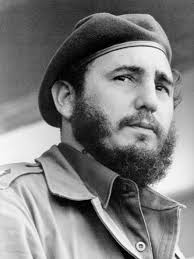
HAVANA, Nov 26 (Reuters) – Fidel Castro, the Cuban revolutionary leader who built a communist state on the doorstep of the United States and for five decades defied U.S. efforts to topple him, died on Friday. He was 90.

A towering figure of the second half of the 20th Century, Castro stuck to his ideology beyond the collapse of Soviet communism and remained widely respected in parts of the world that had struggled against colonial rule.

He had been in poor health since an intestinal ailment nearly killed him in 2006. He formally ceded power to his younger brother Raul Castro two years later.

Wearing a green military uniform, a somber Raul Castro, 85, appeared on state television on Friday night to announce his brother’s death.

“At 10.29 at night, the chief commander of the Cuban revolution, Fidel Castro Ruz, died,” he said, without giving a cause of death.

“Ever onward, to victory,” he said, using the slogan of the Cuban revolution.

Tributes came in from allies, including Indian Prime Minister Narendra Modi and Venezuela’s socialist President Nicolas Maduro, who said “revolutionaries of the world must follow his legacy.”

Although Raul Castro always glorified his older brother, he has changed Cuba since taking over by introducing market-style economic reforms and agreeing with the United States in December 2014 to re-establish diplomatic ties and end decades of hostility.

Fidel Castro offered only lukewarm support for the deal, raising questions about whether he approved of ending hostilities with his longtime enemy. Some analysts believed his mere presence kept Raul from moving further and faster, while others saw him as either quietly supportive or increasingly irrelevant.

He did not meet Barack Obama when he visited Havana earlier this year, the first time a U.S. president had stepped foot on Cuban soil since 1928.

Days later, Castro wrote a scathing newspaper column condemning Obama’s “honey-coated” words and reminding Cubans of the many U.S. efforts to overthrow and weaken the Communist government.

The news of Castro’s death spread slowly among Friday night revelers on the streets of Havana. One famous club that was still open when word came in quickly closed.

Some residents reacted with sadness to the news.

“I’m very upset. Whatever you want to say, he is a public figure that the whole world respected and loved,” said Havana student Sariel Valdespino.

But in Miami, where many exiles from Castro’s Communist government live, a large crowd waving Cuban flags cheered, danced and banged on pots and pans.

Castro’s body will be cremated, according to his wishes. Cuba declared nine days of mourning, during which time the ashes will be taken to different parts of the country. A burial ceremony will be held on Dec. 4.

The bearded Fidel Castro took power in a 1959 revolution and ruled Cuba for 49 years with a mix of charisma and iron will, creating a one-party state and becoming a central figure in the Cold War.

He was demonized by the United States and its allies but admired by many leftists around the world, especially socialist revolutionaries in Latin America and Africa.

Nelson Mandela, once freed from prison in 1990, repeatedly thanked Castro for his firm efforts in helping to weaken apartheid.

The father of communist Cuba, Fidel Castro, died on Nov. 25, 2016, at the age of 90. The controversial and divisive world figure received several international awards and is recognized as a champion of socialism, anti-imperialism, and humanitarianism. Let’s take a look at the life of the revolutionary who ruled Cuba for almost five decades.

1945: Early Life
Castro was born in Cuba in 1926, the illegitimate son of Ángel Castro, a rich farmer. At school, he was an intelligent but not exceptional student — although his main passion was for sport, at which he excelled. But it was when he went to study law at the University of Havana that Castro began to develop his political awareness, becoming involved with a variety of left-wing activist groups. In 1947, he joined a military expedition to try and overthrow the right-wing dictator of the Dominican Republic but when that failed, he returned to Cuba. In 1948, Castro married Mirta Díaz Balart, who came from a wealthy Cuban family. One of the wedding gifts he received was $1,000 from Cuban general Fulgencio Batista, a friend of Balart’s family. (Pictured) Castro after he was chosen as the best athlete of Belen High School in 1945.

1952: Batista coup
Castro was working as a lawyer in 1952 when Batista — who had already served once as a left-leaning president of Cuba — staged a military coup three months before the elections were due. Unlike his legitimate first term as president, the U.S.-backed Batista (C) ruled as a dictator in the interests of the wealthy, with both American business and American organized crime enriching themselves while ordinary Cubans became increasingly impoverished.

1953: Attempted uprising and jail
In response to the Batista coup, a number of revolutionary organisations in Cuba were formed with the intention of opposing the regime — one of which, known simply as “The Movement,” was formed by Castro. In 1953, Castro led a group of over 100 rebels — including his brother Raúl — in an attack on a military garrison, the Moncada Barracks. Despite careful planning, the attempt to start an uprising was a disaster as the rebels were heavily outnumbered, and were quickly forced to retreat, with many of them captured or killed. Castro retreated to the mountains but over the next few days, the remaining rebels were rounded up and either executed or, like Castro, put on trial. Castro is pictured on the left, giving his deposition to military and police chiefs at the Vivac in Santiago de Cuba in July 1953. On Oct. 16, Castro was sentenced to 15 years imprisonment; although in the end, he would serve less than two years. At his trial, he said: “Condemn me. It does not matter. History will absolve me.”

1956: Mexico and Che
Despite being sentenced for 15 years, Castro was released in 1955 as the newly confident Batista regime — bolstered by support from the U.S. — believed the rebels to be no threat to them. During his time in jail, Castro and his wife began divorce proceedings after she began working for Batista’s Ministry of the Interior. A few months after his release, in July 1955, Fidel followed his brother Raúl to Mexico, where the latter introduced him to a young Argentinian doctor called Ernesto Guevara, commonly known as Che. Guevara was committed to helping spread revolutionary activities and fighting the U.S. influence across Latin America. (Pictured) Fidel (L) and Che are seen in jail in Mexico City after being arrested in June 1956, quite possibly the first picture of them together.

1956: Revolutionaries
Guevara (R) and Castro (L) would become profoundly influential in each other’s lives, as the Argentinian joined Fidel in his fight against the Batista regime. In December 1956, a group of revolutionaries — including Fidel and Raúl Castro, and Che Guevara — traveled back to Cuba, where they set up a camp in the Sierra Maestra mountains, and began a grueling, years-long campaign of guerrilla warfare.

1957: Guerrilla warfare
Throughout 1957, Castro and his allies led repeated attacks on military outposts of the Batista regime across the Sierra Maestra region while building support among locals and attracting new recruits from the cities. By 1958, the attacks had proven so successful that the Batista government withdrew its forces from the mountain area entirely, giving Castro’s rebels control of virtually all of Oriente Province. Seeing the tide turning against Batista, the U.S. withdrew its support for Batista and hoped to replace him with a right-wing, military-led regime better placed to thwart Castro. Out of allies, Batista resigned on the New Year’s Eve of 1958, and subsequently fled the country, taking a fortune estimated to be at $300 million with him.

1959: Revolution achieved
After Batista’s resignation, the U.S.-backed military — led by General Eulogio Cantillo — attempted to take control of the country. But the massive swell of support behind Castro was too great. On Jan. 1, Castro supporters took to the streets of the capital Havana to celebrate Batista’s fall, burning casinos and other symbols of the old regime’s power (pictured). On Jan. 2, Guevara-led revolutionary forces entered Havana, while Castro’s forces took the second city of Santiago. A week later, on Jan. 8, Castro finally entered Havana to a hero’s welcome.

1959: Becomes prime minister
With the fall of the Batista regime and the arrest of General Cantillo, a liberal lawyer named Manuel Urrutia Lleó — who had defended rebels in trials established by the Batista regime, and had been strongly backed by Castro — was declared president. But Castro and Urrutia quickly fell out; Urrutia and his prime minister José Miró wanted to establish democratic elections and restore the rule of law. Castro, however, opposed elections and was quick to oversee the execution of former Batista regime officials without proper trials. In mid-February, Miró unexpectedly resigned — leading to Castro being sworn in as prime minister, and leaving Urrutia isolated. A few months later, in July, Castro briefly resigned as prime minister and denounced Urrutia — who, out of allies, offered his resignation. Castro then resumed his duties as prime minister having appointed a replacement president of his own choosing.

1960: Nationalization and purges
Unlike Che Guevara and his brother Raúl, during his time as a revolutionary, Castro had always refused to identify himself as a communist, in the hope of building a broader coalition. But once in power, he began a widespread program of nationalization of property and business, socialization of healthcare and collectivization of agriculture and other means of production — winning him widespread support among the country’s poor. Simultaneously, he also set about purging Cuban society of opponents — not just backers of the Batista regime, but moderates and liberals as well. Opposition newspapers were closed, a surveillance network (the Committees for the Defense of the Revolution) was established to report on counter-revolutionary activities, and many opponents of his rule were arrested and imprisoned. Other groups who Castro disliked were also targeted — notably homosexuals, who were imprisoned on a large scale.

1960 onwards: Embrace of communism and US embargo
In 1961, Castro officially announced that Cuba was a socialist state, and formally allied the country with the Soviet Union, which in return established new trade deals and provided arms. Castro embraced the Soviet Union partly in response to a growing trade war with the U.S.; when the Cuban government had nationalized the properties of the U.S. companies, the U.S. imposed a tight quota on its sugar imports from Cuba, something that could severely damage the island’s economy. Castro is pictured here greeting the Soviet Premier Nikita Khrushchev at the UN General Assembly in New York, U.S., in September 1960. Over the following years, the U.S. trade restrictions were tightened to a full-on embargo, preventing any trade with and travel to Cuba on the part of Americans, and even attempting to prevent any firm that did business with Cuba also doing business with the U.S. Shortly before President Kennedy formalized the trade embargo in 1962, he reportedly asked that 1,000 Cuban cigars be bought for him for his future enjoyment.

1961: Bay of Pigs
In addition to the trade war, since 1960 the U.S. had been actively trying to undermine and disrupt the new Cuban regime. This culminated in the disastrous April 1961 attempt by CIA-organised Cuban exiles to invade the island. On April 17, 1961, around 1,400 Cuban exiles, under the command of U.S. soldiers and CIA operatives, landed at the Bay of Pigs on Cuba’s south coast. But Castro’s government — which knew they were coming thanks to its intelligence network — easily defeated the invaders after three days of fighting. Castro himself was present at the battleground to oversee the military operations (pictured). The botched invasion was a huge embarrassment to the new Kennedy administration.

1962: Cuban missile crisis
Following the Bay of Pigs invasion attempt, Castro moved to strengthen Cuba’s military ties to the Soviet Union — including secretly agreeing to build bases that would hold Soviet R-12 MRBM nuclear missiles, enabling the Soviets to target the U.S. in the same way American nuclear bases in Europe could target the USSR. In October 1962, a U.S. surveillance flight obtained photographic proof of the missile bases (pictured), sparking an international incident that brought the world the closest it has ever been to a nuclear war. After 13 incredibly tense days in which it looked likely that the U.S. and the U.S.S.R. would go to war, the stand-off was resolved when Soviet Premier Khrushchev agreed to dismantle the Cuban bases and withdraw its missiles. In return, the U.S. secretly agreed to do the same with its Italian and Turkish missile bases, and publicly pledged never to invade Cuba.

1960s: Assassination attempts
Since before the Bay of Pigs incident and for many years following it, in addition to invasion attempts, the CIA had repeatedly plotted to assassinate Castro — at least eight separate plots are known of, while Cuban sources estimate they made hundreds of attempts. Notoriously, one of the reported assassination methods supposedly would have involved an exploding cigar — although it’s not clear if this was ever seriously considered by the agency. What is known that several real plots did involve attempts to poison Castro, including one that recruited his ex-lover and another ongoing collaboration between the CIA and American gangsters from Al Capone’s former criminal gang. Needless to say, all the assassination attempts failed.

1970s and 1980s: Decades of rule
With Cuba sat in the middle of the Cold War’s stand-off between the U.S. and the U.S.S.R., Castro continued to rule for decades with little change. Cuba was cut off from much of the world by the U.S. embargo, severely limiting the civil rights of its citizens at home but supported economically thanks to trade with the Soviet Union. During this time, Castro supported other Marxist revolutionary movements across both Latin America and parts of Africa, such as Angola and Ethiopia — the former winning him the admiration of the then-jailed Nelson Mandela (L).

1991: Fall of Soviet Union
Cuba’s decades of relative — if tense — stability started to change at the end of the 1980s, as Castro grew disillusioned with Mikhail Gorbachev’s (R) reformist leadership of the Soviet Union and the decline of communism across Eastern Europe. In 1991, the collapse of the Soviet Union proved a devastating blow for Castro’s Cuba. Losing its major trading partner, responsible for 80 percent of its imports and exports, while still being under economic embargo from its superpower neighbor, saw the country plunged into an economic crisis.

1989-1994: Economic collapse
The economic crisis, which had started in 1989, was exacerbated following the collapse of the Soviet Union. By 1992, the country’s GDP had shrunk by over 40%. Castro declared sweeping austerity measures known as the ‘Special Period in Time of Peace,’ closing all non-essential factories, rationing petrol and electricity and even using oxen to replace tractors on some farms. In 1994, Castro lifted restrictions on Cubans wishing to leave the country. The number of Cubans fleeing the country to seek refuge in the U.S., often on ramshackle rafts, grew significantly — around 30,000 made for the Florida coast. Faced with a wave of immigration, the U.S. Government of Bill Clinton stopped accepting the refugees, returning them to Guantanamo Bay, the U.S. naval base in Cuba. (Pictured) Cuban refugees stranded in the open sea halfway between Key West and Cuba in August 1994.

2001: Hurricane Michelle
In 2001, the category 4 Hurricane Michelle struck Cuba. Thanks to an efficient evacuation process, only four people died but it caused an estimated US $1.8 billion of damage, severely hurting the country’s recovering-but-still-fragile economy. Castro is seen here as he inspects a citrus grove damaged by the hurricane. Although Castro refused the offer of aid from the U.S., he did agree to a one-off purchase of food from the latter, the first shipment of food since the embargo was imposed.
2001 onwards: Health rumors
In 2001, Castro fainted in public while in the middle of giving a seven-hour-long speech in the hot sun (above). It sparked rumors about the leader’s failing health and speculation about who would succeed him if he became too ill to govern.

2006: Handover to Raúl
At the end of July 2006, after undergoing a major surgery, Castro officially handed over his presidential duties to his brother Raúl (R), marking the end of over 45 years as Cuba’s de facto leader, both as prime minister and president (although he retained his official position). Over the following years, he was rarely seen in public, and rumors about his ill health continued to circulate.

2008: Retirement
Almost two years after handing over his duties, in February 2008, Castro officially retired as Cuban president, with Raúl taking over the role — although he remained as the leader of the Communist Party until 2011. In his retirement, and with his health apparently improved, Castro remained active in Cuban political life — writing a weekly column for the official Communist Party newspaper Granma and giving interviews with foreign journalists. He also spoke of some of the mistakes and regrets over his decades of rule — admitting economic blunders during the “special period,” and (among other things) describing his regime’s persecution of homosexuals as a “great injustice” for which he took responsibility.

2009 onwards: Legacy
Castro’s influence can still be seen across the island, including in the many pictures and murals of him still publicly displayed. In December 2014, U.S. President Barack Obama announced that the U.S. would restore diplomatic relations with Cuba, ending 50 years of hostility. Rumors had again begun to swirl about the former Cuban leader’s health as he hadn’t appeared in public since January. In March 2016, Obama and his family made a historic trip to the island nation, though there was no meeting between the two.

2016: Death
On Nov. 25, Raúl announced Castro’s death to the public and said: “The commander in chief of the Cuban revolution died at 22:29 hours this evening.” Before his 90th birthday in August, he had told his supporters that he didn’t expect to live long.

In April, in a rare public appearance at the Communist Party conference, Fidel Castro shocked party apparatchiks by referring to his own imminent mortality.

“Soon I will be like all the rest. Our turn comes to all of us, but the ideas of the Cuban communists will remain,” he said.

Castro was last seen by ordinary Cubans in photos showing him engaged in conversation with Vietnamese President Tran Dai Quang earlier this month.

Transforming Cuba from a playground for rich Americans into a symbol of resistance to Washington, Castro crossed swords with 10 U.S. presidents while in power, and outlasted nine of them.

He fended off a CIA-backed invasion at the Bay of Pigs in 1961 as well as countless assassination attempts.
His alliance with Moscow helped trigger the Cuban Missile Crisis in 1962, a 13-day showdown with the United States that brought the world the closest it has been to nuclear war.

Wearing green military fatigues and chomping on cigars for many of his years in power, Castro was famous for long, fist-pounding speeches filled with blistering rhetoric, often aimed at the United States.

At home, he swept away capitalism and won support for bringing schools and hospitals to the poor. But he also created legions of enemies and critics, concentrated among the exiles in Miami who fled his rule and saw him as a ruthless tyrant.

“With Castro’s passing, some of the heat may go out of the antagonism between Cuba and the United States, and between Cuba and Miami, which would be good for everyone,” said William M. LeoGrande, co-author of a book on U.S.-Cuba relations.

However, it is not clear if U.S. President-Elect Donald Trump will continue to normalize relations with Cuba or revive tensions and fulfill a campaign promise to close the U.S. embassy in Havana once again.
Castro’s death – which would once have thrown a question mark over Cuba’s future – seems unlikely to trigger a crisis as Raul Castro is firmly ensconced in power.

In his final years, Fidel Castro no longer held leadership posts. He wrote newspaper commentaries on world affairs and occasionally met with foreign leaders but he lived in semi-seclusion.

Still, the passing of the man known to most Cubans as “El Comandante” – the commander – or simply “Fidel” leaves a huge void in the country he dominated for so long. It also underlines the generational change in Cuba’s communist leadership.

Raul Castro vows to step down when his term ends in 2018 and the Communist Party has elevated younger leaders to its Politburo, including 56-year-old Miguel Diaz-Canel, who is first vice-president and the heir apparent.
Others in their 50s include Foreign Minister Bruno Rodriguez and economic reform czar Marino Murillo.
The reforms have led to more private enterprise and the lifting of some restrictions on personal freedoms but they aim to strengthen Communist Party rule, not weaken it.

REVOLUTIONARY ICON
A Jesuit-educated lawyer, Fidel Castro led the revolution that ousted U.S.-backed dictator Fulgencio Batista on Jan 1, 1959. Aged 32, he quickly took control of Cuba and sought to transform it into an egalitarian society.
His government improved the living conditions of the very poor, achieved health and literacy levels on a par with rich countries and rid Cuba of a powerful Mafia presence.

But he also tolerated little dissent, jailed opponents, seized private businesses and monopolized the media.
Castro’s opponents labeled him a dictator and hundreds of thousands fled the island.

“The dictator Fidel Castro has died, the cause of many deaths in Cuba, Latin American and Africa,” Jose Daniel Ferrer, leader of the island’s largest dissident group, the Patriotic Union of Cuba, said on Twitter.

Many dissidents settled in Florida, influencing U.S. policy toward Cuba and plotting Castro’s demise. Some even trained in the Florida swamps for the disastrous Bay of Pigs invasion.

But they could never dislodge him.

Castro claimed he survived or evaded hundreds of assassination attempts, including some conjured up by the CIA.
In 1962, the United States imposed a damaging trade embargo that Castro blamed for most of Cuba’s ills, using it to his advantage to rally patriotic fury.

Over the years, he expanded his influence by sending Cuban troops into far-away wars, including 350,000 to fight in Africa. They provided critical support to a left-wing government in Angola and contributed to the independence of Namibia in a war that helped end apartheid in South Africa.

He also won friends by sending tens of thousands of Cuban doctors abroad to treat the poor and bringing young people from developing countries to train them as physicians

‘HISTORY WILL ABSOLVE ME’

Born on August 13, 1926, in Biran in eastern Cuba, Castro was the son of a Spanish immigrant who became a wealthy landowner.

Angry at social conditions and Batista’s dictatorship, Castro launched his revolution on July 26, 1953, with a failed assault on the Moncada barracks in the eastern city of Santiago.

“History will absolve me,” he declared during his trial for the attack.

He was sentenced to 15 years in prison but was released in 1955 after a pardon that would come back to haunt Batista.

Castro went into exile in Mexico and prepared a small rebel army to fight Batista. It included Argentine revolutionary Ernesto “Che” Guevara, who became his comrade-in-arms.

In December 1956, Castro and a rag-tag band of 81 followers sailed to Cuba aboard a badly overloaded yacht called “Granma.”

Only 12, including him, his brother and Guevara, escaped a government ambush when they landed in eastern Cuba.
Taking refuge in the rugged Sierra Maestra mountains, they built a guerrilla force of several thousand fighters who, along with urban rebel groups, defeated Batista’s military in just over two years.

Early in his rule, at the height of the Cold War, Castro allied Cuba to the Soviet Union, which protected the Caribbean island and was its principal benefactor for three decades.

The alliance brought in $4 billion worth of aid annually, including everything from oil to guns, but also provoked the 1962 Cuban Missile Crisis when the United States discovered Soviet missiles on the island.
Convinced that the United States was about to invade Cuba, Castro urged the Soviets to launch a nuclear attack.
Cooler heads prevailed. Soviet leader Nikita Khrushchev and U.S. President John F. Kennedy agreed the Soviets would withdraw the missiles in return for a U.S. promise never to invade Cuba. The United States also secretly agreed to remove its nuclear missiles from Turkey.

‘SPECIAL PERIOD’
When the Soviet Union collapsed in 1991, an isolated Cuba fell into an economic crisis that lasted for years and was known as the “special period.” Food, transport and basics such as soap were scarce and energy shortages led to frequent and long blackouts.

Castro undertook a series of tentative economic reforms to get through the crisis, including opening up to foreign tourism.

The economy improved when Venezuela’s late socialist leader Hugo Chavez, who looked up to Castro as a hero, came to the rescue with cheap oil. Aid from communist-run China also helped, but Venezuelan support for Cuba has been scaled down since Chavez’s death in 2013.

Plagued by chronic economic problems, Cuba’s population of 11 million has endured years of hardship, although not the deep poverty, violent crime and government neglect of many other developing countries.

Cubans earn on average the equivalent of $20 a month and struggle to make ends meet even in an economy where education and health care are free and many basic goods and services are heavily subsidized.

For most Cubans, Castro has been the ubiquitous figure of their entire life.

Many still love him and share his faith in a communist future, and even some who abandoned their political belief still view him with respect.

“For everyone in Cuba and outside his death is very sad,” said Havana resident Luis Martinez. “It is very painful news.”
(Reporting by Daniel Trotta and Marc Frank; Editing by Frank Jack Daniel, Kieran Murray and Hugh Lawson)
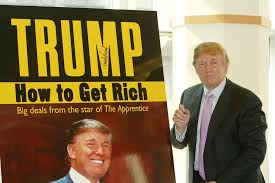
Trump University Fraud Cases Settled for $25 Million

SAN DIEGO, Nov 19—President-elect Donald Trump has reached a $25 million settlement to resolve litigation in New York and California involving allegations of fraud at the now-defunct Trump University, an agreement that resolves a major litigation headache before he enters the White House.

Attorneys for the parties announced the settlement, which is still subject to court approval, during a Friday court hearing.

Mr. Trump has been battling cases brought in California by consumers who alleged the New York businessman’s for-profit real-estate school falsely promised that its seminars would teach them Mr. Trump’s strategies for success. New York Attorney General Eric T. Schneiderman also brought similar claims in separate litigation and will be allocated $4 million of the settlement proceeds.

Mr. Trump has denied the allegations, saying students got their money’s worth from the seminars and that many students gave positive reviews.

Mr. Trump, who announced senior administration appointments on Friday, addressed the settlement on Twitter Saturday morning, saying he agreed to settle because of his election as president.

“I settled the Trump University lawsuit for a small fraction of the potential award because as President I have to focus on our country,” he said in one tweet. “The ONLY bad thing about winning the Presidency is that I did not have the time to go through a long but winning trial on Trump U. Too bad!,” he wrote in another.

The settlement could benefit thousands of consumers who enrolled in Trump University courses, which cost between roughly $1,500 and $35,000.

Mr. Trump won’t admit any wrongdoing as part of the agreement. A spokeswoman for the Trump Organization said: “While we have no doubt that Trump University would have prevailed at trial based on the merits of this case, resolution of these matters allows President-elect Trump to devote his full attention to the important issues facing our great nation.”

Daniel Petrocelli, an attorney for Mr. Trump, said outside the courthouse that while Mr. Trump “can fight, as we all know,” he put aside his personal beliefs to forge the agreement and avoid trial.

Mr. Schneiderman in a statement said the settlement “is a stunning reversal by Donald Trump and a major victory for the over 6,000 victims of his fraudulent university.”

Plaintiffs’ lawyers will forego taking a percentage of the settlement for attorney fees, an attorney for the students said in court, though $1 million of the funds has been allocated for expenses.

“Plaintiffs are very pleased to be able to pay off their credit cards and move on with their lives,” Rachel Jensen, an attorney for the ex-students, said in court.

The settlement comes as Mr. Trump’s team had been seeking to postpone trial proceedings in one of the California cases, which was scheduled to get under way Nov. 28.

During the Friday hearing, U.S. District Judge Gonzalo Curiel in San Diego said he would review the deal to see if it is “fair, adequate and reasonable.”

He added that “with respect to this country,” he hopes the settlement is the “beginning of a healing process that this country sorely needs.” At a hearing last week, the judge urged the parties to settle the case.

Trial proceedings already had been postponed during the presidential campaign so the case wouldn’t interfere with the election. After he won the White House, Mr. Trump sought another delay, saying he needed to be preparing for his new administration, not the litigation. He also sought permission to testify remotely in the case instead of having to appear in person in front of jurors and Judge Curiel.

While the GOP presidential nominee, Mr. Trump criticized Judge Curiel for not dismissing the case before trial, alleging the judge was biased, given his “Mexican heritage” and Mr. Trump’s tough stance on illegal immigrants from Mexico. Those comments were widely criticized. Judge Curiel, whose parents are from Mexico, was born in Indiana.

The case is one of several that threatened to intrude on Mr. Trump’s early tenure as president.
Other cases include litigation between Mr. Trump and two prominent chefs who withdrew from plans to open restaurants in a new Trump hotel in Washington, D.C., citing incendiary remarks by the New York businessman on the campaign trail.

Bernie Sanders: Where the Democrats Go From Here

Millions of Americans registered a protest vote on Tuesday, expressing their fierce opposition to an economic and political system that puts wealthy and corporate interests over their own. I strongly supported Hillary Clinton, campaigned hard on her behalf, and believed she was the right choice on Election Day. But Donald J. Trump won the White House because his campaign rhetoric successfully tapped into a very real and justified anger, an anger that many traditional Democrats feel.

I am saddened, but not surprised, by the outcome. It is no shock to me that millions of people who voted for Mr. Trump did so because they are sick and tired of the economic, political and media status quo.
Working families watch as politicians get campaign financial support from billionaires and corporate interests — and then ignore the needs of ordinary Americans. Over the last 30 years, too many Americans were sold out by their corporate bosses. They work longer hours for lower wages as they see decent paying jobs go to China, Mexico or some other low-wage country. They are tired of having chief executives make 300 times what they do, while 52 percent of all new income goes to the top 1 percent. Many of their once beautiful rural towns have depopulated, their downtown stores are shuttered, and their kids are leaving home because there are no jobs — all while corporations suck the wealth out of their communities and stuff them into offshore accounts.

Working Americans can’t afford decent, quality child care for their children. They can’t send their kids to college, and they have nothing in the bank as they head into retirement. In many parts of the country they can’t find affordable housing, and they find the cost of health insurance much too high. Too many families exist in despair as drugs, alcohol and suicide cut life short for a growing number of people.
President-elect Trump is right: The American people want change. But what kind of change will he be offering them? Will he have the courage to stand up to the most powerful people in this country who are responsible for the economic pain that so many working families feel, or will he turn the anger of the majority against minorities, immigrants, the poor and the helpless?

Will he have the courage to stand up to Wall Street, work to break up the “too big to fail” financial institutions and demand that big banks invest in small businesses and create jobs in rural America and inner cities? Or, will he appoint another Wall Street banker to run the Treasury Department and continue business as usual? Will he, as he promised during the campaign, really take on the pharmaceutical industry and lower the price of prescription drugs?

I am deeply distressed to hear stories of Americans being intimidated and harassed in the wake of Mr. Trump’s victory, and I hear the cries of families who are living in fear of being torn apart. We have come too far as a country in combating discrimination. We are not going back. Rest assured, there is no compromise on racism, bigotry, xenophobia and sexism. We will fight it in all its forms, whenever and wherever it re-emerges.

I will keep an open mind to see what ideas Mr. Trump offers and when and how we can work together. Having lost the nationwide popular vote, however, he would do well to heed the views of progressives. If the president-elect is serious about pursuing policies that improve the lives of working families, I’m going to present some very real opportunities for him to earn my support.

Let’s rebuild our crumbling infrastructure and create millions of well-paying jobs. Let’s raise the minimum wage to a living wage, help students afford to go to college, provide paid family and medical leave and expand Social Security. Let’s reform an economic system that enables billionaires like Mr. Trump not to pay a nickel in federal income taxes. And most important, let’s end the ability of wealthy campaign contributors to buy elections.

In the coming days, I will also provide a series of reforms to reinvigorate the Democratic Party. I believe strongly that the party must break loose from its corporate establishment ties and, once again, become a grass-roots party of working people, the elderly and the poor. We must open the doors of the party to welcome in the idealism and energy of young people and all Americans who are fighting for economic, social, racial and environmental justice. We must have the courage to take on the greed and power of Wall Street, the drug companies, the insurance companies and the fossil fuel industry.

When my presidential campaign came to an end, I pledged to my supporters that the political revolution would continue. And now, more than ever, that must happen. We are the wealthiest nation in the history of the world. When we stand together and don’t let demagogues divide us up by race, gender or national origin, there is nothing we cannot accomplish. We must go forward, not backward.

Bernie Sanders, a senator from Vermont, was a candidate for the 2016 Democratic presidential nomination.

U.S. Faces a Startling New Political Reality After Donald Trump’s Victory

The American political establishment was reeling from shock on Wednesday as leaders in both parties began coming to grips with four years of President Donald J. Trump in the White House, a once-unimaginable scenario that has now plunged the United States and its allies and adversaries into a period of unprecedented uncertainty about the policies and impact of Mr. Trump.

President Obama, a longtime foe of Mr. Trump, and Hillary Clinton, the president-elect’s vanquished opponent, held separate news conferences to urge people to put aside whatever bruised feelings and disappointment they have and come together for the sake of the republic, and for the good of Mr. Trump’s presidency.

Mr. Obama, addressing the nation from the Rose Garden on Wednesday, said he had called Mr. Trump with congratulations and to invite him to meet at the White House on Thursday to discuss a smooth transition to the Trump administration.

“We are all now rooting for his success in uniting and leading the country,” Mr. Obama said. “The peaceful transfer of power is one of the hallmarks of our democracy. And over the next few months we are going to show that to the world.”

Mrs. Clinton, in her first remarks to supporters after the election, said that she hoped that Mr. Trump “will be a successful president for all Americans,” and said she was “sorry that we did not win this election for the values we share and the vision we hold for our country.”

“This is painful, and it will be for a long time,” Mrs. Clinton said, standing beside her husband, former President Bill Clinton, in a tableau that underscored the end of a nearly 25-year era when the Clintons dominated American politics.

Noting that the country was “more deeply divided than we thought,” Mrs. Clinton added: “We must accept this result and look to the future. Donald Trump is going to be our president — we owe him an open mind and a chance to lead.”

While her speech largely dealt with politics, Mrs. Clinton choked back tears at times, and turned personal at one point.

“To all the little girls who are watching this,” she said, “never doubt that you are valuable and powerful and deserving of every chance and opportunity in the world to pursue and achieve your own dreams.”

For many millions of voters, a sense of excitement and even euphoria coursed from coast to coast as they celebrated the election of a true political outsider who had promised to reverse policies of the Obama administration and be a champion for “forgotten Americans.” But millions of others felt a sense of dread and even fear as they tried to fathom how Mr. Trump could win the presidency when so many polls suggested otherwise, and to prepare themselves for the consequences of a new leader who has no experience in government or world affairs.

Trump campaign advisers said on Wednesday that the president-elect was turning to assembling a cabinet and White House team and selecting a conservative nominee for the Supreme Court vacancy. The advisers said Mr. Trump was inclined to roll out a few cabinet nominations at a time, rather than kicking them off with one high-profile pick for a critical department like Treasury or State.

Among the candidates for cabinet secretaries and advisers are members of Mr. Trump’s inner circle, aides said, including Senator Jeff Sessions of Alabama, a crucial adviser on policy issues; Steven Mnuchin, a businessman who was Mr. Trump’s national finance chairman; Rudolph W. Giuliani, the former mayor of New York; Gov. Chris Christie of New Jersey; and Newt Gingrich, a former speaker of the House.

Mr. Trump also spent Wednesday morning receiving phone calls from world leaders, said the campaign advisers who spoke on the condition of anonymity to discuss the transition planning. The advisers declined to identify the leaders, though one said it would be unusual if the president-elect had not heard from allies like Britain and Germany.

Asked if President Vladimir V. Putin of Russia had spoken with Mr. Trump, who surprised many Americans by saying that Mr. Putin had been a stronger leader than President Obama, the aide said the two men had not been in touch.
Anxiety was particularly deep among Hispanics, African-Americans, Muslims, immigrants, women and others who had felt disparaged or demonized by Mr. Trump, who at times used harsh and racially charged language in ways that upended mainstream politics. The very idea that Mr. Trump had been endorsed by a Ku Klux Klan newspaper — even if he rejected it — symbolized the sense of shock that he would now lead a vibrantly diverse democracy.

Asked how they would feel about a Trump presidency, more than a third of Americans said they would be frightened, exit polls found. Among those who voted for Hillary Clinton, the feeling was almost unanimous and reflected a deep divide: 92 percent said Mr. Trump scared them.

Politicians also joined business leaders — as well as the many Americans with retirement and savings accounts — in keeping a nervous eye on the world financial markets in fear of the sort of backlash that wounded Britain after its vote in June to leave the European Union. While some business leaders worried about the nation’s sliding into recession, others were more hopeful that Mr. Trump’s proposals of tax cuts, infrastructure spending and relaxing of regulations would be welcomed by the financial markets, which stabilized after sharp declines overnight.

Political activity and reactions in both parties were in a surreal state of suspended animation as Republicans and Democrats began anticipating Mr. Trump’s moves. Paul D. Ryan, the speaker of the House, said at a news conference Wednesday morning that Mr. Trump had a “mandate” for his vision of government, including trying to repeal the Affordable Care Act, after his stunning upset victory over Mrs. Clinton.

Mr. Ryan described a United States under Mr. Trump as a different place than it has been, saying that the president-elect would be a champion of the many Americans who do not like the direction of the country and “don’t feel heard and don’t feel represented by the people in office.”

Mr. Ryan, who chose in October to stop campaigning for Mr. Trump after revelations about his past offensive language about women, said that he had “spoken with Donald twice in the last 18 hours” and that the president-elect “will lead a unified Republican government.”

“We talked about the work ahead of us, and the importance of bringing the nation together,” Mr. Ryan said at a news conference in his hometown, Janesville, Wis. “This needs to be a time of redemption, not a time of recrimination.”

Mr. Ryan could have been hinting at his own fate. There are a more than a few restless conservatives in Mr. Ryan’s conference in the House who had been agitating for the speaker’s ouster before the election because of his failure to fully embrace Mr. Trump. And whether that discontent will now die down is far from clear.
Other Republicans who made their reservations about Mr. Trump proudly known before the election tried to be gracious, though some sounded more skeptical than optimistic.

Senator Ben Sasse of Nebraska, who became a public face of the anti-Trump faction on Capitol Hill, said he and his family had asked God to steer Mr. Trump in the right direction. “We pray that he will lead wisely and faithfully keep his oath to a Constitution of limited government,” Mr. Sasse said in a statement. Then he promised to hold Mr. Trump to his word. “Starting today, I will do everything in my power to hold the president to his promises,” Mr. Sasse said.

Others conservatives seemed to welcome Mr. Trump as the means to an end that they could all agree on: the dismantling of the parts of the Obama legislative legacy that they found so egregious, particularly the Affordable Care Act and his executive actions on immigration.

“Americans voted for Republicans because of a promise to go to Washington to reverse our current course, and end the Washington cartel — a promise to drain the swamp,” said Senator Ted Cruz of Texas, a former Trump rival for the Republican nomination, adopting the slogan that Mr. Trump used as his closing argument to voters. “Now is the time to follow through on those words with action.”

Senator Rand Paul of Kentucky, another of Mr. Trump’s former primary rivals, even speculated that the reversal of Mr. Obama’s achievements would begin within the first month of a Trump administration.

“This is something I’m excited to do,” Mr. Paul said on MSNBC’s “Morning Joe.” “I think you’re going to find that we’re going to repeal a half dozen or so of regulations that are killing jobs and making us less competitive with the rest of the world.”

Democratic leaders were largely silent, refraining from making provocative statements on Twitter or elsewhere, as they waited to hear more from Mr. Trump. Senator Chuck Schumer of New York, who is expected to become the next Democratic minority leader in the Senate, and is one of the party’s toughest brawlers, issued a conciliatory statement noting that Mr. Trump had called him on Wednesday morning.

Elsewhere, the transition of power seemed to be unfolding in an orderly fashion. Word came from the Pentagon on Wednesday morning that Mr. Trump would be receiving the same classified intelligence briefings as the president. The defense secretary, Ashton B. Carter, issued a statement declaring that he was committed to an orderly passing of power to the next commander in chief.

Protester who sparked Donald Trump assassination fear says he was battered for no reason

THE protester who sparked fears Donald Trump was about to be assassinated at a rally last night has revealed he was holding nothing but a sign.

Austyn Crites has claimed Trump fans kicked and chocked him while the presidential candidate was bundled off stage by his security guards.

There was a frenzy of chaos at the rally in Nevada last night after someone shouted “gun” – despite Crites carrying only a sign.

He told the Guardian: “People started going crazy.
“These people couldn’t grab the sign – they start tackling me, and then just piled on, and someone yelled something about a gun.

“I was yelling down there, ‘There is no gun! I only have a sign! I only have a sign!

“But there were people wrenching on my neck so hard they could have strangled me to death. Other people were grabbing at my balls. Other people were kicking me. It was absolutely nuts.”

Two suited secret service officers pulled the Presidential hopeful away from the microphone and rushing him backstage in Reno, Nevada.

Other secret service agents pinned the man, later identified as Reno-native and registered Republican Austyn Crites, to the floor. Crites, 33, was then manhandled out of the room as heavily-armed police officers flooded into the room. He has since been released.

A Secret Service spokesman later said that after a “thorough” search no gun was found in the venue or on the Crytes.

The 70-year-old was half an hour into a speech when an audience member shouted: “He’s got a gun” and indicated a shaven-headed man in the crowd.

Speaking to The Guardian, Crites said he had worked his way to the front of the crowd to hold up a sign reading “Republicans against Trump” which he had printed off the internet.

The crowd jeered after he raised the sign, Crites said, but then “all of a sudden people next to me are starting to get violent; they’re grabbing at my arm, trying to rip the sign out of my hand.”

At that point Crites claims the crowd “piled on” and he heard someone in the crowd shout “something about a gun” after he hit the floor.

Crites described the Republican nominee for the Presidency as “a textbook version of a dictator and a fascist”.
He also said he did not blame the crowd for their actions: “The people who attached me – I’m not blaming them. I’m blaming Donald Trump’s hate rhetoric.”

Austyn Crites was holding a sign saying ‘Republicans against Trump’ when he was manhandled by security staff
Crites has since written on Facebook: “Take what happened tonight as a classic example of dictator incitement of violence – against your own Republican brother with a stupid sign.”

Republican tycoon Trump reappeared at the Reno Convention Center several minutes after Crites had been removed to cheers from fans, declaring: “Nobody said it was going to be easy for us, but we will never ever be stopped.”
But, Trump’s campaign staff highlighted the incident to contrast Trump with his Democrat rival Hillary Clinton on Twitter.

Dan Scavino, social media director for Trump’s campaign retweeted a supporter who wrote: “Hillary (Clinton) ran away from rain today. Trump is back on stage minutes after assassination attempt.”

The GOP nominee began his day in Tampa, Florida, before racing to Wilmington in North Carolina and Reno.
He planned to end the night at a rally in Denver, Colorado.

Trump, Clinton blitz across the country in final push amid tightening polls

Democrat Hillary Clinton will spend the final days of the election trying to protect her lead in key battlegrounds, reflecting a tightening, unusually volatile race against Republican Donald Trump.

Trump, whose electoral college prospects are narrower, is now banking on a late-hour attempt to win at least one blue-leaning state — and to dramatically drive up turnout in rural areas in a collection of battlegrounds where he must prevail on Tuesday.

With four days left on the campaign trail, both candidates and surrogates blitzed across the country Friday, making stops in states where polls have narrowed in recent days. The frenzied final days also include celebrity appearances — Jay Z headlined a get-out-the-vote show with Clinton in Cleveland, while Stevie Wonder played “Love Trumps Hate” show on her behalf in Philadelphia — and endless ads airing in battleground states.

Clinton stopped in Pennsylvania and Michigan on Friday, two states where she has consistently led Trump, as well as Ohio. She brought a new urgency to her message at a rally in Pittsburgh, focusing on the danger that a Trump presidency would present to the country and asking supporters to imagine Trump taking the oath of office in front of the Capitol and being in charge of the nation’s nuclear arsenal.

“Think about what it would mean to entrust the nuclear codes to someone with a very thin skin who lashes out at anyone who challenges him,” Clinton said. “Imagine how easy it would be that Donald Trump would feel insulted and start a real war, not just a Twitter war at 3 in the morning.”

While talking about gun violence at a rally in Detroit, Nov. 4, Democratic presidential candidate Hillary Clinton asked if supporters had seen the new fashion choice of her rival Donald Trump, “a camo hat.”

While talking about gun violence at a rally in Detroit, Nov. 4, Democratic presidential candidate Hillary Clinton asked if supporters had seen the new fashion choice of her rival Donald Trump, “a camo hat.” Hillary Clinton asks if supporters in Detroit have seen the new fashion choice of her rival Donald Trump, “a camo hat.” (The Washington Post)
Clinton urged supporters to stage “an intervention” with friends and family members who plan to vote for Trump by explaining to them that “anger is not a plan.”

“Sometimes the fate of the greatest nations comes down to a single moment,” Clinton said. “This is one of those make-or-break moments for the United States. This is in your hands.”

Trump continued a tour of small towns in rural counties on Friday, first stopping at a country club in Atkinson, N.H. He continued to Wilmington, Ohio, between Cincinnati and Columbus. He planned to end the day in Hershey, Pa.

Besides reminding supporters of Clinton’s scandals, Trump focused on promises to return lost manufacturing jobs, protect residents from what he described as dangerous undocumented immigrants and get rid of crime in faraway major cities.

“Don’t let the pundits, the politicians or the media tell you what kind of a country you have,” Trump said in Wilmington. “Don’t let them limit your dreams because they want to limit your dreams. You can have any future you want.”

The final-days travel schedules of Trump and his running mate, Gov. Mike Pence of Indiana, reflect a dire need to win vote-rich swing states including Florida and North Carolina, where Trump will campaign on Saturday.

The latest Washington Post-ABC News tracking poll shows Donald Trump and Hillary Clinton in a dead heat nationally.

Lately, Trump has made many stops in out-of-the-way places, most of which are already guaranteed to break heavily for Republicans.

His advisers say they think he can win over rural whites by a much bigger margin than Republican nominee Mitt Romney did in 2012 — and come away with significantly more votes, which they gamble will offset his weakness among suburban Republicans in battleground states.

As part of a bid to steal a blue-leaning Midwestern state, Trump will also return to Wisconsin on Sunday, a state that a Republican nominee has not won since 1984. The many white, blue-collar voters in the state have raised hopes among Trump and his allies that he has a chance there.

Although Clinton, in contrast, needs only to hold on to leads in the states where she is ahead, she intends to fight for votes beyond those, her campaign manager, Robby Mook, said Friday.

“We built our operation for a wide map from the beginning of the campaign,” Mook said in a phone call with reporters.

And while Trump is trying to drive up turnout among white voters, Clinton is putting a premium on minority voters, who polls suggest are likely to break heavily in her favor.
Mook touted what he called “the Hillary coalition” — Latinos, Asians, African Americans, suburban women and millennials — that he said have on the whole been turning out in strong numbers in battleground states where there’s early voting.
Mook said the campaign is confident its early vote totals will amount to “a firewall” on Election Day, or as he described it, “a lead that Donald Trump is incapable of overcoming.”

He cited several states where Clinton stands to benefit from the strong early voting turnout, particularly among Latinos, including Florida, Nevada and North Carolina.
In Michigan on Friday, Clinton made a pitch aimed at boosting African American turnout in a state where her advisers have suggested Trump could be doing better, given its manufacturing losses and large population of working-class whites, Trump’s strongest constituency.

At a rally in Detroit, Clinton talked about issues including criminal justice reform, college affordability and systemic racism, all of which are of particular importance to black voters. She also criticized Trump for portraying the lives of black people as being “all about crime and poverty and despair.”

“We’re doing everything we can to make sure that we get the numbers that we need,” Clinton’s campaign chairman, John Podesta, told reporters earlier Friday. “Michigan is a state that we feel like we’ve got a lead, and we want to make sure that we hold that lead.
“We want to make sure that we get the vote out and make sure people are enthusiastic. We want to end with a crescendo of enthusiasm,” he said.

The Clinton campaign also starting airing television ads in Michigan for the first time in the general election this week.

Trump will make one last swing through two western battleground states: Colorado and Nevada. He also plans to campaign in Iowa, a state where he has performed consistently well in the polls in recent months.

And Trump is slated to hold his final event before Election Day on Monday night in New Hampshire, the state where he notched his first primary win.

Polls have shown Clinton leading in New Hampshire for a long time, but recent surveys signal a turn in Trump’s direction. New Hampshire’s many white, working-class voters — as well as its independent streak — make it a volatile place where Republicans hope voters will break late toward Trump.

Clinton’s schedule is being driven in part by a desire to make stops in states that have not had early voting, in hopes of providing a burst of momentum ahead of Tuesday.

The schedule of Clinton’s running mate, Tim Kaine of Virginia, illustrates the campaign’s dual focus of trying to protect leads as well as contest close states.

On Monday, Kaine will return to his home town of Richmond to rally voters in Virginia, a state where Clinton’s lead has dwindled in recent weeks.
The plans of the two tickets also highlight a Democratic advantage that will be on full display in coming days: a much stronger and deeper bench of surrogates that can fan out across the country.

Besides Clinton and her running mate, the Democrats are also dispatching a sitting president, a former president, a sitting vice president, a popular first lady and Clinton’s former primary rival, Sen. Bernie Sanders of Vermont.

FBI fear of leaks drove decision on emails linked to Clinton: sources

WASHINGTON: FBI Director James Comey was driven in part by a fear of leaks from within his agency when he decided to tell Congress the FBI was investigating newly discovered emails related to Hillary Clinton, law enforcement sources said on Thursday.

The examination of the email traffic is now being carried out under the tightest secrecy by a team at Federal Bureau of Investigations headquarters in Washington, the sources said, requesting anonymity because of the inquiry’s sensitivity.

Several sources said it was unclear whether the FBI would make any further public disclosures about its latest review before Tuesday’s presidential and congressional elections. Two sources said such disclosures were unlikely.
Another source, recently in contact with top investigators, said: “It depends on how it goes and what they find.” The source said that, as of Thursday, “nobody really knows” whether the FBI will have anything further to say before the election.

Dropping like a bombshell on the U.S. presidential campaign, Comey’s disclosure last Friday in a letter to senior lawmakers just days before the elections raised questions about his motives and drew criticism from some over his timing.

Comey disclosed that the FBI was looking at emails as part of a probe into Clinton’s use of a private email system while secretary of state, without describing the emails’ content or how long the inquiry might take. The FBI normally does not comment on ongoing inquiries.

The latest emails examination was moving forward “expeditiously,” said one source close to the review.
The new emails turned up as FBI investigators were examining electronic devices used by former Democratic Representative Anthony Weiner in connection with an alleged “sexting” scandal. Weiner’s estranged wife, Huma Abedin, is a Clinton confidante.

Two law enforcement sources familiar with the FBI’s New York Field Office, which initially discovered the emails, said a faction of investigators based in the office is known to be hostile to Hillary Clinton. A spokeswoman for the FBI’s New York office said she had no knowledge about this.

Democratic Party sources said such a faction was likely responsible for a recent surge in media leaks on alleged details of an ongoing FBI investigation of the Clinton Foundation.

The FBI has made preliminary inquiries into Clinton Foundation activities and alleged contacts between Trump and associates with parties in Russia, according to law enforcement sources. But these inquiries were shifted into low gear weeks ago because the FBI wanted to avoid any impact on the election.

The FBI previously had spent about a year investigating Clinton’s use of the unauthorized server at her home in Chappaqua, New York, instead of the State Department system after classified government secrets were found in some of her emails.

Comey had said in July that while there was “evidence of potential violations of the statutes regarding the handling of classified information, our judgment is that no reasonable prosecutor would bring such a case.”
(Editing by Kevin Drawbaugh and Jonathan Oatis)

Taliban envoys travel to Pakistan to discuss Afghanistan peace talks

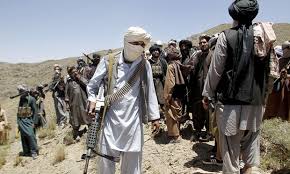
Islamabad, Oct 21 – Senior members of the Taliban’s political commission based in Qatar have travelled to Pakistan for discussions with security officials there about possible peace talks with the Afghan government.

The development follows the revelation this week that Taliban officials held two rounds of secret talks with Afghanistan’s spy chief and a senior US diplomat in the capital of the Gulf state, Doha, this month and last month – meetings Pakistan was excluded from despite its long association with the Islamist movement.

Two sources within the insurgency told the Guardian that a trio of Taliban diplomats left Doha on Wednesday with a mission to hold talks with Pakistani officials.

“The visiting Afghan Taliban delegation will discuss various topics, including peace talks, and share the latest information with Pakistan,” a senior official told the Guardian.

The men are Maulvi Shahabuddin Dilawar, a former ambassador to Pakistan, Mullah Jan Muhammad Madani, a former foreign minister under the Taliban regime in the 1990s, and Mullah Abdul Salam, a former deputy education minister.

The Taliban official said the discussions being held in Pakistan follow successful contacts made with both Afghan and US officials in recent months.

“Taliban and the Americans have been engaged in a number of rounds of talks in Qatar,” he said. “They have made some progress, on a very zigzag path. God willing, we hope further talks will create progress.”

Last year Pakistan succeeded in establishing itself as the host and broker of an effort to end the 15-year insurgency in Afghanistan. Islamabad managed to bring Taliban, US and Chinese diplomats around the same table at a breakthrough meeting in the Pakistani hill resort of Murree in July 2015.

But a scheduled second meeting never took place after the Afghan government confirmed that the former Taliban leader Mullah Omar had died years previously and that the movement had been run in his name by Mullah Akhtar Mansoor.

After a bitter leadership fight, Mansoor formally became the Taliban leader but showed little interest in re-engaging in the Pakistan-brokered process.

Mansoor was killed by a US drone strike in May, creating further uncertainty about the chances of peace talks.
Although Pakistan has been a key ally for the Taliban during both its rise to power in the 1990s and its re-emergence as an anti-Nato insurgency after 2001, some within the movement resent Pakistani interference in the Taliban’s affairs.

A Taliban official who talked to the Guardian said the group’s current leader, Mullah Haibatullah Akhundzada, had sought to “speed up” talks with Kabul and the US.

He said: “Pakistan and the rest of the neighbours will be gradually brought on board. Pakistan is an important neighbour and no doubt they will want to be involved.”

But a western official who was aware that at least two of the Taliban envoys had travelled to Pakistan said the envoys’ meeting was unlikely to be related to the recent Doha talks.

The official said it was an attempt by Islamabad to wrest back control and escape “immense US pressure and international isolation”.

“They and a group from Quetta are talking to the Pakistanis about a Pakistan-led process,” the official said. “This is a separate initiative to escape US and Chinese pressure.”

The official said some within the Taliban had objected to the way members of the political commission appear to have been summoned to Islamabad.

The Taliban is split between rival factions, both among and between commanders on the battlefield in Afghanistan and those living inside Pakistan. Bitter divides exist over whether to pursue peace talks or not, as well as over the control of money and resources.

The western official described the current situation within the movement as “chaos as normal”.

Quoting a Taliban official, the Associated Press reported this week that the head of the Doha office had not taken part in the talks with the Afghan government, reflecting “a continuing power struggle within the movement over who should run the Qatar office”.

A Pakistani intelligence official declined to comment on the latest claims.