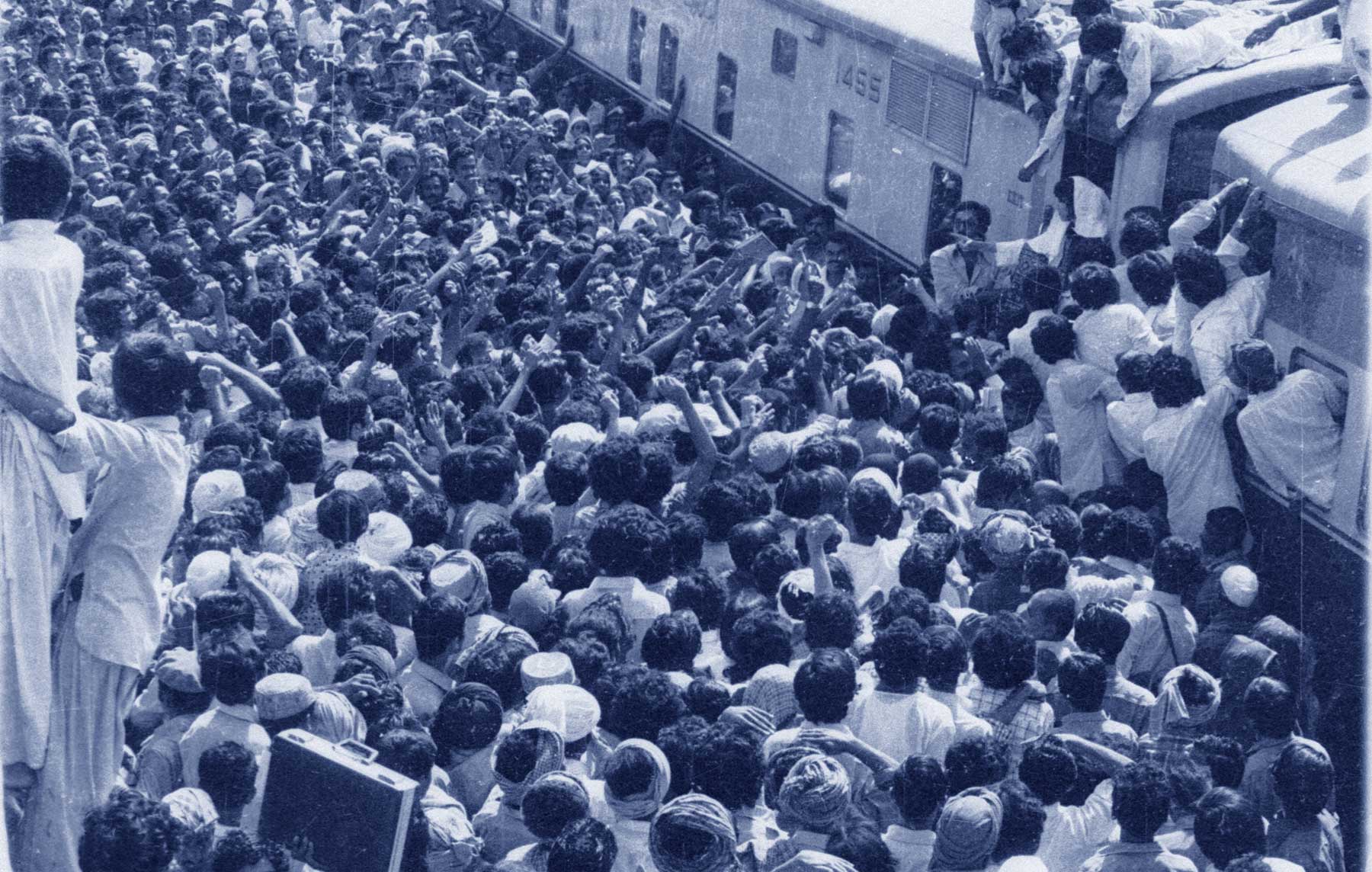
Chinese, Pakistani businesses build ties as Beijing splurges on ‘Silk Road’

Chinese companies are in talks to snap up more businesses and land in Pakistan after sealing two major deals in recent months, a sign of deepening ties after Beijing vowed to plough $57 billion into a new trade route across the South Asian nation.

A dozen executives from some of Pakistan’s biggest firms told Reuters that Chinese companies were looking mainly at the cement, steel, energy and textile sectors, the backbone of Pakistan’s $270b economy.

Analysts say the interest shows Chinese firms are using Beijing’s “One Belt, One Road” project ─ a global trade network of which Pakistan is a key part ─ to help expand abroad at a time when growth has slowed at home.

A Chinese-led consortium recently took a strategic stake in the Pakistan Stock Exchange, and Shanghai Electric Power acquired one of Pakistan’s biggest energy producers, K-Electric, for $1.8b.

“The Chinese have got deep pockets and they are looking for major investment in Pakistan,” said Muhammad Ali Tabba, chief executive of two companies in the Yunus Brothers Group cement-to-chemicals conglomerate.

Tabba said Yunus Brothers, partnering with a Chinese company, lost out in the battle for K-Electric, but the group is eyeing up other joint ventures as part of a $2b expansion plan over the coming years.

Sindh Governor Mohammad Zubair, who until recently was the privatization minister, told Reuters China’s steel giant Baosteel Group is in talks over a 30-year lease for state-run Pakistan Steel Mills. Baosteel did not respond to a request for comment.

The negotiations come as Pakistani business sentiment turns, with companies betting that Beijing’s splurge on road, rail and energy infrastructure under the China-Pakistan Economic Corridor (CPEC) will boost the economy.

The Chinese charge is in contrast to Western investors, who have largely avoided Pakistan in recent years despite fewer militant attacks and economic growth near 5 per cent.
It is welcomed by many in Pakistan: foreign direct investment was $1.9b in 2015/2016, far below the 2007/2008 peak of $5.4b.

At the stock exchange signing ceremony, Sun Weidong, China’s ambassador to Pakistan, said the deal “embodies the ongoing financial integration” between Chinese and Pakistani markets.

“This will facilitate more financial support for our enterprises,” Sun said.

Reservations
CPEC will connect China’s Western region with Pakistan’s Arabian Sea port of Gwadar through a network of rail, road and pipeline projects.

That will be funded by loans from China, and much of the business will go to Chinese enterprises.

The scale of Chinese corporate interest beyond that is difficult to gauge, but in Karachi, Pakistan’s financial center, sharply-dressed Chinese appear to outnumber Westerners in hotels, restaurants and the city’s airport.

Rising skyscrapers testify to a construction boom in the city, businesses are printing Chinese-language brochures and salaries demanded by Pakistanis who speak Chinese have shot up.

Miftah Ismail, chairman of Pakistan’s Board of Investment, said Chinese companies were interested in investing in the telecoms and auto sectors, with FAW Group and Foton Motor Group planning to enter Pakistan.

FAW said the Pakistan “project is going through internal approvals”, but did not offer more details. Foton declined to comment.

But not everyone is excited by China’s growing role in the Pakistan economy, including trade unions, who said Chinese companies’ alleged mistreatment of local workers in Africa in the past had alarmed them.

“We have concern and reservations that the Chinese might use the same methods in Pakistan,” said Nasir Mansoor, deputy general secretary of National Trade Union Federation, Pakistan, the national trade union body.

The Chinese government and Chinese companies have dismissed such accusations in the past.

And doing business may not be easy for newcomers. Security remains a concern despite a drop in Islamist militant violence, and in the World Bank’s ease of doing business index, Pakistan ranks 144 out of 190 countries.

Next phase
The Chinese interest comes as Islamabad and Beijing discuss the next phase of CPEC: how to build Pakistan’s industry with the help of Chinese state-owned industrial giants.

Pakistani officials are drafting plans for special economic zones which would offer tax breaks and other benefits to Chinese businesses.

But even before zones are established, Chinese investors are scoping out land deals.

“A lot of companies … don’t care about CPEC. They just want 500 acres of land to set up shop,” said Naheed Memon, head of the Sindh province’s Board of Investment.

Faisal Aftab, manager of private investment firm Oxon Partners, said Oxon was in talks with two state-run Chinese companies and a wealthy Chinese businessman to purchase and develop land for high-end residential and commercial properties.

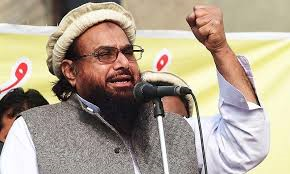
China, not America, likely behind Hafiz Saeed’s house arrest

The biggest question about Hafiz Saeed’s house arrest isn’t why, but why now?

After all, we’ve been here before.

He was placed under house arrest in December 2008, just days after the Mumbai terror attacks that New Delhi and Washington believe he helped orchestrate. He was detained again in September 2009. In both cases, he was released in relatively short order.

In more recent years, he has essentially lived free in Lahore, holding rallies and hosting journalists, including those from the West.

So why did Pakistani authorities decide to once again place him under house arrest on Monday?

One Pakistani media report points to US pressure, contending that in the last days of the Obama administration, American officials warned Pakistan to rein in Saeed or risk sanctions.

Saeed himself, in a video released shortly after his detention, bizarrely claimed that Pakistan was obliged to act because of US President Donald Trump’s warm relationship with Indian Prime Minister Narendra Modi. A Saeed spokesman made a similar claim.

Washington, of course, has pushed Pakistan to crack down on Saeed for years, and unsuccessfully so. So it beggars belief to assume that US pressure would suddenly and magically prompt Pakistan to detain Saeed—and particularly at a time when the US-Pakistan relationship appears to be entering a period of drift. Washington is shifting its engagement with New Delhi into overdrive, while Islamabad is cementing its failsafe partnership with Beijing.

It’s also folly to assume the Trump administration was actively pushing Pakistan to move on Saeed. Trump has been in office for less than two weeks, and beyond his rapid-fire issuance of executive orders, his presidency appears frenzied and disorganised—not to mention hamstrung by numerous unfilled senior diplomatic and national security posts.

Bottom line? The Trump administration has too much on its plate to be focusing laser-like on Pakistan.

________________________________________
If any external pressure compelled Pakistan to place Saeed under house arrest, it’s more likely to have come from Beijing than Washington.
________________________________________

In a telling yet underreported development several weeks ago, China’s former consul general in Kolkata published a blog post calling on Beijing to rethink its default policy of blocking Indian attempts to have JM leader Masood Azhar sanctioned by the UN.

This all makes good sense when we think about the high stakes of CPEC. For Beijing (as for Islamabad), rapid and sustained progress on this project is a core strategic imperative.

Hafiz Saeed doesn’t pose a direct threat to China, but so long as he walks free he poses a direct threat to India-Pakistan relations.

The last thing China wants as it pushes forward with CPEC is an India-Pakistan relationship on tenterhooks — not to mention on a war footing, as was the case for several weeks last year.
________________________________________
China has long leaned on Pakistan to tackle terror more robustly — and it’s arguably gotten results. Some have speculated that Beijing’s prodding played a role in Pakistan’s decision to launch the Zarb-i-Azb operation.
________________________________________

The anti-state militants targeted in that offensive had not only terrorised Pakistan; they’d also posed a threat to Chinese investments and workers in Pakistan. Chinese pressure may also have helped prompt Pakistan’s Red Mosque offensive.

In short, we should never underestimate China’s leverage in Pakistan, including its ability to get Pakistan to do things it often resists.

And yet the question still remains: Why now? If we assume China influenced Pakistan’s decision to detain Saeed, why didn’t Pakistan act weeks or months ago?

Enter President Trump’s executive order on immigration.

It’s doubtful Trump actively pressured Pakistan to rein in Hafiz Saeed, but it’s likely Pakistan’s detention of Saeed was done with Trump in mind.

We can read the house arrest, at least in part, as an effort by Pakistan to showcase its counterterrorism bonafides to the new US administration, and to dissuade Trump from adding Pakistan to the list of countries that can’t send their citizens to the United States for 90 days. Trump’s chief of staff has suggested Pakistan could be added to the list.

Of course, all this speculating could ultimately be immaterial and Saeed may be released relatively soon.

Unless, that is, China has the ability to get Pakistan to go beyond token gestures when it comes to addressing anti-India militancy, and unless Pakistan chooses to do some big-time signaling to Washington by keeping Saeed in detention for an extended period.

Alas, given Pakistan’s core strategic interests and the value the authorities seem to accord to Saeed as a key asset, I wouldn’t count on either scenario materialising anytime soon.

Barack Obama ‘heartened’ by scale of protests against Donald Trump’s Muslim travel ban

In a blasting criticism of Donald Trump’s Muslim travel ban, former president Barack Obama has said he “fundamentally disagrees” with discrimination that targets people based on their religion and was “heartened” by the protests that have been sparked across the country.

“President Obama is heartened by the level of engagement taking place in communities around the country,” said a statement issued by his spokesman Kevin Lewis.

“In his final official speech as president, he spoke about the important role of citizens and how all Americans have a responsibility to be the guardians of our democracy – not just during an election but every day.”

Mr Obama has not weighed in on a political issue since leaving office on January 20 and making way for his successor – something that is usual for most presidents.

He has said he plans to give Mr Trump room to govern but has also said he would speak out if the New York tycoon’s actions violated basic US values. Thousands of protests across the country have taken part in demonstrations against the order, insisting that his Muslim travel ban does breach fundamental US values.

In the statement, Mr Obama said was pleased with those citizens who are exercising constitutional rights to assemble and “have their voices heard.” He also drew a distinction between his policies and those of Mr Trump.

“With regard to comparisons to President Obama’s foreign policy decisions, as we’ve heard before, the president fundamentally disagrees with the notion of discriminating against individuals because of their faith or religion,” it said.

On Monday, it had emerged that dozens of US envoys located around the world had prepared a “dissent memo”.

This ban … will not achieve its stated aim to protect the American people from terrorist attacks by foreign nationals admitted to the United States,” says the draft, obtained by lawfareblog.com.

It also said that Mr Trump’s “knee jerk” executive order was based on misguided notions about terrorism in the United States.

“Despite the order’s focus on them, a vanishingly small number of terror attacks on US soil have been committed by foreign nationals who recently entered the US on immigrant or non-immigrant visa,” it says. “Rather, the overwhelmingly majority of attacks have been committed by native-born or naturalised US citizens – individuals who have been living in the US for decades, if not since birth.”

It adds: “In the isolated incidents of foreign nationals entering the US on a visa to commit acts of terror, the nationals have come from a range of countries, (such as Pakistan or Saudi Arabia), which are not covered by the order.”

Trump asked for a ‘Muslim ban,’ Giuliani says — and ordered a commission to do it ‘legally’

Former New York mayor Rudy W. Giuliani said President Trump wanted a “Muslim ban” and requested he assemble a commission to show him “the right way to do it legally.”

Giuliani, an early Trump supporter who once had been rumored for a cabinet position in the new administration, appeared on Fox News late Saturday night to describe how Trump’s executive order temporarily banning refugees came together.

Trump on Friday signed orders not only to suspend admission of all refugees into the United States for 120 days but also to implement “new vetting measures” to screen out “radical Islamic terrorists.” Refugee entry from Syria, however, would be suspended indefinitely, and all travel from Syria and six other nations — Iran, Iraq, Libya, Somalia, Sudan and Yemen — are suspended for 90 days. Trump also said he would give priority to Christian refugees over those of other religions, according to the Christian Broadcasting Network.

Fox News host Jeanine Pirro asked Giuliani if the ban had anything to do with religion.

“How did the president decide the seven countries?” she asked. “Okay, talk to me.”

“I’ll tell you the whole history of it,” Giuliani responded eagerly. “So when [Trump] first announced it, he said, ‘Muslim ban.’ He called me up. He said, ‘Put a commission together. Show me the right way to do it legally.'”

Giuliani continued, saying he assembled a “whole group of other very expert lawyers on this,” including former U.S. Attorney General Michael Mukasey, Rep. Mike McCaul (R-Tex.) and Rep. Pete King (R-NY).

“And what we did was, we focused on, instead of religion, danger — the areas of the world that create danger for us,” Giuliani told Pirro. “Which is a factual basis, not a religious basis. Perfectly legal, perfectly sensible. And that’s what the ban is based on. It’s not based on religion. It’s based on places where there are substantial evidence that people are sending terrorists into our country.”

It was unclear when the above-mentioned phone call took place and when the commission began working. An email to the White House press office was not immediately returned Sunday.

Clips of the exchange between Giuliani and Pirro quickly went viral Saturday night, with some claiming that Giuliani’s statement amounted to admitting Trump’s intent had been to institute a ban based on religion.

Others, including Trump senior adviser Kellyanne Conway and White House Chief of Staff Reince Priebus have insisted it is not a ban on Muslims, but rather one based on countries from which travel was already restricted under the Obama administration.

Priebus appeared on CBS’s “Face the Nation” Sunday morning to say it was possible Trump would expand the list of countries included in the travel ban.

“You can point to other countries that have similar problems, like Pakistan and others,” Priebus told host John Dickerson. “Perhaps we need to take it further.”

Priebus also said there had been weeks of work and “plenty of communication” between the White House, the State Department and the Department of Homeland Security regarding the ban.

“We didn’t just type this thing up in an office and sign up,” he told Dickerson.

Later on the same program, Rep. Keith Ellison (D-Minn.) called out Giuliani’s interview with Pirro from the night before.

“They can’t deny that this is a Muslim ban,” Ellison told Dickerson. “On the campaign trail, [Trump] said he wanted a Muslim ban. … Rudy Giuliani who helped him write it said that they started out with the intention of a Muslim ban and then they sort of ‘languaged’ it up so to try to avoid that label, but it is a religiously based ban.”

Senate Democrats vowed to draft legislation to block the travel ban.

“We’re demanding the president reverse these executive orders that go against what we are, everything we have always stood for,” Senate Minority Leader Charles E. Schumer (D-N.Y.) said in a news conference Sunday morning, noting later that his middle name, Ellis, was originally inspired by Ellis Island.

“It was implemented in a way that created chaos and confusion across the country, and it will only serve to embolden and inspire those around the globe those that will do us harm,” Schumer added. “It must be reversed immediately.”

Trump’s executive order caused mayhem and sparked massive protests at airports around the country Friday and Saturday, as reports surfaced that dozens of travelers from the affected countries, including green-card holders, were being detained.

The American Civil Liberties Union filed a lawsuit Saturday morning challenging Trump’s order after two Iraqi men with immigrant visas were barred from entering the United States at John F. Kennedy International Airport.

As Giuliani was speaking, Fox News simultaneously aired an alert that noted federal judge Ann M. Donnelly had issued a stay to stop the deportations nationwide.

Donnelly wrote that there was a strong likelihood the order had violated the petitioners’ rights to due process and equal protection by the Constitution.

“There is imminent danger that, absent the stay of removal, there will be substantial and irreparable injury to refugees, visa-holders, and other individuals from nations subject to the January 27, 2017 Executive Order,” Donnelly wrote.

The ACLU hailed the victory.

“Clearly the judge understood the possibility for irreparable harm to hundreds of immigrants and lawful visitors to this country,” ACLU executive director Anthony D. Romero said in a statement. “Our courts today worked as they should as bulwarks against government abuse or unconstitutional policies and orders. On week one, Donald Trump suffered his first loss in court.”

On Sunday, the Department of Homeland Security issued a statement saying it did not plan to back off enforcing Trump’s orders.

“President Trump’s Executive Orders remain in place—prohibited travel will remain prohibited, and the U.S. government retains its right to revoke visas at any time if required for national security or public safety,” the statement read. “President Trump’s Executive Order affects a minor portion of international travelers, and is a first step towards reestablishing control over America’s borders and national security.”

The department said that less than one percent of daily international air travelers to the United States had been “inconvenienced” on Saturday.

Matthew Kolken, an immigration attorney based in Buffalo said there has been “a systemic bias against individuals from Muslim countries in the U.S. immigration departments” for years, including under the Obama administration.
“This isn’t unprecedented,” Kolken told The Washington Post by phone Sunday. “The unfortunate reality is the executive branch does have vast discretionary authority to determine who they are going [allow in or not].”

That said, Kolken believes “Trump has gone a step further without a doubt” in including even people who are lawful permanent residents and suspending all immigration applications from people from the seven countries on the banned list.

If there was evidence of disparate treatment of individuals from the same country — if there were anecdotal evidence of, for example, a Syrian family of one religious background allowed to enter over that of another religious background — then that is where lawsuits could “come to play,” he said.

“The question becomes whether they’re trying to do an end-around by couching the ban as a country-specific ban based on a security-related issues when in reality it’s a religious ban,” Kolken said.

Donald Trump refugee ban: ‘arrivals from targeted countries stopped at US airports’

The International Refugee Assistance Project, one of the organisations involved in a legal challenge against Trump’s executive order banning refugees from certain countries, has said the policy is “irresponsible and dangerous”.

The organisation said in a statement: “Denying thousands of the most persecuted refugees the chance to reach safety is an irresponsible and dangerous move that undermines American values and imperils our foreign relations and national security.

“IRAP works with hundreds of the most vulnerable refugees – children with medical emergencies, survivors of gender-based violence and torture, and Afghan and Iraqi allies to U.S. forces, to name a few – who will be left in immediate life-threatening danger.

“For many of them, resettlement in the United States is their only option to live safely and with dignity.”

Yousif Al-Timimi, a Case Worker at IRAP and former IRAP client who had to flee Iraq in 2013 because of his service to the US government, said: “Those who helped the U.S. mission in Iraq are thankful to be here in the United States as refugees or through the Special Immigrant Visa program; however, for them, the fear is not over.

“Their families are still in Iraq where they might get hurt or killed just because they have ties to a person with a U.S. affiliation and are looked at as traitors. Many of them, like me, try to help their parents and siblings to get out of the country for safety.”

A legal challenge has been filed against Donald Trump’s executive order, which imposes a three-month ban on refugees from seven Muslim-majority countries and from Syria permanently.
The New York Times reports that lawyers representing two Iraqi refugees detained at JFK airport filed a challenge against the measure on Saturday, demanding their clients be released and proposing a class action in a bid to represent all refugees and migrants affected.

One of the refugees detained was named as Hameed Khalid Darweesh, who is said to have worked on behalf of the US government in Iraq for 10 years. The second detained refugee, Haider Sameer Abdulkhaleq Alshawi, was reportedly travelling to New York to join his wife and young son. They had both arrived in the US on Friday night, travelling on seperate flights.

The complaints are said to have been filed in conjunction with the American Civil Liberties Union, the International Refugee Assistance Project at the Urban Justice Centre, the National Immigration Law Centre, the Jerome N. Frank Legal Services Organisation and the law firm Kilpatrick, Townsend and Stockton.

Mark Doss, one of the lawyers representing the pair, told the paper: “These are people with valid visas and legitimate refugee claims who have already been determined by the State Department and the Department of Homeland Security to be admissible and to be allowed to enter the US and now are being unlawfully detained.”

Cairo airport officials reportedly told Reuters seven US-bound migrants, six from Iraq and one from Yemen, were prevented from boarding an EgyptAir flight to New York’s JFK airport.

The officials said the action Saturday by the airport was the first since President Donald Trump imposed a three-month ban on refugees from seven Muslim-majority countries: Iraq, Syria, Iran, Sudan, Libya, Somalia and Yemen.

The officials said the seven migrants, escorted by officials from the UN refugee agency, were stopped from boarding the plane after authorities at Cairo airport contacted their counterparts in JFK airport.

The officials spoke on condition of anonymity because they were not authorised to brief the media.

Google would not confirm or deny reports that it has recalled staff travelling overseas back to the US.

Google chief executive Sundar Pichai, in a memo to staff seen by Bloomberg News, said more than 100 company staff are affected by the order.

The company has reportedly told these staff to get back to the US.

The employees in question normally work in the US but happened to be abroad when the order was made. The concern is that even if staff have valid visas, they may still be at risk if they are from one of the seven countries targeted by the order and they are outside the US when the order kicks in.

Google would not comment on whether staff had been recalled. It issued this statement:
We’re concerned about the impact of this order and any proposals that could impose restrictions on Googlers and their families, or that could create barriers to bringing great talent to the US. We’ll continue to make our views on these issues known to leaders in Washington and elsewhere.

The Liberal democrat leader, Tim Farron, has drawn parallels between May’s visit with Trump and her meeting with Erdogan. calling the pair “unsavoury leaders”. In a statement he said:
As Theresa May seeks trade deals with ever more unsavoury leaders, she ignores the simple point that the most successful countries around the world respect human rights – economies flourish in free societies.

There are tens of thousands of people in Turkish jails without fair trial who in many cases have committed no crime, other than daring to disagree with President Erdogan. Theresa May should address this as a priority in her meeting today.

Yes, the Prime Minister should seek to promote British trade, but at this time her priority should be to secure a long-term trade deal with our European neighbours by fighting to stay in the single market.

CAIRO:
Five Iraqi passengers and one Yemeni were barred from boarding an EgyptAir flight from Cairo to New York on Saturday following President Donald Trump’s ban on the entry of citizens from seven Muslim-majority countries, sources at Cairo airport said.

The passengers, arriving in transit to Cairo airport, were stopped and re-directed to flights headed for their home countries despite holding valid visas, the sources said

Mexico’s President Cancels Meeting With Trump Over Wall

MEXICO CITY, Jan 26 — President Donald J. Trump’s decision to build a wall along the southern border escalated into a diplomatic standoff on Thursday, with Mexico’s president publicly canceling a scheduled meeting at the White House and Mr. Trump firing back, accusing Mexico of burdening the United States with illegal immigrants, criminals and a trade deficit.

Mr. Trump’s push to fulfill his campaign pledge and build a border wall brought to a head months of simmering tensions, culminating in a remarkable back-and-forth between the two leaders.

By afternoon, Mr. Trump’s spokesman said the president would pay for the border wall by imposing a 20 percent tax on imports to the United States, which he said would raise billions of dollars.

The sparring began Thursday morning when the president of Mexico announced on Twitter that he was canceling his meeting with Mr. Trump next week, rejecting the visit after the new American leader ordered the border wall between the two nations.

Having called for dialogue in the face of Mr. Trump’s vows to build a wall during the American presidential campaign, President Enrique Peña Nieto ultimately bowed to public pressure in Mexico to respond more forcefully to his northern neighbor.

On Wednesday, Mr. Trump signed an executive order to beef up the nation’s deportation force and start construction on a new wall along the border. Adding to the perceived insult was the timing of the order: It came on the first day of talks between top Mexican officials and their counterparts in Washington, and just days before the meeting between the two presidents.

Mr. Trump’s action was enough to prompt Mr. Peña Nieto to start discussing whether to scrap his plans to visit the White House, according to Mexican officials. In a video message delivered over Twitter on Wednesday night, Mr. Peña Nieto reiterated his commitment to protect the interests of Mexico and the Mexican people, and he chided the move in Washington to continue with the wall.

“I regret and condemn the United States’ decision to continue with the construction of a wall that, for years now, far from uniting us, divides us,” he said.

Then on Thursday morning, Mr. Trump fired back, warning that he might cancel the meeting himself if Mexico did not agree to pay for the wall.

Just before Mr. Trump fired off his Twitter post, the Mexican foreign minister and Mr. Trump’s Homeland Security secretary, John F. Kelly, were preparing to see each other for a scheduled 11:30 a.m. meeting.

According to a senior American official, the secretary had been briefed. The appropriate flags had been arranged by the protocol staff at the Department of Homeland Security. Then, just as American officials greeted the minister outside the department’s headquarters in Northwest Washington, the minister received word from Mexico that he was being pulled back, the official said. The meeting never happened.

By early afternoon, Mr. Trump said it was the United States that was being treated unfairly.

“We have agreed to cancel our planned meeting,” Mr. Trump said in a new conference Thursday afternoon. “Unless Mexico is going to treat the U.S. fairly, with respect, such a meeting would be fruitless, and I want to go a different route. We have no choice.”

In Mexico, Mr. Peña Nieto had little political room to maneuver. With Mr. Trump’s order to build the wall, the perceived insults Mexico had endured during the campaign had finally turned into action. Decades of friendly relations between the nations — on matters involving trade, security and migration — seemed to be unraveling.
Calls began to come in from across the political spectrum for Mr. Peña Nieto to cancel his visit, and to respond with greater fortitude to the perceived menace from President Trump. On Twitter, Mr. Trump’s action was referred to by politicians and historians as a “an offense to Mexico,” a “slap in the face” and a “monument to lies.”

Historians said that not since President Calvin Coolidge threatened to invade a “Soviet Mexico” had the United States so deeply antagonized the Mexican populace.

“It is an unprecedented moment for the bilateral relationship,” said Genaro Lozano, a professor at the Iberoamerican University in Mexico City. “In the 19th century, we fought a war with the U.S.; now we find ourselves in a low-intensity war, a commercial one over Nafta and an immigration war due to the measures he just announced.”

Donald Trump protests attract millions across US and world (Jan 21, 2017)

Millions of protesters have taken to the streets of cities in the US and around the globe to rally against the new US President Donald Trump.

Larger numbers of demonstrators than expected turned out for more than 600 rallies worldwide.
The aim was principally to highlight women’s rights, which activists believe to be under threat from the new administration.

Meanwhile, Mr Trump used his first full day in office to visit the CIA’s HQ.

He said he was “1,000%” behind the spy agency’s employees and also accused the media of being dishonest in its reporting of the size of the crowd at his inauguration.

Mr Trump did not refer to Saturday’s protests.

‘We are the majority’
The biggest US rally was in the capital Washington, which city officials estimated to be more than 500,000-strong.
This far exceeded the 200,000 that had originally been expected by organisers of the Women’s March on Washington.
By most estimates, it also surpassed the crowd at Friday’s presidential inauguration.

The protesters in the nation’s capital heard speeches from Scarlett Johansson, Ugly Betty star America Ferrera, Ashley Judd, Gloria Steinem and Michael Moore among others.

A planned march to the White House proved impossible as the entire route was filled with demonstrators.
Interim DC Police Chief Peter Newsham told Associated Press: “The crowd stretches so far that there’s no room left to march.”

During his speech, Michael Moore ripped up a copy of the Washington Post, saying: “The headline was ‘Trump takes power’. I don’t think so. Here’s the power. Here’s the majority of America right here. We are the majority.”

The singer Madonna also made an appearance, swearing several times in a speech carried live by major US TV networks.

“Yes, I am outraged. Yes, I have thought an awful lot about blowing up the White House,” she said.

America Ferrera told the crowd: “We march today for the moral core of this nation, against which our new president is waging a war.”

Huge crowds were reported at other US protests.
So many turned out in Chicago – some 150,000 – that a planned march had to be called off and the event declared a rally. Streets were also overflowing in Los Angeles.

Huge crowds were also reported in New York, Seattle, Boston and Miami, some of the venues for about 300 nationwide protests.

Many women wore knitted pink “pussy hats” – a reference to a recording that emerged during the election campaign in which Mr Trump talked about groping women.

Organisers of a London rally said between 80,000 and 100,000 people had taken part there. Belfast, Cardiff, Edinburgh, Leeds, Liverpool, Manchester and Bristol were among the other UK cities holding protests.

Anti-Trump marches took place earlier in Australia, New Zealand and in several Asian cities.

Women’s March Sydney co-founder Mindy Freiband told the crowd: “Hatred, hate speech, bigotry, discrimination, prejudicial policies – these are not American problems, these are global problems.”

Barcelona, Rome, Amsterdam, Geneva, Budapest, Prague and Berlin were among the European cities that took part.
In Paris, protester Francoise Seme Wallon said Mr Trump was “a nasty guy and he’s dangerous for the whole world”.

Mr Trump’s first full day in office began with an inter-faith service at Washington National Cathedral.
He then visited the CIA’s HQ in Langley, Virginia.

In a speech there, he told about 400 employees: “There is nobody who feels stronger about the intelligence community and the CIA than me.”

During the election campaign, Mr Trump had sharply criticised the intelligence agencies over their stance on alleged Russian involvement.

Mr Trump also talked up his yet-to-be-confirmed nominee for CIA chief, Mike Pompeo.
“You will be getting a total gem,” he told the employees.

In one of his first steps, Mr Trump ordered government agencies to ease the “economic burden” of the health law known as Obamacare.

His team also quickly overhauled the White House website. The revamp replaces Barack Obama’s policies with Mr Trump’s new agenda.

The new administration lists only six issues on the website – energy, foreign policy, jobs and growth, military, law enforcement and trade deals.

Critics complained that it made no mention of civil rights, healthcare, climate change or LGBT rights.

Inauguration Day 2017: Pomp and chaos collide as Trump becomes president

The nation’s stark divide was on full display in Washington Friday as Donald J. Trump became America’s 45th president amid joyous roars of support and eruptions of chaos throughout the city, including the removal of a half-dozen protesters who tried to disrupt the swearing-in ceremony.

Less than two miles from where Trump and former president Obama joined hundreds of other elected officials at the west front of the U.S. Capitol, anarchists armed with crowbars and hammers marched through the city’s streets, toppling over news boxes, smashing bus-stop glass, vandalizing businesses, spray-painting buildings and, in one case, bashing in the windows of a black limousine.

The acts of violence prompted helmeted police to chase the protesters with batons, hose them with pepper spray and apparently toss flash bangs into their ranks. Three D.C. police officers were injured and nearly 100 activists were arrested as the sound of explosions and sirens filled the air – marking the most intense confrontations in a day that began with protesters shutting down at least a few security checkpoints.

The confrontations intensified during the afternoon as protesters hurled objects — including concrete bricks — at police in black riot gear, who fired back with more flash bangs and pepper spray. As helicopters swirled overhead and about two dozen booms echoed through downtown buildings, dozens of demonstrators fled, coughing uncontrollably and pouring milk in their eyes to wash out the stinging liquid. Traffic throughout the area was left gridlocked. An hour later, the abused limousine was set ablaze, spreading dark smoke throughout the area before firefighters extinguished the flames. The sound of more booms and sirens soon followed.

D.C. Interim Police Chief Peter Newsham told CNN that there were “maybe a couple of hundred” protesters involved in the violence, noting that the city was hosting “thousands of others who are peacefully demonstrating.”
Council member Anita Bonds (D-At Large) worried that the violent demonstrations would unfairly reinforce the image of the nation’s capital as a liberal bastion hostile to Trump and his supporters.

“Protesting is, in my opinion, your civil right. But I don’t want you coming in to my town and destroying my property,” Bonds said, suggesting that out-of-towners were at fault. “Go home and do it.”

Trump’s inauguration capped a campaign that galvanized millions of Americans who were eager to embrace a Washington outsider willing to say, or tweet, whatever is on his mind. The 70-year-old real estate mogul — who has never before held elected office — was jubilant Friday morning.

And legions of his supporters were on hand to embrace their new president.

As his parade began around 3:45, thousands of people standing along the route — some who had woken up before dawn to get there — endured an intermittent chilly rain to cheer for and wave banners at the New York real estate mogul.

“The president’s coming,” parade-goers near the start said to each other as they peered down Pennsylvania Avenue. They readied their cell phone cameras, fidgeting and arching their necks as the bass of brass instruments and drums came closer and closer.

Just before reaching his newly opened $212 million Trump International Hotel, the president and First Lady Melania Trump exited their armored limousine to wave toward the crowd.

But the time Trump reached the front of his hotel — where protesters had gathered across the street — he’d returned to the limo.

Beneath the gloomy lighting of a winter afternoon, few could tell which vehicle the president was in.

“Was that him?” asked a man from Tennessee at the western edge of the hotel, near 12th Street. Hardly anyone applauded as the president passed. An announcement came minutes later that Trump had reached Freedom Plaza.

“Worst parade ever,” said another man in a “Make America Great Again” hat. “I waited three hours for that?”

Up the street, 37-year-old Kelly Dolin had come from Waynesboro, Va., with his family to watch his 17-year-old son, who attends Fishburne Military School, march in the parade.

Dolin was surprised at the subdued mood of the crowds he had seen. “It wasn’t what I expected,” said Dolin, who voted for Hillary Clinton. “It seems like you’d hear more cheering.”

Earlier in the day, at least, Trump’s many supporters didn’t lack in enthusiasm.

Kathy Davis and a friend sat in yellow ponchos in a light rain west of the Capitol, awaiting a moment they’d long anticipated. Both evangelical Christians, they’d driven down together from upstate New York on Thursday.

“We have just known that Donald Trump was supposed to be president, ” said the 59-year-old. “When we saw the miracle happen on Election Day, I can’t tell you the feelings that rose up.”

One 68-year-old grandmother so adored Trump that she and her family drove 19 hours from Missouri to D.C. to watch him become commander in chief. Security had confiscated Marian Curry’s pepper spray and taser but let her keep a small folding chair because of her arthritic knees.

Curry insisted she’s neither a Republican nor a Democrat, but something about Trump drew her in.
“He woke me up,” she said.

Donna Lutz, a 71-year-old teacher from Florida, said she’d lost friends over her support for him.

“For the first time in my life, I have not been able to have an opinion,” said Lutz, dressed in a bright red coat, fuzzy red earmuffs and a button with Trump’s face. “I was very passionate, so now I get to see that my passions were shared.”
But her feelings certainly weren’t shared by everyone.

Trump’s inflammatory rhetoric has angered and offended millions of Americans others, making him the most unpopular incoming president in at least four decades. Friday, Trump supporters and detractors came face to face on the National Mall, around the White House and throughout downtown D.C.

In one case, 10-year-old Josh Wheeler’s anti-abortion sign was thrown to the ground, driving him to tears.
Wheeler’s father, Todd, said a protester had pushed the boy and called him names, though another anti-Trump activists helped comfort Josh afterward.

“We’re disappointed in the police for letting them do that,” said Wheeler, whose family came to Washington for the inauguration from Indianapolis.

At John Marshall Park’s checkpoint, Black Lives Matter protesters — chanting “Shut it down” — did just that. Five men chained themselves together, preventing anyone from passing and forcing police officers to redirect attendees to other entrances.

“It feels great that we closed the checkpoint,” said 28-year-old Aaron Goggans, one of the organizers. “But we know this is just the beginning.”

At the corner of Massachusetts Avenue and 20th Street, a very different sort of demonstration was being held as the earthy scent of burning pot wafted, and reggae pumped from a sound system. A cry went up from the crowd of marijuana enthusiasts waiting for their free joints.

They were reacting to a herd of motorcycles roaring past, one bike flying a Trump campaign flag.

“What’s up Bikers for Trump? ” said the DJ. “Come for some free weed?”

Across the street stood five D.C. police officers, hands in their pockets.

As the newly inaugurated Trump signed paperwork on Capitol Hill, hundreds of protesters meandered up Massachusetts Avenue from Union Station, occasionally blocking both sides of the thoroughfare.

The march had taken on a carnival feel, with stilt walkers, large puppets, a brass band and a giant inflatable elephant adorned with the word “racism.”

“Immigrants are welcome here!” People chanted. “No hate! No fear!”

Trump supporters leaving the inauguration taunted the peaceful protesters, waving their ubiquitous red “Make America Great Again” hats.

Earlier, at 10th and E streets, protesters had blocked the entrance to a checkpoint.

A group of women tied themselves together with purple yarn and sat on the ground to prevent people from passing through.
“Hey, hey, ho, ho! Donald Trump has to go!” the group of about 100 mostly young protesters. “End white supremacy!”

Armed with signs, brass instruments and life-size wooden crosses, the assembly danced, blew whistles and sang peacefully along with a small marching band.

The protest continued until a large group of inauguration goers — many dressed in suits and dress clothes — tried to push through the human barricade. People starting falling to the ground and swearing until police officers helped create a lane for the attendees to pass through.

Throughout the city, other anti-Trump protests popped up.

At 14th and I streets NW, about 100 anti Trump marchers chanted, ‘Whose streets? Our streets!”
One man carried a bundle of American flags over his shoulder.

“It’s not enough to continue shouting into the echo chamber of social media,” said Clara Mystif, 31, a writer from Florida. “We’re here to actually put our bodies on the line in support of our friends who are going to be targeted by this regime.”

Law enforcement was prepared to contend with more than 60 demonstration groups that planned to gather in the District, including DisruptJ20, which drew thousands of participants. The activists’ website promised “a series of massive direct actions that will shut down the Inauguration ceremonies and any related celebrations.”

They set out to challenge a security plan that took months of planning and millions of dollars to execute. Among the obstacles facing agitators: Checkpoints, roadblocks, truck-barricaded streets, hundreds of Jersey barriers, miles of fencing and 28,000 security officials deployed across 100 square blocks in the heart of Washington.

On Friday, counter-demonstrators also arrived to support their new president — most notably, Bikers for Trump, a group that served as a vigilante security force at the Republican National Convention and expected 5,000 members in Washington.

The region’s normally packed Washington-bound Metro trains were mostly empty early Friday. In a yellow line car headed south, two groups of four wearing Trump gear — beanies saying “Trump America’s 45th president” and American flag scarves — sat ebulliently at the end.

One bearded man in a North Face vest and sweatpants, clearly new to Metro, propped his feet on a divider and later asked if he could smoke his cigarette. He hopped off his seat to record a selfie video with his friends.

“It’s the best day in America,” he beamed.

The man swiveled the camera to show the rest of the crowd.

“Washington sucks,” he bellowed, before turning the camera off.

“I said ‘Grab them by the p—y,’ 17 times yesterday,” he joked later, referring to Trump’s vulgar comments on the set of Access Hollywood in 2005. He casually repeated the phrase several times, until his female companion shushed him.

“Today’s a huge day,” he said as the train approached their stop.

“Yuuuuge!” his friend responded.

Meanwhile, just before 9:30 a.m., the outgoing president left the Oval Office for the final time.

As Obama did, reporters asked, “Feeling nostalgic?”

Obama responded, “Of course.”

Another reporter shouted, “Any words for the American people?”

The 44th president of the United States answered, “Thank you.”

Despite Trump’s reputation as a showman, the celebration in honor of the former “Apprentice” star was smaller than the one in 2009 for the nation’s first African American leader.

Trump’s 3 p.m. parade is expected to last just 90 minutes. Obama’s took more than four hours. Trump is expected to appear at three official balls. Obama attended 10. Just 450 bus permits had been sought for Friday. About seven times that many – more than 3,000 – registered eight years ago.

Though Trump suggested “record numbers” of people would attend Friday’s festivities, at least one longstanding ball had to cancel due to a lack of interest, and others have struggled to sell tickets. Compared to past celebrations, far fewer notable celebrities and musicians are attending or performing, and a number of the city’s great halls haven’t been rented.

Trump’s hotel has frequently been targeted by protesters in recent months. An extra layer of high metal fencing appeared outside its front doors this week, and staff have carefully monitored everyone coming and going.

Washington’s lack of enthusiasm for Trump’s arrival may be due in part to the adversarial relationship he’s long had with the fiercely liberal capital, a place he described as a “swamp” that needs draining.

Just 4 percent of D.C.’s residents voted for the new occupant of the city’s most hallowed quarters: 1600 Pennsylvania Avenue.
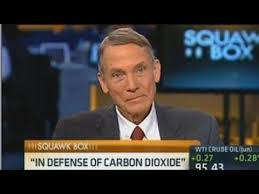
Trump meets with Princeton physicist who says global warming is good for us

Yes, Donald Trump met with Al Gore. But on Friday, according to the Trump transition team, the president-elect also met with William Happer, a Princeton professor of physics who has been a prominent voice in questioning whether we should be concerned about human-caused climate change.

In 2015 Senate testimony, Happer argued that the “benefits that more [carbon dioxide] brings from increased agricultural yields and modest warming far outweigh any harm.”

While not denying outright that increasing atmospheric carbon dioxide levels will warm the planet, he also stated that a doubling of atmospheric carbon dioxide would only cause between 0.5 and 1.5 degrees Celsius of planetary warming. The most recent assessment of the United Nations’ Intergovernmental Panel on Climate Change puts the figure much higher, at between 1.5 degrees and 4.5 degrees C.

“All trees, and many other plants, wheat, rice, soybeans, cotton, etc., are handicapped because, by historical standards, there currently is too little, not too much, CO2 in the atmosphere,” read a slide contained in Happer’s testimony.

“A dispassionate analysis of the science indicates that more CO2 will bring benefits, not harm to the world,” he also said in the testimony.

Happer did not answer questions on his way into the elevator to meet with Trump, according to pool reports. He did not immediately respond to requests for comment from the Post.

E&E News, which was apparently first to report on the meeting, noted that it was “unclear” whether Happer might be under consideration for energy or science positions in the administration. There certainly remain many of those to fill.

Happer is not wrong that carbon dioxide appears to bolster plant growth — the greening up of the Arctic has, indeed, been observed. But that comes with many other consequences, including melting of glaciers and thawing of permafrost, which can emit still more carbon dioxide to the atmosphere.

“While we are perhaps lucky that CO2 has this effect on plant physiology, in addition to being a greenhouse gas, it is not our ‘get out of jail free’ card when it comes to our ongoing emissions of CO2,” climate scientist Richard Betts of the U.K.’s Hadley Centre wrote on the subject recently.

Happer is an eminent physicist who held prominent positions at the Department of Energy, as well as at his university, and has 200 scientific publications to his name. But in 2009 testimony, he went even further in countering the scientific consensus on climate change, asserting that “the current warming also seems to be due mostly to natural causes, not to increasing levels of carbon dioxide.” Most scientists have been plain and very clear that carbon dioxide is indeed the cause of most of the current warming.

In a 2011 essay in the journal First Things, Happer further argued that “the ‘climate crusade’ is one characterized by true believers, opportunists, cynics, money-hungry governments, manipulators of various types — even children’s crusades — all based on contested science and dubious claims.”

The essay triggered an in-depth rebuttal from Michael MacCracken, a climate scientist who formerly directed the U.S. Global Change Research Program in the Bill Clinton administration, and who characterized it as “so misleading that, in my view, it merits a paragraph-by-paragraph response.”

The meeting may be most noteworthy as an example of how Trump plans to get scientific advice — through meetings with people whose views are not necessarily part of the mainstream. It’s not a model that most scientists will approve of.
Trump has met individually not only with Happer, but also with Robert F. Kennedy Jr., whose views on the safety of vaccines have been rejected by scientific authorities. The meeting has caused alarm in the medical community.

The president-elect has not yet named a presidential science adviser.

Justin Trudeau criticised for vacation with Aga Khan

Canada’s prime minister is in hot water for taking a tropical vacation on the Aga Khan’s private island in the Bahamas.
Justin Trudeau and his family were guests of the billionaire spiritual leader over New Year’s.

The federal ethics commissioner is reviewing Mr Trudeau’s trip to see if it warrants an official investigation.
Mr Trudeau said he is “more than happy” to answer any questions the commissioner has.

News of his winter getaway was first revealed by the National Post, after days of speculation over where the prime minister and his family were on holiday.

Prince Shah Karim Al Hussaini Aga Khan is a longtime family friend of the Trudeaus.

Mr Trudeau was also accompanied by Liberal MP Seamus O’Reagan and Liberal Party President Anna Gainey, and their respective partners.

The Prime Ministers Office (PMO) told the Toronto Star the information was kept secret to protect the families’ privacy.
Mr Trudeau has since gone on the record about the vacation, and admitted to also using the Aga Khan’s private helicopter.

“As was the case with previous Prime Ministers, when travelling for personal reasons, Mr. Trudeau, his family, and any guests travelling with him reimburse an equivalent economy airfare,” Trudeau spokesperson Cameron Ahmad told the BBC.
At a press conference on Friday morning, Mr Trudeau seemed visibly uncomfortable answering questions related to his trip.

“This was our personal family vacation and the questions you’re asking, I allow you to reflect on them,” he said.
On Monday, Conservative leadership candidate Andrew Scheer wrote a letter to Ethics Commissioner Mary Dawson to ask that she look into whether Mr Trudeau’s visit violated conflict of interest rules regarding gifts.

The helicopter ride may also have broken rules introduced by Mr Trudeau’s own government that forbid ministers and parliamentary secretaries from accepting sponsored travel on private aircraft unless they get prior permission from the ethics commissioner first.

Commissioner Dawson has said she has begun a preliminary review of Mr Trudeau’s vacation to see if it warrants an investigation.

The Aga Khan Foundation is a registered lobbyist and has received hundreds of millions from the federal government over the past several decades, from both the Liberal and Conservative parties.

 In 2015, the government gave the foundation a five-year $55m (£34m, $42m US) grant to develop health services in Afghanistan
 In 2005, the government contributed $30m (£19m, $23m US) to help build the foundation’s headquarters in Ottawa.
 In 2009, then-Prime Minister Stephen Harper gave his royal highness honorary citizenship

Who is the Aga Khan?

Prince Karim Aga Khan is the 49th hereditary Imam of the Ismaili Muslims. They trace his lineage directly to the Prophet Muhammad.

He lives in France, has a British passport, graduated from Harvard University and is among the top 15 of the world’s wealthiest royals, according to Forbes magazine. The say he has an estimated wealth of $1bn (£640m) in 2008.
A close family friend of the Trudeaus, he was an honourary pallbearer at the funeral of Mr Trudeau’s father, Pierre.