Donald Trump just keeps having the Worst Week in Washington

Trump's accusers (Credit: cnn.com)
Trump’s accusers
(Credit: cnn.com)

It was the week when the wheels truly fell off Donald Trump’s presidential campaign.

Still reeling from the release of a tape in which he is heard making lewd and sexually suggestive comments about women, Trump watched as a parade of accusers emerged last week, each telling a similar story: He had tried to grope, grab or kiss them sometime over the past three decades.

Trump has categorically denied each and every one of the charges. But his promised “evidence” to dispute the claims amounted to a single statement from a cousin of Summer Zervos, a contestant on “The Apprentice” who alleged that Trump kissed and groped her.  And he made things worse by insisting in campaign speeches that he could never have groped the women he is accused of groping because, well, they simply aren’t attractive enough.

‘She would not be my first choice’: Trump denies sexually assaulting Jessica Leeds on plane

The allegations of groping seemed to send Trump off into an even-less-disciplined stage of his campaign, which, at this point, is barely lurching its way to the finish line. Trump spent the week alleging a global conspiracy against him and his supporters, a conspiracy that virtually everyone — Hillary Clinton’s campaign, the media, corporations — was in on.

See all newsletters

And he repeatedly insisted that the entire election was rigged, the outcome predetermined by forces dead set on keeping him from the White House.

Along the way, Trump also suggested that Clinton might have been on drugs in the second debate, disassembled a malfunctioning teleprompter on stage and veered wildly off message time and time and time again.

With every passing minute, Trump watched his base grow ever more committed to him while pushing away the loosely affiliated Republican voters and independents he so badly needs if he wants to have a real shot at beating Clinton. That prospect looks increasingly dim, and what’s worse for Republicans is that Trump doesn’t even seem to care.

Donald Trump, for taking the shackles off, you had the Worst Week in Washington. Congrats, or something

U.S. blacklists Pakistan nationals on suspicion of money laundering

The United States blacklisted four men and their companies based in Pakistan and the United Arab Emirates on Tuesday, for purported ties to an organisation accused of laundering money for drug traffickers and Chinese, Colombian and Mexican crime groups.

Among them was Pakistani national Obaid Khanani, whose father Altaf Khanani was arrested by U.S. authorities in September 2015 and accused by the U.S. Treasury Department of laundering billions of dollars for the Taliban and other groups.
The department said in a statement that Obaid Khanani, 29, continued to help lead his father’s money laundering organization after the arrest. Altaf Khanani is set to be tried on money laundering charges in Miami this month, according to federal court records.

Another man on the list, Hozaifa Khanani, also 29, is Altaf Khanani’s nephew and was involved in real estate investments on behalf of his uncle’s organization, the Treasury Department said. Muhammad Javed Khanani, Altaf Khanani’s brother, was “heavily involved in laundering criminal proceeds via money service businesses” Treasury said. It said a fourth man, Atif Polani, helped move funds on behalf of Khanani’s organization.

The sanctions block any assets the men or companies might have had in the United States, and bars Americans from dealing with them.

“Treasury remains committed to combating illicit money laundering networks around the world and today’s action is the result of close coordination with our partners in the United Arab Emirates,” said John E. Smith, acting director of the Office of Foreign Assets Control, which imposes sanctions.

The department also blacklisted several businesses based in Pakistan and Dubai for either being owned by the men or being linked to money laundering.

(Reporting by Yeganeh Torbati and Joel Schectman; editing by Grant McCool)

Three mysterious incidents in New York, New Jersey and Minnesota raise fears of terrorism

NEW YORK, Sept 18 — Authorities are investigating three incidents — explosions in New York and New Jersey and a stabbing attack in Minnesota — that took place within a 12-hour period on Saturday and sowed fears of terrorism.

Officials said they could identify no definitive links between the disturbances — a bombing that hurt 29 in Chelsea, an explosion along the route of a scheduled race in Seaside Park, N.J., and a stabbing that wounded nine in a St. Cloud, Minn., mall.

But each incident in its own right raised the possibility of terrorist connections, prompting federal and local law enforcement to pour major resources into determining exactly what happened and why.

A news agency linked to the Islamic State claimed Sunday that the suspect in Minnesota, who was fatally shot by an off-duty police officer, was “a soldier” of the militant group, though there was no confirmation of what connection the man may have had.

A claim of responsibility is no guarantee that the terrorist group directed or even inspired the attack, and authorities said they were still exploring a precise motive. The terrorist group made no similar claims about the New York and New Jersey incidents.

In New York, authorities said there was no evidence that the mysterious Saturday-night explosion was motivated by international terrorism, though they confirmed that the bombing was intentional.

“This is the nightmare scenario,” Gov. Andrew M. Cuomo (D) said.

The governor said nearly 1,000 police officers and National Guard troops would be sent to bus stops, train stations and airports, as investigators with the New York Police Department, the FBI, and the Bureau of Alcohol, Tobacco, Firearms and Explosives worked to identify the person or people responsible for the explosion.

A federal law enforcement official said investigators were still aggressively probing if the New York and New Jersey incidents were related, though the official cautioned that as of Sunday afternoon they had not tied them together definitively.

Those injured in the Saturday-night blast in Chelsea had been released from hospitals by Sunday.
The Manhattan explosion occurred about 8:30 p.m. Saturday in the area of West 23rd Street between Sixth and Seventh avenues, injuring 29 people as it hurled glass and debris into the air, officials said. Surveillance video showed passersby running to get away from the blast, and investigators said they would comb through that and older footage to try to identify those responsible.

Authorities said the explosion was produced by some type of bomb, and they posted on Twitter a photo of what appeared to be a mangled Dumpster or garbage container. Masum Chaudry, who manages a Domino’s Pizza near the scene, said the explosion “shook the whole building” and caused “total chaos.”

Cuomo said, “When you see the amount of damage, we really were very lucky there were no fatalities.”
A short time after the explosion, just a few blocks away, police found another potentially explosive device, which looked like a pressure cooker with wiring, according to a law enforcement official who spoke on the condition of anonymity to discuss the ongoing investigation. Both that device and the remnants of that which exploded will be sent to the FBI’s lab in Quantico, Va., for analysis, authorities said. Pressure cookers were used in the two bombs detonated at the Boston Marathon in 2013.

Sara Miller, who was at a restaurant two blocks from the site of explosion, said she heard the blast, then saw people scrambling to get away. “I was here on September 11th so I thought, maybe, you know, I was being paranoid … but then I saw people running,” said Miller, 42. “It is a scary time because you never know when it will happen again.”

Officials differed on whether to call the Saturday night explosion an act of terrorism. Cuomo said: “It depends on your definition of terrorism. A bomb exploding in New York is obviously an act of terrorism, but it’s not linked to international terrorism.”

City, police and FBI officials said it was too early to determine any type of motivation, though they insisted they would not shy from labeling the crime an act of terror if it became appropriate to do so.

“We do not know the motivation. We do not know the nature of it. That’s what we have to do more work on,” said New York City Mayor Bill de Blasio, who shied away from labeling the attack as terrorism.

The incident comes as foreign leaders, including many heads of state, are heading to Manhattan for the United Nations General Assembly. Secretary of State John F. Kerry arrived Saturday, while Obama is scheduled to head to the city on Monday.

This annual meeting — held more than two miles from the site of the explosion in Chelsea — is traditionally a challenging time for New York, as many roads are shut down and the heavy security leads to traffic jams.

Officials said they had already prepared to beef up security, and now they would intensify those efforts.
On the campaign trail, the Democratic and Republican presidential candidates offered varied reactions to news of the incident. As early reports circulated Saturday night, Donald Trump declared that a “bomb went off” in New York City and said: “We better get very, very tough. We’ll find out. It’s a terrible thing that’s going on in our world, in our country and we are going to get tough and smart and vigilant. … We’ll see what it is. We’ll see what it is.”

Hillary Clinton condemned what she characterized as the “apparent terrorist attacks” in Minnesota, New Jersey and New York.

“This should steel our resolve to protect our country and defeat ISIS and other terrorist groups,” Clinton said, using an acronym for the Islamic State. She added, “I have laid out a comprehensive plan to do that.”

Moyed Abu, 28, a manager of OMG, a jeans store on 7th Avenue, said he and two employees were in the store at the time of the blast. Abu said they assumed initially it was construction noise — but immediately saw dozens of people, though not everyone, running in both directions, Abu said.

“I saw that some people started to take pictures,” he said. “In this situation, it’s better to just leave! It’s not safe!”

The Chelsea explosion occurred about 11 hours after a pipe bomb exploded in a Jersey Shore garbage can, shortly before a scheduled charity 5K race to benefit Marines and Navy sailors. No one was hurt.

Officials said that device, too, would be sent to the FBI lab in Quantico, though Cuomo noted the pipe bombs used in New Jersey “appear to be different” than those in New York.

New York Police Commissioner James O’Neill said officials would explore a possible connection between the two cases but noted, “At this point, there doesn’t appear to be one.”

Two law enforcement officials said residue of tannerite — used primarily for making exploding targets for firearms practice — was found in material that had detonated in New York. The officials said a cellphone was used in both the New York and the New Jersey cases.

In another incident Saturday night in Minnesota, a man who made reference to Allah and asked at least one person whether he or she were Muslim stabbed and wounded nine people inside a Minnesota mall. He was shot to death by an off-duty police officer. On Sunday, the Islamic State claimed that the attacker was “a soldier of the Islamic State” and “carried out the operation in response to calls to target the citizens of countries belonging to the crusader coalition.”

A law enforcement official said Sunday that officials were examining all the devices, reviewing surveillance footage and combing through social media. Another official said that there was no clear suspect as of Sunday afternoon but that the investigation was in its very early stages.

“Whoever placed these bombs, we will find, and they will be brought to justice,” Cuomo said.

Some New Yorkers, though, said they felt uneasy waiting. Leonard Glass, 55, who walked 20 blocks from the upper West Side of Manhattan to the site of the explosion early Sunday afternoon, said that no one had taken responsibility for the explosion made it worse.

“I hope this is something else,” he said. “Not terrorism.”

Zapotosky and Wang reported from Washington. Renae Merle in New York and Mark Berman, Ellen Nakashima, Kristine Guerra, Sari Horwitz, Sean Sullivan, Steven Overly, John Wagner and Julie Tate contributed to this report, which has been updated.
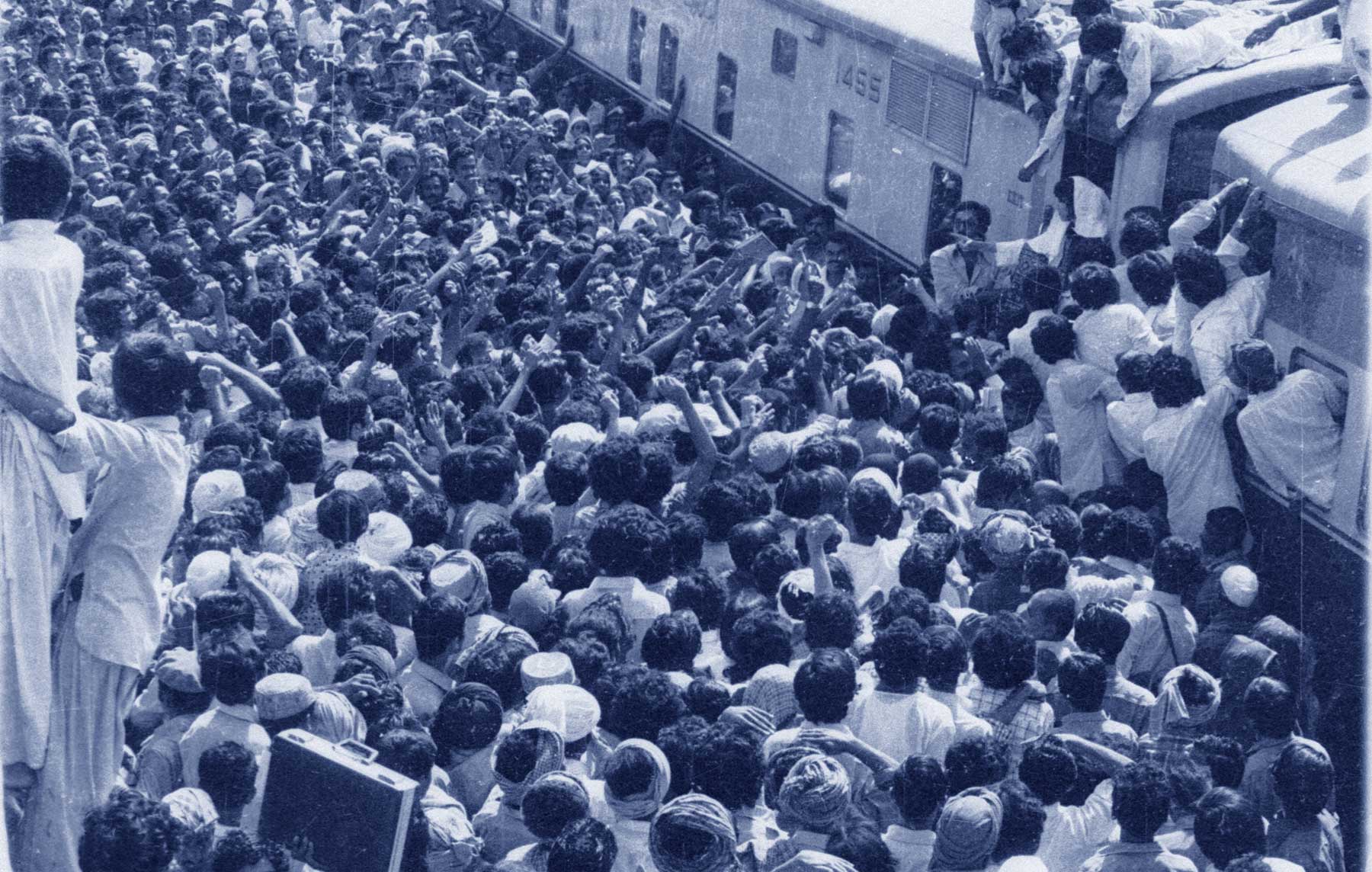

The Afghan War Quagmire

Eight years ago, President Obama pledged to wind down the war in Iraq and redouble efforts to defeat the Taliban in Afghanistan. “As president, I will make the fight against Al Qaeda and the Taliban the top priority that it should be,” he said during a campaign speech. “This is a war that we have to win.”

Lasting peace, Mr. Obama said, would depend on not only defeating the Taliban but helping “Afghans grow their economy from the bottom up.” He added, “We cannot lose Afghanistan to a future of narco-terrorism.”

Now, at the twilight of his presidency, these goals are receding further into the distance as America’s longest war deteriorates into a slow, messy slog. Yet despite this grim reality, there has been no substantive debate about Afghanistan policy on the campaign trail this year. Neither Donald Trump nor Hillary Clinton has outlined a vision to turn around, or withdraw from, a flailing military campaign.

The war in Afghanistan has cost American taxpayers in excess of $800 billion — including $115 billion for a reconstruction effort, more than the inflation-adjusted amount the United States spent on the Marshall Plan. The Afghan government remains weak, corrupt and roiled by internal rivalries. The casualty rate for Afghan troops is unsustainable. The economy is in shambles. Resurgent Taliban forces are gaining ground in rural areas and are carrying out barbaric attacks in the heart of Kabul, the capital. Despite an international investment of several billion dollars in counternarcotics initiatives, the opium trade remains a pillar of the economy and a key source of revenue for the insurgency.

“It does not appear that the Afghan forces in the near future will be able to defeat the Taliban,” said a senior administration official who spoke about the White House’s appraisal of the campaign on the condition of anonymity. “Nor is it clear that the Taliban will make any significant strategic gains or be able to take and hold on to strategic terrain. It’s a very ugly, very costly stalemate.”

The administration’s current strategy commits the United States to keeping roughly 8,400 troops in Afghanistan for the foreseeable future and spending several billion dollars each year subsidizing the Afghan security forces. The goal has been to coax the Taliban to the negotiating table by beating them on the battlefield, a prospect that now seems remote.

The next American president may be tempted to adopt the Obama policy and hope for the best. That would be a mistake. At the very least, the next administration needs to carry out a top-to-bottom review of the war, one that unflinchingly addresses fundamental questions.

One such question is whether the Afghan Taliban — an insurgency that has never had aspirations to operate outside the region — is an enemy Washington should continue to fight. American forces started battling the Taliban in 2001 because the group had provided safe haven for Al Qaeda, which was based there when it planned the Sept. 11 attacks. While Al Qaeda has largely been defeated, the Taliban has proved to be extraordinarily resilient.

Another question is what it would take to bring the conflict to an end — either by enabling Afghan forces to defeat the Taliban or by bringing them into the political fold — and whether that is something the United States is realistically capable of achieving.

This will not be an easy discussion. A precipitous drawdown from Afghanistan may well have calamitous consequences in the short run, exacerbating the exodus of refugees and expanding the area of ungoverned territory in which extremist groups could once again subject Afghans to despotism and plot attacks on the West.
But American taxpayers and Afghans, who have endured decades of war, need a plan better than the current policy, which offers good intentions, wishful thinking and ever-worsening results.

Poll Shows Tight Race for Donald Trump and Hillary Clinton

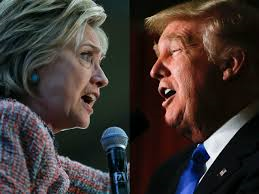
Hillary vs Donald (Credit: brietbart.com)
Hillary vs Donald
(Credit: brietbart.com)

With less than eight weeks before Election Day, Donald J. Trump and Hillary Clinton are locked in a tight contest, with both candidates still struggling to win the confidence of their respective bases, the latest New York Times/CBS News poll finds.

Mrs. Clinton, the Democratic nominee, has the support of 46 percent of likely voters nationwide, to 44 percent for Mr. Trump, the Republican, including those who said they were leaning toward a candidate. Looking more broadly at all registered voters, Mrs. Clinton holds a wider edge, 46 to 41 percent.

In a four-way race, Mr. Trump and Mrs. Clinton are tied at 42 percent each. Gary Johnson, the Libertarian candidate, has the support of 8 percent of likely voters, and the Green Party nominee, Jill Stein, takes 4 percent.

The third-party candidates draw their strongest support from younger voters. Twenty-six percent of voters ages 18 to 29 say they plan to vote for Mr. Johnson, and another 10 percent back Ms. Stein. A little more than one in five political independents say they will vote for one of the third-party candidates.

Discontent with the major party candidates is widespread. Among those who say they intend to vote for Mr. Trump or Mrs. Clinton, slightly more than half express strong support. The rest say that they harbor reservations about their candidate, or that they are simply voting to thwart the other nominee.

Over all, just 43 percent of likely voters describe themselves as very enthusiastic about casting a ballot in November. Fifty-one percent of Mr. Trump’s supporters say they are very enthusiastic about voting; 43 percent of Mrs. Clinton’s supporters say they are very enthusiastic.

The race has clearly grown tighter in recent weeks. National polling averages show that Mrs. Clinton’s margin over Mr. Trump has narrowed from eight points in early August to two points today.

Mrs. Clinton found herself under attack last week for suggesting that half of Mr. Trump’s supporters held views that made them “deplorables,” and for her campaign’s attempts to conceal her pneumonia diagnosis. The Times/CBS News poll was conducted from Sept. 9 to 13, so many of those interviewed were aware of the controversies.

Mr. Trump hired new campaign leadership in mid-August and has been more disciplined in his public statements. His poll numbers have been steadily rising.

Mrs. Clinton continues to outpace Mr. Trump among women, nonwhites and younger voters, while Mr. Trump leads among whites, 57 to 33 percent.

Among white women, the candidates are virtually tied: 46 percent for Mrs. Clinton and 45 percent for Mr. Trump.

Mrs. Clinton’s support is notably strong among college graduates, particularly whites. She leads by 11 points among white likely voters with a college degree; if polling holds, she would be the first Democrat in 60 years to win among this group.

This is the first Times/CBS News poll of the election cycle to include a measure of likely voters. The nationwide telephone survey reached 1,433 registered voters and has a margin of sampling error of plus or minus three percentage points. To achieve a sample that reflected the probable electorate, these voters were weighted by their responses to questions about voting history, attention to the campaign and likelihood of voting.

With Mrs. Clinton sidelined by illness this week, Mr. Trump has vigorously pressed his case. He promoted a new plan to support working parents on Tuesday, and released a partial account of his medical status on Wednesday during a taping of “The Dr. Oz Show.”

Poll participants expressed ambivalence about the need for more information on the candidates’ medical histories. For each candidate, just 45 percent of registered voters said they wanted to see more medical records released. (Questions about Mr. Trump’s and Mrs. Clinton’s medical records were asked starting on Sunday afternoon, after news broke that Mrs. Clinton fell ill at a ceremony commemorating the Sept. 11, 2001, attacks.)

Mr. Johnson’s showing of 8 percent support in this poll will make it difficult for him to qualify for the first presidential debate, on Sept. 26. Under the rules set by the Commission on Presidential Debates, a candidate must reach an average of 15 percent support in five major news media polls, including the Times/CBS News poll. Another poll included in the average used by the commission, the Washington Post/ABC News poll, had Mr. Johnson at 9 percent support last week.

London-based leader prompts violence and detentions in Pakistan

The political party that dominates Pakistan’s largest city is facing one of the most serious crackdowns in its history after an intervention by its exiled leader in London led to a night of violence followed by the detention of senior party members and shutdown of its headquarters.

On Tuesday, officials closed the “Nine Zero” offices of the Muttahida Quami Movement (MQM) in Karachi after supporters of the party – a highly disciplined movement of Karachi’s Urdu-speaking Muhajir population – ransacked two television stations in a rampage that left one person dead and eight injured.
Mustafa Kamal says Altaf Hussain’s party has taken money from Indian intelligence and claims he ‘stays drunk for days’

The violence came after MQM’s leader in exile, Altaf Hussain, lambasted Pakistan as a “cancer for the entire world” and the “epicentre of terrorism” in a speech broadcast over loudspeakers to a crowd in the city from his base in north London, where he has run the party since the early 1990s.

By appearing to incite his followers to attack the media for not covering his speeches, Hussain triggered an unprecedented challenge to his control over a party that has dominated the politics and commerce of Pakistan’s business capital for decades.

He urged his supporters to “move” on ARY and Samaa, two private television news stations, to “get justice”.
Pakistani paramilitary rangers cordon off a street leading to headquarters of the Muttahida Qaumi Movement.

Immediately afterwards, two television stations and their satellite trucks were attacked, including with gunfire. One person was killed in the violence while police vehicles were also torched.

The rangers, a nominally civilian police force controlled by the army, acted swiftly, rounding up senior MQM leaders, including the party’s top parliamentarian, Farooq Sattar.

The MQM is based in London on the first floor of an office building in Edgware.

Also held was Aamir Liaquat, a popular light-entertainment television personality who is involved in the party.
The police responded to Hussain’s speech by lodging a treason case against him.

The commander of the rangers, Maj Gen Bilal Akbar, vowed to take action and promised to detain anyone who had listened to Hussain’s speech and who could be identified by security camera footage.

Zahid Husain, a leading commentator, said the incident was a “defining moment for the party” that it might not survive.

“I have never heard anyone speaking like that, inciting violence and raising slogans against Pakistan,” he said. “The party was already under huge pressure and this has completely discredited it. The leaders in Pakistan cannot defend it.”

On Tuesday, Hussain apologised for his remarks, claiming he had been under severe mental stress.
The apology was not enough to assuage party leaders in Karachi who have been repeatedly embarrassed by Hussain’s outbursts.

In a highly unusual public rebuke of Hussain, Sattar told a press conference after his release on Tuesday afternoon that the MQM “won’t allow this to happen in future”.

“Whatever the reason given for yesterday’s tragedy – mental stress, health or anything else – it is not tolerable and it is not justified,” he said. “We disassociate ourselves with yesterday’s slogans and we recognise Pakistan constitution and laws.”

Although Sattar did not announce a complete break with Hussain, as some analysts had speculated, he said decisions would now be “taken in Pakistan by local leaders”.

“Decisions will be taken by MQM Pakistan until Altaf Hussain’s health issues are resolved,” he said.
Speaking at the MQM’s headquarters in London, Wasay Jalil – a member of the coordination committee – denied the party was involved in extremism and blamed the rangers for triggering Monday’s violence.

Jalil dismissed talk of a split between the London and Karachi branches of the MQM and said there was no prospect that the MQM’s London-based founder Altaf Hussain might resign or be toppled.

“Mr Hussain is not a party worker. He’s the ideologue of the MQM. We make decisions in Pakistan. He ratifies the decisions.”

He added: “He’s the undisputed leader of the Muhajir nation. He has charisma, he’s self-made and that’s why the Pakistani establishment hates him.”

The MQM has come into ever greater conflict with the rangers in the last two years as both the central government in Islamabad and the powerful army have sought to impose order on the unruly port city of 20 million people.

The party, which was established by Hussain in 1984, has long dominated the city through the loyal support of Karachi’s Muhajir community – relatively well-off Urdu speakers who migrated from India after independence in 1947, and their descendants.

While the party promotes a secular politics that staunchly opposes Islamist militancy, it also runs a violent enforcement wing that dominates the city’s criminal economy.

From an unassuming office in Edgware, the Pakistani metropolis is ruled by a party Imran Khan accuses of murdering his Movement for Justice colleague Zhara Shahid Hussain

In March 2015, assault rifles were found during a raid on MQM’s offices. The last year has seen a ban on media coverage of speeches by Hussain.

Senior leaders have also been arrested, including Waseem Akhtar, who was set to be elected as Karachi’s new mayor.
Akhtar was arrested in July and is accused of multiple crimes, including instigating riots that shook the city in 2007.

The former MP has been held for more than a month at Karachi’s central prison and is unlikely to be released any time soon, meaning he could run the city from behind bars.

The party has also bitterly complained about what it claims are illegal attacks against its party workers by the rangers. It says 130 of its activists have been illegally detained and 62 killed.

No Hard Evidence ISIS is Operating in India

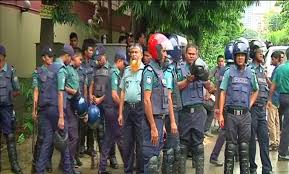
BD attack (Credit: ibtimes.co.uk)
BD attack
(Credit: ibtimes.co.uk)

The Islamic world, at the end of this week, looks like a series of boiling cauldrons from Dhaka to Kabul through to Istanbul and Baghdad. Islamist rage depicts itself equally violently in killing other Muslims as it does infidels. This – Islamist terror – is the common thread between terrorist acts in Mumbai, Paris, Brussels, Orlando and all over Afghanistan. From Syria-Iraq, the scourge has spread to Libya and will reach out to the rest of Africa, Europe and even the US.

Let us make no mistake that Islamist terror is thriving globally. A section of the Muslims is using extreme violence to terrorise fellow Muslims. Yet, the other hard reality is that hundreds of thousands of Muslims are willing to die and kill in the name of Islam as that see that as the way to paradise.

The other issue is whether, in all this, the Dhaka attack is a manifestation of ISIS’s presence or an example of local radical groups using the ISIS brand to seek publicity through their gruesome acts. It is doubtful if ISIS have sent their CEOs to manage things in Bangladesh. What, however, is more likely is that those Bangladeshis who had gone to Syria and Iraq have returned and are now willing to be used by one or more of the several radical organisations that still exist in the country. These could be independent acts replicated all over the world. They are more like franchises than actual branches of the main group. It is a kind of  common discourse with groups acting under peer pressure knowing that the rest of us do not have an adequate reply. Drones will kill but they do not prevent the birth of other jihadists.

To understand where the world stands today perhaps a short recap of recent history is necessary. The game was played in several playing fields. Vietnam had been a Cold War disaster for the US and an early reprieve was necessary. Proxy wars in Africa had not delivered satisfactorily and Iran had slipped out of the US orbit. Brezhnev provided the opportunity to the US in December 1979 when the Soviet Union invaded Afghanistan. For the first time, the US used religion and not democracy and human rights as weapons when the Afghan jihad was launched. And for the first time in modern history, Muslims from different parts of the ummah got together to battle the Evil Empire. Ultimately, an exhausted, over-stretched Soviet Union withdrew and the Afghan mujahideen thought this was the result solely of their bravery and Islamic faith. No credit was given to the US contribution for this victory.

The 1990s were different; the US lost interest in the region. The jihadi presumed he had inherited the world because of his superior religion. When this did not happen, the mullah reverted with great vehemence to promising paradise in the other life to be attained through war and dying for the faith. Theological orthodoxy has been the ploy since then.

The US administration allowed Pakistan to develop its nuclear capability when it winked at Zia ul-Haq’s efforts to nuclearise. Pakistan launched its proxies in India (and later in Afghanistan) in the 1990s confident that it could use terror as a weapon under a nuclear umbrella. The US had fought an inconclusive war in Iraq; Saddam Husain continued to be the ruler and the Americans were seen as occupation forces in Saudi Arabia. Al Qaeda was born and Osama bin Laden swore to cleanse the Holy Land of infidel forces. September 11, 2001 brought the US back into West Asia with all its might and instead of concentrating on eradicating the threat in Afghanistan and Pakistan, Washington once again diverted its attention to Iraq. The world knows what happened there and how.

Arab Winter not Spring

Iran emerged as the strongest force in the region. The Arab Spring in Iran-backed Syria turned into a long cold bitter winter. ISIS was officially born in June 2014 when Abu Bakr Baghdadi made his sole appearance and announced the ‘caliphate’.

This is not to say that ISIS or the Al Qaeda are solely the result of US policies and interests. Local dictators and monarchs have contributed to this by suppressing any attempt at collective emancipation of their people and denied them any hope of power sharing. ISIS was helped in its phenomenal rise by the Saudis and the Qataris in their regional and sectarian battles against Iran. But even they did not expect the group to be so successful in its efforts at state-building. In fact, the caliphate would be a great danger to all the Muslim allies of the West in the region. There may be some truth in reports that the Iranians and the Saudis secretly met in an effort to try and dissolve the caliphate. Turkey tried to play the dangerous game in several ways with and against ISIS in order to contain the Kurds. The Istanbul airport bombing is the result of this double game, just as much as the recent onslaught in Baghdad with hundreds killed is obviously mean to exhibit its strength and discredit reports that its hold is slipping.

It is impossible to fully discuss here the complex nature of the relationships in West Asia, which is compounded further by the interests of other outside powers that drive the present chaos. The Al Qaeda-ISIS rivalry in West Asia is another factor that adds to the confusion. At some point they are conjoined twins – for instance Al Qaeda, ISIS, Boko Haram and the Kingdom of Saudi Arabia have the ‘Shahada’ as their banner. ISIS concentrates currently in its own region, followed by Europe and the US. It is a kind of a reverse-crusade.

While ISIS brutality is particularly frightening, there are two factors that cause greater concern. One, the deliberate use of certain Quranic verses by the ISIS to justify its brutality is accepted by a section of Muslims in different parts of the world. This frightens others, especially non-Muslims whose knowledge about Islam is bound to be inadequate. The second is that we often make the mistake of assuming that others see themselves as we see them. While the rest of us assume that everyone considers ISIS to be evil incarnate, there are others who think otherwise. For us in India, we have the problem that confirmed Pakistani terrorist organisations like the Lashkar-e-Tayyaba plan a ‘Ghazwa-e-Hind’ and dream of establishing three caliphates in India.

This fits admirably with the dreams of the Pakistani military mindset that seeks parity with India through confrontation. (Both share the same motto – ‘Jihad in the name of Allah’). Pakistani terror outfits dreamt of caliphates in India decades before Abu Bakr Baghdadi announced his caliphate in Iraq two years ago.

ISIS conceivably has no ethnic Arab presence or even interest in our region apart from the usual rhetoric. Bangladesh and Pakistan have Syria-Iraq returnees in larger numbers, who could be the vanguard of ISIS franchises. They would opt for the brand equity of ISIS and the latest attack in Dhaka was to register an international presence. Fortunately for India, we do not have those kinds of numbers in Syria or returning to wage jihad in their own country.

While one may be reasonably confident that ISIS will not make a mark in India, one should not be complacent and there is continued need to monitor the growing radicalisation of the youth in our major cities. Conscious efforts are being made to spread jihadist ideology. Inflammatory speeches and videos and violence against other sects are the usual ploys. There is little difference between Barelvi groups like the Raza academy and ISIS on theological principles such as blasphemy, apostasy and Shia Muslims. The number of Salafist mosques and madrassas all over the country has grown. These are funded illegally from abroad and tolerated and even, encouraged by state governments and the Centre. These institutions propagate Islamist supremacist ideologies that would ultimately lead to conflict.

We were lucky in Hyderabad with the recent arrest of 11 suspects alleged to be plotting terrorist strikes on behalf of ISIS. The problem is that for every terrorist plot disrupted, there could be several others in the pipeline. But to blame ISIS without evidence would be to create a scare. Since there is no real presence of ISIS capability, the only way this can happen in India is if Lashkar-e-Tayyaba wears the ISIS mask and begins to operate here. This will let Pakistan off the hook, the US would not have to push Pakistan any more and we will not be able to contemplate any action. India must not fall into the trap of changing the narrative about terrorism in the country without adequate proof.

Vikram Sood is the former chief of Research and Analysis Wing

Dozens killed as Islamic State pushes for territory in Afghanistan

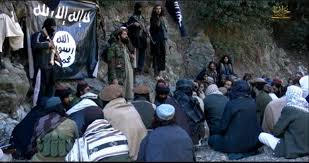
ISIS in Afghanistan (Credit: pamelagellar.com)
ISIS in Afghanistan
(Credit: pamelagellar.com)

Dozens of people have been killed in clashes between Islamic State militants and Afghan forces as the extremist movement renewed efforts to seize parts of eastern Afghanistan.

Fighters pledging allegiance to the movement, also known as Daesh, attacked police checkpoints in the Kot area of Nangarhar province.

As many as 36 attackers were reported to have been killed in the assaults, with at least another dozen police and civilians also dead from the fighting.

The assault comes just three months after the Afghan president, Ashraf Ghani, said the militant movement had been wiped out in Afghanistan.

Afghan extremist fighters set up an offshoot of the Islamic State in Iraq and Levant (Isil) in 2014 and have since fought both the Government and Taliban to increase their influence.

The US military estimates between 1,000 and 3,000 Isil fighters are in Afghanistan, mostly comprised of disaffected Pakistani and Afghan Taliban, as well as Uzbek Islamists and locals.

Saleem Khan Kunduzi, Nangarhar province governor, said: “There is no doubt that Daesh do not respect anyone.

“They kill people, regardless of whether they’re a child or a woman. They burn down madrasas, mosques and schools.”

Sediq Ansari, the head of Afghanistan’s civil society federation, blamed local leaders for failing to tackle the threat from Islamic State.

He told the Reuters news agency: “They should be accountable for every drop of blood that has been shed in Nangarhar so it becomes a lesson to other officials.”

Isil is also a bitter foe of the Taliban in Afghanistan, which it accuses of lacking Islamic zeal. The US Air Force has begun launching air strikes on its positions in the country. So far this year, between 60 and 80 American air raids have targeted Isil in Afghanistan, including those by drones and strike aircraft.

Isil’s leadership  is now believed to have left Nangarhar and moved northwards into the neighbouring Kunar province. That could be the next target if the group has the strength to expand.

Istanbul’s Ataturk Airport attack attributed to ISIS ‘blowback’

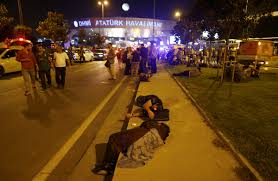
Ataturk airport (Credit: cnipo.com)
Ataturk airport
(Credit: cnipo.com)

The attack on Istanbul airport by suspected Islamic State terrorists is a classic example of unintended consequences, or what the CIA calls blowback.

But having turned a blind eye to the menace of Islamic State across its southern border for strategic reasons, Turkey can hardly be surprised at what is now occurring.

Turkish Prime Minister Binali Yildirim says it is highly likely ­Islamic State is responsible.

If so, it will be the third terror ­attack committed by the group in Turkey this year.

Add in the gathering violence committed by Kurdish separatists and it is clear that Turkey, once ­described as the most cosmopolitan country in the Islamic world, now faces a worsening crisis of ­religious and political violence.

The problem has been inc­ubated by Ankara’s policies. Since the war began Turkey has used Syria’s innumerable opposition groups as a foil against the Assad regime, Turkey’s enemy and rival in the region.

Under President Recep Tayyip Erdogan, Turkey has been increasingly supportive of Islamist movements across the region, including Egypt’s Muslim Brotherhood, which in 2013 was over­thrown in a military coup.

But as the Americans discovered when they funded the Mujaheddin against the Soviets in Afghanistan in the 1980s, terror groups like ­Islamic State and al-Qa’ida are “cold monsters’’. They have their own agendas, which will never align with the secular, liberal and peaceful society most Turks aspire to create. They are not your allies.

As a NATO member, Turkey has been an ally in the coalition air campaign against Islamic State, but a deeply reluctant one. Late last year it finally began launching sorties against Islamic State targets inside Syria and northern Iraq after much international pressure and a suicide attack in the border town of Suruc, which killed 34.

Turkey has also been broadly supportive of Australia’s efforts to suppress Islamic State, catching, where it can, transiting Australian fighters and deepening its co-­operation with our police and ­intelligences agencies.

But traditionally Ankara has shown more enthusiasm for bombing hostile Kurdish groups such as the PKK which have ­exploited the chaos in Syria and northern Iraq to establish a foothold on its border.

This has hindered the campaign against Islamic State as Kurdish fighting units are among the most effective troops in the Syrian-Iraq theatre.

Turkey has also allowed Islamist militants free reign at the border, both to smuggle foreign fighters into Syria and to move contraband, like oil, out of it. This has greatly contributed to Islamic State’s strength and wealth. But now, like spores to the wind, ­Islamic State’s attackers are spreading across the globe.

Yesterday’s attack was the third Islamic State assault in Turkey this year. It is unlikely to be the last.

Could a Muslim Judge Be Donald Trump Neutral? Trump Thinks Not

Trump interview (Credit: lawnewz.com)
Trump interview
(Credit: lawnewz.com)

Donald J. Trump said Sunday that a Muslim judge might have trouble remaining neutral in a lawsuit against him, extending his race-based criticism of the jurist overseeing the case to include religion and opening another path for Democrats who have criticized him sharply for his remarks.

The comments, in an interview with John Dickerson, the host of CBS’s “Face the Nation,” come amid growing disapproval from fellow Republicans over his attacks on Judge Gonzalo P. Curiel, a federal judge in California overseeing a suit against the defunct Trump University, whose impartiality Mr. Trump questioned based on the judge’s Mexican heritage.

And they came as Republicans, concerned about how his remarks could harm their ability to retain control of the United States Senate and have a detrimental effect in races further down the ballot, continue to grapple with how to distance themselves from Mr. Trump’s rhetoric without alienating his die-hard voters.

Mr. Trump has called Judge Curiel, who was born in Indiana to Mexican immigrants, a “Mexican” and said he has a “conflict of interest” in the case because of Mr. Trump’s proposed border wall with Mexico. The case that Judge Curiel is overseeing is a class-action suit in which students of the for-profit operation say they were defrauded.

Mr. Dickerson asked Mr. Trump if, in his view, a Muslim judge would be similarly biased because of the Republican presumptive nominee’s call for a ban on Muslim immigrants. “It’s possible, yes,” Mr. Trump said. “Yeah. That would be possible. Absolutely.”

When Mr. Dickerson noted that there is a tradition in the United States, a nation of immigrants, against judging people based on their heritage, Mr. Trump replied: “I’m not talking about tradition. I’m talking about common sense, O.K.?”

At a recent rally in San Diego, where the suit is being heard, Mr. Trump engaged in a minutes-long attack on Judge Curiel over the suit, which cuts at the heart of the candidate’s appeal to voters as a successful businessman.

With Mr. Dickerson and, in a separate interview, with Jake Tapper of CNN’s “State of the Union,” Mr. Trump repeated not only the criticisms of Judge Curiel, but he intensified them.

“He is a member of a club or society, very strongly pro-Mexican, which is all fine,” Mr. Trump said. “But I say he’s got bias. I want to build a wall. I’m going to build a wall. I’m doing very well with the Latinos, with the Hispanics, with the Mexicans, I’m doing very well with them, in my opinion.”

The candidate’s broadside against Judge Curiel was one of the most overtly racial remarks he has made in the presidential race, and it has been roundly criticized by prominent Republicans. It also came after Mr. Trump delivered a stinging rebuke to Gov. Susana Martinez of New Mexico, the head of the Republican Governors Association and a star within her party, after she declined to appear with him at an event in her state.

The remarks exacerbated the tension that Republicans face in embracing their nominee. White, older, working-class voters comprise a large chunk of the party’s base, and Republicans need to keep the presidential campaign close in order to hold their Senate majority. But Mr. Trump has offended wide swaths of voters to whom the party must appeal amid shifts in national demographics.

The result has left Republicans to mitigate the damage by rejecting Mr. Trump’s language in one moment, but embracing his candidacy the next. An example last week was Speaker Paul D. Ryan, who endorsed Mr. Trump with lukewarm praise after declining to back him when he became the presumptive nominee. A day later, Mr. Ryan was forced to respond to Mr. Trump’s condemnation of Judge Curiel’s impartiality; Mr. Ryan rejected Mr. Trump’s comments.

On NBC’s “Meet the Press,” Senator Mitch McConnell, the majority leader, did not directly answer a question about whether the remark was racist, but said he completely disagreed with it. “All of us came here from somewhere else,” Mr. McConnell said in reference to Judge Curiel’s heritage. “That’s an important part of what makes America work.”

Senator Bob Corker of Tennessee, a Republican who had been floated as a potential vice-presidential nominee alongside Mr. Trump, said on ABC News’ “This Week” of Mr. Trump’s behavior, “I think that he’s going to have to change.” And Newt Gingrich, the former Speaker who has been among Mr. Trump’s most vocal supporters, called the remarks “inexcusable” on “Fox News Sunday.”

“This is one of the worst mistakes Trump has made,” said Mr. Gingrich, who has also been mentioned as a potential vice-presidential candidate.

But none of the three men rejected Mr. Trump’s candidacy outright. Mr. Gingrich praised Mr. Trump moments later as a quick learner. Mr. Corker suggested that Mr. Trump “has an opportunity to really change the trajectory of our country, and it’s my sense that he will take advantage of that.”

In the weeks since he vanquished his remaining two primary opponents, Mr. Trump has repeatedly turned the campaign’s focus inward — about his businesses, the Trump University lawsuit, his fights with other Republicans — and obscured hopes Republicans had of keeping a spotlight on Hillary Clinton and her email controversy or on a jobs report suggesting a slowing of the economy.

Mr. McConnell, who quickly endorsed Mr. Trump after he became the presumptive nominee in early May, has been vocal about his concern that the remarks about Hispanics will have historic implications, along the lines of those that Barry Goldwater had on the party’s ability to woo black voters after he declined to support the Civil Rights Act of 1964.

Mr. McConnell argued that the alternative to Mr. Trump — a second Clinton presidency — was worse. But he also urged Mr. Trump to stop focusing on the recent past and look to the future.

“This is a good time, it seems to me, to begin to try to unify the party,” Mr. McConnell said. “And you unify the party by not settling scores and grudges against people you’ve been competing with. We’re all behind him now. And I’d like to see him reach out and pull us all together and give us a real shot at winning this November.”