Sadiq Khan: ‘Ruthless? No. Decency can get you to the top in politics’

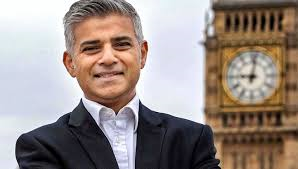
London Mayor Sadiq Khan (Credit: edienet)
London Mayor Sadiq Khan
(Credit: edienet)

Sadiq Khan asks to meet in the Lahore Kahari, his local curry house, in Tooting. I haven’t eaten all morning – don’t want to spoil my appetite. Khan walks in, shakes my hand tightly, sits down and starts talking 10 to the dozen. It’s only a couple of weeks since the election, and he says he’s in the final stage of grief: acceptance. But it’s still painful. “It’s quite upsetting … ” he exhales loudly. “Thoroughly depressing. I was inconsolable.” He apologises for the speed of his delivery. “Two things you know when you’re a Khan: speak fast or you’re not heard, and eat fast or you don’t eat.” I make a mental note to get in quick with the food.

Khan, 44, is one of eight siblings (seven of them boys) born to a bus driver father and housewife-seamstress mother. He grew up in this part of south London, and still lives around here, as does his mother (his father died in 2003) and the rest of his family. He points out of the window to the mosque across the road – his local. The Henry Prince council estate where he grew up is a bus-ride away in Wandsworth; the house his parents later bought is a short walk, and he now lives 10 minutes away with his lawyer wife Saadiya and their two daughters. As local MPs go, you don’t get much more local than Sadiq Khan.


Former shadow justice secretary discusses Labour’s ‘rose tinted glasses’ about Blair era, claiming some in the party are looking back too favourably on the past


It’s a fascinating geo-history, but my mouth is watering. “Do you fancy some food?” I say. He looks surprised. “Well, let’s see how we get on.” So we carry on talking, not so much as a poppadom and glass of water between us. I’m beginning to understand why we’re here. Khan, the consummate politician, never misses a photo opportunity – this is Sadiq in his manor.

He asks where I’m from. Manchester, I say. He grins. “Come down here, take our jobs, take our women, bloody immigrants!” Khan could have been created by screenwriter David Simon – say, the successor to Tommy Carcetti as mayor of Baltimore in The Wire. He is fast-walking and fast-talking, with steel behind the smile; a wheeler-dealer with an eye permanently on the prize. (And then the next one.)

As it happens, the MP for Tooting does now hope to be mayor – of London. First, he must see off fellow Labour hopefuls, then dispatch candidates from rival parties. Let’s just say he’s quietly confident; he already has the backing of Unite, the largest trade union, and the GMB.

Khan was one of Ed Miliband’s lieutenants, responsible for the general election campaign in London. “We did very well by the way,” he says. “We kept all 38 seats and won seven others.” So why did Labour get hammered? “There was a concern among those who aren’t poor about what we could do for them, I suspect.” Are the candidates for leadership of the Labour party strong enough? “Let’s wait and see,” he says non-committally. Look me in the eye, I say. He does, but still doesn’t answer with any more conviction. “It’s too early to tell. I’ve got no horse in the race.”

The one thing he won’t do is rubbish Miliband’s legacy. Too many of his colleagues are already doing that, he says, looking back on the Blair years “with rose-tinted glasses”.

“A word I think you’ll hear overused in the leadership contest is ‘aspiration’. It’s used in a pejorative way to suggest we didn’t understand what it meant. I understand what it means. It means your dad working all the overtime hours that London Transport will give you, aspiration means your mum, notwithstanding having eight children, works as a seamstress at home as well to make ends meet. Aspiration means, as a 24-year-old trainee solicitor, sleeping on a bunk bed in your mum and dad’s home to save for a deposit. So I get aspiration.” This is classic Khan – defending Labour while promoting his ability to lead London in the same breath.

During the election campaign, Khan warned Labour MPs who had already announced they were standing for mayor not to put personal ambition before the party. Within a week of Labour losing the election, he stood down as shadow justice minister and shadow minister for London, and announced his bid for the mayor. By his own logic, surely Labour need him in the shadow cabinet? “Yeah, it was a tough one.” Did his daughters, aged 15 and 13, think he should go for the leadership or mayor? “Mayor. Maybe children are smarter than you think, and they saw I’d have much more fun as mayor of London. I’d be able to do what I want to, whereas being leader of the opposition is a far tougher proposition.” It’s a surprising answer – not least because he insists he does not want to be a “red-carpet mayor like Boris”. In the end, he says, it goes back to what London has done for his family, and what he’d like to see it do for future generations.

He loves to tell the story of the bus driver’s son made good; the boy who learned to box to look after himself on a tough estate (two of his brothers became amateur champions), who went on to captain the school’s cricket team and had trials for Surrey, who became a human rights lawyer representing victims of police abuse, and who sacrificed a brilliant legal career to serve his people. It is an inspirational story. And like all good lawyers, he retains the ability to tell it his way, always the master of his own narrative.

Khan began his legal career working with eminent human rights lawyer Louise Christian as a trainee in 1994, when she was in partnership with Mike Fisher. They made Khan a partner in 1997. Five years later Fisher left and the company was renamed Christian Khan. But when Khan was selected as Labour candidate for Tooting in 2004 he quit without notice.

“I walked away from the business. I wasn’t paid out because I wanted to be a full-time politician. It’s never been about money for me, so Louise took over the firm and I became an MP.” It was a brave decision – Khan had no salary for six months while campaigning. But it is also a selective interpretation of events.

I later hear that Khan hired lawyers threatening Christian with legal action unless he was compensated for his share of the company – and that only after Christian suggested a counter-claim (because she and his clients had been left in the lurch by him) did he drop the matter. I ring Khan to ask if it is true. He says he doesn’t know about a counter-claim, but yes, he did threaten legal action. “I was concerned about my tax liability, but ended up taking that on the chin. And strictly speaking, I was entitled to half the firm, and my lawyer advised me to pursue everything I was entitled to. In the end, I decided not to because I wanted to get on with my political career.” Khan admits that he and Christian have not talked since he left the firm.

Christian had been his mentor, and hoped he would one day take over the practice. Does he regret the way things ended? “Yeaaaah,” he says, weighing his words carefully. “But you’ve got to move forward. In my next venture, where I’m mayor of London, I can’t be looking backwards to my 10 years as an MP. You’ve got to move forward.”

As chair of the human rights pressure group Liberty in the early noughties, Khan campaigned against imprisonment without trial, then in 2005 as a new MP voted against Labour’s proposal to hold terrorism suspects for 90 days without charge. “When I first got elected, everyone said, ‘Sadiq’s a rising star, he’s going to go all the way.’ But Blair wanted to pass 90 days, and you’ve got a choice: do you hold true to your beliefs and speak out against it? And I did. It was the first ever defeat Blair had.” Did it make an enemy of Blair? “Oh my God, yeah! There were some people who never forgave me. I was threatened.” How? “That ‘you’re finished as an MP, you’ve got no chance now’. Whips said that, other MPs said that.”

Yet, three years later Khan was the whip responsible for pushing 42-day detention without charge through the Commons. What would the Khan who chaired Liberty make of Khan the politician? “The thing you’ve got to remember is, it’s a different role you’re performing. As the chair of Liberty, your job is to to put pressure on governments of whatever colour, right?” Ultimately, he says, you’ll get nowhere as a politician unless you compromise. “You’ve got to think: do you want to be a megaphone politician or do you want to get things done? ”

Khan has always had a reputation in politics – as he did in law – for getting things done. Do you have to be ruthless to succeed? “Ruthless? No. Decency can get to the top in politics.”

There seems an element of ruthlessness in going from challenging detention without charge to championing it, I say. “No,” he protests, “it’s not about you. It’s about who you did it for. So, when I’m a lawyer, I’m doing it for my client – he or she is the most important person, not me. When I’m a member of parliament, constituents are the most important people. When I’m chair of Liberty, our members are the most important people. And when you’re mayor of London, London is the most important thing. So you’ll be ruthless for your clients, ruthless for your constituents, ruthless for London, without necessarily being ruthless as a person.” You sense that whatever job he does, Khan will always see himself as a lawyer – the eternal advocate.

David, the photographer, arrives. “Your job is to make me look really really good,” Khan tells him, running his hand through his hair. “Clooneyesque is the job spec.” He laughs. “Yes, Clooneyesque.” Is it true he likes to think of himself as “cool and metrosexual”? “This is interesting, you see. When I see my children’s friends’ parents, right, I look at myself and say to my girls, ‘Come on, you’ve got a cool dad, surely?’, but they say, ‘no Dad, you’re not cool.’ They say my taste in music is not cool.” What does he like? “Jay-Z, Paul Weller, Sting.” What else do his girls say about him? “They say I’m a smart Alec because I like to have the last word.”

David suggests, as we’re in the curry house, it would be nice to take pictures of him eating. This time, Khan is more keen. He speaks in Urdu to the manager, Rizwan, and asks him to order for us.

“How spicy do you like it?” Rizwan asks.

“Not very spicy,” Khan answers for me. “He lives in north London! The article will be as good or bad as the food – so make it good!”

I ask Khan why he would make the best mayor, and suddenly it feels like I’m interviewing him for the job. “I went to a good local state school, had an affordable university education, one of my brothers had an apprenticeship, council accommodation. Today’s Londoners don’t have the same opportunities we had, and it breaks my heart. But being disappointed about it is not enough. I want to do something about it. And I’ve got the experience – I ran a successful business before becoming a politician, lawyer for more than 10 years, big jobs in government, I understand what makes London tick, I’ve got ideas whether it’s housing or helping businesses or reducing inequality or the living wage.” He’s talking faster and faster. “Also, I want to get things done. I’m not doing it because it’s just a reward for long service or because I couldn’t hack it in politics or in law. It’s because I’ve genuinely got something to offer.”

David suggests a picture of Khan tucking into a poppadom. He looks appalled. “Don’t even try that. Listen, it’s got to be proper food. Not a poppadom. There’s an urdu word, gora, which means white. So you guys are gora. The joke would be, ‘that’s gora food’.”

But back to pitching for mayor. “First of all, we need a candidate who’s going to win. So, I’m the only candidate who’s fought and won a marginal seat. On every occasion my share of the vote has gone up. I was in charge of the 2014 London elections; not only did we keep all 15 councils we won another five. We had the best ever European election results in 2014.”

Dish after dish arrives – fish massala, chicken methi, seekh kebab, lamb karahi – the smell is overpowering, the taste heavenly. But Khan doesn’t seem interested. David asks if he could stop talking for a second. Khan smiles at the waiters. “Well, he can make me look Clooneyesque or make me look like Ed eating a bacon sandwich, so I’ve got to be nice to him.” And then back to me. “The reason we won the most seats in the European election was because we did well in inner London and outer London, so I get the science and the art of winning elections. I’m a winner. So if we want a candidate who will win the election in May, I think that’s me.”

Are you not going to eat, I ask. No time, he says – a mayoral candidate’s work is never done. His assistant tells him they had better be on their way. I’m staring at all the dishes in front of me; Khan wraps a kebab in a serviette and prepares to head off. I ask him if it’s true he does standup comedy. Only at Labour party functions, he says. “At my last gig, I met Windsor Davies from It Ain’t Half Hot Mum. He said I was very funny. Arthur Smith says I’d be a very decent standup comic.” What’s his best joke?

“I went to hospital last week to meet the surgeons. I said: ‘What’s the easiest form of people to operate on? Surgeon One says: ‘The easiest form of people to operate on are accountants, because you slice them open and all their parts are numbered.’ Second surgeon goes: ‘No, actually you’re wrong, the easiest people to operate on are librarians because you cut them open and all their parts are in alphabetical order.’ Third surgeon goes: ‘No, you’re both wrong. The easiest people to operate on are politicians.’ I said: ‘Why?’ He goes: ‘Well, last week we had Jeremy Hunt in here and we sliced him open, and he was headless, heartless and gutless and his head and arse were interchangeable.’ Thank you. We’ve gotta go.”
 

How the US Tracked and Killed the Leader of the Taliban

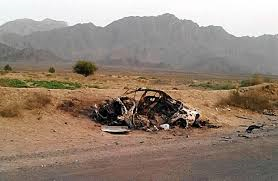
Mansour vehicle (Credit: wsj.com)
Mansour vehicle
(Credit: wsj.com)
U.S. spy agencies zeroed in on Mullah Akhtar Mansour while he was visiting his family in Iran, laying a trap for when the Taliban leader crossed the border back into Pakistan.

While U.S. surveillance drones don’t operate in the area, intercepted communications and other types of intelligence allowed the spy agencies to track their target as he crossed the frontier on Saturday, got into a white Toyota Corolla and made his way by road through Pakistan’s Balochistan province, according to U.S. officials briefed on the operation.

Then, the U.S. military took over. Operators waited for the right moment to send armed drones across the Afghan border to “fix” on the car and made sure no other vehicles were in the way so they could “finish” the target, the officials said, using the argot of drone killing—all before Mullah Mansour could reach the crowded city of Quetta, where a strike would have been more complicated.

The ambush that killed Mullah Mansour marked a critical moment in Obama administration policy on Afghanistan, as it weighed a push for peace talks and a potential need for a military escalation. It also represented a message to Pakistan that the U.S. would take action on Pakistani soil if necessary without advance warning.

Pakistan’s Interior Minister, Chaudhry Nisar Ali Khan, warned on Tuesday that the strike would have “serious implications” for relations with the U.S. and described the incident as “completely against the U.N. Charter and international law.”

President Barack Obama secretly ordered the strike on Mullah Mansour after first trying to bring him to the negotiating table. Initially, there was hope in Washington that Mullah Mansour would be more open to negotiations than his predecessor, Mullah Mohammad Omar.

Obama administration officials were divided over whether the Pakistanis were capable or willing to deliver Mullah Mansour for the negotiations.

U.S. officials said the Pakistanis tried and grew frustrated in February by Mullah Mansour’s refusal to send representatives to meet with the Afghan government.

Around the same time, people who maintain contacts with the Taliban began to report that Mullah Mansour had left Pakistan and was spending time in Iran.

U.S. intelligence agencies received information that allowed them to track Mullah Mansour’s movements, including details about devices he used for communications, U.S. officials said.

That allowed the spy agencies to present policy makers with a choice: If and when Mullah Mansour were located in Pakistan, should the U.S. strike?

Mullah Mansour’s travels made it easier to find him. In contrast, the Central Intelligence Agency spent years looking in vain for an opportunity to kill the reclusive cleric he replaced, Mullah Omar.

An April 19 Taliban attack in Kabul targeted Afghanistan’s secret service, killing more than 60 people and underlining for the Americans the extent to which Mullah Mansour had chosen a military course. A decision was made that he should “face the consequences” of his refusal to negotiate, a senior administration official said.

The U.S. knew the route Mullah Mansour took to Quetta because he had taken it several times. U.S. intelligence agencies detected his preparations to cross the border back into Pakistan last week.

“Such actionable intelligence is rare,” another senior administration official said. “Given the preponderance of what has happened over the last few months, most principals around the table were going to be hard pressed to say: ‘Don’t take the shot.’”

Both the U.S. military and the CIA operate drones in the region. Military drones in Afghanistan rarely stray across the border, and CIA drones generally only go into Pakistan for strikes in what are known as Federally Administered Tribal Areas, according to U.S. officials. Pakistan facilitates the program by clearing the airspace there for CIA drones, while publicly opposing U.S. strikes in Pakistani territory, they said.

But Balochistan has long been off limits to the drones, U.S. and Pakistani officials say. So U.S. officials believe that Mullah Mansour and other Taliban leaders felt more comfortable there.

Route N-40, which Mullah Mansour and his driver used, cuts between Taftan on the Iranian border and Quetta, the provincial capital of Balochistan, according to the U.S. officials.

The U.S. normally would want multiple drones to keep eyes on such an important target. Because CIA drones weren’t operating in the area, U.S. spy agencies relied on signals intelligence and other location information to track the Corolla’s journey, according to U.S. officials.

Armed drones based in Afghanistan and piloted by the U.S. military’s Joint Special Operations Command were preparing to move in for the kill, the officials said.

The U.S. knew Pakistani radar could detect the intrusion. Pakistan might then scramble jet fighters to intercept the drones, so timing was critical.

The military’s Reaper drones crossed the border into Pakistani airspace, flying low over the mountains along the Afghanistan-Pakistan border to exploit gaps in radar coverage, the officials said.

Officers in the U.S. military command center overseeing the operation held off briefly because the vehicle pulled over near unidentified buildings, the officials said. It’s not clear why the stop was made.

They waited until the car got back on the road and away from other vehicles and buildings. Then they launched the strike, and two Hellfire missiles took out Mullah Mansour, the officials said.

The drones hovered overhead to ensure there were no survivors, then headed back to Afghanistan, the officials said.

The U.S. government agencies involved in the operation agreed in advance that the strike would be disclosed publicly by the Pentagon once completed. The agreement also called for officials to be vague about identifying the location of the strike, and the Pentagon was instructed to announce that the strike took place along the Afghanistan-Pakistan border. But U.S. officials soon disclosed the location inside Pakistan.

Pakistani officials said they weren’t notified by U.S. authorities until seven hours after the strike.

—Margherita Stancati, Saeed Shah, Gordon Lubold and Qasim Nauman contributed to this article.

Afghan Taliban leader in Pakistan likely killed in US drone strike

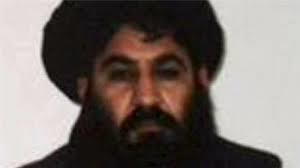
Mullah Akhtar Mansoor (Credit: Al Jazeera)
Mullah Akhtar Mansoor
(Credit: Al Jazeera)

WASHINGTON, May 21 (Reuters) – The United States conducted a drone strike on Saturday against the leader of Afghan Taliban, likely killing him on the Pakistan side of the remote border region with Afghanistan in a mission authorized by U.S. President Barack Obama, officials said.

The death of Mullah Akhtar Mansour, should it be confirmed, could further fracture the Taliban – an outcome that experts cautioned might make the insurgents even less likely to participate in long-stalled peace efforts.

The mission, which included multiple drones, demonstrated a clear willingness by Obama to go after the Afghan Taliban leadership in Pakistan now that the insurgents control or contest more territory in Afghanistan than at any time since being ousted by a U.S.-led intervention in 2001.

Pentagon spokesman Peter Cook confirmed an air strike targeting Mansour in the Afghanistan-Pakistan border region but declined to speculate on his fate, although multiple U.S. officials, speaking on condition of anonymity, told Reuters he likely was killed.

“We are still assessing the results of the strike and will provide more information as it becomes available,” Cook said.

A Taliban commander close to Mansour, speaking to Reuters on condition of anonymity, denied Mansour was dead.

“We heard about these baseless reports but this not first time,” the commander said. “Just wanted to share with you my own information that Mullah Mansour has not been killed.”

In December, Mansour was reportedly wounded and possibly killed in a shootout at the house of another Taliban leader near Quetta in Pakistan.

Bruce Riedel, an Afghanistan expert at the Brookings Institution think-tank, described the U.S. operation in Pakistan as an unprecedented move but cautioned about possible fallout with Pakistan, where Taliban leadership has long been accused of having safe haven.

A State Department official said both Pakistan and Afghanistan were notified of the strike but did not disclose whether that notification was prior to it being carried out.

“The opportunity to conduct this operation to eliminate the threat that Mansour posed was a distinctive one and we acted on it,” the official said.

TROUBLED PEACE TALKS

The U.S. drones targeted Mansour and another combatant as the men rode in a vehicle in a remote area southwest of the town of Ahmad Wal, another U.S. official said, speaking on condition of anonymity.

U.S. special operations forces operated the drones in a mission authorized by Obama that took place at about 6 a.m. EDT (1000 GMT), the official said. That would have placed it at Saturday at 3 p.m. in Pakistan.

Cook branded Mansour “an obstacle to peace and reconciliation between the government of Afghanistan and the Taliban” and said he was involved in planning attacks that threatened U.S., Afghan and allied forces.

Michael Kugelman, a senior associate for South and Southeast Asia at the Woodrow Wilson Center, said the strike was unlikely to bring the Taliban to the negotiating table any time soon.

“The Taliban won’t simply meekly agree to talks and especially as this strike could worsen the fragmentation within the organization,” he said.

Kugelman said the most important target for the United States remained the top leadership of the Haqqani network, which is allied with the Taliban.

Mansour had failed to win over rival factions within the Taliban after formally assuming the helm last year after the Taliban admitted the group’s founding leader, Mullah Omar, had been dead for more than two years.

It was unclear who Mansour’s successor might be.

“If Mansour is dead it will provoke a crisis inside the Taliban,” Riedel said.

U.S. Senator John McCain, the Republican head of the Senate Armed Services Committee, said he hoped the strike would herald a change in the Obama administration’s policy against more broadly targeting the Taliban.

The new U.S. commander in Afghanistan is currently reviewing U.S. strategy, including whether broader powers are needed to target insurgents and whether to proceed with plans to reduce the number of U.S. forces.

“Our troops are in Afghanistan today for the same reason they deployed there in 2001 – to prevent Afghanistan from becoming a safe haven for global terrorists,” McCain said.

“The Taliban remains allied with these terrorists, including al-Qaeda and the Haqqani network, and it is the one force most able and willing to turn Afghanistan into a terrorist safe haven once again.”

(Additional reporting by James Mackenzie in Afghanistan and Drazen Jorgic in Pakistan; Editing by Bill Trott and David Gregorio)


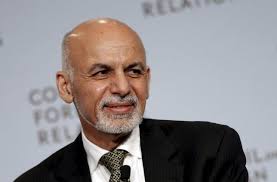
Ashraf Ghani’s New Plan to Win Afghanistan’s Long War Against the Taliban

Ashraf Ghani (Credit: inreuters.com)
Ashraf Ghani
(Credit: inreuters.com)

After his swearing-in in September 2014, President Ashraf Ghani of Afghanistan approached Pakistan sensibly. He did not demand military operations against the Haqqani Network and other Taliban networks based in Pakistan because he knew Islamabad would never do that. Rather, he pleaded with Pakistan to bring the Taliban to the negotiating table. Despite trying to smooth over relations with Pakistan after taking over the country from his predecessor, Hamid Karzai, Ghani’s stance was clear. He repeatedly said that Pakistan is in a “state of hostility with Afghanistan” and uses its proxies–chief among them, the Taliban–to exert pressure on Afghanistan for strategic gains.

This strategy of pursuing peace talks did not yield the desired result for Afghanistan. There were some occasional talks over the last two years, but the fighting has never quite gone away. The Taliban have once again vowed to launch a series of brutal attacks all over Afghanistan, invalidating and disregarding Ghani’s pleas for peace talks. A suicide attack and gun battle in Kabul in front of an National Directorate of Security (NDS) office claimed 64 lives and left 347 wounded on April 19, for example.

The Taliban has done this very thing throughout the past 13 years. They give glimpses of hope for peace in the winter months, since they cannot fight in the cold, only to take up arms again once their traditional fighting season begins.

Following the Kabul attack, Ghani summoned a joint session of the two houses of parliament. He addressed the nation and made bold announcements unlike any leader since Mohammad Najuibullah in the 1990s. Ghani said he no longer wants Pakistan to bring the Taliban to the negotiating table. He also added that the Taliban shed the blood of their own people and land for others’ interests. He added that the period of amnesty and soft behavior was over. Taliban who have been sentenced to death shall be executed soon, Ghani pledged. Despite these bold remarks, he said that Afghanistan’s door is open to those who lay down their weapons and put an end to militancy. His stance was applauded by many Afghans on social media. People of Helmand province  subsequently held a rally in support of the president’s remarks.

This is a major shift in Afghanistan’s outreach strategy to Pakistan and the Taliban. Karzai played at soft diplomacy with Pakistan throughout his presidency, in a bid to convince Islamabad to bring the Taliban to peace talks. He once publicly stated that he would side with Pakistan if there were to be a war between the United States and Pakistan; he even called the Taliban his “brothers.” But none of this rhetoric produced results.

Ghani’s statement at the joint session was not driven merely by emotion. He laid the ground for his strategy. Pakistan has always disowned the Taliban, but Ghani’s multilateral diplomacy essentially saw Pakistan confess that the Taliban are trained and sheltered in Pakistan. During his tour to the United States in March, Pakistan’s foreign affairs adviser, Sartaj Aziz, admitted that Pakistan houses the Afghan Taliban.

On top of everything, Ghani is making advancements on diplomatic and military grounds with regional countries. His approach toward Central Asian countries is another example of his pragmatic diplomacy. Central Asian countries share the same fear of Islamist expansion in the region, as does Russia. Ghani’s national security adviser and top decision maker, Hanif Atmar, played a considerable role in furthering diplomatic missions with Russia, China, and India. Atmar traveled to India in November 2015 and China in April 2016. His visits with Russian officials and tour to China brought fruit militarily. China offered military aid to the Afghan National Army following Atmar’s visit to Beijing.

Moreover, after Russia allegedly approached the Taliban to help the group fight ISIS in Afghanistan, Atmar tried to convince Moscow that it was in its best interest to support Afghan forces instead of the Taliban–not only to fight ISIS, but all militant groups. Following his talks with Russian officials, Moscow gifted 10,000 automatic rifles to the Afghan Security Forces. Ten thousand automatic rifles might not mean a lot for a country’s military, but Moscow’s willingness for military cooperation speaks to the success of Ghani’s regional outreach.

The Taliban’s number one demand for a long time has been the withdrawal of the U.S. military from Afghanistan, but they continue their offensives, even after the U.S. military completely ended its combat mission in 2014. Thirteen years of appeasement and amnesty could not convince the Taliban to cut a peace deal. It is now sensible to stop investing Afghanistan’s resources in peace talks and start investing them in building up the country’s security forces. Finally, Afghanistan must put more diplomatic pressure on Pakistan and encourage the international community to do the same. This is now Ashraf Ghani’s plan.

Samim Arif is an Afghan Fulbright scholar. He studies Political Journalism and Public Relations at Indiana University.


Feeling GOP Peril, Muslims Try to Get out the Vote

'Bird of peace' visits Bernie rally (Credit: nydailynews.com)
‘Bird of peace’ visits Bernie rally
(Credit: nydailynews.com)

WASHINGTON, March 25  — American Muslims are watching in growing horror as Donald J. Trump and Senator Ted Cruz battle for the Republican presidential nomination, outdoing each other with provocative proposals that have included Muslim registries, immigration bans and fleets of police patrolling their neighborhoods.

With round tables, summit meetings and news releases falling on deaf ears, national advocacy groups are planning to fend off policies they consider hostile to Muslims with a more proactive strategy: driving up the Muslim vote.

Organizations like the Council on American-Islamic Relations, known as CAIR, the Islamic Circle of North America and the U.S. Council of Muslim Organizations are encouraging mosques to turn themselves into voter registration centers before the November election so that Muslims can make their voices heard at the polls. Registration drives are expected to ramp up significantly in June, during Ramadan, when attendance at Islamic centers peaks.

“The fear and apprehension in the American Muslim community has never been at this level,” said Ibrahim Hooper, a spokesman for CAIR. “The anti-Islamic tidal wave is spurring civic participation.”

Muslims tended to lean Republican as recently as 2000, but a backlash after the Sept. 11, 2001, attacks, along with the Middle East policies of the George W. Bush administration, has led to a gradual shift toward the Democrats. A Pew Research Center survey last year found that 70 percent of American Muslims identify with the Democratic Party, while just 11 percent consider themselves to be Republicans.

Although Muslims make up only about 1 percent of the population in the United States, civil rights groups have set a goal of registering a million new voters. Efforts will be focused on swing states such as Ohio and Florida that have large Muslim populations, potentially giving the small but united voting bloc the power to tilt close elections.

“The best answer to this anti-Muslim rhetoric is engagement in the political process,” said Naeem Baig, the president of the Islamic Circle of North America. “It is a matter of survival for the American Muslim community.”

Like many Muslims, Mr. Baig said that the vitriol directed at Americans who practice Islam is the worst that he can remember. Violence against Muslims and attacks on mosques increased last year, and Muslim parents say their children are being bullied at school. Even the voter registration push has drawn criticism in some circles, with websites such as Creeping Sharia lamenting greater Muslim engagement in American politics and suggesting that “the problem with CAIR’s initiative is that no one who follows the Quran can honestly claim to follow the Constitution.”

The tenor of the presidential campaign is being blamed for fanning such flames, with much of the responsibility for this being placed on Mr. Trump.

This month, Mr. Trump suggested in an interview that “Islam hates us,” and he angered many Muslims last year with his idea of a moratorium on Muslim immigrants. He has also waxed nostalgic about a myth of an American general who executed Muslims with bullets dipped in pig blood, citing it as an example of old-fashioned toughness.

Mr. Cruz, a Republican from Texas, has also been accused of stirring anti-Muslim sentiment. Last week he appointed Frank Gaffney, who is known for his conspiracy theories about the spread of Shariah law in the West, to his foreign policy team. And after the terrorist attacks by the Islamic State in Brussels this week, Mr. Cruz went further than Mr. Trump has gone by calling on the authorities to “patrol and secure Muslim neighborhoods.”

Such language is not going unnoticed by American Muslims, and leaders at the Dar Al-Hijrah Islamic Center in Virginia have been holding voter education workshops. “We’re seeing an energy that is largely motivated by anti-Trump sentiment,” said Colin Christopher, the deputy director of government affairs at Dar Al-Hijrah. “The advantage of this is our community is going to put more resources to putting young leaders into the process.”

It is too soon to assess whether such voter registration efforts are succeeding, but CAIR says it is seeing a lot of energy behind the movement. Its polls have shown that about three-fourths of Muslims who are registered to vote planned to do so during the primary election season, and two-thirds of them expected to vote for Democrats.

Ghazala Salam, the president of the American Muslim Democratic Caucus of Florida, estimated that voter registration of Muslims in her state was up by almost 20 percent from a year ago and said that she saw a lot of Republicans changing party affiliations. She said that Muslim activists were setting up registration tables at luncheons and festivals and that anxiety about the election was spurring more people to sign up. “The community is very anxious and afraid about our security with all the rhetoric that we hear,” Ms. Salam said.

In cases where potential voters are reluctant to register, Reema Ahmad, a community organizer in Chicago, reminds them what is at stake this year. She regularly stands outside mosques to recruit new voters and sometimes will wonder aloud as prayer goers whisk by if they really want Mr. Trump to be president. It tends to stop them in their tracks.

“It’s one of the main tactics I employ,” Ms. Ahmad says, noting the importance of this election for Muslims. “If you’re not at the dinner table, you’re on the menu.”

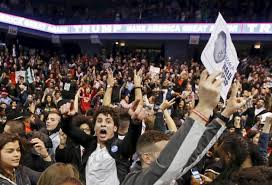
Trump’s Rally in Chicago Canceled After Violent Scuffles

Trump's Chicago rally (Credit: reuters.com)
Trump’s Chicago rally
(Credit: reuters.com)

CHICAGO, March 11— With thousands of people already packed into stands and music blaring to warm up the crowd, Donald J. Trump’s campaign abruptly canceled his rally here on Friday night over security concerns as protesters clashed with his supporters inside an arena where he was to speak.

Minutes after Mr. Trump was to have taken to a podium on the campus of a large, diverse public university just west of downtown, an announcer suddenly pronounced the event over before it had begun. Hundreds of protesters, who had promised to be a visible presence here and filled several sections of the arena, let out an elated, unstopping cheer. Mr. Trump’s supporters, many of whom had waited hours to see the Republican front-runner, seemed stunned and slowly filed out in anger.

Around the country, protesters have interrupted virtually every Trump rally, but his planned appearance here — in a city run for decades by Democrats and populated by nearly equal thirds of blacks, Latinos and whites — had drawn some particularly incensed responses since it was announced days ago.

The canceled rally came on a day that Mr. Trump sought to move past the primary fight, saying that the party needed to come together behind him.

Elsewhere, Mr. Trump’s security has tried to identify and exclude potential demonstrators before they enter his events, but large groups of protesters had waited in line for seats here, and engaged in tense disputes with Trump supporters even as the University of Illinois at Chicago Pavilion was still filling up. For more than an hour before the event was to begin, security teams led protesters out, one by one, but many more remained, sparring with Trump supporters.

In a statement, Mr. Trump’s campaign said that he “has determined that for the safety of all of the tens of thousands of people that have gathered in and around the arena, tonight’s rally will be postponed to another date.”


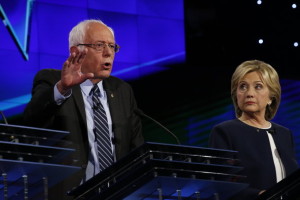
Bernie Sanders and Hillary Clinton spar in fierce debate in Flint


Democratic debate between Sanders & Clinton (Credit: nytimes.com)
Democratic debate between Sanders & Clinton
(Credit: nytimes.com)

Hillary Clinton and Bernie Sanders held a fierce and substantive debate in Flint, Michigan, on Sunday night, disagreeing over trade, guns and the auto industry bailout while joining forces to call for the resignation of state governor Rick Snyder over the city’s water contamination crisis.

Shortly after they took the stage, the Associated Press announced that Sanders had won the Democratic caucuses in Maine, his eighth victory in the 2016 presidential primary race. In a statement, the leftwing Vermont senator thanked Maine’s voters and claimed momentum heading into Tuesday’s primaries in Michigan and Mississippi.

Onstage he and the former secretary of state had one of their sharpest exchanges yet when they were asked by a member of the audience about trade and job creation, an issue Sanders had been attacking Clinton over in the lead-up to the debate.

“Secretary Clinton supported virtually every one of the disastrous trade agreements written by corporate America,” Sanders said.

“He voted against the money that ended up saving the auto industry,” Clinton replied. “I think that is a pretty big difference.”

“If you are talking about the Wall Street bailout, where some of your friends destroyed this economy … ” Sanders began.

“You know…” Clinton interjected, before Sanders cut her off: “Excuse me, I’m talking,” he said, dismissing her with his hand.

Bernie Sanders scolds Hillary Clinton for interrupting him during a particularly heated exchange on trade and government bailouts

Sanders repeatedly attacked Clinton’s past support for international trade agreements, an issue he is attempting to use against her in Michigan in order to win blue-collar votes in the rust-belt industrial state.

“I am very glad … Secretary Clinton has discovered religion on this issue,” Sanders said, referring to her position on trade. “We’ve lost 60,000 factories since 2001, they’re going to start having to – if I’m president – invest in this country, not in China, not in Mexico.”

The candidates began the debate by addressing the city’s toxic water crisis. Sanders recalled his meetings with residents: “I have to tell you what I heard, and what I saw literally shattered me. And it was beyond belief that children in Flint, Michigan, in the United States of America in the year 2016 are being poisoned.”

Clinton, who spotlighted the issue in an earlier debate, reminded the CNN audience that she had pushed the Democratic National Committee to host a debate in Flint.

“It is raining lead in Flint, and the state is derelict in not coming forward with the money that is required,” Clinton said, joining Sanders for the first time in calling for the governor to “resign or be recalled”.

Sanders and Clinton have both been campaigning hard in Michigan, which holds its primary on Tuesday.

Sanders has work to do if he hopes to win the state; Clinton is leading him by a double digit margin, according to the RealClearPolitics polling average.

Just before the debate, Sanders earned the endorsement of former Michigan Senator Don Riegle, a native of Flint. During an impromptu press conference, Riegle said the Clintons’ support for the Nafta trade agreement “destroyed the Flint I loved”.

Clinton and Sanders also tussled over whether gun manufacturers should be legal liable when their weapons are used in crimes.

Clinton said that giving immunity to gun makers and sellers “was a terrible mistake” and noted that she and Sanders were on opposing sides of the debate.

Sanders has said his support for the 2005 law was in part an effort to protect small gun shops in his home state of Vermont. He told the audience in Flint that Clinton’s approach could amount to “ending gun manufacturing in America”.

Clinton referred in emotional terms to the Sandy Hook massacre and told Sanders: “You talk about corporate greed. The gun manufacturers sell guns to make as much money as they can.”

At turns during the debate, Sanders sharply cut Clinton off or seemed to reprimand her for interrupting. Jennifer Palmieri, Clinton’s communication director, called his tone and behaviour “desperate and disrespectful” and said it was a sign of his campaign’s mounting frustration at the current dynamic of the primary race.

“It was quite mild compared to Republicans, and I also think it was really substantive. It’s not even in the same universe as the Republican debate, but he does seem to be frustrated and that was apparent,” she told the Guardian after the debate.

When asked if the senator’s tone was too harsh, Jeff Weaver, his campaign manager, said it was not, and said he hoped the analysis of the debate remained on the issues.

“He made a lot of forceful points tonight, there were a lot of forceful points to make, frankly on issues like trade and the economy, and he made those points and [laid] out the differences between them,” Weaver said in the spin room after the debate.

Weaver dismissed Sanders’s heavy losses on Super Tuesday and said the campaign was making progress among African American voters, seen as crucial to winning the Democratic nomination.

“It’s not about margins, it’s about making progress,” Weaver said. “There’s a long campaign to go. We are making substantial progress … At this point, in many ways, what we’re confronting is not by race but by age.”

Weaver called Clinton a “regional candidate” despite the fact that she has claimed three states outside of the South, including a narrow victory in Massachusetts, where Sanders had hoped to win.

There were also moments of levity during the debate. “We are, if elected president, going to invest a lot into mental health, and if you watch these Republican debates, you’re going to know why,” Sanders said.

“He’s called you a communist,” host Anderson Cooper told Sanders of Republican frontrunner Donald Trump.

“That’s one of the nice things he’s called me,” Sanders replied.

Clinton said she had won more votes than Trump in the primaries so far, and predicted that his “bigotry, his bullying, his bluster are not going to wear well on the American people”.

Sanders declared: “I would love to run against Donald Trump,” adding that polls showed “Sanders v Trump does a lot better than Clinton v Trump”.

Perhaps the most powerful moment came when Sanders was asked about his Judaism, which he has been accused of downplaying on the campaign trail.

“I am very proud to be Jewish, and being Jewish is so much of who I am,” Sanders said.

“Look, my father’s family was wiped out by Hitler in the Holocaust. I know about what crazy and radical, and extremist politics mean. I learned that lesson as a tiny, tiny child when my mother would take me shopping, and we would see people working in stores who had numbers on their arms because they were in Hitler’s concentration camp.”

He concluded: “I’m very proud of being Jewish and that is an essential part of who I am as a human being.”

Actor Mark Ruffalo briefly joined reporters in the spin room to discuss Sanders’ performance.

“The message that Bernie is giving us is one of imagination,” said Ruffalo, who has campaigned on the senator’s behalf. “It’s one of great ideas and one that takes America to its greatest potential … and early on that message really captured the minds and the hearts of feeling people.”

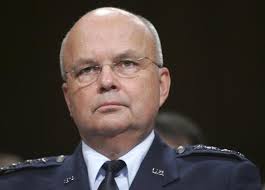
Former CIA director: Military may refuse to follow Trump’s orders if he becomes president

Gen. Michael Hayden (Credit: nydailynews.com)
Gen. Michael Hayden
(Credit: nydailynews.com)

Former CIA director Michael Hayden believes there is a legitimate possibility that the U.S. military would refuse to follow orders given by Donald Trump if the Republican front-runner becomes president and decides to make good on certain campaign pledges.

Hayden, who also headed the National Security Agency from 1999 to 2005, made the provocative statement on Friday during an appearance on HBO’s “Real Time with Bill Maher.” Trump, fresh off a string of primary victories, has yet to secure his party’s nomination, but Hayden said the candidate’s rhetoric already raises troubling questions.

“I would be incredibly concerned if a President Trump governed in a way that was consistent with the language that candidate Trump expressed during the campaign,” Hayden said during the interview with Maher.

Earlier this month, Trump told a South Carolina retirement community that he supports waterboarding and similar interrogation techniques because “torture works” when it comes to extracting vital information from terrorists.

Deeming waterboarding “torture,” President Obama’s administration discontinued its use during his first term in office. Proponents of the controversial practice, as The Washington Posts Jenna Johnson noted, avoid labeling it as torture, which would violate various international laws and treaties. Trump, meanwhile, has not only pledged to reinstate waterboarding, but also introduce other methods of interrogation that are “so much worse” and “much stronger.”

“Don’t tell me it doesn’t work — torture works,” Trump told the Sun City retirement community. “Okay, folks? Torture — you know, half these guys [say]: ‘Torture doesn’t work.’ Believe me, it works. Okay?”

Trump has also said on multiple occasions that the United States should kill the family members of terrorists.

“That will make people think. Because they do not care very much about their lives, but they do care, believe it or not, about their family’s lives,” Trump said during a debate of Republican presidential candidates in December.

Politifact has pointed out that targeting terrorists’ family members is barred by the Geneva Conventions.

During his appearance on “Real Time,” Hayden cited Trump’s pledge to kill family members as being among his most troubling campaign statements.

“That never even occurred to you, right?” Maher asked.

“God, no!” Hayden replied. “Let me give you a punchline: If he were to order that once in government, the American armed forces would refuse to act.”

“That’s quite a statement, sir,” Maher said.

“You are required not to follow an unlawful order,” Hayden added. “That would be in violation of all the international laws of armed conflict.”

“You’ve given us a great reason not to support Trump. There would be a coup in this country,” Maher joked.

Hayden said he didn’t mean to imply that the military would provoke “a coup.”

“I think it’s a coup that you said it,” Maher added.

Facing the Taliban and His Past, an Afghan Leader Aims for a Different Ending

Facing Taliban (Credit: cyrusreporter.com)
Facing Taliban
(Credit: cyrusreporter.com)

LASHKAR GAH, Afghanistan — When mujahedeen guerrillas captured this southern provincial capital in 1993, Gen. Abdul Jabar Qahraman was the Afghan government commander on the last flight out, surrendering the city.

In a resonant twist more than two decades later, Mr. Qahraman is again the face of the Afghan government here as an insurgency threatens to overrun his post.

This time, it is the Taliban at the city gates. The insurgents are firmly entrenched in a suburb of the provincial capital, Lashkar Gah, and separated from the seat of government by only the calm waters of the Helmand River. They control or contest at least 10 of the 14 districts in Helmand Province, Afghanistan’s largest in both size and opium production.

Mr. Qahraman came to Helmand last month as President Ashraf Ghani’s representative, taking charge of efforts to hold the province against the Taliban. But insisting that military measures alone are not the government’s best chance, the former general has also been trying to engage Taliban commanders in negotiations.

“Back then, too, I believed that the solution to the problem of this nation is not in fighting, and I believe that today,” Mr. Qahraman said in an interview last week at his command center here, in between aides’ frequently handing him the phone with military commanders, local officials and elders on the line. “Artillery, tanks and warplanes are failed instruments and should only be used very rarely, only when you think you will be destroyed.”

“Our first attempt is to slow the fighting, to quiet the fighting,” he added.

In some places, however, that has looked like retreat.

The army recently abandoned its last bases in the districts of Musa Qala and Now Zad, pulling out as many as 1,500 soldiers in an apparent move to strengthen a security belt around Lashkar Gah. American Special Operations forces have been drawn into the fight, recently moving to help clear roads to the provincial capital and getting involved in planning its defense.

Mr. Qahraman, 58, has been here before. His command was the last bastion of the Russian-backed Communist government in southern Afghanistan, and he became personally identified with its collapse here in 1993, when he withdrew his forces and turned Lashkar Gah over to the C.I.A.-backed mujahedeen. He went into exile in Moscow for a decade afterward.

He returned to Afghanistan after the United States invasion in 2001 and the fall of the Taliban, and became a member of Parliament. His views on how to engage the resurgent Taliban are a sympathetic fit with those of Mr. Ghani, who has tried to open talks with the insurgency’s leaders in an effort to reach a political end to the long war.

But in the immediate crisis, tribal elders here see his efforts as impractical and hopeless — the desperate acts of a nostalgic commander. The Taliban, instead of responding to his peace calls, have challenged him to a “face-to-face” fight, and they do not like the government’s chances.

“I think Mr. Qahraman is in daydreaming mode,” said Hajji Mohammad Tahir, an elder from Sangin District who recently attended discussions with Mr. Qahraman. “Right now, the Taliban have the upper hand, the government is beneath. Once you bring them down militarily, then it would be possible for local Taliban to put their weapons down and join the peace process — not now.”

Mullah Abdul Rahman Ehsan, a Taliban commander in Sangin, said Mr. Qahraman had clearly returned to Helmand to make up for past humiliations.

“Let’s fight first, and forget about peace and laying weapons down,” Mullah Ehsan said. “First we need to fight, then work on the peace process.”

Others even saw cynical motives in the recent events in Helmand, particularly after the surrender of the army bases. After a disastrous year militarily, the government might be striking deals with the Taliban in the districts to keep them away from the city, just as the Communist government did in its final days in southern Afghanistan.

The suspicion is furthered by the fact that the man in charge of Helmand operations is talking peace, and that the minister at the helm of national defense, Mohammad Masoom Stanekzai, was until last year effectively in charge of the national peace process.

“The question that is going through my head, after they just retreated from Musa Qala, is what if they are saying we won’t resist in the districts and you don’t attack the city?” said Abdul Majid Akhundzada, the deputy head of Helmand’s provincial council, whose father was a leading rebel commander against Mr. Qahraman in the 1980s. “If that is not the case, why are they leaving without a fight?”

Mr. Qahraman, who said the recent retreats were necessary and not part of any deal, admitted to facing an uphill task.

In Helmand, the government has lost to the Taliban not just most of its districts, but also, over the course of the past few years, much of its public support and any semblance of corruption fighting. The allure of opium profits has ensnared Taliban and government officials alike.

Deep in the deserts that are supposedly Taliban territory, officials and local elders report nighttime drug raids by security forces. Bodies are left behind, but lucrative bags of opium end up disappearing.

“If you send me out in the whole of Helmand right now and say, ‘Jabar, find me a couple good district governors, a few good district police chiefs, a few good directors,’ I can’t find you one in the whole of Helmand. I absolutely can’t,” Mr. Qahraman said. “Even if you appoint these men closest to me, they will turn into wolves — the mentality has turned like that. The bad has become good in the perceptions.”

After a few disastrous months of fighting in Helmand, with the government territory shrinking, a delegation of senior officials recently dispatched by Mr. Ghani found that only about half of the Afghan Army force there on paper was actually on duty. Many troops were missing because of desertion, casualties or corruption, one member of the delegation said, speaking on the condition of anonymity to discuss delicate information.

While acknowledging such problems, Mr. Qahraman said there should be enough forces in Helmand to fight an insurgency that he believes does not number more than 2,000 fighters. The Afghan forces are well supplied, he insisted, calling the modern army’s NATO support “a genetically modified cow that gives good milk” compared with the Soviet support a generation ago, which he called “a skinny cow.”

The problems lie in how the forces are managed, he said, and in corrupt leadership eating up supplies before they reach the units.

“Their only art is that they are mobile,” Mr. Qahraman said about the Taliban. “For us, on the other hand, even preparing the convoys takes days. They have an upper hand — they are locals, they know the terrain, and their load is smaller.”

Still, Mr. Qahraman said he hoped to make a difference in Helmand. He recited a Pashto poem:

“If you keep swimming after it, it will come to your hand / Who says there are no pearls in the sea?”

But Hajji Sharafuddin, 53, a mujahedeen fighter who battled Mr. Qahraman in the 1980s, fears that the former general’s history in Lashkar Gah will continue to repeat itself.

“Tomorrow, you will have another plane come for you,” Hajji Sharafuddin said, “and we will be left here watching.”

Taimoor Shah contributed reporting from Kandahar, Afghanistan

Powers meeting on Afghanistan see Taliban talks by March

Peace talks on Afghanistan (Credit: abcnews.go.com)
Peace talks on Afghanistan
(Credit: abcnews.go.com)
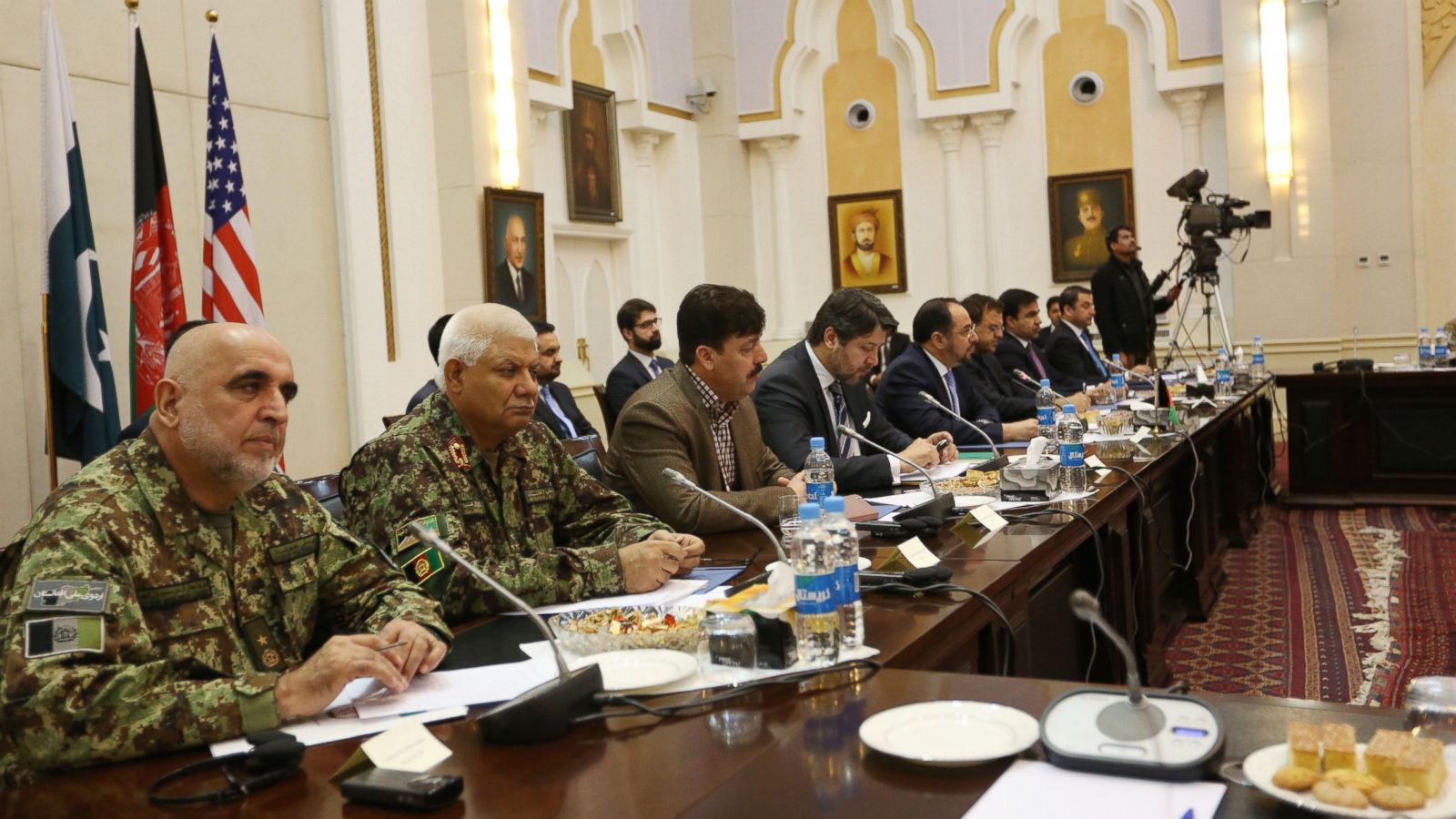
KABUL, Feb 23: Afghan government and Taliban representatives are expected to meet in Islamabad by the first week of March for their first direct talks since a previous round of the peace process broke down last year, officials said on Tuesday.

Following a meeting in Kabul, the so-called Quadrilateral Coordination Group (QCG), made up of officials from Afghanistan, Pakistan, the United States and China, “expressed strong support for the upcoming direct talks between the Government of Afghanistan and authorized representatives of the Taliban and other groups.”

In a joint statement released by the Afghan foreign ministry, they said the first round of direct peace talks is expected to take place by the first week of March in the Pakistani capital.

On Monday, the powerful chief of the Pakistan army, Gen. Raheel Sharif met officials from Qatar, where the Taliban maintains a political office, to prepare the way for Tuesday’s meeting, the fourth in a series of quadrilateral encounters aimed at laying the ground for full peace talks.

However the Taliban has been riven by factional infighting since last year’s announcement of the death of the movement’s founder Mullah Mohammad Omar some two years earlier. The Taliban has not yet clearly indicated whether it will take part in any talks with the Western-backed government in Kabul.

New leader Mullah Akhtar Mansour has laid down preconditions for taking part in any talks, including the withdrawal of all foreign forces, while a breakaway faction that opposes him has rejected any negotiations.
But officials in Kabul have expressed hopes that at least some parts of the movement and other insurgent groups affiliated with it can be persuaded to join.

“I think there’s a lot of Taliban that want to come,” the outgoing commander of NATO forces in Afghanistan Gen. John Campbell said earlier this month. “That’s what’s going to be hard, to get all the right people to the table.”

Tuesday’s four-way talks in Kabul came against a backdrop of continuing violence and increasing military pressure from the Taliban, which has stepped up its insurgency since the withdrawal of most international troops from combat in 2014.

Over the weekend, Afghan officials confirmed that troops had pulled out of two key districts in Helmand, leaving the entire northern half of the volatile province in the hands of the insurgents.

Insurgents have also kept up their suicide bombing campaign, with 14 people killed in an attack on a clinic in Parwan province north of Kabul on Monday.

Writing by James Mackenzie; Editing by Michael Perry and Katharine Houreld