You Say You Want a Revolution

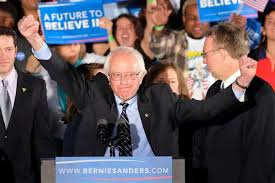
Bernie wins New Hampshire (Credit: usnews.com)
Bernie wins New Hampshire
(Credit: usnews.com)

If there’s one thing that fires up Bernie Sanders supporters—and makes his detractors roll their eyes—it’s his call for a “political revolution.” To his base, it’s the very point of his anti-establishment, anti-elite candidacy. To his critics, it’s the very embodiment of his campaign’s naïve impracticality and vagueness.

But now that voters in Iowa and New Hampshire have spoken, it’s time to take the idea of political revolution more seriously—more seriously, indeed, when Sanders himself appears to have. It’s time to ask: What exactly would it take?

It starts with Congress. And here it’s instructive to compare Sanders and Donald Trump. Both rely on broad, satisfying refrains of “We’re gonna”: We’re gonna break up the big banks. We’re gonna make Mexico build the wall. We’re gonna end the rule of Wall Street billionaires. We’re gonna make China stop ripping us off.

The difference is, Trump’s refrains are more plausible. That’s because today’s Congress is already willing to enact many of his proposals, whether repeal of Obamacare or severe restrictions on immigration. And if Trump became president, the 115th Congress would very likely be more conservative than the 114th.

For Sanders to deliver on his “We’re gonna” pledges, he needs an entirely different Congress. How to get it? Thus far, Sanders has laid out a theory of action that is basically, “If I come, they will build it.” That is, if he electrifies enough voters to win, then presumably those voters will have upended Congress as well. He’s banking on an electoral flood tide à la 1980, 1964, or 1932.

That’s possible, but it’s not a plan. If he’s serious about political revolution, the first priority for Sanders now should be to cultivate a crop of Democratic candidates who can oust Republican incumbents. House Democrats, at their lowest numbers since 1947, need 30 seats to regain a majority. If Sanders launched a “Bernie’s 30” effort, to persuade his formidable base of small donors to give money and time to a slate of candidates who can win a targeted set of seats now held by the GOP, that would help effect the actual institutional change his presidency would depend on.

A second step for a true revolution would be a common policy agenda for all these candidates. Here he could take a page from Newt Gingrich’s playbook and issue a progressive Contract With America that prioritizes 10 easy-to-digest legislative goals (Wall Street reform, campaign reform, single-payer health care, and so forth). Historians and commentators differ on how much the Contract truly caused the tectonic 1994 GOP takeover. But it did nationalize, and standardize, congressional campaigns in a way that Sanders would need to do.

Third, Sanders should also take a page from the Obama 2008 playbook. That campaign organized young people more systematically than any presidential campaign in history. Across the country, it held “Camp Obama” trainings, in which young people taught each other Marshall Ganz’s story-centered methods of community organizing. Sanders has the young people; now he needs the machinery to amplify their force.

Fourth, Sanders would have to learn from Obama 2008 how to catalyze culture makers. Every presidential campaign knows enough now to enlist celebrity musicians or artists. But Sanders could invite artists from all around the country, famous or not, to create work that spreads the message of his campaign. Culture shapes norms: about inequality,  racism, violence. And culture that isn’t made by the campaign but by the people packs a punch.

Fifth, Sanders would have to link up to other organic movements that are arising in parallel with his own campaign. The Democracy Awakening coalition, led by the NAACP and Public Citizen with dozens of other progressive organizations, for example, is planning a national rally in Washington for this spring. But Sanders should look beyond obviously progressive movements. If he wants a revolution, he needs also to invite in the segment of Trump supporters who aren’t racist xenophobes but who simply feel left behind by a changing country. That would be revolutionary.

Sixth, the Sanders campaign should study the Tea Party closely and learn from it. It’s too easy for progressives to dismiss the Tea Party as a creation of the Koch brothers. The more complex and instructive reality is that, especially early on, there were many thousands of Americans self-organizing on conference calls and Facebook and in person. What was their leadership structure? How did they communicate? What lessons do their grassroots leaders have about dealing with the party establishment?

Seventh, Sanders should be building a web of city leaders—elected and not—who will push policies in sync with his national agenda. Cities are increasingly the locus of civic innovation, whether on the sharing economy or living wages or criminal-justice reform. A true political revolution would activate citizens in every city of scale to provide the foundation from which federal reforms could arise.

Of course, Hillary Clinton could adopt some of these strategies, too. But her disadvantage is that she does not have many young voters. More crucially, she does not seek transformational change. The only other candidate who wants such change, Trump, sees his voters as an audience, as customers, as fans. Not so much as citizens. He loves them the way Il Duce loved his people. He wants to exercise power in their name, not to empower them to shape their own futures.

Which brings me back to the Sanders opportunity—and what I think of as an American opportunity. I supported Obama in 2008, and I’ve supported Clinton this time. But I am genuinely excited about the energy Sanders has activated, and I believe it’s good for the country if that energy gets converted to productive civic action.

So the message now to Bernie Sanders from Americans of every stripe should be this: You say you want a revolution? Help us make one.
Jeb Bush Had To Ask Voters In New Hampshire To ‘Please Clap’ For Him

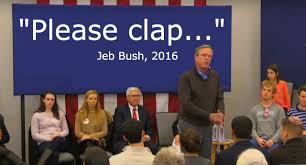
Jeb in NH (Credit: pinknews.com)
Jeb in NH
(Credit: pinknews.com)

Former Florida Gov. Jeb Bush (R), who is trying to save his failing campaign in New Hampshire after finishing sixth in the Iowa caucuses, had to beg an audience in New Hampshire to clap for him.

“I will be a commander in chief that will have the back of the military, I won’t trash talk, I won’t be a divider-in-chief or an agitator-in-chief. I won’t be out there blowharding talking a big game without backing it up,” Bush said at a town hall in New Hampshire on Tuesday. “I think the next president needs to be a lot quieter but send a signal that we’re prepared to act in the national security interests of this country to get back in the business of creating a more peaceful world.”

When Bush’s comments were met with silence, he asked the audience to “please clap,” which they did.

According to HuffPost Pollster, which aggregates publicly available polling data, Bush trails Donald Trump, Sen. Ted Cruz (Texas), Ohio Gov. John Kasich and Sen. Marco Rubio (Fla.) in New Hampshire.

Why do the Iowa caucuses matter?

Iowa-caucus (Credit: beliefnet.com)
Iowa-caucus
(Credit: beliefnet.com)

The Democratic and Republican Iowa Caucuses, the first step in nominating a candidate, will take place on February 1. Iowans defend the caucus as an exercise in real grassroots democracy, given the extent of politicking and discussion that goes on.

On February 1, the first voting contest in the presidential nominating process kicks into gear in the US state of Iowa. Because it is the first state to do so, candidates invest heavily there, whether by holding debates or canvassing.

Iowans vote in caucuses, which are small political meetings held throughout 1,681 locations scattered around the state. They are similar to primaries in that residents cast ballots for their preferred party candidate, and whoever garners the most votes wins. But people do not just show up and vote – the process is essentially a meeting of friends and neighbours in high school gyms and church basements, where discussions about candidates are held.

Representatives for the candidates are present and, at one point, attempt to persuade undecided voters. This is what makes caucuses different from primaries. The Iowa caucuses, which have represented the nation’s first ballot-marking since the 1970s, is also different for Democrats and Republicans.

The caucuses: Republican vs Democrat

In the US, elections take place like this: Citizens elect delegates, delegates elect nominees, and nominees become presidents.

On the Republican side, the caucuses are straightforward: Voters turn up, listen to speeches, and then cast their vote by a secret ballot. Votes are tallied statewide. A winner is subsequently declared.

On the Democratic side, the process is more convoluted and time-consuming. The number of people in the room are counted, and any candidate who does not get a certain percentage (a threshold set at the beginning of the night) in the first round, is eliminated.

Those who voted for losing candidates are then coaxed by the others to join their side and to vote for their candidate of choice. At the end, the results are collated across the state in all precincts.

Despite the hoopla surrounding the Iowa caucuses, the real impact of this process happens further down the line, when results are eventually translated into votes for delegates, who represent their states at their respective party conventions. These delegates are the ones who vote for a candidate to run in the national election.

Why are the Iowa caucuses significant? 

Iowans defend the caucus as an exercise in real grassroots democracy, given the extent of politicking and discussion that goes on. However, some argue that the lengthy and complex caucus is archaic and should be changed.

One of the problems with placing so much weight on Iowa is that it is not demographically representative of the US, with a population that is approximately 90 percent white versus 77 percent nationwide.

“The importance of Iowa is enshrined in tradition. It’s not practical,” said Jason Johnson, a professor of political science and communication at Hiram College in Ohio.

“Other states are more demographically and economically diverse and are a better indicator of how you would do nationally. It’s just that we have been doing it for so long that no one wants to advocate its change,” Johnson, who has worked for both Republicans and Democrats as a campaign manager, told Al Jazeera.

If this state is small and unrepresentative, why does it have such an impact on the race? In a nutshell, it is because it is the first contest for people to get their party nomination. If a candidate does not do well in those early states, like Iowa and New Hampshire, financial and electoral support eventually begins to dry up. This gives Iowa the power to narrow down the playing field.

“Because it is the first, a large number of voters within the two parties and a large number of the press and party elites in [Washington] DC choose to make it an important contest,” Johnson said.

“Your success in Iowa is perceived to be an indicator for your ability to organise, to get people on the ground and to have voters enthusiastically support you.”

What do the Iowa caucuses achieve?

Because of the sequential system, the results of the ‘first-in-the-nation’ caucuses can affect how people in the next state vote (it helps them adjust their expectations accordingly), give winning candidates more airtime and media attention, and impact the behaviour of donors. More importantly, it narrows down the number of candidates to a manageable size.

“Its most important facet is that it winnows the field,” said Lara Brown, the author of Jockeying for the American Presidency: The Political Opportunism of Aspirants. “It typically brings out two to three candidates who have the media momentum and organisational campaign to go forward.”

The winnowing effect of the Iowa caucuses helps predict the losing nominee. That is because it separates the “starters from the non-starters,” according to Bill Schneider, a political analyst who has covered every US presidential and midterm election since 1976.

“You will see candidates dropping out after Iowa,” Schneider told Al Jazeera. “People who vote in the Republican caucuses tend to be evangelical. They are not representative of the larger party. On the Democratic side, they tend to be very liberal, because it’s people who have the commitment to attend what’s essentially a meeting.”

Since 1972, no Democratic or Republican candidate who finished worse than fourth place in Iowa has gone on to win their party’s nomination, according to the Christian Science Monitor.

Most often, it is those hopefuls who get a top tier spot who continue to do well in their campaigns. Those who do not usually drop out of the race soon thereafter, although there are a few exceptions. A case in point is former Arkansas Governor Mike Huckabee, who, in 2008, won the Republican caucus, but dropped out just three months later, without securing the GOP nomination.

What does this mean for this year’s race?

Essentially, pundits, strategists, candidates and people will be using the Iowa caucuses’ results as a litmus test to see how the nation responds to candidates and to set the stage and build momentum for the first primary held in New Hampshire about a week later. It is also a chance for voters and the media to see if the results measure up to their expectations.

In the Democratic contest, former Secretary of State Hillary Clinton was leading in polls until Vermont Senator Bernie Sanders caught up with her. In Iowa, he recently topped Clinton at 49 percent to 45 percent, according to the latest Quinnipiac University poll, essentially locking both candidates in a tight battle.

While Sanders has positioned himself to seriously compete in this race, Iowa may be a tough win for him, according to some observers.

“Hillary Clinton has long focused on Iowa as essentially a shortcoming of her previous campaign, and I’d be surprised if she doesn’t win there,” Brown told Al Jazeera. “Bernie Sanders has to bring a lot of first-time caucus-goers who may not be as active and knowledgeable as Clinton’s supporters.”

On the GOP side, all eyes will be on billionaire Donald Trump, and whether people will actually go out and vote for him. The celebrity tycoon is leading in Iowa with about 31 percent, compared with 29 percent for Senator Ted Cruz, according to the same Quinnipiac University poll.

“As Trump gains momentum, there will be a lot of caucusers who think he’s going to be the nominee so they say ‘let me get on board’,” said Joe Watkins, a Republican strategist. “They see who’s going to win and they want in. That’s how it works.”

Trump, who won the endorsement of former GOP vice presidential nominee Sarah Palin, recently exuded confidence at an Iowa rally when he said he “could shoot somebody” on New York’s Fifth Avenue and “wouldn’t lose any voters”.

“With Palin’s endorsement, he’s digging into Ted Cruz’s base, which is the evangelical Christian base,” Watkins, who was a White House aide to former President George Bush senior, told Al Jazeera.

In New Hampshire, Trump has a much larger lead over the other Republican presidential hopefuls there, so if he wins in Iowa, he can bring both contests to South Carolina, which then puts him in a comfortable position on Super Tuesday, a day on which several US states hold primaries.

Schneider explained that there are two ways things can go for Trump: His supporters, many of whom have never voted in a caucus before, may not show up, especially since he has not invested as much time and energy on the ground there.

“A caucus is a meeting. It takes a lot more energy to attend a meeting,” Schneider said. “You need something to pull people out of their beds, find babysitters for their kids, to get them to that meeting. Without that sort of operation, his people won’t show up.”

On the other hand, it is possible that Trump’s supporters will show up without any organisation. “His people are so fired up, they want their voice to be heard. So it could happen. It happened to [Barack] Obama in 2008.”

What happens after the caucuses?

“Just because a candidate wins Iowa doesn’t mean he wins the general election,” Republican strategist Watkins said. “It’s all very fluid and not automatic.”

“It’s possible Trump can win Iowa and even the Republican nomination, but winning the general election is something else; he’d have to win constituents who aren’t Republican, or he has to walk back many of his comments that alienated others.”

The results of Iowa’s caucuses and New Hampshire’s primaries also tend to go hand in hand. “Iowa and New Hampshire are different kinds of tests, but they go together: Iowa is a very restricted electorate. New Hampshire is more open because they allow independents,” Schneider said. “If you fail both these tests, then it’s time to leave.”

U.S. Broadens Fight Against ISIS With Attacks in Afghanistan

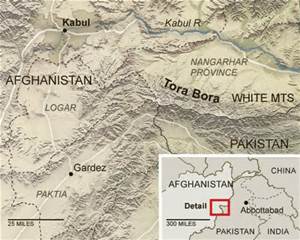
Tora Bora, Afghanistan (Credit: crackersquire.blogspot.com)
Tora Bora, Afghanistan
(Credit: crackersquire.blogspot.com)

WASHINGTON, Jan 31 — The United States has carried out at least a dozen operations — including commando raids and airstrikes — in the past three weeks against militants in Afghanistan aligned with the Islamic State, expanding the Obama administration’s military campaign against the terrorist group beyond Iraq and Syria.

The operations followed President Obama’s decision last month to broaden the authority of American commanders to attack the Islamic State’s new branch in Afghanistan. The administration — which has been accused by Republicans of not having a strategy to defeat the group — is revamping plans for how it fights the terrorist organization in regions where it has developed affiliates.

Many of these recent raids and strikes in Afghanistan have been in the Tora Bora region of Nangarhar Province — an inhospitable, mountainous area in the eastern part of the country, near the border with Pakistan. It was in Tora Bora that Osama bin Laden and other senior Qaeda militants took refuge during the American-led invasion in 2001, and eventually evaded capture by slipping into Pakistan.

Instructors from the American-led coalition worked with Iraqi soldiers during a live ammunition exercise last week at the Besmaya military base south of Baghdad. The emergence of Islamic State affiliates in various countries has prompted a new American approach. Credit Thaier Al-Sudani/Reuters

American commanders in Afghanistan said they believed that between 90 and 100 Islamic State militants had been killed in the recent operations. Intelligence officials estimate that there are roughly 1,000 Islamic State fighters in Nangarhar Province, and perhaps several thousand more elsewhere in the country. But even the generals leading the missions acknowledge that a resilient militant organization can recruit new fighters to replace those killed in American attacks.

“The new authority gives us the ability to take the gloves off to hold them in check, and we have been targeting them heavily and it has had quite an effect,” said Maj. Gen. Jeffrey Buchanan, the military’s deputy chief of staff for operations in Afghanistan. “But just because you take a bunch of guys off the battlefield doesn’t mean you will stop this organization.”

Although Mr. Obama had declared an end to combat missions in Iraq and Afghanistan, the operations are part of a continuing and potentially expanding American military footprint in south-central Asia, the Middle East and Africa for the fight against the Islamic State, also known as ISIS or ISIL.

In Iraq, the United States has about 3,700 troops, including trainers, advisers and commandos. There are several dozen Special Operations forces deployed in Syria. Defense Secretary Ashton B. Carter has said the United States and its allies are looking to do more, and has asked other countries — including several Arab ones — to contribute more to the military campaign as it moves to reclaim Mosul in Iraq and Raqqa in Syria, the two major cities controlled by the Islamic State.

Administration officials are weighing a new campaign plan for Libya that would deepen the United States’ military and diplomatic involvement on yet another front against the Islamic State. The United States and its allies are increasing reconnaissance flights and intelligence collecting there — and even preparing for possible airstrikes and raids, according to senior American officials. Special Operations forces have met with various Libyan groups over the past months to vet them for possible action against the Islamic State.

In Afghanistan, American and other allied commanders fear that the combination of fighters loyal to the Taliban, the Haqqani network and the Islamic State is proving too formidable for the still struggling Afghan security forces to combat on their own.

The United States has 9,800 combat troops in Afghanistan. Although that figure is scheduled to decline to 5,500 by the time Mr. Obama leaves office next January, administration and military officials are privately hinting that the president may again slow the troop withdrawal later this year.

At a hearing last week, Mr. Obama’s nominee to be the next commander in Afghanistan, Lt. Gen. John W. Nicholson Jr., was asked by Senator John McCain, chairman of the Armed Services Committee, if he believed that the overall security situation in Afghanistan was deteriorating, rather than improving.

“Sir, I agree with your assessment,” said General Nicholson, a veteran of several deployments to Afghanistan. He said that the Taliban had fought against Afghan security forces “more intensely than perhaps we anticipated” and that the emergence of the Islamic State there had been unexpected.

General Nicholson said that, if confirmed by the Senate, he would take his first 90 days to review the two primary missions in Afghanistan — counterterrorism and advising and assisting Afghan forces — before offering his recommendations on American troop levels in the country. The departing commander, Gen. John F. Campbell, is scheduled to testify before Congress this week, and he is expected to likewise underscore the rising threat from the Islamic State.

Under newly relaxed rules the White House sent to the Pentagon last month, the military now needs to show only that a proposed target is related to Islamic State fighters in Afghanistan. Before, such a target could be struck only if it had significant ties to Al Qaeda.

The military had been able to strike Islamic State targets in self-defense, but the new rules lower the standard for such offensive operations against the group.

“Suffice to say we had built up a sufficient amount of intel to be able to go after them in a robust way once we were able to take the gloves off,” General Buchanan said.

He added: “We continue to conduct operations against Al Qaeda throughout, but have been more focused on” ISIS in recent weeks.

There are significant differences between the Islamic State fighters in Afghanistan and those in Iraq and Syria.

In Afghanistan, a majority of the militants were previously part of the local Taliban or Haqqani network, and many of them have now “rebranded” themselves as members of the Islamic State. While the leaders of the group in Iraq and Syria are mostly from those countries, many of their fighters come from other Middle Eastern countries and from Europe.

The Islamic State militants in Afghanistan receive some money from leaders in Iraq and Syria, but there is little evidence that they receive much direction about when and where to launch attacks, according to military officials. There have been few examples of the Islamic State members in Afghanistan being able to effectively communicate with each other to carry out complex attacks, like the ones often carried out in Iraq and Syria. Nevertheless, the group has claimed responsibility for several deadly bombings in Afghanistan in recent months.

President Ashraf Ghani of Afghanistan has thanked American officials for their recent efforts against the Islamic State, which he fears is gaining strength, according to senior American officials.

As the Islamic State has expanded in Afghanistan, it has also fought the Taliban as the two groups compete for influence and money.

“They are trying to assume control at the local level over checkpoints, over the drug trade, over flows of illicit goods,” Brig. Gen. Wilson A. Shoffner, a spokesman for the American military in Afghanistan, said in a telephone interview on Sunday.

Iran Complies With Nuclear Deal; Sanctions Are Lifted

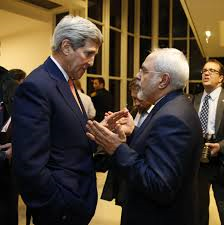
John Kerry & Javad Zarif (Credit: washingpost.com)
John Kerry & Javad Zarif
(Credit: washingpost.com)

VIENNA, Jan 16 — The United States and European nations lifted oil and financial sanctions on Iran and released roughly $100 billion of its assets after international inspectors concluded that the country had followed through on promises to dismantle large sections of its nuclear program.

This came at the end of a day of high drama that played out in a diplomatic dance across Europe and the Middle East, just hours after Tehran and Washington swapped long-held prisoners.

Five Americans, including a Washington Post reporter, Jason Rezaian, were released by Iran hours before the nuclear accord was implemented. The detention of one of the released Americans, Matthew Trevithick, who had been engaged in language studies in Tehran when he was arrested, according to his family, had never been publicly announced.

Early on Sunday, a senior United States official confirmed that “our detained U.S. citizens have been released and that those who wished to depart Iran have left.” The Washington Post also released a statement confirming that Mr. Rezaian and his wife, Yeganeh Salehi, had left Iran.

“Iran has undertaken significant steps that many people — and I do mean many — doubted would ever come to pass,” Secretary of State John Kerry said Saturday evening at the headquarters of the International Atomic Energy Agency, which earlier issued a report detailing how Iran had shipped 98 percent of its fuel to Russia, dismantled more than 12,000 centrifuges so they could not enrich uranium, and poured cement into the core of a reactor designed to produce plutonium.

But Mr. Kerry was clearly energized by the release of the Americans, an issue he took up on the edges of almost every nuclear negotiation, and pursued in separate, secret talks that many involved in the nuclear issue were only vaguely aware were happening.

The release of the “unjustly detained” Americans, as Mr. Kerry put it, came at some cost: Seven Iranians, either convicted or charged with breaking American embargoes, were released in the prisoner swap, and 14 others were removed from international wanted lists. Many of the presidential candidates, including Senator Marco Rubio of Florida and Donald J. Trump, denounced the swap as a sign of weakness, and they have long promised to review or withdraw from the nuclear agreement.

They particularly object to the release of about $100 billion in frozen assets — mostly from past oil sales — that Iran will now control, and the end of American and European restrictions on trade that had been imposed as part of the American-led effort to stop the program. It was not only sanctions that forced Iran to the table: the United States and Israel also developed one of the world’s most sophisticated cyberweapons to destroy the centrifuges that Iran has now been dismantling.

With the start of the so-called implementation day, the day that the accord goes fully into operation, the structures are finally in place for Tehran to re-engage with the world after decades of isolation.

But even in a week that started with the release of 10 sailors who drifted into Iranian waters — the Defense Department still has not provided an explanation of how that happened — and ended with a prisoner swap that seemed drawn from the pages of the Cold War, it was far from clear whether Tehran would choose to re-engage — at least very quickly.

In Tehran and Washington, political battles are still being fought over the merits and dangers of moving toward normal interchanges between two countries that have been avowed adversaries for more than three decades. But Mr. Kerry suggested that the nuclear deal had broken the cycle of hostility, enabling the secret negotiations that led up to the hostage swap. It was far from a sure thing: Just weeks ago, Iran was demanding the release of nearly 20 Iranians convicted or indicted in the United States; an administration official said that number had been whittled down to seven, but even that still rankled some.

“Critics will continue to attack the deal for giving away too much to Tehran,” said R. Nicholas Burns, who started the sanctions against Iran that were lifted Saturday as the No. 3 official in the State Department during the George W. Bush administration. “But the fact that Iran’s nuclear ambitions will be effectively frozen for the next 10 to 15 years is a real advantage for us,” he said, adding that “it was achieved by tough-minded diplomacy and not war.”

Still Mr. Burns, who now teaches diplomacy at Harvard and has advised Hillary Clinton, a Democratic candidate for president, argued that recent encounters with Iran — including its ballistic missile tests and its propping up of President Bashar al Assad of Syria, “demonstrate how complicated our relationship with Iran will continue to be.” He urged President Obama to issue new sanctions against Iran this weekend for the ballistic missile tests — a violation of United Nations Security Council resolutions — to demonstrate that he will keep up the pressure.

A copy of the proposed sanction leaked three weeks ago, and the Obama administration pulled it back — perhaps to avoid torpedoing the prisoner swap and the completion of the nuclear deal. Negotiations to win the release of Mr. Rezaian, who had covered the nuclear talks before he was imprisoned on vague charges, were an open secret: Mr. Kerry often alluded to the fact that he was working on the issue behind the scenes.

Mr. Rezaian was held in Tehran’s notorious Evin Prison for practically all of his incarceration, and spent the first several months in solitary confinement. He suffered vision problems and relatives said he lost about 40 pounds. It wasn’t until about a year ago that the Iranian authorities publicly explained the nature of the charges against him.

His mother, Mary Rezaian, who lives in Turkey and went to Tehran last June to be closer to her son, said then that he had only just become aware of the global support for him, including an appeal for his release from Muhammad Ali, the former heavyweight boxing champion. Mr. Rezaian’s mother said she was permitted to visit him only occasionally and said it had become “ever harder” for him to cope.

Then, several weeks ago the Iranians leaked news that they were interested in a swap of their own citizens, which American officials said was an outrageous demand, because they had been indicted or convicted in a truly independent court system.

But behind the scenes, one senior American official said, “it was clear this would be the only way.” There was discussion inside the administration of similar swaps during the Cold War, a practice moviegoers have been reminded of recently in “Bridge of Spies,” about the negotiations to win the release of Francis Gary Powers.

Mr. Kerry insisted that the two sets of negotiations were completely separate, but he acknowledged they were related: The intense diplomatic contact with Iran — Mr. Kerry has spent more time with his American-educated Iranian counterpart, Mohammad Javad Zarif, than any other foreign minister — made the prisoner talks possible.

The result was two parallel races underway — one involving implementing the nuclear deal, the other to get the prisoner swap done while the moment was ripe. The Iranians beat, by months, the C.I.A. and Energy Department estimates of how long it would take them to dismantle the far-flung elements of its nuclear empire, a long checklist that occupies scores of pages in the nuclear accord.

“They were highly motivated to get it done,” said one American official who was closely involved, because President Hassan Rouhani wanted money flowing into Iran, and more oil flowing out, before a critical election next month.

But there were last minute hitches. For example, the United States and Iran were struggling late Saturday to define details of what kind of “advanced centrifuges” Iran will be able to develop nearly a decade from now — the kind of definitional difference that can undermine an accord.

The result was that Mr. Kerry and Mr. Zarif veered from the monumental significance of what they were accomplishing — an end to a decade of open hostility — to the minutiae of uranium enrichment.

But Mr. Kerry emerged to tell reporters he had reached the goals he has talked about for two years. “Each of the pathways that Iran had to a nuclear weapon have been verifiably closed down,” he declared. Noting that Tehran has frozen much of its activity during the negotiations, he responded to critics of the deal — including, without naming them, the Republican presidential candidates — who say that Iran will immediately cheat.

“We have now two years of compliance under our belt,” he said. “Obviously, past performance does not guarantee future results.” But, he argued, “we know without doubt that there is not a challenge in the entire region that wouldn’t become much more complicated if Iran had the ability” to produce nuclear weapons.”

But Iran has something it desperately needs: Billions in cash, at a time oil shipments have been cut by more than half because of the sanctions, and below $30-a-barrel prices mean huge cuts in national revenue.

Just how much cash is a matter of dispute. A senior American official said Saturday that Iran will be able to access about $50 billion of a reported $100 billion in holdings abroad, though others have used higher estimates. The official said Iran will likely need to keep much of those assets abroad to facilitate international trade.

The Obama administration on Saturday also removed 400 Iranians and others from its sanctions list and took other steps to lift selected restrictions on interactions with Iran. Another 200 people, however, will remain on the sanctions list under for other reasons, including terrorist activities, human rights abuses, involvement in civil wars in Syria or Yemen or ties to the country’s ballistic missile program.

Under the new rules put in place, the United States will no longer sanction foreign individuals or firms for buying oil and gas from Iran. The American trade embargo remains in place, but the government will permit certain limited business activities with Iran, such as selling or purchasing Iranian food and carpets and American commercial aircraft and parts.

It is an opening to Iran that represents a huge roll of the dice, one that will be debated long after Mr. Obama he has built his presidential library. It is unclear what will happen after the passing of Iran’s Supreme Leader, Ayatollah Ali Khamenei, who has protected and often fueled the hardliners — but permitted these talks to go ahead.

The president and Mr. Kerry, with a year and four days left in office, are hoping to foster new discussions that will bear fruit in other areas, including ending the war in Syria and moving, slowly, to the eventual restoration of diplomatic relations.

Rick Gladstone and William J. Broad contributed reporting from New York, Peter Baker from Washington and Thomas Erdbrink from Tehran.

Turkey Blames Islamic State in Istanbul Attack

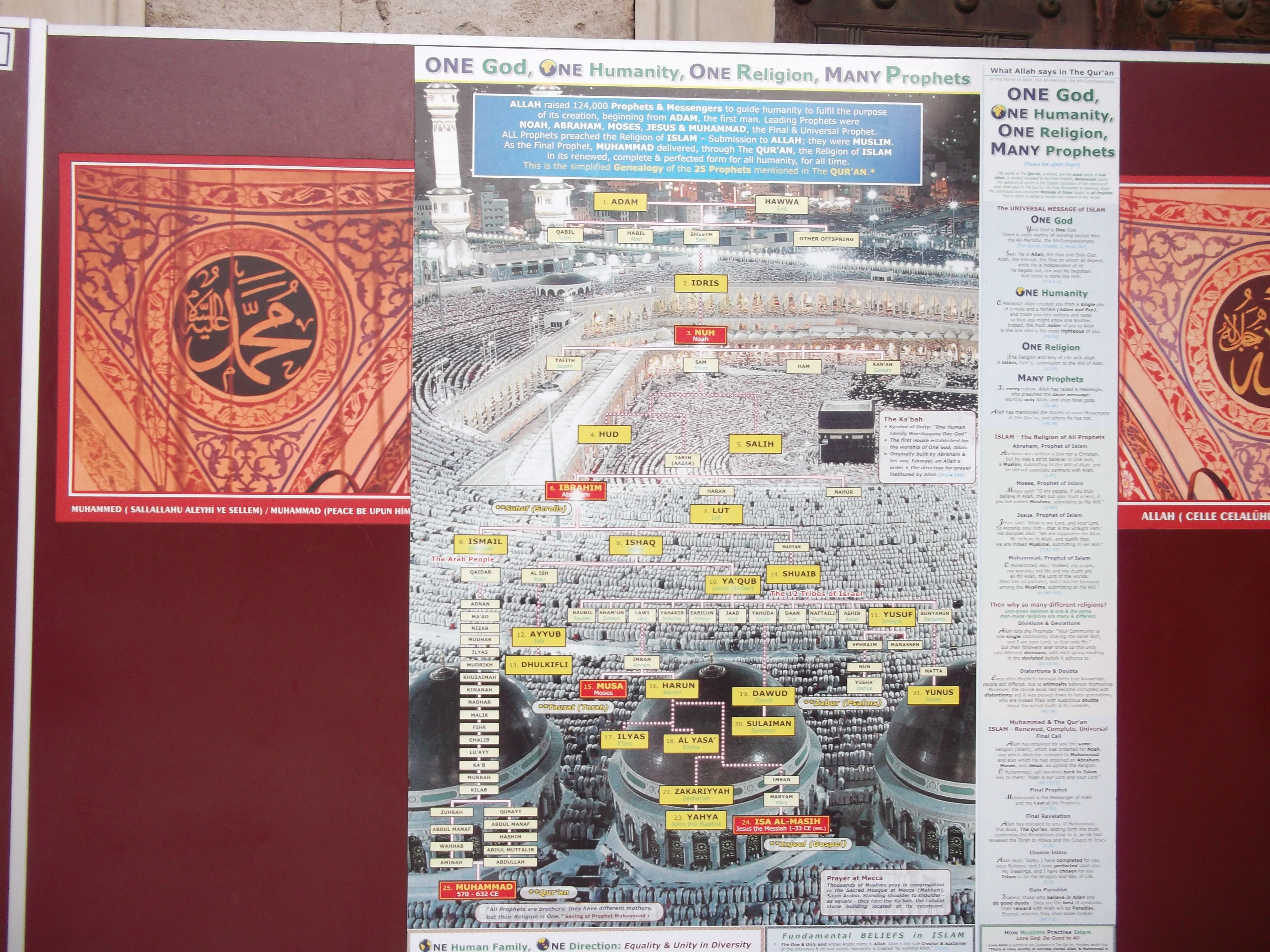
Blue Mosque (Istanbul) inscription (Credit: Photo by author)
Blue Mosque (Istanbul) inscription
(Credit: Photo by author)

ISTANBUL, Jan 12 —An Islamic State suicide bomber struck Istanbul’s historic district Tuesday, killing at least 10 people in a blow to Turkey’s vital tourism industry that comes as the U.S. and its allies are stepping up their campaign against the extremists.

The bomber—identified by Turkish authorities as a Syrian citizen born in 1988—walked up to a foreign tour group preparing to visit the Blue Mosque and other world-renowned buildings and detonated the explosives shortly after 10 a.m., officials said. At least eight of those killed and nine of the injured were from Germany, where Chancellor Angela Merkel’s open-door policy for Syrian refugees has come under increasing fire.

Turkey and the U.S. are developing new plans to choke off Islamic State supply routes by clamping down on a vital 60-mile stretch of the Turkey-Syria border, which the militants use to transport weapons, supplies and fighters in and out of their Syrian strongholds.

Ankara has asked the Pentagon to arm and train Turkish-backed Arab militants in Syria to help control their side of the border, officials said yesterday. U.S. officials say they are considering the request.

Islamic State, which has sought to extend its reach globally, has responded to the pressure by staging deadly attacks around the world, including two suicide bombings in Ankara in October that killed more than 100 people.

Tuesday’s attack may signal a new attempt by the Sunni Muslim extremist group to destabilize Turkey by targeting a crucial industry. Famously straddling the narrow Bosporus Strait between Asia and Europe, Istanbul is the world’s fifth most popular city for tourists world-wide and the third most visited in Europe after Paris and London, according to MasterCard Inc. ’s global destinations index. Some 32 million tourists visit Turkey annually, with Istanbul recording 12 million arrivals last year.

There was no immediate claim of responsibility. But Prime Minister Ahmet Davutoglu said the bomber belonged to Islamic State.

“This attack is a repercussion on Turkey of the civil war that has been going on in Syria for five years, and its related proxy wars,” said Numan Kurtulmus, Turkey’s deputy prime minister.

Firas Abi Ali, a senior analyst with IHS Country Risk, described the Islamic State attack as a risky strategic shift that would “herald a broader campaign against Turkey” and “will likely provoke a significant backlash by the Turkish government.”

Turkey’s President Recep Tayyip Erdogan pledged to press on with the fight. “Turkey is the primary target for all terrorist organizations active in the region,” he said. “Turkey will continue its determined and principled fight against terrorism until the very end.”

The German chancellor expressed her condolences to the victims’ loved ones and urged solidarity with Turkey. “Let us not forget the people in Turkey, who again and again have become targets of terror,” Ms. Merkel said.

More than 400,000 Syrians arrived in Germany last year to apply for asylum, according to government figures, part of a massive wave of migrants who crossed into Europe via Turkey.

Critics say last year’s uncontrolled migration has exposed Europe to heightened security risks, and opponents of Ms. Merkel’s welcoming policy have highlighted the possibility of Islamic State militants entering among the refugees.

Eyewitnesses and Turkish officials said the bomber appeared to target the group gathered near an ancient Egyptian obelisk, close to the entrance to the Blue Mosque compound.

“It was a single, very loud blast,” said Mahmut Karademir, a restaurant worker near the blast site. “Then people started running for their lives.”

Berlin-based Lebenslust Touristik GmbH said members of one of its tour groups were among the dead and injured.

“These are difficult hours for all of us,” said German Foreign Minister Frank-Walter Steinmeier. “Hours of mourning, of anger, and of outrage.”

Tourism makes up around 4% of Turkey’s economy and generated close to $30 billion last year, according to the government’s investment-promotion agency. Istanbul alone generated a third of that total.

Olivier Jager, chief executive of Forward Data SL, a tourism consultancy, said such attacks typically “trigger immediate travel cancellations, followed by lower volumes of new booking during some time,” a trend shown after the deadly attacks in Paris last year and a related security crackdown in Brussels.

“The time necessary for recovery will depend on the ability of the Turkish authorities to reassure leisure travelers that visiting Istanbul is safe,” said Mr. Jager.

The industry is already struggling to deal with a steep decline in Russian tourists after Turkish jets shot down a Russian warplane carrying out airstrikes along the Turkey-Syria border last fall.

Russia imposed various sanctions in response, including banning charter flights.

Mr. Kurtulmus, Turkey’s deputy prime minister, said Turkey had been systematically targeted since the July 20 bombing in the southeastern town of Suruç.

That attack, linked to Islamic State, killed 33 peace activists as they prepared to cross the border to the Syrian city of Kobani, where U.S.-backed Kurdish militants had just ousted Islamic State fighters.

Turkey soon found itself in a two-front war against Islamic State and the Kurdistan Workers’ Party, or PKK, which has been fighting for Kurdish autonomy for decades. Both groups are designated by Ankara and its Western allies as terrorist organizations.

With the peace process between Turkey and its Kurds stalled, the PKK and its affiliates have led an urban uprising in Turkey’s southeast.

They targeted a police station in Istanbul in a deadly assault in August, and claimed a mortar attack on the smaller of Istanbul’s two airports in December.

Ankara has responded by opening its air bases for U.S.-led coalition forces fighting Islamic State, launching limited airstrikes on the jihadist organization in Syria and on PKK camps in northern Iraq, and launching military operations against Kurdish insurgents in southeastern Turkey.

But the campaigns have failed to halt the death toll, as soldiers and police are killed battling the PKK, Kurdish separatists are killed by the dozens and civilians get caught in the crossfire.
—Emre Peker and Anton Troianovski in Berlin contributed to this article

Iran supreme leader says Saudi faces ‘divine revenge’

Iran protests (Credit: mynewspage.eu)
Iran protests
(Credit: mynewspage.eu)

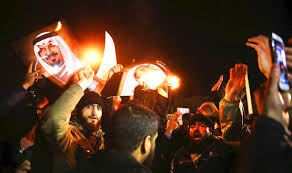
Dubai, Jan 3: Iran’s supreme leader said on Sunday that Saudi Arabia will face “divine revenge” for executing a top Shia cleric whose death sparked protests in which the kingdom’s embassy in Tehran was firebombed.

“The unjustly spilled blood of this oppressed martyr will no doubt soon show its effect and divine vengeance will befall Saudi politicians,” state TV reported Ayatollah Ali Khamenei as saying. It said he described the execution as a “political error”.

Saudi Arabia executed Sheikh Nimr al-Nimr alongside 46 others including dozens of al-Qaeda members, in the country’s biggest mass execution in three decades.

In Tehran the Saudi embassy was ransacked after protesters threw petrol bombs and stormed the building. The kingdom’s consulate in Mashhad, Iran’s second biggest city, was also set on fire.

Saudi foreign ministry spokesman Mansur al-Turki called Iran’s reaction “irresponsible”, and summoned Tehran’s envoy in protest.

The embassy demonstrators were cleared out by police and 40 arrests have been made, Tehran’s prosecutor told the ISNA news agency, adding that more detentions could follow.

Tensions were already rising with Saudi Arabia summoning the Iranian envoy to the kingdom to protest at Tehran’s earlier angry response to the execution.

Nimr was a talismanic figure in protests that broke out in 2011 in the Sunni-ruled kingdom’s east, where the Shia minority complains of marginalisation. His arrest in July 2012 sparked days of protest.

Hundreds of Shias marched through Nimr’s home district of Qatif in protest at the execution, eyewitnesses told Reuters news agency, chanting “down with the Al Saud” in reference to the Saudi ruling family.

Donald Trump featured in new jihadist recruitment video

ISIL video (Credit: freakoutnation.com)
ISIL video
(Credit: freakoutnation.com)

Washington, Jan 2: Last month, The Washington Post reported that white nationalists have begun using Republican presidential candidate Donald Trump as a recruitment tool.

Now, the polarizing Republican presidential front-runner has become the recruitment fodder for another group of marginalized extremists.

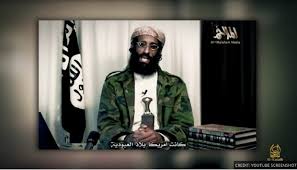
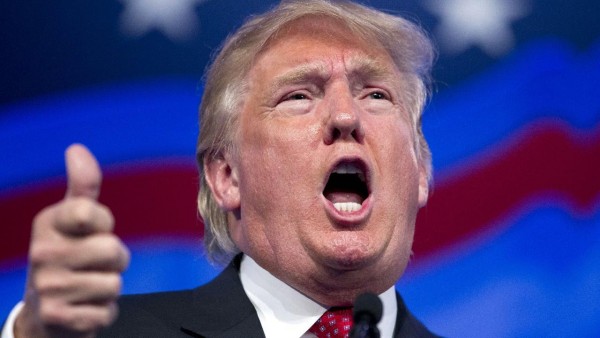
A propaganda video released by the Somali-based al-Qaeda affiliate al-Shabab includes a clip of Trump calling on the United States to bar Muslims from entering the country, according to news reports. Trump made the statement following the Islamic State-inspired shootings in San Bernardino, Calif., last month.

The video was produced to look similar to a documentary and calls upon African Americans to join a holy war against the United States, according to the BBC.

Claiming the United States is a hotbed of racial inequality, police brutality and anti-Muslim sentiment, the film is an indictment of U.S. race relations and also includes historical civil rights-era footage of Malcolm X, an unnamed white supremacist and African Americans in prison, according to CNN.

The clip showing Trump, the BBC noted, arrives 10 minutes into the 51-minute propaganda video.

On either side of the Trump footage, NBC reported, are clips of Anwar al-Awlaki, the late al-Qaeda recruiter, urging Muslims in the United States to move to Islamic countries or wage war against the West at home. A U.S. citizen, al-Awlaki was killed in a drone strike carried out in Yemen in 2011.

“Yesterday, America was a land of slavery, segregation, lynching and Ku Klux Klan, and tomorrow, it will be a land of religious discrimination and concentration camps,” Awlaki can be heard saying in recorded footage.

He adds: “The West will eventually turn against its Muslim citizens.”

The al-Kataib Media Foundation released the video on Twitter on Friday, according to NBC.

Trump’s campaign did not immediately respond to requests for comment. But Saturday afternoon, news of the video did nothing to dim the ardor of supporters gathering for his rally in Biloxi, Miss. They began lining up seven hours before the candidate was scheduled to speak, and they utterly rejected the premise that Trump was providing grist for propagandists.

Some wondered whether the video was real. More insisted that the al-Qaeda affiliate was attacking Trump out of fear.

“ISIS, Al-Shabaad, al-Qaeda, all those groups — they don’t want Trump in office,” said Richard Coyne, 52, an Army veteran from nearby Gulfport, who retired last year.  “They want the status quo, which is unfortunately pro-ISIS, pro-Al-Qaeda, pro-Muslim.” ISIS is another name for the extremist group Islamic State.

Sarah Anderson, 57, of Hattiesburg, also an Army veteran who had once worked at the checkpoint at the Berlin Wall, said that any terrorist group that cited Trump was doing so because it is “scared to death of him.”

“He’s a threat to them,” she said. “That’s the opposite of promoting what the terrorists want.”

Some voters were unaware of the video but well aware that Democratic presidential candidate Hillary Clinton had warned of Trump’s rhetoric being promoted to recruit terrorists. Tom Simmons, a 68-year-old Vietnam War veteran from nearby Vancleave, was reminded of a time 45 years ago when liberals worried so much about winning hearts and minds that they did not do what was necessary for victory.

“I can’t comprehend anything that the Democrats say,” Simmons said. “The terrorists fear Trump right now. They’re going to do anything they can to make him look ridiculous and sound ridiculous.”

In controversial remarks made after the San Bernardino attack, Trump called for “a total and complete shutdown of Muslims entering the United States until our country’s representatives can figure out what the hell is going on.”

The propaganda video includes that line, but bleeps out the word “hell,” according to CNN.

In the wake of the Paris attacks, Trump said he would “strongly consider” shutting down some mosques and heavily surveilling others.

“I would hate to do it, but it’s something that you’re going to have to strongly consider because some of the ideas and some of the hatred — the absolute hatred — is coming from these areas,” Trump said in an interview on “Morning Joe.”

The video arrives on the heels of several heated exchanges between Trump and Hillary Clinton, in which Clinton has claimed Trump’s language aids jihadists.

“If you go on Arabic television, as we have, and you look at what is being blasted out — video of Mr Trump being translated to Arabic,” Clinton said at an Iowa town hall last month. “ ‘No Muslims coming to the United States,’ other kinds of derogatory, defamatory statements — it is playing into the hands of the violent jihadists.”

Trump’s comments, Clinton added, “lights an even bigger fire for them to make their propaganda claims through social media and in other ways.”

Trump responded to Clinton’s assertion by calling her “a liar.”

“It’s just another Hillary lie,” Trump said on NBC News’s “Meet the Press” late last month. “She’s a liar, and everybody knows that.”

David Weigel contributed to this report from Biloxi, Miss


The Muslim Drill

Trump seeks to ban Muslim entry to US (Credit: yalibnan.com)

AFTER the terrorist attacks in Paris last month, a real estate mogul and television host with nature-defying hair used the moment to publicly muse about registration databases and even special identification cards for American Muslims. For the sake of efficiency, I created a card myself, listing my skin tone as “Caramel Mocha,” my ethnicity as “Bollywood” and my religion as “Sunny-Side Sunni.”

On Monday afternoon, Donald J. Trump, that mogul turned leading Republican presidential candidate, said that this country should bar all Muslims from entry until we can “understand this problem and the dangerous threat it poses.” He used the horrific attack in San Bernardino, Calif., which claimed the lives of 14 and wounded 21, to cast suspicion on roughly 1.6 billion people worldwide.

The proposal was so outlandish that at first I tweeted to ask if he actually said bar Muslims or muslin? As an American Muslim, I don’t support either idea, but I can live without the latter. (Although I would miss the softness.)

We live in absurd times with these absurd realities, but sadly, there is no laugh track.

That’s the “Trump Drill”: Begin with an ominous warning such as, “Something really dangerous is going on,” before launching into an insidious exercise of manipulating fear against minorities to cynically mobilize support. It’s most effective after tragic events like the San Bernardino shootings, reportedly carried out by a radicalized couple, Syed Rizwan Farook and Tashfeen Malik, who were sympathetic to the Islamic State.

When I first heard the news of the attack, I also began a drill. The Muslim Drill. It’s familiar to many minority communities. First, I pray for the victims and their families. Then, I start a different sort of prayer: “Oh, Allah, please don’t let it be a Muslim. Just let it be some white dude.”

My prayer reflects no ill will or animosity against white people, but rather a realization that when a white male, say, kills three people at a Planned Parenthood clinic in Colorado, the entire civilization, behavior and population of whatever constitutes “whiteness” are not indicted and asked to engage in post-tragedy condemnathons.

White Christians generally don’t have to denounce violence in the name of their religion or hope their patriotic “American-ness” isn’t questioned by a nameless, skeptical jury.

But that is exactly what American Muslims are expected to do after violent extremists they’ve never met commit violent acts in cities they’ve never visited.

Even before the shooting was declared an act of terror, an American Muslim civil rights organization held a news conference to condemn the shooting on behalf of the “American Muslim community.” Memo to Muslims and haters alike: There’s no such thing as a monolithic Muslim community. American Muslims are among the most diverse religious communities in this country, who can’t even decide on what day to celebrate Eid.

Who can blame anyone, though, for pre-emptive condemnations when anti-Muslim bigotry is now mainstreamed? The F.B.I. reports that anti-Muslim hate crimes are about five times more common now than they were before 2001. However, that hasn’t stopped some American Muslims from pledging more than $100,000, as of Tuesday evening, for the families of the San Bernardino victims.

When Syed Farook was named as one of the San Bernardino shooters, a Muslim friend texted: “Donald Trump loves this. If it is ISIS, it’s like they want him elected so he can put us in camps,” resigning himself to his inevitable internment. We joked that we could make money by making bean pies and hummus in the camps and selling them on the black market.

It is dark and can seem callous, I know. But many American Muslims have learned to adopt a gallows humor since the attacks of Sept. 11. This doesn’t minimize the tragedies — we, like all Americans, mourn for the victims and fear for our country — but rather allows a collective catharsis amid the anxiety.

For example, after law enforcement officials confirmed that Mr. Farook’s wife, the other shooting suspect, was a Pakistani citizen, I noticed that #Pakistani was trending on social media. I mused about creating a new “Pakistani Drill.” I’ll start telling people that I’m a pre-partition Indian who is “spiritual but not religious” and loves “Slumdog Millionaire.”

Of course, general suspicion, manifested in calls for exclusion, is no laughing matter. An exasperated Arab-American friend asked on social media: “Can someone please come up with a strategy we can get behind to put the brakes on this slide to the very ugly future on the horizon?”

An unlikely but welcome brake came from the former vice president Dick Cheney. In a radio interview, he said, “This whole notion that somehow we can just say no more Muslims, just ban a whole religion, goes against everything we stand for and believe in.”

I actually agree with Mr. Cheney’s statement. Truly, we must be witnessing the apocalypse.

Many Americans know there is a problem of violent extremism and mass shootings in our country. “The Trump Drill” will not help us. We don’t need a repeat of a shameful past that rationalized internment and bigotry in the name of security. We need a way to feel secure that celebrates our values: pluralism, liberties, diverse partnerships and the inevitable marriage of halal meat with corn tortillas. Maybe we can call this the “American Drill.”

Want to stop Islamic terrorism? Be nicer to Muslims

The discovery that several of the Paris attackers were European nationals has fueled concern about Muslim immigrants becoming radicalized in the West.

Some politicians have expressed views that the best way to avoid homegrown terrorists is to shut the door.

The refugee migration debate turned even more contentious after authorities found a Syrian passport at the scene of the attack. Poland is now turning back refugees, more than half of American governors have vowed to refuse Middle Easterners seeking a new beginning, and House Speaker Paul D. Ryan has asked for a “pause” on the federal Syrian refugee program.

Fearful reactions to terrorist violence are nothing new. Incidents of extremist activity are often followed by anti-Islam protests or hate crimes. Reports of the Islamic State luring Western Muslims abroad are followed by a tightening of homeland security policy. Just after the attacks in Paris, presidential hopeful Donald Trump said that he would be willing to close mosques in America.

Such displays of intolerance can make Muslims feel like they don’t belong in Europe or the United States.

Our research, forthcoming in Behavioral Science and Policy, and in partnership with the World Organization for Resource Development and Education, shows that making Muslims feel this way can fuel support for radical movements. In other words, many Western policies that aim to prevent terrorism may actually be causing it.

Preventing radicalization

In our research, we asked hundreds of Muslims in Germany and the United States to tell us about their experiences as religious and cultural minorities, including their feelings of being excluded or discriminated against on the basis of their religion. We also asked how they balance their heritage identities with their American or German identities. We wanted to know if these kinds of experiences were related to their feelings toward radical groups and causes.

There are a lot of practical and ethical barriers to studying what makes someone become a terrorist.

We normally don’t know who terrorists are until after they’ve committed an attack. By then, we can only rely on after-the-fact explanations as to what motivated them. We can’t perform a controlled laboratory study to see who would participate in an act of terrorism. In surveys, we can’t ask someone straightforwardly how much they would like to join a radical movement, because most people who are becoming radicalized would not answer honestly.

Instead, we measured a couple of indicators of support for radicalism. We asked people how willing they would be to sacrifice themselves for an important cause. We also measured the extent to which participants held a radical interpretation of Islam. For example, we asked whether it’s acceptable to engage in violent jihad. Finally, we asked people to read a description of a hypothetical radical group and tell us how much they liked the group and how much they would want to support it. This hypothetical group consisted of Muslims in the United States (or Germany, in the German study) who were upset about how Muslims were treated by society and would stop at nothing to protect Islam.

Overall, support for these indicators of extremism was very low, which is a reminder that the vast majority of Muslims do not hold radical views.

But the responses of some people showed they felt marginalized and identified with neither the culture of their heritage nor the culture of their adopted country.

We described people as “culturally homeless” when they didn’t practice the same customs or share the same values as others in their adopted culture but also felt different from other people of their heritage.

We found that people who said they were torn between cultures also reported feeling ashamed, meaningless and hopeless. They expressed an overall lack of significance in their lives or a feeling that they don’t really matter. The more people’s sense of self worth was threatened, the more they expressed support for radicalism.

Our findings are consistent with a theory in psychology that terrorists are looking for a way to find meaning in their lives. When people experience a loss to their sense of personal significance — for example, through being humiliated or disrespected — they seek out other outlets for creating meaning.

Extremists know and exploit these vulnerabilities, targeting Muslims whose sense of significance is low or threatened. Radical religious groups give these culturally homeless Muslims a sense of certainty, purpose and structure.

For people who already feel culturally homeless, discrimination by the adopted society can make matters worse. In our data, people who said they had been excluded or discriminated against on the basis of their religion experienced a threat to their self-esteem. The negative effects of discrimination were the most damaging for people who already felt culturally homeless.

Our results suggest that cultivating anti-immigrant or anti-Islamic sentiment is deeply counterproductive. Anti-immigrant discourse is likely to fuel support for extremism, rather than squelch it.

Integration the goal

To decrease the risk of homegrown radicalization, we should work to improve integration of Muslim immigrants, not further isolate them. This means welcoming Syrian refugees, not excluding them. It means redefining what it means to be American or German in a way that is inclusive and doesn’t represent only the majority culture. It means showing interest in and appreciation for other cultural and religious traditions, not fearing them.

According to our data, most Muslims in the United States and in Germany want to blend their two cultures. But it is difficult to do this if either side pressures them to choose.

We should not confuse integration with assimilation.

Integration means encouraging immigrants to call themselves American, German or French and to take pride in their own cultural and religious heritage.

Our data suggest that policies that pressure immigrants to conform to their adopted culture, like France’s ban on religious symbols in public institutions or the “burqa ban,” are likely to backfire, because such policies are disrespectful of their heritage.

In the United States, the pressure to conform comes in the implicit meaning of the “melting pot” metaphor that underlies our cultural ethos. This idea encourages newcomers to shed their cultural uniqueness in the interest of forging a homogeneous national identity. In comparison, the “mixed salad” or “cultural mosaic” metaphors often used in Canada communicate appreciation for cultural differences.

In Germany, immigrants without sufficient German language skills are required to complete an integration course, which is essentially a tutorial on how to be German. Interestingly, we found that the more German Muslim participants perceived that Germans wanted them to assimilate, the less desire they had to do so. We also see these identity struggles in Muslim communities in France, where “being French” and “being Muslim” are thought to be mutually exclusive.

Our findings point to a strategy for reducing homegrown radicalization: encouraging immigrants to participate in both of their cultures plus curbing discrimination against Muslims. This strategy is better for both immigrants’ well-being and adopted cultures’ political stability.

For an example of how this can be done successfully, look to a jihadist rehabilitation program in Aarhus, Denmark, where the police work with the Muslim community to help reintegrate foreign fighters and find ways for them to participate in Danish society without compromising their religious values.

Communities can make it harder for terrorists to recruit by helping the culturally homeless feel more at home.