An ISIS Militant From Belgium Whose Own Family Wanted Him Dead

Abdelhamid Abaoud (Credit: acn.com)
Abdelhamid Abaoud
(Credit: acn.com)

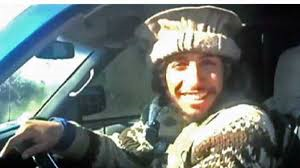
BRUSSELS, Nov 17 — When the family of Abdelhamid Abaaoud received word from Syria last fall that he had been killed fighting for the Islamic State, it rejoiced at what it took to be excellent news about a wayward son it had come to despise.

“We are praying that Abdelhamid really is dead,” his older sister, Yasmina, said at the time.

The family’s prayers — and the hopes of Western security officials — were not answered. Mr. Abaaoud, then 26, was in reality on his way back to Europe to meet secretly with Islamic extremists who shared his determination to spread mayhem. He has since been linked to a string of terrorist operations that culminated with Friday’s attacks in Paris.

“Of course, it is not joyous to make blood flow. But, from time to time, it is pleasant to see the blood of disbelievers,” Mr. Abaaoud declared in a French-language recruiting video for the Islamic State released shortly before his supposed death.

During his travels back to Europe at the end of last year, European security services picked up his trail and tracked his cellphone to Athens, according to a retired European military official. But they lost him, and soon after that he appeared to have made it back to Belgium, where he had grown up in a moderately successful family from Morocco.

At about the time Mr. Abaaoud began his return journey to Europe, Abu Muhammad al-Adnani, a leader with the Islamic State — he now has a $5 million bounty on his head, offered by the United States — made an impassioned plea for the killings of disbelievers. “If you can kill a disbelieving American or European, especially the spiteful and filthy French, then rely on Allah and kill him in any manner or way however it may be,” Mr. Adnani said in a recorded message.

Western intelligence agencies, worried that the Islamic State was planning to widen its carnage from the Middle East to Europe, tried to track a slow but steady trickle of fighters in Syria as they headed home to the Continent.

A Belgian television station reported Monday that security services had been alerted to Mr. Abaaoud’s return to Europe by a telephone call he made from Greece to an inmate, the brother of a known jihadist, in Belgium.

The realization among security officials that Mr. Abaaoud was back in Europe led to a major operation to intercept him. A safe house for militants he had helped set up in eastern Belgium was raided in January.

There, two of his comrades, including the brother of the inmate he had called, were killed. The Belgian authorities trumpeted the raid as having thwarted “a major terrorist operation.”

But it missed its principal target, Mr. Abaaoud, who then somehow made his way back to Syria, which Islamic State refers to by its historical Muslim name, “Sham.”

“Allah blinded their vision and I was able to leave and come to Sham despite being chased by so many intelligence agencies,” he later told Dabiq, a slickly produced magazine published by the Islamic State.

It is not known whether Mr. Abaaoud had any direct contact in Syria with Mr. Adnani, the architect of what the C.I.A. director, John O. Brennan, on Monday called the Islamic State’s “external operations agenda.” As a low-level fighter, Mr. Abaaoud was unlikely to have mixed with senior figures in the militant group’s hierarchy, experts in Belgium said.

But the two men shared a passion for propaganda, with Mr. Adnani serving as the Islamic State’s official spokesman and Mr. Abaaoud featured in various recruitment campaigns.

Mr. Abaaoud also had an invaluable asset for Islamic State leaders eager to take their battle to Europe — a pool of friends and contacts back home willing to carry out attacks.

Like many of the jihadists who have carried out attacks in Europe, including the brothers who attacked the French satirical magazine Charlie Hebdo in January, Mr. Abaaoud showed far more interest in thievery and drugs when he was a young man than in Islam, particularly the highly disciplined, self-sacrificing Salafi strain favored by many militants.

Nor was his family impoverished. His father, Omar, owned a clothing store off the market square in Molenbeek, a borough of Brussels, and the family lived nearby in a spacious if shabby corner home on Rue de l’Avenir — Future Street — near the local police station.

Despite his subsequent denunciations of the mistreatment suffered by Muslims in Europe, he enjoyed privileges available to few immigrants, including admission to an exclusive Catholic school, Collège Saint-Pierre d’Uccle, in an upscale residential district of Brussels.

He was given a place as a first-year student in the secondary school but stayed only one year. An assistant to Saint-Pierre’s director, who declined to give her name, said he had apparently flunked out. Others say he was dismissed for poor behavior.

He then drifted into a group of friends in Molenbeek who engaged in various petty crimes. Among his friends were Ibrahim and Salah Abdeslam, two brothers who, like Mr. Abaaoud, lived just a few blocks away and are now at the center of the investigation into the Paris attacks.

Ibrahim Abdeslam was one of the suicide bombers on Friday, and Salah Abdeslam, who rented a car in Brussels that was used to transport some of the gunmen in the attacks on Paris, is the target of an extensive manhunt.

Mr. Abaaoud was arrested for petty crime in 2010 and spent time in the same prison in Brussels where Ibrahim Abdeslam was being held, according to the spokesman for Belgium’s federal prosecutor and Ibrahim’s former lawyer. It is not known if they were in touch while in the prison, but they did not stay long. After their release, they returned to Molenbeek, often hanging out at a dingy bar known as a hangout for drug dealers.

To the dismay of his family, which had not seen him show any religious zeal, Mr. Abaaoud suddenly moved to Syria in the beginning of 2014, according to jihadi experts tracking Belgian militants.

Soon after his arrival in Syria, where he stayed for a time in a grand villa in Aleppo used to house French-speaking jihadists, he explained his choice in a video: “All my life I have seen the blood of Muslims flow. I pray that God breaks the backs of those who oppose him” and “that he exterminates them,” he said.

Early this year, the French magazine Paris Match found a film that showed Mr. Abaaoud grinning and making jokes as he dragged corpses with a pickup truck.

“I suddenly saw my picture all over the media,” he told Dabiq. He added that “thanks to Allah, the infidels were blinded by Allah” and did not spot him when he returned to Europe at the end of last year.

He also somehow persuaded his younger brother, Younes, who was still in Molenbeek and only 13, to join him in Syria. The boy left Belgium for Syria on his own without raising any suspicion from the authorities.

Mr. Abaaoud’s father joined a state prosecutor’s case against his son in May for having recruited Younes.

“I can’t take it anymore,” Omar Abaaoud told local reporters at the time. “I am on medication,” he said, adding that his son had dishonored the family. “He destroyed our families. I don’t ever want to see him again.”

His father is now living in Morocco and wants to put the property on Future Street up for sale, a family friend said.

Now, Mr. Abaaoud is suspected of being a leader of a branch of the Islamic State in Syria called Katibat al-Battar al Libi, which has its origins in Libya. This particular branch has attracted many Belgian fighters because of language and cultural ties, said Pieter van Ostaeyen, who tracks Belgian militants.

Many Belgian Muslims are of Moroccan origin, he said, and speak a dialect found in eastern Morocco that is similar to a Libyan dialect. Aymenn Jawad al-Tamimi, who studies jihadi groups at the Middle East Forum, a research center in Washington, said there was no evidence yet that the Paris attacks had been ordered by Mr. Adnani or the Islamic State’s overall leader, Abu Bakr al-Baghdadi.

But he added that the soldiers at the Libyan branch that includes Mr. Abaaoud had played a prominent role in exporting violence. One of their tasks, he said, has been to organize plots that “involved foreign fighters, sleeper cells in Europe that were connected with an operative inside of Syria and Iraq, usually in a lower to midlevel position.”

About 520 Belgian fighters have gone to Syria or Iraq to fight, making Belgium the biggest suspected source, per capita, of foreign fighters for ISIS. According to posts on Twitter and other social media accounts, the two men who were killed during the raid in Verviers, Belgium, in January were members of Katibat al-Battar.
 

Khanani’s arrest by US shocks money-changers

KARACHI, Nov 15: The news about the arrest of Altaf Khanani, a well-known money-changer, by US authorities has sent shockwaves among exchange companies operating in Pakistan. They fear more arrests as more and more transactions come under scrutiny across the world.

The US authorities revealed on Friday that they had arrested Altaf Khanani in September and accused his firm, Khanani Money Laundering Organisation (MLO), of laundering illicit funds for organised crime groups, drug trafficking organisations and designated terrorist groups throughout the world.

While most of the money-changers avoided discussing the issue of Altaf’s arrest, they accepted that the incident may raise pressure on them. They also expect more names to appear in the case since the man has deep connections in Pakistan.

Altaf, a Karachiite by birth, was a partner of Kalia group, one of the biggest money-changers working under the name of Khanani and Kalia. The exchange company was banned about five years ago and their offices were sealed by the FIA.

Four of their employees were jailed, but the case could not be proved against them in court. They were released, but the State Bank did not restore their licence because they were also wanted in money laundering cases in a number of countries.

The US Office of Foreign Assets Control (OFAC) on Friday designated Dubai-based money services business Al Zarooni Exchange for being owned directly or indirectly by the Khanani MLO, and for materially assisting, sponsoring, or providing financial support to the Khanani MLO.

Their properties in which the Khanani MLO or Al Zarooni Exchange has an interest, were blocked and U.S. persons were prohibited from engaging in transactions with them.

A money changer, who wished not to be identified, said Haji Haroon, another money changer, has been picked up by security agencies in connection with money laundering.

“For the last four months he has been in custody of the agency and has reportedly revealed 82 names of money changers, businessmen and politicians involved in transfer of illegal money from Pakistan,” said the money changer.

The Forex Association of Pakistan (FAP) did not betray any alarm over the arrest, maintaining that money changers in Pakistan had no links with any illicit business.

“I believe that exchange companies operating in Pakistan are not involved in this kind terrorist funding or money laundering. I don’t feel I have to worry,” said Malik Bostan, president FAP.

He said it is impossible to completely eradicate the Hundi system. It has been working world over and illegal money is transferred through these illegal channels.

Flow of illegal money is believed to be high from Pakistan particularly to Dubai, two months back Pakistan was placed among top three investors in Dubai property.

Money changers were reluctant to name names but said Khanani’s old partners and their business links in Pakistan could see trouble.

The Secretary General of Exchange Companies Association of Pakistan Zafar Paracha said there are some popular ways to send out illegal money from Pakistan: through Hundi; carrying cash on person, in form of gold and diamonds.

The transfer of wealth through diamonds has gained popularity as few months back its demand escalated without an obvious reason. Millions of dollars can be transferred through very small pack of diamond.

Pakistan Military Expands Its Power, and Is Thanked for Doing So

Raheel Sharif in Washington (Credit: dawn.com)
Raheel Sharif in Washington
(Credit: dawn.com)

ISLAMABAD, Pakistan — The most popular man in public office in Pakistan does not give speeches on television, rarely appears in public and rejects news interviews.

He is Gen. Raheel Sharif, the Pakistani Army chief, who has presided over the country’s armed forces at a time when they are riding high after curbing domestic terrorism and rampant political crime.

Aided by a new-media publicity campaign, the military command’s popularity has helped it quietly but firmly grasp control of the governmental functions it cares about most: security and foreign affairs, along with de facto regulatory power over the news media, according to interviews with Pakistani officials and analysts.

In a country with a long history of military coups, the current command has gotten what it wants, edging aside the civilian government of Prime Minister Nawaz Sharif, who is not related to General Sharif, without the messiness or the international criticism a complete takeover would bring. And it is being thanked for doing it.

“I wouldn’t describe it as a soft coup, but I would definitely say the civilian leadership has yielded space to the military — for their own survival and because there were major failures on their part,” said Talat Masood, a retired lieutenant general and military analyst.

General Sharif, known as General Raheel here, took over the military command late in 2013. He was appointed to the post a few months after the new civilian government was inaugurated, and the country was in trouble. There were suicide bombings, political party killings, rampant crime and violence in its big cities, and assassinations of political leaders. Some politicians were calling for negotiations with the Pakistani Taliban as military efforts to set the militants back appeared to have stalled.

Then the Pakistani Taliban carried out a cruel attack on a school for army families in Peshawar last December, killing 145 people — including 132 schoolchildren methodically gunned down in their classrooms. Supported by a huge public backlash against terrorism, the army ramped up its crackdown on some of the militant groups sheltering in the country’s northwestern tribal areas, especially in North Waziristan.

Advertisement

Continue reading the main story

Capital punishment was restored, and the military was handed new power, starting its own counterterrorism court system alongside the badly backlogged and compromised civilian justice system.

This year, the Pakistani Taliban have managed to carry out only a single major suicide bombing. The army’s success against the Taliban emboldened it to take on violent political parties and criminal gangs in the country’s biggest city, Karachi, through a paramilitary group known as the Sindh Rangers. Despite complaints of human rights abuses in Karachi, and millions of internally displaced people from the tribal areas, most Pakistanis were simply relieved to see the violence hugely reduced.

Through it all, General Sharif’s public appearances have been less ostentatious than those of some of his predecessors. But at the same time, his face has become ubiquitous on social media, after giving a free hand to the officer commanding the Inter-Services Public Relations office, the military’s media arm, to modernize that service.

Advertisement

Continue reading the main story

The ISPR had long been headed by lower-ranking officers, and it remained decidedly lodged in the analog era. But by this year, the leader of the office, Asim Saleem Bajwa, had been promoted to lieutenant general — a three-star rank normally reserved for corps commanders — and his agency had become an impressively slick

General Bajwa’s Twitter account has more than 1.5 million followers, and the agency’s Facebook account has more than 2.8 million likes. A film division is pumping out offerings for television, as it had long done, but it has added short videos tailored to YouTube-style platforms.

The social media accounts show in daily detail the commander’s movements — visiting the front lines in Waziristan or reviewing troops. Video links showed army units in combat, sometimes the same day it occurred, and troops helping earthquake victims. Professionally produced martyr-style videos show, for instance, a mother mourning a son killed in the field, who returns from the dead to present her with his beret.

The ISPR declined to comment for this article unless a draft of it was submitted to the office for advance review, according to a spokesman for the agency.

The Pakistani news media is clearly reflecting the shift in influence. When Prime Minister Sharif visited Washington on Oct. 22, for instance, the visit did not get nearly the attention of General Sharif’s current five-day visit to Washington.

In recent weeks, General Sharif has seemed less circumspect about the new pecking order. The military press office noted, for instance, that at a meeting of army corps commanders last Tuesday, the general was “concerned” that the civilian government was not doing enough to follow up the military’s success at clearing out the frontier areas with effective governance. The clearly implied scolding sent shock waves through the political establishment, but few dared to criticize the military — something even opposition parties rarely do now.

The Pakistani news media, in particular, has largely stopped open questioning of the military’s increased power. Pakistani journalists say the military no longer has to bring intimidation to bear, as it long had, because most of the criticism has gone quiet. At the military’s insistence, a government watchdog body has ordered broadcast media to stop airing anything that could be viewed as support for terrorist groups — a notably broad definition.

Even some of the military’s critics in the news media now say the relative peace has been a trade-off nearly everyone supports.

“My honest opinion is that most of the pressure now is from within ourselves,” said Rana Jawad, the news director at GEO, a leading private television network. “One of the reasons why there’s no effort to counter the claims of ISPR is that the situation on the ground has improved drastically. It’s a big thing for me: I used to report on 50 dead, 40 dead, 30 dead almost every day, and there’s nothing of this sort now.”

Mr. Jawad is no apologist for the military, however. He was on a cellphone call in 2014 with the channel’s news anchor in Karachi, Hamid Mir, when an attacker shot Mr. Mir six times. “It was terrible; I could hear his screams and helplessness and the shots,” Mr. Jawad said.

GEO journalists blamed the military’s powerful intelligence arm, the Inter-Services Intelligence agency, and the channel even broadcast a picture of the agency’s leader at the time, Lt. Gen. Zaheer ul-Islam, which some saw as an implication that he had been behind the attack. That led to legal action against the channel that continues, and some local cable operators have refused to carry GEO.

“We suffered a lot from the military,” Mr. Jawad said. “We were beaten, hounded, brought to our knees by the powerful military, so we know.” Nonetheless, he added: “I see a marked improvement in the security environment in Pakistan, fewer and fewer Pakistanis dying unnecessarily, and I cannot reject this.”

The military’s triumphant crackdown on militants has had little effect on the war next door in Afghanistan, however, and the command still appears to be playing a double game when it comes to using some militants as proxies.

In particular, military analysts said, the pressure does not extend to the Afghan Taliban, many of whose leaders live openly in the Pakistani city of Quetta. And the military has avoided tangling with the Haqqani network, a close Afghan Taliban ally whose members have carried out some of the deadliest attacks in Afghanistan but are mostly based in remote districts of Pakistan near the border.

The double standard led to the blocking of one American military aid payment of $300 million to the Pakistani military this year, under a congressionally mandated requirement to certify progress in fighting the Haqqanis. An additional $1 billion in military aid under a separate program this year was not affected by that requirement, however.

Amid the Pakistani command’s clearly ascendant streak, Mr. Masood, the military analyst and former lieutenant general, worries that the military may go too far, preventing the country’s still-immature democratic institutions from developing.

“Success speaks for itself. They did clear Waziristan, and General Sharif does get credit for that,” he said. “But success can change. If they overplay the military card and continue to build an inflated image, it could boomerang. They need to allow civilians their space. But I’m afraid the lust for power is such that they don’t always understand that.”

The Lessons of Mumbai were Learned by the Jihadis

Paris carnage (Credit: cnn.com)
Paris carnage
(Credit: cnn.com)

In November 2008, a new form of terrorism filled our television screens as a 10-man cell dispatched by Pakistan-based terror group Lashkar-e-Taiba wreaked murder and mayhem across Mumbai. Choosing prominent targets filled with foreigners and Indians, the terrorists opened fire on anyone they came across, butchering 266 before dying fighting the authorities.

In so doing, they took over global headlines for days as well as bringing one of Asia’s super-cities to a standstill. Terrorist groups around the world celebrated this horror and began to discuss how they might try to emulate this success. Seven years later in Paris, the playbook has been copied.

This has been the longstanding fear of Western security agencies. Aware of the perceived success of the Mumbai attack, police and intelligence services across Europe have been ramping up their preparedness and training. Most recently, in June, the UK’s emergency and intelligence agencies did a dry run for a marauding shooter attack in London. And there have been scares. In 2010, a network of European cells that seemed to indicate al-Qaeda was attempting a Mumbai-style assault, with training camps in Pakistan’s badlands, was apparently disrupted.

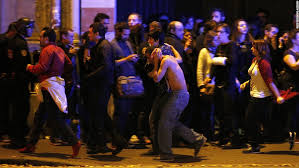
Then earlier this year, Paris was racked by the Charlie Hebdo murders. But whereas those attacks, initially at least, were selective in their targets, Friday’s were utterly indiscriminate. The bombers at the stadium must have known the French President was in the environs, though they blew themselves up outside, killing whoever happened to be nearby. The other cell liberally targeted Parisians on a Friday night out. This is a markedly different form of horror and one that requires deep indoctrination, preparation and training. It is also a step up in terms of atrocity from what we had seen before in Europe. Mumbai-style terrorism has reached European shores.

At least one of the attackers has been uncovered as having some French background. While unsurprising given the threat picture that we have seen, this is particularly disturbing within the context of the sort of attack they undertook. To brutally shoot and execute fellow nationals pleading for their lives is something which would have required intense commitment. This training may have occurred in Syria, but in many ways this no longer matters. Islamic State (Isis) has shown an interest in stirring chaos and misery around the world with little apparent concern for its strategic impact.


Unlike the Madrid bombings, which had the effect of prying apart the coalition in Iraq, the attacks that Isis has inspired, instigated or directed, have been aimed at killing as many as possible in “enemy” countries and stirring tensions in societies. France in particular has been at the epicentre of this threat. In May 2014, Frenchman Mehdi Nemmouche opened fire at a Jewish Museum in Brussels killing three. He was later reported to have fought alongside Isis. In August this year, another young man with links to France, Ayoub el Khazzani, was barely prevented from shooting at passengers on a high-speed train from Amsterdam to Paris.

His background remains unclear, but he was linked to a network in Turkey that was linked to Isis and connected to Sid Ahmed Ghlam, a 24-year-old Algerian French resident who was reportedly plotting to attack churches in Paris. He was detained after he called an ambulance to his home having shot himself accidentally in the leg. He was already of concern to French security services.

And none of this is to talk about the numerous plots that French authorities have faced where individuals have launched attacks in advance of jihadist ideologies with no clear evidence of any sort of network. Around Christmas last year there was a spate of random attacks using knives or cars, and in June, Yassin Salhi decapitated his boss and tried to drive a car bomb into a chemical factory in Lyon. He strung up his boss’s head on a fence, took pictures of it with an Islamist flag and sent them to a fighter he knew in Syria.

This, sadly, is the nature of the current threat. And while obtaining the high-powered rifles required to cause such mass slaughter is much harder in the UK, it could strike here. Each wave of terrorism has to cause greater mayhem to have the same impact over time, and consequently for Isis to distinguish itself from al-Qaeda, it must create greater impact and misery.

Timeline of Paris attacks

While the UK can draw comfort from the fact weapons are harder to get here, British people abroad have fallen foul of these plots. The massacre in Sousse particularly affected British nationals, and at least one Briton was caught up in Friday’s Paris attacks. Terrorism has to continually evolve and cause greater brutality to maintain impact and attract attention. And while France is currently the epicentre, the ideology and groups are ones that are keen to equally target the UK.

Raffaello Pantucci is director of  international security studies at the Royal United Services Institute

Pak army chief’s U.S. visit to focus on Afghanistan, peace talks

Gen Raheel Sharif (Credit: arabnews.com)
Gen Raheel Sharif
(Credit: arabnews.com)

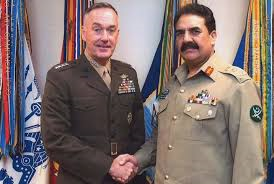
Pakistan’s powerful army chief General Raheel Sharif during his U.S. visit this week will hold talks with top defence officials and discuss key issues like the Afghanistan situation, facilitating peace parleys with the Taliban and Indo—Pak ties, officials said on Sunday.

General Raheel, during his visit from November 15—20, will meet top American defence officials amid indications that the U.S. wants Pakistan to revive reconciliation talks with the Afghan Taliban, considered close to the spy agency ISI.

Significantly, Gen. Raheel is visiting the U.S. on his own as there was no official invitation either from his American counterpart or the Pentagon.

A Pakistani official said Pakistan is ready to play its role in the reconciliation process but the statements by Afghan government blaming the country for the recent deadly attacks by the Taliban have vitiated the atmosphere.

“The issue of peace in Afghanistan will be part of talks in Washington and Pakistan will like to have assurance of action against militants involved in attacks in return for pushing Taliban for talks,” the official said on condition of anonymity.

Pakistan has been demanding action against militants like chief of Pakistani Taliban Mullah Fazlullah, who is allegedly hiding in Afghanistan.

Prime Minister Nawaz Sharif said last month that his government was trying to arrange talks with the Taliban but nothing concrete has come out so far.

Earlier, the first open round of talks between the Afghan government and the Taliban were held in Murree near Islamabad in July and another round scheduled later was cancelled when the news of Taliban supremo Mullah Omar’s death surfaced.

Gen. Raheel will also brief the U.S. officials about security relations with India after deadly border clashes in recent months raised fears that the conflict might spiral out of control, officials said.

Gen. Raheel would meet Vice President Joe Biden. Other meetings that he would have during his stay in Washington include with Secretary of State John Kerry, Defence Secretary Ashton Carter, Chairman of the Joint Chiefs of Staff Gen Joseph Dunford, Army Chief of Staff Gen Mark Milley and Director CIA John Brennan.

Fierce clashes between rival Afghan Taliban factions: officials

KANDAHAR, Nov 8: Fierce clashes have erupted between two rival Taliban groups in southern Afghanistan, officials said Sunday, reportedly leaving dozens dead in the first internecine fighting since a breakaway faction of the Islamist movement appointed its own leader.

The skirmish was taking place in southern Zabul province between fighters loyal to the widely-recognised Taliban leader Mullah Akhtar Mansoor and followers of Mansoor Dadullah, a deputy of splinter-group leader Mohamed Rasool who announced his own faction Tuesday.

“The fighting started from early Saturday morning in Khak-i-Afghan and Arghandab districts of Zabul province. About 60 fighters of Mullah Dadullah and 20 of Akhtar Mansoor have been killed,” Ghulam Jilani Farahi the deputy police chief for the province told AFP, adding 30 others were injured.

The two districts are under Taliban control, and it was unclear how Farahi arrived at his figures.

“The fighters killed are mostly from Mansour Dadullah’s group, including foreign fighters from Uzbekistan,” he said.

Islam Gul Seyal, the provincial governor’s spokesman, confirmed the battle and said fighting was still going on.

Mansoor Dadullah was appointed as second deputy for Rasool, who was named the leader of the splinter group in a mass gathering of dissident fighters on October 3, in the remote southwestern province of Farah, according to an AFP reporter who attended the meeting.

It was unclear whether the new group could rally wide support but its emergence poses a fresh hurdle to potential peace talks with the government.

It also exposes simmering rifts within the movement since the announcement in July of the death of longtime leader Mullah Omar.
Also on Sunday, the bodies of seven minority Shia Hazaras who were kidnapped in October from neighbouring Ghazni province by gunmen were found dead in Zabul.

“The seven Hazara bodies – three women and four men – all have been beheaded and were brought by tribal elders to a hospital in Shah Joy district,” Jawad Waziri district governor for Shah Joy said.
There has been a rise in sectarian killings in Afghanistan this year, blamed by observers on the growing influence of foreign Sunni fighters and the Islamic State group in the country.

Afghan Taliban splinter further to elect dissident leader

A spokesman for a breakaway Afghan Taliban faction says they have elected their leader, further deepening the split within the insurgency group.

Manan Niazi, a spokesman for the dissidents, says that Mullah Mohammad Rasool has been voted in as the Taliban’s “supreme leader.”

It’s unclear how many followers the splinter group has but Thursday’s statement is a reflection of deep divisions among the Taliban, who have been waging war on the Kabul government for 14 years.

The differences among various Taliban leaders have been festering since July, when Afghanistan’s intelligence service announced the death of Mullah Mohammad Omar, the group’s founder and leader.

The July announcement said Mullah Omar had been dead for more than two years. The leadership soon afterward chose his deputy, Mullah Akhtar Mansoor, as new leader.

After Obama-Sharif meet, US categorically rules out nuclear deal with Pakistan

Sharif-Obama 2015 meeting (Credit: usnews.com)
Sharif-Obama 2015 meeting
(Credit: usnews.com)

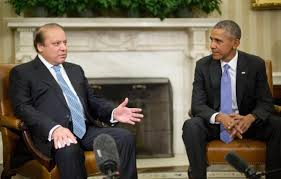
Washington, Oct 23: The US has “categorically ruled out” any kind of negotiations with Pakistan on India-type civil nuclear deal, terming the reports in American media “completely false”.

“Let me state categorically, we have not entered into negotiations on 123 Agreement with Pakistan nor are we seeking an exception for Pakistan within the nuclear supplier group in order to facilitate civil nuclear exports,” a senior Administration official said after US President Barack Obama met Pakistani Prime Minister Nawaz Sharif here on Thursday.

The official, speaking on condition of anonymity, was responding to questions on reports appearing in the American media that US was considering a civil nuclear deal with Pakistan.

“There is no such thing as a nuclear deal which has been reported in the media is some short of a civilian nuclear package alleged to be something like that the US concluded with India 10 years ago.

“Let me just assure you categorically that the press allegations of a 123 agreement with Pakistan are completely false,” the official added.

Pakistan has made it clear its interest in civilian nuclear cooperation and it is called socio-economic imperative because of energy shortfalls, the official noted.

Leaders of the two countries, however, did discuss on Pakistan’s nuclear safety and security which is an ongoing discussion.

The 123 Agreement signed between the US and India is known as Indo-US nuclear deal. The framework for this agreement was done in 2005.

“We have a long standing dialogue with Pakistan about its nuclear program, and various developments in this program. We are particularly concerned and have expressed these concerns to Pakistan that there is requirement of all countries possessing nuclear weapon to ensure the safety, security of these weapons and do everything it can to promote strategic stability. So we will continue to engage in dialogues like this with Pakistan,” the official said.

It is the understanding of the US that Pakistan is very well aware of the full range of potential threat to nuclear arsenal including from terrorist groups that operate on its soil. Other Pakistani military facilities have been attacked.

“So they are very well aware of the terrorist threats including to all aspects of their military installations and its our understanding that they have a dedicated security apparatus that understands the importance of nuclear security,” the official said.

In a readout of the Obama-Sharif meeting, the White House said the President stressed the importance of avoiding any developments that might invite increased risk to nuclear safety, security, or strategic stability.

“The leaders pledged to continue their strong cooperation on nuclear security, including at the upcoming Nuclear Security Summit,” the readout said.

According to a joint statement, Obama and Sharif discussed the continuing threat of nuclear terrorism. Obama welcomed Pakistan’s constructive engagement with the Nuclear Security Summit process and its cooperation with the International Atomic Energy Agency and other international forums, it said.

The leaders noted Pakistan’s efforts to improve its strategic trade controls and enhance its engagement with multilateral export control regimes, the joint statement said.

“Recognising the importance of bilateral engagement in the Security, Strategic Stability and Non-Proliferation Working Group, the two leaders noted that both sides will continue to stay engaged to further build on the ongoing discussions in the working group,” the statement added.

“More generally, the US urges all Nuclear Weapons states including Pakistan to exercise restraint in nuclear weapon and missile and capabilities.”

“In particular, we have discussed measures to strengthen safety and security for Pakistan and continue to hold regular discussions on Pakistan on these issues,” the senior administration official added.


Obama Announces Halt of U.S. Troop Withdrawal in Afghanistan

US announcement on Afghanistan (Credit: thewrap.com)
US announcement on Afghanistan
(Credit: thewrap.com)

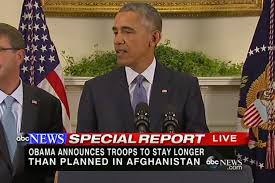
WASHINGTON, Oct 15 — The United States will halt its military withdrawal from Afghanistan and instead keep thousands of troops in the country through the end of his term in 2017, President Obama announced on Thursday, prolonging the American role in a war that has now stretched on for 14 years.

In a brief statement from the Roosevelt Room in the White House, Mr. Obama said he did not support the idea of “endless war” but was convinced that a prolonged American presence in Afghanistan was vital to that country’s future and to the national security of the United States.

“While America’s combat mission in Afghanistan may be over, our commitment to Afghanistan and its people endures,” said Mr. Obama, flanked by Vice President Joseph R. Biden Jr. and his top military leaders. “I will not allow Afghanistan to be used as safe haven for terrorists to attack our nation again.”

The current American force in Afghanistan of 9,800 troops will remain in place through most of 2016 under the administration’s revised plans, before dropping to about 5,500 at the end of next year or in early 2017, Mr. Obama said. He called it a “modest but meaningful expansion of our presence” in that country.

The president, who has long sought to end America’s two wars before he leaves office, said he was not disappointed by the decision. He said the administration had always understood the potential for adjustments in troop levels even as the military sought to withdraw troops from battle.

But the announcement underscores the difficulty Mr. Obama has had in achieving one of the central promises of his presidency in both Afghanistan and Iraq. Mr. Obama conceded that despite more than a decade of fighting and training, Afghan forces are not fully up to the task of protecting their country.

The Taliban are now spread through more parts of the country than at any point since 2001, according to the United Nations, and last month they scored their biggest victory of the war, seizing the northern city of Kunduz and holding it for more than two weeks before pulling back on Tuesday.

Mr. Obama noted the dangers, saying, “In key areas of the country, the security situation is still very fragile, and in some areas, there is risk of deterioration.” After 2017, he said, American forces will remain in several bases in the country to “give us the presence and the reach our forces require to achieve their mission.”

He did not specifically mention Iraq, where a full troop withdrawal has been followed by a surge in violence from the Islamic State. But he said the mission in Afghanistan had the benefit of a clear objective, a supportive government and legal agreements that protect American forces — three factors not present in Iraq.

“Every single day, Afghan forces are out there fighting and dying to protect their country. They’re not looking for us to do it for them,” Mr. Obama said. He added, “If they were to fail, it would endanger the security of us all.”

After the president’s remarks, White House officials reiterated to reporters that the missions of American soldiers in Afghanistan would not change. Some of the troops will continue to train and advise Afghan forces, while others will carry on the search for Qaeda fighters, militants from the Islamic State and other groups that have found a haven in Afghanistan.

Josh Earnest, the White House press secretary, said politics played “absolutely no role” in the president’s decision to extend the American military presence in Afghanistan.

But Mr. Earnest acknowledged the 2016 presidential election, saying that the next president — Democrat or Republican — will inherit a situation in the country that is a “dramatically improved one when compared to the situation that President Obama inherited.”

Some critics of the administration, who have long urged the president to leave more troops in Afghanistan, said Mr. Obama’s actions did not go far enough to confront Al Qaeda and other threats there.

“While this new plan avoids a disaster, it is certainly not a plan for success,” Representative Mac Thornberry, a Texas Republican and chairman of the House Armed Services Committee, said in a statement.

House Speaker John A. Boehner said in a separate statement that he was “glad the administration finally admits President Obama’s arbitrary political deadlines are ‘self-defeating.’ ” He added: “The president’s half-measures and failed leadership have emboldened our enemies and allowed for ISIL’s rise. It’s time for a change.”

Even before Kunduz fell to the Taliban, the administration had been under growing pressure from the military and others in Washington, including Congress, to abandon plans that would have cut by about half the number of troops in Afghanistan next year, and then drop the American force to about 1,000 troops based only at the embassy in Kabul by the start of 2017.

Obama’s Evolving Stance on Afghanistan

Important speeches illustrate President Obama’s shifting stance on keeping troops in Afghanistan, beginning with his days as a senator.

Now, instead of falling back to the American Embassy — a heavily fortified compound in the center of Kabul — Mr. Obama said that the military would be able to maintain its operations at Bagram Air Field to the north of Kabul, the main American hub in Afghanistan, and at bases outside Kandahar in the country’s south and Jalalabad in the east.

All three bases are crucial for counterterrorism operations and for flying drones that are used by the military and the C.I.A., which had also argued for keeping troops in Afghanistan to help protect its own assets.

There was no set date for the military to decrease the number of troops in Afghanistan to 5,500. The pace of that troop reduction would be determined largely by commanders on the ground, and the timing would also most likely provide flexibility to whoever succeeds Mr. Obama.

President Ashraf Ghani of Afghanistan had also pressed for Mr. Obama to keep more troops, and many in Washington who have worked closely with the Afghans over the past several years were loath for the United States to pull back just when it had an Afghan leader who has proved to be a willing partner, unlike his predecessor, Hamid Karzai.

Mr. Ghani is acutely aware of his country’s need for help from the United States and its NATO allies. The American military has repeatedly stepped in this year to aid Afghan forces battling the Taliban, launching airstrikes and at times sending Special Operations troops to join the fight, despite Mr. Obama’s declaration that the American war in Afghanistan had ended.

But the recent fighting in Kunduz also exposed the limits of foreign forces now in Afghanistan, which total 17,000, including American and NATO troops. It took only a few hundred Taliban members to chase thousands of Afghan soldiers and police officers from Kunduz, and the Afghans struggled to take back the city even with help from American airstrikes and Special Operations forces.

During the fighting, an American AC-130 gunship badly damaged a hospital run by Doctors Without Borders, killing at least 22 patients and staff members — and not a single insurgent.

Mr. Obama apologized for the attack, which may have violated guidelines laid down by the administration for the use of force by the military after the American combat mission ended last year. Under the rules, airstrikes are authorized to kill terrorists, protect American troops and help Afghans who request support in battles — like those in Kunduz, recently taken over by the Taliban — that can change the military landscape.

The idea behind the guidelines was to give troops leeway and to keep Americans out of daily, open-ended combat. But how much latitude Mr. Obama would allow the military moving forward was unclear.

It is not the first time the administration has revised the withdrawal plans. During Mr. Ghani’s visit in March, Mr. Obama announced that the United States would keep 9,800 troops in Afghanistan through 2015, instead of cutting the force in half, as had been originally planned. At the time, the White House still maintained that almost all the troops would be pulled out by 2017.

But with the situation in Afghanistan continuing to deteriorate, the military presented the administration with new options this summer. The plan that has been decided on for 2017 and beyond hewed closely to a proposal made by Gen. Martin E. Dempsey, then the chairman of the Joint Chiefs of Staff.

Mr. Obama said that 5,500 troops, along with contributions from NATO allies, which have yet to be agreed upon, would provide enough power to protect the force and continue the advisory and counterterrorism missions.

His announcement will allow the military to continue carrying out secret operations against suspected militant leaders focused primarily in eastern Afghanistan. In recent years, the United States shifted away from counterinsurgency operations that involved tens of thousands of troops patrolling the countryside and toward a so-called “lighter footprint” model of targeted strikes.

New details about such operations were disclosed on Thursday in classified documents published by The Intercept, a national security news website. The documents – part of a larger group of military files providing details about the Pentagon’s drone war from 2011 to early 2013 – included a set of briefing slides assessing Operation Haymaker, an effort to hunt down Taliban and Qaeda militants in Afghanistan from January 2012 to February 2013.

During that period, there were 56 airstrikes that killed 35 suspected militants who the military had been tracking. Those strikes also killed 219 other people who do not appear to have been specifically targeted but were labeled “enemy killed in action,” the documents showed.


Nawaz heads to White House to discuss Afghan reconciliation

WASHINGTON, Oct 15: US President Barack Obama on Thursday, in an address to his nation from the White House, said he would meet Prime Minister Nawaz Sharif on October 22 to discuss his plan for peace in the Pak-Afghan region.

Obama also announced a plan to keep 5,500 American troops in Afghanistan into 2017, cancelling his earlier plan to bring home most of the troops before he leaves office.

The US president said he held extensive consultations with his commanders in Afghanistan, the US national security team, international partners and Afghan leaders before making the announcement.

Obama also spoke with Afghan President Ashraf Ghani on Wednesday to discuss this plan and also discussed with him the Afghan-led reconciliation process.

The US troops will operate from three bases in Bagram, Jalalabad and Qandahar and will be able to operate quickly when needed.

He also slowed the pace of the reduction of American forces and plans to maintain the current US force of 9,800 through most of 2016.

Obama called the new war plan a “modest but meaningful” extension of the US military mission in Afghanistan, which he originally planned to end next year.

The US president acknowledged his country’s weariness of the lengthy conflict but said he was “firmly convinced we should make this extra effort.”

Military leaders have argued for months that the Afghans needed additional assistance and support from the US to beat back a resurgent Taliban and hold onto gains made over the past 14 years of American bloodshed and billions of dollars in aid.

It will be up to Obama’s successor — the third US commander in chief to oversee the war — to decide how to proceed from there.

“I suspect that we will continue to evaluate this going forward, as will the next president,” Obama said, standing alongside Vice President Joe Biden, Defense Secretary Ash Carter and Joint Chiefs Chairman Joseph Dunford as he announced the plan.