
Spying Case Against U.S. Envoy Is Falling Apart, and Following a Pattern

Robin Raphael (Credit: abcnews.com)
Robin Raphael
(Credit: abcnews.com)
WASHINGTON, Oct 10 — Last fall, federal agents raided the home and office of Robin L. Raphel in search of proof that she, a seasoned member of America’s diplomatic corps, was spying for Pakistan. But officials now say the spying investigation has all but fizzled, leaving the Justice Department to decide whether to prosecute Ms. Raphel for the far less serious charge of keeping classified information in her home.
The fallout from the investigation has in the meantime seriously damaged Ms. Raphel’s reputation, built over decades in some of the world’s most volatile countries.

If the Justice Department declines to file spying charges, as several officials said they expected, it will be the latest example of American law enforcement agencies bringing an espionage investigation into the public eye, only to see it dissipate under further scrutiny. Last month, the Justice Department dropped charges against a Temple University physicist who had been accused of sharing sensitive information with China. In May, prosecutors dropped all charges against a government hydrologist who had been under investigation for espionage.

Ms. Raphel, in negotiations with the government, has rejected plea deals and has been adamant that she face no charges, according to current and former government officials, particularly because the Justice Department has been criticized in recent years for handing out inconsistent punishments to American officials who mishandle classified information.

Both the Justice Department and a lawyer for Ms. Raphel, Amy Jeffress, declined to comment.

The Raphel case has also been caught in the crosswinds of America’s tempestuous relationship with Pakistan, a strong Cold War alliance that has frayed since the Sept. 11, 2001, attacks amid recriminations between Washington and Islamabad. Ms. Raphel has for decades been at the center of shaping American policy toward Pakistan, and she has maintained close ties to Pakistani officials even as many of her colleagues became disenchanted with what they saw as Islamabad’s duplicity in the fight against terrorism.

Against that backdrop, the federal investigation has delved into the murky world of international statecraft, where diplomats exert influence through a careful dance of trading, sharing and eliciting information. Some American investigators viewed Ms. Raphel’s relationships with deep suspicion.

Those suspicions became a federal investigation last year when American officials, while eavesdropping on a Pakistani government official, intercepted a conversation that seemed to suggest that Ms. Raphel, an adviser at the State Department, was passing American secrets to Pakistan. The reason for the eavesdropping is unclear, but the government routinely listens to the phone calls and reads the emails of foreign officials.

After months of secret surveillance, the investigation into Ms. Raphel spilled into the public when agents searched her home and her State Department office last October. She was quickly stripped of her security clearances and left in the dark about the precise origins of the federal investigation. Her friends said that the investigation had taken a deep emotional toll.

“Sometimes the whiff of scandal can be worse than any actual scandal,” said Husain Haqqani, a former Pakistan ambassador to Washington who has known Ms. Raphel for years. “More people hear that you were investigated than care to know you were cleared or never actually charged.”

American officials will not discuss what classified information the investigators found in Ms. Raphel’s home. The current and former American officials who discussed the case did so on the condition of anonymity because they were not authorized to talk about it publicly.
Over the years, the stories of American officials mishandling classified information have at times seemed as peculiar as they were serious. John P. O’Neill, a counterterrorism specialist for the F.B.I., once lost a briefcase full of government secrets in a Florida hotel. Samuel R. Berger, the national security adviser to President Bill Clinton, stole classified documents from the National Archives and hid them under a construction trailer. As attorney general, Alberto R. Gonzales took material about the nation’s warrantless wiretapping program home with him.

One C.I.A. director, John M. Deutch, stored classified information on his home computer. Another C.I.A. director, David H. Petraeus, shared his highly classified journals with his mistress, then lied to the F.B.I. about it. Hillary Rodham Clinton used a private email system when she was secretary of state that investigators say contained classified information, although Mrs. Clinton and the State Department say the information was not marked as classified.

The punishment for mishandling classified information has varied wildly. Mrs. Clinton has not been charged with wrongdoing. Mr. Berger pleaded guilty to a misdemeanor. Mr. Deutch received a pardon from Mr. Clinton and was never charged. Mr. Gonzales and Mr. O’Neill were not charged. In the most recent case, the Justice Department allowed Mr. Petraeus to plead guilty to a misdemeanor, despite strong objections from investigators. That deal was so contentious that the F.B.I. director, James B. Comey, personally appealed to the attorney general, Eric H. Holder Jr., and said that Mr. Petraeus’s crimes warranted felony charges, according to two government officials involved in the case. F.B.I. agents are still angry about that decision and say it set a standard that will make it harder to bring cases in the future.

In discussions with prosecutors, according to several government officials, Ms. Raphel and her lawyer have cited the Petraeus case as the vital precedent. If passing secrets — including notes on war strategy and the names of covert officers, which Mr. Petraeus shared — and lying about it amount to a misdemeanor, then, Ms. Raphel says, she should not face any charges.

Some American investigators remain suspicious of Ms. Raphel and are loath to abandon the case entirely. Even if the government cannot mount a case for outright spying, they are pushing for a felony charge related to the classified information in her home. Several officials acknowledged, however, that the case would be difficult to prosecute because it would require intelligence agencies to declassify information and would probably reveal secrets about American surveillance of foreign officials.

Felony charges for improperly taking and storing classified information, while not espionage in the common sense of the word, would be filed under the Espionage Act and could expose Ms. Raphel to years in prison — a far stiffer penalty than Mr. Petraeus and others received.

The news of the investigation has shaken policy circles in Washington, where Ms. Raphel has been a fixture as a diplomat, a South Asia expert in the private sector, and a lobbyist. She began her career as a C.I.A. analyst but moved quickly to the State Department, which sent her to Islamabad in the mid-1970s. It was during this posting that she met and married Arnold L. Raphel, another foreign service officer. In 1988, while he was America’s ambassador to Pakistan and after he and Ms. Raphel had divorced, Mr. Raphel was killed in a plane crash with the Pakistani president, Mohammed Zia ul-Haq.

During the Clinton administration, Ms. Raphel served as the assistant secretary of state for South Asia, and then ambassador to Tunisia. In the George W. Bush administration, she was the State Department’s coordinator for reconstruction in Iraq, where she tried to guide the war-torn country toward a stable government and economy. After retiring from the government in 2005, she joined Cassidy & Associates, a Washington lobbying firm that represents the Pakistani government, among other clients.

At the start of the Obama administration, Richard C. Holbrooke, the State Department’s special representative for Afghanistan and Pakistan, reached out to Ms. Raphel to work with him. She quit her lobbying job and was sent as a State Department contractor to the American Embassy in Islamabad, where she helped disburse American aid to Pakistan. Until the F.B.I. investigation, she continued to work on contract as an adviser on Pakistan and Afghanistan.

During her long career working on Pakistan issues, Ms. Raphel has seen the country go from being one of America’s most steadfast Cold War allies — and a partner in the 1980s effort to train Afghan fighters to expel Soviet troops from Afghanistan — to being something of a pariah to Washington. Although Pakistan pledged support for the campaign against Al Qaeda and the Taliban after the Sept. 11 attacks, senior members of both the George W. Bush and Obama administrations became convinced that Pakistani soldiers and spies were aiding the Taliban and other militant groups by attacking American troops in Afghanistan.

For their part, Pakistani officials stoked fury in the country about the C.I.A.’s campaign of drone strikes and what they came to see as the agency’s expansion operations in Pakistan.

As relations between the two countries deteriorated, Ms. Raphel was considered one of Pakistan’s few remaining supporters in the top echelon of American government. This earned her enemies among government officials in India, Pakistan’s archrival, but also among colleagues who considered her too sympathetic toward an unreliable ally.

“I don’t think it was very fashionable to say, ‘I think the Pakistanis have a point,’ but Robin did that,” said Cameron Munter, the former American ambassador to Pakistan who oversaw Ms. Raphel’s work in Islamabad
Putin’s Boldness, Syria’s Misery

The Russian intervention in Syria begins a new and even more dangerous phase in the continuing nightmare of the Syrian civil war. Obama administration critics often portray the incident as a test in comparative presidential masculinity. As The New York Post would have it, President Vladimir V. Putin of Russia wants to “humiliate” President Obama or, as Senator John McCain informed us, Mr. Putin has exploited Mr. Obama’s “weakness.”

Clearly, this sort of policy by machismo is good politics in both the United States and in Russia. American presidents like to look tough, and the Russian president has demonstrated that riding around bare-chested on horses and tagging tigers on camera can improve one’s domestic approval rating.

But foreign policy rarely favors the bold, even if headline writers do. The Russian move into Syria is indeed daring, but it will not end the Syrian civil war or counter the threat of terrorism and extremism. The various militias on the ground in Syria and their supporters abroad don’t care how Mr. Putin looks on a horse. They will plot a response and kill Russians.

Over all, the Russian efforts will worsen the violence, inflame terrorism and risk dragging the Russians into a quagmire. The consequences are likely to be bad for Russia, for the United States and, worst of all, for Syria and its neighbors.

It would be the height of folly for the United States to respond to Russia’s foray into Syria with a similarly bold but unwise countermove. The many proposals coming from the presidential candidates, from imposing no-fly zones to sending in United States forces to fight the regime of President Bashar al-Assad directly, all have the virtue of appearing strong and responsive to the Russian challenge. But they all lack an even vaguely plausible theory of how they would actually improve the situation on the ground in Syria. The basic concept is to do something bold and decisive, and then peace and democracy will simply follow. Unfortunately, the George W. Bush administration already tested that idea in Iraq.

Instead, Western policy makers should pause, exercise some unpopular caution, and reflect on what fuels the violence in Syria and why the Russians felt the need to engage in such a potentially costly escalation. Both the Assad regime and the various factions of the opposition have survived this long in the civil war because of substantial external assistance. When one faction suffers setbacks, its external supporters reliably rush in to prop it back up. This is a familiar pattern from the bad old days of the Cold War, when proxy civil wars in such diverse locations as Angola, Guatemala and Vietnam thrived for decades on United States-Soviet escalation and counterescalation.

Even without a Cold War, the pattern of proxy wars holds. The Assad regime, in fact, has suffered several setbacks in recent months, including the Islamic State’s advance through central Syria and opposition victories in Idlib Province. These setbacks resulted in part from increased and improved foreign assistance from Saudi Arabia, Turkey, the United Arab Emirates and Qatar, and even to some extent the United States.
Russia noticed, and escalated in Syria so that it could, in the classic formulation, negotiate with the United States and its allies from “a position of strength.” This means shoring up the shaky Assad regime.

This strategy is a mirror image of the equally flawed American plan for Syria. American policy similarly holds that ending the Syrian civil war requires changing the balance of power sufficiently to convince Mr. Assad’s external supporters that his regime has no future and to enter into a negotiation on opposition terms.

And so external supporters on both sides have simply doubled down in an attempt to create their own facts on the ground. But the result is a seesaw effect in which no side will ever keep its position of strength for long or produce its desired negotiation. To the contrary, the likely consequence of Russia’s escalation is that supporters of the Syrian opposition — not just the United States, but even more Saudi Arabia, Qatar, the United Arab Emirates and Turkey — are more likely to counterescalate.
Both the United States and the Syrian people would be better off if we simply skipped the next step in Syria and instead looked for a way to break out of the destructive cycle.

The necessary compromise to ending the cycle is not that far from the one stated in the Geneva Communiqué that the United States and Russia signed in 2012. It would involve real concessions, particularly from the United States and its partners, on Mr. Assad, in which they would support a political transition that contained no guarantee that Mr. Assad would leave power, while the regime and its supporters agreed to share power in Damascus.

The recent Russian escalation and American posturing have made that compromise even more difficult to achieve. The regional powers, particularly Iran and Saudi Arabia, seem even further away from compromise than the United States and Russia. At the moment, the regional powers still hope for victory and would prefer to fight the war to the last Syrian.

In the meantime, American efforts should focus on the vast suffering that is overflowing into neighboring countries and into Europe. The refugee crisis, as many have noted, is a symptom of the disease that is the Syrian civil war.

The United States, and the international community as a whole, have often seemed so focused on curing an incurable disease that they have given the symptoms — which in this case are refugees — short shrift.
We can provide greater assistance to the refugees, and we can make greater efforts to integrate them into the neighboring countries. That’s not a solution to the civil war, but sometimes the boldest thing to do is recognize the limits of your power.

Jeremy Shapiro is a fellow in foreign policy at the Brookings Institution

Taliban’s New Leader Strengthens His Hold With Intrigue and Battlefield Victory

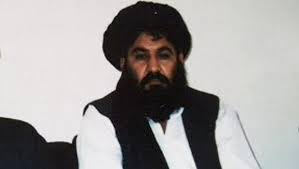
Mullah Akhtar Mansoor (Credit: cbsnews.com)
Mullah Akhtar Mansoor
(Credit: cbsnews.com)

KABUL, Afghanistan — If ever there was a Taliban bureaucrat who seemed set on a less than stellar career path, it was Mullah Akhtar Muhammad Mansour.

In the 1990s, he was the Taliban government’s chief of aviation while Afghanistan had few planes in the air. He also oversaw the tourism department for what was one of the world’s most sealed-off countries at the time.

In short, there was little hint back then that he would someday emerge as the Taliban’s supreme commander, and the successor to the group’s legendary founder, Mullah Muhammad Omar.

But in the years since the Taliban leadership was driven into exile in Pakistan in 2001, Mullah Mansour became central to the group’s reincarnation as a powerful insurgency that survived NATO offensives to pose a grave threat now to the Western-backed Afghan government.

Details of his rise, filled in through interviews with current and former Taliban commanders, Western and Afghan officials, paint a portrait of an insurgent leader with a distinct flair for intrigue.

As acting leader of the Taliban over the past few years, he closely kept the secret that Mullah Omar had been dead since 2013. And he wielded that edge powerfully, issuing orders in Mullah Omar’s name, moving against rival Taliban commanders and steadily consolidating power, according to Afghan and Taliban officials.

He has also benefited from a powerful alliance with the Pakistani military spy agency, Inter-Services Intelligence, the original sponsor of the Afghan Taliban insurgency. That relationship, along with a hefty dose of cash payouts to fellow commanders, was a crucial factor in his ability to manage the succession crisis this summer after news of Mullah Omar’s death finally got out, Taliban and Afghan officials said.

Pakistan’s role in Mullah Mansour’s rise and rule has offered a bit of hope to Afghan and Western officials that Pakistani officials might be persuaded to force the Taliban to accept a peace deal.

But it has also sometimes been a political liability for Mullah Mansour, embittering some Taliban figures who resent Pakistan’s influence on the leadership and who are not likely to forgive his deception about Mullah Omar’s death. Some alienated commanders have sought a new direction with the Islamic State offshoot that is growing in Afghanistan and Pakistan.

Mullah Mansour’s biggest mystery to Western and Afghan officials is wrapped up in the question of how he will try to shape Afghanistan’s future now that he has consolidated power: Will he attempt to return the Taliban to power as conquerors, or will he try to turn military victories into a strong hand in peace talks?

Riches in Exile

Mullah Mansour, a stout man believed to be just under 50, does not, unlike his famously reclusive predecessor, live in hiding. His circumstances are not those of a jihadist leader living a fugitive existence, fearing drone strokes and avoiding cellphones in case they are tracked — in fact, one person who knows him says the Taliban leader owns a cellphone company.

Some of the time, he lives in a southern neighborhood of Quetta, Pakistan, known as Satellite Town, in an enclave where he and some other Taliban leaders from the same Pashtun tribe, the Ishaqzai, have built homes, according to interviews with a range of people who know him, including high-ranking Taliban leaders. As with many of the people interviewed about Mullah Mansour, they spoke on the condition of anonymity to avoid offending or prompting revenge.

But Quetta is not his only option. Although he is on the United Nations no-fly list, Mullah Mansour has repeatedly taken flights in and out of Pakistan, according to a senior Afghan intelligence official. Often, his destination has been Dubai, in the United Arab Emirates, where he has a house and several investments under different names, the official said.

That freedom alone would support widespread claims that he enjoys special status from the Pakistani authorities. Also telling is the large detachment of plainclothes security officers in his part of Satellite Town that notably grew around the time he was announced as the Taliban’s leader, neighborhood residents say.

Although he has benefited from his Pakistani contacts, they come with strings. Intelligence officials say that Mullah Mansour is wealthy by any standard, partly because of his ties to Ishaqzai narcotics traffickers. But some of that wealth has occasionally been frozen by Pakistani officials, the Afghan intelligence official said. One such time came this year when Pakistan was seeking to broker a round of talks between the Taliban leadership and the Afghan government and wanted Mullah Mansour to go along with it, the official said.

Such details present, for the Taliban, an uncomfortable contrast to the austere lives their leaders supposedly lived when they governed the country. A biography of Mullah Mansour recently issued by the Taliban seemed intent on rebutting that impression.

“He likes and wears loose, neat and clean clothes,” the biography reads. “He dislikes and avoids extravagance and prodigality in dressing, eating and all other needs of everyday life.”

Mullah Mansour is one of the last senior members of Mullah Omar’s original government still with the insurgency. Of those still alive, some have reconciled with the Afghan government and now live in Kabul. To them, it is surprising that Mullah Mansour is what he is today.

Mullah Salaam Alizai, who was close to Mullah Omar during the Taliban government in the 1990s and later spent years as an insurgent commander, described Mullah Mansour as unpredictable and an opportunist. “The kind of person who doesn’t have his own ideology, the kind of person who doesn’t care about how much destruction occurs,” he said in a phone interview.

“If he is told to destroy one road, he will destroy 10, if he is told to kill one person, he will kill 100,” added Mullah Alizai, who reconciled with the government about eight years ago.

Maulawi Qalamuddin, who ran the Ministry for the Propagation of Virtue and the Suppression of Vice in the Taliban government, remembered Mullah Mansour as a hard-working administrator.

“Mullah Mansour was not a notorious figure and he was not fundamentalist, either,” said Maulawi Qalamuddin, who is now on the Afghan government’s peace commission. “People didn’t grumble or complain about him.”

A Violent Operator

Those seeking evidence that Mullah Mansour’s priority is to wage war rather than pursue peace talks will have no difficulty finding it. He was one of the early organizers of the insurgency after the United States toppled the Taliban government in 2001, becoming a major battlefield commander.

Leaked United States military intelligence logs present a snapshot of him sowing violence across southern Afghanistan in 2006 and 2007. They show that he attended strategy sessions where suicide bombings were planned, back when that was still a relatively new tactic for the Taliban.

If the boundaries between the Taliban and opium and heroin traffickers in Afghanistan are now blurred, that is in no small part because of Mullah Mansour. He was among the first major Taliban officials to be linked to the drug trade, according to a 2008 United Nations report, and later became the Taliban’s main tax collector for the narcotics trade — creating immense profits for the Taliban as opium and heroin exports soared.

The Taliban biography of Mullah Mansour on its English website relishes in tracing how the ferocity of the Taliban’s war against American and coalition forces seems to track each of Mullah Mansour’s promotions up the group’s ranks.

Despite his rising profile within the Taliban, he remained something of an unknown to his enemies. Of that there is no better measure than a bizarre episode in 2010, when an impostor claiming to be Mullah Mansour sought to engage in secret peace talks.

The Afghan government and the American-led military coalition were hopeful, especially when they heard the man’s modest demands for an end to the war: amnesty for Taliban leaders and jobs for Taliban soldiers. The military showered the man with money, flew him to Kabul for meetings, and struggled to keep expectations in check.

Then he simply disappeared, and both Kabul and Washington concluded they had been duped. And the real Mullah Mansour’s star continued to rise.

In 2010, Pakistani officials arrested Mullah Abdul Ghani Baradar, Mullah Omar’s top deputy. Afghan and Western officials later said he was detained because he had been negotiating with Afghan officials without Pakistan’s involvement.

Two commanders rose to more prominence in the wake of Mullah Baradar’s arrest: One was Mullah Mansour, the other was Mullah Abdul Qayyum Zakir, a young former detainee at the American prison camp at Guantánamo Bay, Cuba, who had a reputation as a tough commander in southern Afghanistan.

For a while, the two coexisted uncomfortably as co-deputies. But Mullah Mansour clearly gained the upper hand, becoming the acting leader of the Taliban, said Rahmatullah Nabil, the head of the Afghan intelligence agency, in an interview last year.

Afghan and Western officials said he had become the sole supposed conduit to Mullah Omar, in whose name annual announcements were made, but whom even senior Taliban commanders had not seen in years — to their growing anger and skepticism.

But Mullah Mansour was confident enough to begin placing his loyalists in important spots, and to move against those who doubted him.

In spring last year, Mullah Mansour served notice to Mullah Zakir that he was being fired because Mullah Omar was dissatisfied with the commander’s military strategy. But Mullah Zakir called his bluff, demanding proof that Mullah Omar was both alive and did in fact want him gone, three Afghan and Western officials said. Mullah Mansour showed a letter attributed to Mullah Omar, but could not produce compelling evidence. The gamble had failed, and the issue festered, giving wider circulation to rumors that Mullah Omar was dead and Mullah Mansour was deceiving his comrades.

A Power Struggle

Those rumors dogged Mullah Mansour through the first half of the year, when Pakistan began pushing the Taliban leadership to officially meet for the first time an Afghan government delegation, as a prelude to peace talks.

Until that meeting, in early July near Islamabad, the Taliban had long refused to meet with the Afghan government. But diplomats in attendance at the Pakistani-brokered talks were told that Mullah Mansour himself had authorized the meeting, one of the Afghan delegates, Hekmat Karzai, later said.

The senior Afghan official said that Mullah Mansour had, in fact, acquiesced to sending a delegation to the meeting, under heavy pressure from Pakistani officials. But as the talks were being prepared, he suddenly shifted tack, instructing several possible Taliban emissaries that they should refuse to attend. Then Mullah Mansour disappeared for a while.

“Mansour’s phones were turned off, he went missing,” one senior Afghan official said.

Why Mullah Mansour tried to sink the talks is unclear, but the Afghan intelligence official and a Western diplomat who had read intelligence reports on the issue said Mullah Mansour was probably worried he would lose the loyalty of Taliban commanders.

“It is not that Mansour is not obedient to Pakistan — it’s just that he is afraid of the movement falling apart,” the senior Afghan official said.

Pakistan was left scrambling to find Taliban figures who were willing to participate, leading to a smaller and less impressive delegation than the Afghan government had hoped for at the July 7 meetings. Still, the talks were hailed as the historic beginning of a long-sought peace process.

But Mullah Mansour’s apparent concerns were coming true. Within the Taliban, the talks — and Mullah Mansour’s perceived acquiescence to them — had cleaved the senior ranks. Senior Taliban figures began discussing the need for guidance from Mullah Omar, which in turn provoked renewed questions about whether he was even alive, two Afghan officials and a Western envoy said.

Deception Discovered

In July, word that Mullah Omar had long been dead suddenly began to circulate among commanders, according to Afghan officials. Precisely how the news broke was unclear, but one theory is that with peace talks looming, Mullah Omar’s son, Mullah Muhammad Yaqoub, began to confide to other senior Taliban leaders, according to an Afghan and a Western official.

On July 29, the Afghan government made it public, proclaiming that Mullah Omar had in fact died two years earlier in a hospital in Karachi, Pakistan.

Mullah Mansour immediately tried to get ahead of a potential succession struggle. In a few days of masterful constituency building — with the help of cash payouts and Pakistani influence, according to Afghan and Western officials — he secured the loyalty of possible rivals. In a series of shuras — consultative councils that his detractors claimed had been packed with his friends and tribesmen — he manufactured consent.

But others rallied behind Mullah Omar’s son, Mullah Yaqoub. Those supporters included Mullah Zakir and, reportedly, the leadership of the Haqqani network, an influential wing of the Taliban known for its brutal terrorist tactics and fund-raising mastery, according to members of the Taliban leadership council.

Then, Mullah Mansour let the world know that he had cut the heart out of his opposition.

The Taliban announced on July 31 that not only had Mullah Mansour been officially declared the new supreme leader, but that both of his deputies had also been chosen from the Haqqani network’s leadership, some of Mullah Yaqoub’s supposed backers. Two weeks later, the Taliban released a statement that Mullah Yaqoub and his family members had agreed to pledge their loyalty to Mullah Mansour’s leadership.

Mullah Zakir, however, would not go easily.

Officials with the National Directorate of Security, the Afghan intelligence service, said they had intercepted a message in which Mullah Mansour offered more than $14 million to Mullah Zakir through an intermediary in Helmand Province. The senior Afghan intelligence official claimed that after a payoff was made, of an unknown sum, Mullah Zakir demanded that he lead the Taliban military commission and that Mullah Mansour pledge not to engage in peace talks. However, those claims could not be confirmed in interviews with Taliban officials.

In any case, after he was anointed as Mullah Omar’s successor, Mullah Mansour had some consolidating to do. He disowned the July 7 peace meeting with the Afghan government, telling his supporters that they should dismiss talk of a peace process as propaganda — “the words of the enemies,” according to a recording the Taliban released.

Yet even then his speech was met with some degree of hope in Kabul, where diplomats noted that he had not explicitly ruled out future negotiations with the Afghan government.

“The doors of indirect meetings with the enemy in regards to independence of Afghanistan and the end of occupation were and still are open,” the Taliban said in another statement on their website.

Uncertainty Ahead

The deftness with which Mullah Mansour emerged as the new leader speaks to his political talents. But some Taliban leaders see it more as evidence of Pakistan’s support.

One of the insurgency’s most senior officials, Tayyeb Agha, resigned in August, saying he was dismayed that Mullah Mansour’s selection occurred outside Afghanistan.

In a lengthy statement, Mr. Agha, who was the Taliban’s chief foreign emissary, said choosing a leader in Pakistan was “a great historical mistake” and that Taliban leaders should relocate to Afghanistan from their exile in Pakistan to “preserve their independence.”

Within the insurgency, an aversion to peace talks and Mullah Mansour’s close ties with Pakistan remain potent issues for those who have not yet accepted his leadership.

But in recent days, Mullah Mansour has swept aside attention from internal tensions by presiding over the Taliban’s most consequential military victory since their government was ousted in 2001. After two years of steady infiltration into the north, and a patient encirclement campaign in Kunduz Province, Taliban fighters planted the white Taliban flag in the heart of Kunduz on Sept. 28.

The changes on the Afghan battlefield have for now made peace talks almost an afterthought. Afghan and Western officials hope that will not always be the case. But even those who have examined Mullah Mansour’s statements and career closely for clues are hard pressed to say what his long-term intentions might be.

“I’ll tell you who he isn’t,” Barnett Rubin, a scholar of Afghanistan who has worked in the United States government on Afghanistan policy, said in an interview. “He is not a moderate or extremist Talib, because his life is not lived according to our categories. People are trying to pigeonhole him into something they understand.”

Mujib Mashal, Ahmad Shakib and an employee of The New York Times contributed reporting. Alain Delaquérière contributed research.

Shaken by Taliban Victory in Kunduz, Afghans Flee Another Provincial Capital

KABUL, Sept 30 — The test facing the Afghan government now is not just whether it can quickly mount a counterattack and retake Kunduz, the northern city that fell to the Taliban on Monday, but whether it can prevent a nearby provincial capital from falling as well.

Accounts from the neighboring province of Baghlan on Wednesday showed that the collapse of government forces in Kunduz against less numerous Taliban forces was prompting a crisis of confidence in the neighboring province of Baghlan, where wealthier citizens and those with government connections have begun to leave for the relative safety of their hometowns.

In the midst of one of the gravest moments for the American-backed government in Kabul, military leaders spoke for a third day about launching a decisive counterattack against the Taliban in Kunduz. But it was becoming clear that most of the reinforcements for such an attack had been waylaid in Baghlan.

The reinforcements “will not be able to reach Kunduz without a big fight,” said Ted Callahan, a Western security adviser based in northeastern Afghanistan.

The Taliban have proven in the last few days just how tight a grip they hold on a stretch of northern Baghlan that abuts Kunduz Province. Reinforcements coming from either Kabul or the government stronghold in Mazar-i-Sharif must pass through the area to reach Kunduz city, and a number of convoys have been ambushed there.

It was not clear on Wednesday whether the front line in the north was still in Kunduz or was rapidly shifting south into Baghlan. That, at least, was how residents of Baghlan’s provincial capital, Pul-i-Kumri, were feeling.

“It is true, people are evacuating the city today,” Zabihullah Rustami, a former member of the provincial council, said by telephone. He had done so himself, he said, relocating to his rural district to the east. “People who are enemies of the Taliban are leaving,” he said, and the city was rife with “rumors that the Taliban might attack and take over the city.”

Advertisement

Continue reading the main story

Pul-i-Kumri, about 90 miles north of Kabul, could become the next flash point if the Taliban’s momentum in the north is not checked in the next few days.

Taliban fighters have been creeping up to the city’s outskirts over the last six months. Gun and mortar fire are frequently heard, and skirmishes have become regular occurrences on three sides of the city.

“In Pul-i-Kumri, the situation is not in the favor of the government,” Mr. Rustami said. “If any Taliban come out and shout ‘Allahu akbar,’ the city will fall. The Taliban are close to the city.”

In a worrisome sign, two units of the Afghan Local Police surrendered their bases just outside Pul-i-Kumri to the Taliban on Wednesday and joined the insurgents, while a third base there was overrun, said Mohammad Leqaa, a former general who commanded police forces in several provinces. Other military units in the area were also said to have fled.

Mr. Leqaa estimated that as much as 10 percent of the city’s population left on Wednesday alone. “The residents were influenced by waves of people fleeing Kunduz by way of Baghlan,” he said. “We tried to announce to people not to panic and don’t leave. They weren’t listening.”

Mr. Callahan, the security adviser, said he expected government forces to put up more of a fight in Pul-i-Kumri than they did in Kunduz.

“I think you’ll see much more resistance” from the police and pro-government militias, Mr. Callahan said. “Mind you, Baghlan is big, and most of the security forces are drawn from the eastern parts of the province, so there is a big pool of potential reinforcements.”

Even so, he said, a strong defense could not be taken for granted because if panic took root in Pul-i-Kumri, a Taliban victory could be “a self-fulfilling prophecy,” and a small Taliban force could sow enough fear “to more or less walk in” as security forces retreated.

“It would be the same movie we’ve seen in Kunduz,” Mr. Callahan said.

The Taliban’s resurgence in Baghlan over the past two years is a complicated story of ethnic rivalry and local politics as much as ideology. Baghlan’s sprawling and populous northern district, known as Baghlani Jadid, is largely Pashtun, Afghanistan’s largest ethnic group — from which the Taliban traditionally draws its members.

Pashtuns live in settlements across the north, but they are outnumbered in the region by Afghanistan’s second largest group, the Tajiks. In Baghlan, many Pashtuns have felt left out of the provincial power structure, especially after a leading Pashtun candidate failed to win the provincial council chairmanship in last year’s election. Since then, Pashtun support for the government appears to have waned in northern Baghlan and insecurity has been rising, especially along the stretch of national highway running through the province.

On Tuesday and Wednesday, convoys of reinforcements headed toward Kunduz were fighting pitched battles with the Taliban in two areas, said Abdul Shaker Urfani, a member of a community council in northern Baghlan.

By his count, more than 1,000 Afghan soldiers and police officers bound for Kunduz were stuck in the province on Wednesday. “They can’t break through the Taliban resistance,” Mr. Urfani said.

The capture of Kunduz, a city of 300,000 people, three days ago appeared to be the Taliban’s largest military victory in a war that has gone on for more than a decade. Kunduz is the first urban center the Taliban have held since 2001.

Soon after it fell, Afghan military officials spoke of using the city’s airport, five miles to the south, as a staging ground for a swift counterattack. Now, though, the airport is imperiled as well, caught between Taliban forces approaching from Kunduz and the insurgent-controlled countryside in every other direction.

By Tuesday night, Taliban fighters had pushed through the airport perimeter, threatening several hundred soldiers and at least as many civilians who had fled to the airport from the city. One police officer was killed and at least 17 were wounded defending the area, officials said.

Their situation improved somewhat when American warplanes struck Taliban positions at 11:30 p.m. and again at 1 a.m., an American military spokesman said. The Afghan Air Force also fired weapons.

Around the same time, American Special Forces soldiers and Afghan commandos left the airport headed for Kunduz, according to Afghan government officials. Whether the Americans were there to take Taliban positions or to call in airstrikes was not known. By morning, the Americans appeared to have returned, said people there who spoke by telephone.

An American military spokesman refused to discuss the matter.

It appeared that at least one American operation in the city ended in failure. An Afghan security official, speaking on the condition of anonymity, said that a group of 100 or more Afghan soldiers, trapped in an ancient fortress north of the city, had held the Taliban off for more than two days. But when American forces tried to airdrop ammunition and weapons to them, the official said, “they missed the base and dropped the weapons in the river.” It was not clear whether the weapons actually landed in the water of the nearby Kalagaw River or had merely missed the defenders’ position by a long distance.

That position fell Wednesday morning, and about 60 soldiers surrendered or were captured by the Taliban, although at least a few dozen managed to escape, the official said.

Questions about how thousands of army, police and militia defenders could continue to fare so poorly against a Taliban force that most local and military officials put only in the hundreds were hanging over President Ashraf Ghani’s government and its American allies.

The government forces and militiamen defending Kunduz Province were said to number more than 7,000 when the city fell. Some fell back to the airport, some fled to their homes, and some are unaccounted for.

Military officials in Kabul continued to promise an imminent counterattack, but an Afghan security official in Kabul who insisted on anonymity to discuss security matters said he was not aware that enough troops were in position to mount one.

“There is no counterattack,” he said, “not now, at least.”

Abdullah Talks Poverty, Militancy at UN Summit

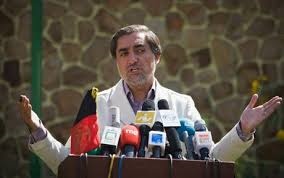
AA at UN (Credit: telegraph.co.uk)
AA at UN
(Credit: telegraph.co.uk)
Addressing The 2030 Agenda for Sustainable Development at the United Nations in New York on Saturday, Abdullah Abdullah the Chief Executive Officer of National Unity Government (NUG) reaffirmed Afghanistan’s strong commitment to implementing long-term development projects across the country after 2015.

In his remarks, Abdullah highlighted the gains made by Afghanistan over the recent years, but said poverty still remains one of the biggest challenges in the country.

Abdullah also touched on the issue of peace and security in Afghanistan and asked Chinese leadership to use their influence convincing Pakistan to contribute honestly in restoring long standing peace in the country.

“China has been helping Afghanistan in the past 14 years, support for the reconstruction of the country, capacity building—at the same time showed some interest in investing in Afghanistan. Recently they also were facilitating or supporting the initiatives which were there for reconciliation,” he added.

The CEO addresses the UN summit at a time that the people of Afghanistan are still coping with serious security threats and poverty. However Abdullah pledged that NUG is determined to take measures in reducing poverty in the country.

“Afghanistan begun to pursue its MDGs almost half a decade later than other member states. Based on our 2005 to 2015 MDG report, we have a mixed achievements and setbacks, while poverty rate as remains more or less constant for several years, we have made considerable progress in primary education, gender equality, in women empowerment, child and maternal mortality rate are being reduced, ” CEO Abdullah said.

In addition, Abdullah talked on the issue of terrorism and reiterated that the militant groups are still operating inside the Pakistani soil.

It is expected that NUG will submit the evidences proving Pakistan’s support of terrorism to the UN general assembly.

A trilateral meeting between Afghanistan, Pakistan and the US is also scheduled to take place in New York on the sidelines of the general assembly meeting.

U.S. Is Struggling in Its Effort to Build an Afghan Air Force

KABUL, Afghanistan — Col. Qalandar Shah Qalandari, Afghanistan’s most decorated pilot, recently took command of what was meant to be the building blocks of his country’s new air force: a squadron of shiny American-made attack helicopters, intended to solve the chronic lack of close air support for Afghan troops.

Sixteen of the armed MD-530 scout helicopters were rushed here this year to great fanfare, and a dozen more are to join them. But Colonel Qalandari was not impressed. “This plane is a total mess,” he said. “To be honest, I don’t know why we have this plane here.”

An Afghan public affairs officer tried to shush the colonel as he spoke to a journalist at the Afghan Air Force base at Kabul airport. A United States Air Force public affairs officer looked on aghast.

But Colonel Qalandari kept on: “I will tell the truth. This is my country, and these are my men, and they deserve the truth.”

He tossed a map on the table, showing the effective range of the helicopter from its Kabul airfield: It cannot even reach areas where the Taliban normally operate. In summertime, its maximum altitude with a full load of fuel and ammunition is only 7,000 to 8,000 feet, he said — meaning it cannot cross most of the mountain ranges that encircle Kabul, which is itself at an elevation of about 6,000 feet.

“It’s unsafe to fly, the engine is too weak, the tail rotor is defective and it’s not armored. If we go down after the enemy we’re going to have enemy return fire, which we can’t survive. If we go up higher, we can’t visually target the enemy,” Colonel Qalandari said. “Even the guns are no good.”

Each helicopter carries two .50-caliber machine guns, mounted on pods on either side of the craft’s small bubble cockpit. “They keep jamming,” one of the colonel’s 10 newly American-trained pilots said.

Colonel Qalandari is not the first Afghan official to complain about the woeful state of efforts to build an air force to replace the Americans in carrying out airstrikes, medical evacuations and transport missions in a country with poor and dangerous roads. United States officials have long seen the aspirations as unrealistic, while Afghans have complained that their allies have ignored their views about what they need to fight the Taliban.
One of the Afghan Air Force’s primary assault vehicles is the MD-530 scout helicopter. Its range is about 83 miles. But it cannot operate above an elevation of 7,000 to 8,000 feet, which dramatically reduces the area it can patrol in Afghanistan’s mountainous landscape.

In the past, efforts were focused on reconstructing the air force left behind by the Soviets, or at least the helicopter transport and gunship parts of it. During the Soviet era, the Afghan Air Force even had MiG-21 jet fighters with Afghan pilots. What the Afghans have had lately is a fleet of prop-driven Cessna transport planes, and aging Russian MI-17 transport helicopters and MI-35 helicopter gunships, the kind Colonel Qalandari flew in the past.

American efforts to rebuild the Russian fleet stalled after the conflict in Ukraine brought Western sanctions on the Russians. That has made spare parts difficult to obtain and new Russian helicopters all but impossible to buy.

Of the Afghan legacy fleet of five MI-35 gunships — a fearsome aircraft well-suited to Afghan conditions — only one is still flying. “And that one won’t last much longer,” Colonel Qalandari said.

Some of the Russian MI-17s, normally used for transport, have been outfitted as gunships or medevac aircraft, but there are constant problems keeping them in service because of issues with maintenance and spare parts. Afghan V.I.P.s also tend to demand them for personal transportation when they travel around the country.

American officials hailed the MD-530 as a quick — and realistic — solution to Afghanistan’s air force needs.

Built by McDonnell Douglas, the two-seat helicopter has a 33-year history, serving as a Special Operations scout helicopter, and in the United States as a traffic and weather news helicopter, or for power line work.

It is simple to fly and repair, and could be put into action in Afghanistan quickly, American officials said. The first four of the MD-530 gunships to be battle-ready have already gone on two combat missions, in August, and Afghans and Americans both pronounced them a success.

American officers say that it would take much longer — many years — to train Afghan pilots to fly more advanced American military helicopters with advanced avionics and computerized controls. They are also extremely expensive to fly.

“This is a sustainable solution,” said Lt. Col. James Abbott, an Air Force trainer who put off retirement to help run the MD-530 program in Afghanistan. “You’re fighting guys with a gun in the back of a pickup truck: How much technology does that need?”

The new helicopters were procured and delivered, with enough Afghan pilots trained and ready to fly them, in less than a year. “It’s been pretty amazing what they’ve done in a short time,” Colonel Abbott said.
Some of the Afghan pilots have already qualified on the MD-530 as instructor pilots, and are training other Afghans. Training mechanics and maintainers will take longer, and American contractors are still doing most of that work.

The pilots inside the MI-17 helicopter. Spare parts for the Russian fleet are difficult to obtain, but many Afghans are dissatisfied with replacement American helicopters. Credit Andrew Quilty for The New York Times
Colonel Abbott said a lot of the Afghan criticism of the new aircraft was from pilots used to Russian equipment, and replacing that has become impossible. “It’s a tough sell for the legacy guys,” he said, “but the young pilots love it.”

As for the complaints about the helicopter’s troubles in the high altitudes and thin air of Afghan battlefields, he noted that those would be a problem for even most advanced aircraft.

Capt. Naiem Azadi — one of the new instructor pilots and a veteran of the MD-530’s first combat mission, in Jalalabad last month — is enthusiastic about the helicopter. But he wished it had gun sights, he said. As it is now, targeting is visual, and the twin .50-caliber machine guns are aimed by tilting the helicopter toward the target.

“If we don’t have ground controllers guiding us, it’s very hard to target safely,” Captain Azadi, 27, said.

Already, one of the new helicopters has crashed, while an American pilot was flying with an Afghan trainee near the 8,000-foot-high Lataband Pass, just east of Kabul.

Colonel Qalandari said the incident showed the limitations of the helicopter in Afghan terrain. After the helicopter landed, a recurring tail rotor problem, plus its light weight, caused it to tip over in a wind. While the crew escaped safely, the aircraft rolled down the mountainside, toppled off a cliff, and was completely destroyed.

“When my pilots fly in this, only God and I know what they’re going through,” the colonel said. “And I don’t know whether they’ll make it back.”

The MD-530 is not the only problem aircraft in the Afghan arsenal, according to Afghan officials.

They also have 25 C-208 transport planes, basically modified Cessna 12-seater prop planes, an aircraft the Americans praise for its simplicity and workhorse abilities.

The Afghan Air Force chief of staff disagreed. “The C-208 is not good for Afghan territory, it’s unacceptable to the geography of the country,” the senior officer, Maj. Gen. Mohammad Dawran, said in an interview. “We can’t keep them pressurized; they only have a 4,000- to 5,000-meter ceiling — no good in the hot weather. Only a single engine.”

General Dawran said that while he was grateful to the Americans for the help they had given, they had yet to accomplish nearly as much as the Russians did in creating an Afghan Air Force in the 1980s.

“Our international friends, especially the U.S.A., did a lot of good things to help the Afghan Air Force,” he said. “We began from zero, and now we’re in a better situation. But the Americans did not pay enough attention to what we wanted. They did not consult the Afghan side.”

The Afghan general was hopeful, however, about the planned delivery next year of 20 new Brazilian-made A-29 airplanes, a light attack aircraft purchased by the American military. Unlike the new helicopters, the A-29 will be able to drop laser-guided bombs and other high-tech arms.

“The nice thing about a laser-guided bomb,” said Colonel Abbott, “it doesn’t care what it gets dropped out of, it’s just as lethal.”

Brig. Gen. Chris Craige, the commander of the American Air Force training mission here, acknowledged that development of an Afghan Air Force had lagged behind other military training efforts. For one thing, the United States and its coalition allies did not even start working on training an Afghan Air Force until 2007, and efforts were complicated by the highly technical nature of air power and by the long periods of training needed for pilots and mechanics. Pilots in particular need English-language proficiency, which takes up most of the first year of their training.

The A-29, said General Craige, “is the absolutely right airplane for them. It will bring the next level of capability to them as far as not just machine guns and rockets, but also being able to drop bombs. And that’s where we really start getting the Afghan Air Force to a point where they can sustain themselves in those tough battles.”

Training on the A-29 does not begin until next year, and the full complement of 20 planes will not arrive until December 2018.

But Afghan ground forces are begging for air support as they face more determined ground challenges from the Taliban, who have boasted of how much easier it is to fight with fewer worries about American airstrikes.

Most American airstrikes in support of Afghan forces have to be approved on a case-by-case basis by Gen. John F. Campbell, the American commander in Afghanistan, and not all are.

One exception has been Musa Qala, a district of Helmand Province that fell to the Taliban on Aug. 26. Heavy American airstrikes rained down almost continuously on the district for weeks after that, according to Afghan officials and local residents.

But over all, General Craige said, “this is the first year where the coalition hasn’t come in and said, ‘We’ll take care of it.’”

That has been difficult for Afghans to accept. As another American general put it, speaking on the condition of anonymity while criticizing an ally, the heavy American use of air power in previous years has made Afghan government forces feel excessively dependent on it.

“The Taliban doesn’t complain about not getting air support,” the general said, “but they get it done.”

Pope warns about fight against extremism

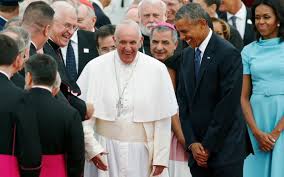
Pope Francis & President Obama (Credit: thedailybeast.com)
Pope Francis & President Obama
(Credit: thedailybeast.com)
Pope Francis on Thursday warned members of Congress and the American public not to be consumed by their opposition to religious extremism.

“Our world is increasingly a place of violent conflict, hatred and brutal atrocities, committed even in the name of God and of religion,” Francis said before a rapt joint meeting of Congress.

A delicate balance is required to combat violence perpetrated in the name of a religion, an ideology or an economic system, while also safeguarding religious freedom, intellectual freedom and individual freedoms,” he said. “But there is another temptation which we must especially guard against: the simplistic reductionism which sees only good or evil; or, if you will, the righteous and sinners.”

“We know that in the attempt to be freed of the enemy without, we can be tempted to feed the enemy within,” Francis said. “To imitate the hatred and violence of tyrants and murderers is the best way to take their place.”

Though Francis never mentioned Islam during his historic address — the first ever by a pontiff before a joint meeting of Congress — the comments appear to refer to ongoing global struggles against extremist groups such as the Islamic State in Iraq and Syria (ISIS). Some critics have worried that efforts to crack down on radicalism around the world end up limiting people’s rights and subjecting them to constant surveillance.

Francis’s speech on Thursday captured the attention of all of Washington.
In addition to the comments on extremism, the address largely focused on immigration, climate change and efforts to protect the poor.

Hajj Stampede Near Mecca Leaves Over 700 Dead

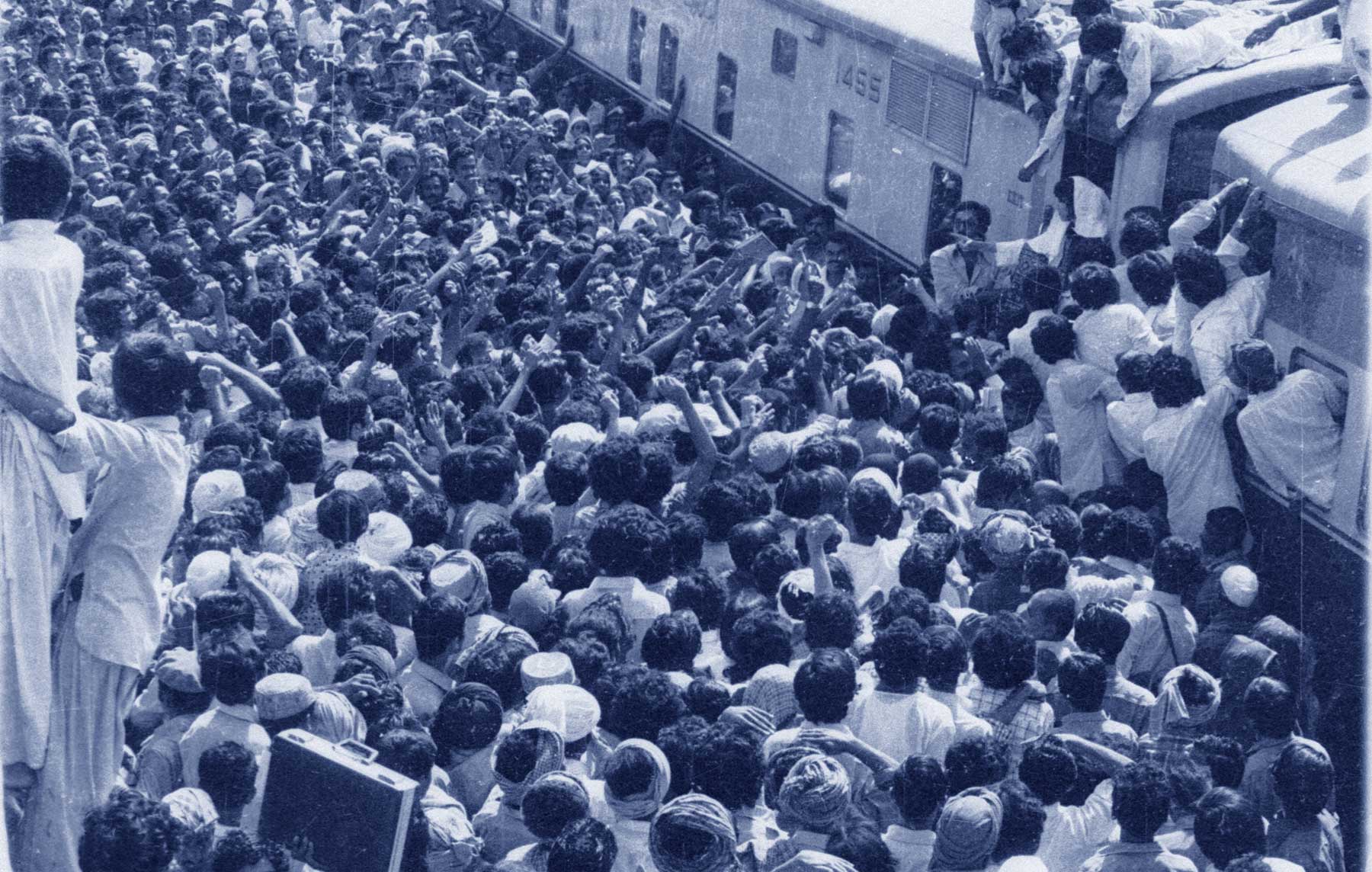
BEIRUT, Lebanon — In streaming ribbons of white, great masses of Muslim pilgrims made their way between cities of air-conditioned tents toward the next stop on their holy tour of Mecca in Saudi Arabia.

Then something went disastrously wrong, trapping the crowds in narrow streets and touching off a mass panic and crushing stampede that left the asphalt covered with lost sandals, crumpled wheelchairs and piles of white-robed bodies.

It was the deadliest accident during the Hajj pilgrimage in a quarter-century, with at least 717 pilgrims from around the world killed and more than 850 wounded. And it posed yet another challenge for the country’s new leader, King Salman, who is already coping with low oil prices, a war in Yemen and an increasingly fierce rivalry with Iran.

The stampede was the latest in a series of crises that have plagued the pilgrimage this season: Just two weeks ago, a crane collapse killed more than 100 visitors, and hotel fires have injured others. The missteps have embarrassed the insular Saudi monarchy, which considers itself the global guardian of orthodox Islam and takes great pride in protecting the holy sites and their millions of annual visitors.

King Salman — who bears the title of “the custodian of the two holy mosques,” giving him personal responsibility for Mecca and Medina — expressed his condolences for the dead in an address aired on Saudi state television and ordered a review of the management of the pilgrimage. A commission was formed to investigate.

Other officials appeared to blame the dead. The Saudi health minister, Khalid al-Falih, said in a statement that the stampede may have been caused by “some pilgrims who didn’t follow the guidelines and instructions issued by the responsible authorities.”

But some present in the area at the time said security forces had temporarily closed exits from an area packed with pilgrims, causing the crowding that led to the stampede.

Khalid Saleh, a Saudi government employee who rushed to the site when he heard screams and sirens, said he had found “huge numbers of people on the ground either dying or injured.” Pilgrims there told him that some of the area’s exits had been closed so that V.I.P. cars could pass, he said.

The Saudis’ main regional rival, Iran, blamed the tragedy on Saudi mismanagement. The head of Iran’s Hajj organization, Said Ohadi, said two paths near the site of the accident had been closed for “unknown reasons.”

“This caused the tragic incident,” he told Iranian state television. “Saudi officials should be held accountable.”

At least 131 Iranians were among the dead, according to Iranian news agencies.

Ayatollah Ali Khamenei, the supreme leader of Iran, blamed “misconduct and improper acts” by Saudi officials and declared three days of public mourning.

The Saudi government has spent billions of dollars on construction in Mecca in recent years aimed at enlarging the grand mosque, adding accommodations and facilitating movement between the sites. Those investments followed a number of high-casualty accidents, including the 2006 deaths of 360 people on a bridge that had long been identified as a dangerous choke point.

Nevertheless, Thursday’s stampede is likely to renew criticism that Saudi Arabia lacks the management skills to protect one of the world’s largest regular human migrations.

Irfan al-Alawi, the executive director of the Islamic Heritage Research Foundation and a critic of how the Saudi government has developed Mecca and another holy city, Medina, said by telephone from Mecca that the stampede had been a result of “poor management” by the government, given the number of past disasters.

The stampede occurred early Thursday, the first day of the Muslim Eid al-Adha holiday, near a T-shaped intersection of narrow streets in Mina, about six miles east of Mecca, where many pilgrims stay in air conditioned tents.

The area is close to Jamarat, where pilgrims gather to throw pebbles at walls in a ritual that represents the stoning of the devil.

Maj. Gen. Mansour Turki, a spokesman for the Saudi Interior Ministry, told reporters that large groups of pilgrims had run into each other and started shoving, causing the stampede, which was exacerbated by extreme heat and fatigue.

General Turki and other officials said they would not comment on how the streets had become so crowded before the official investigation was complete.

And Saudi officials confined reporters given official access to the pilgrimage for hours after the accident, preventing them from reaching the site and investigating its cause.

Survivors described a nightmare situation of getting trapped in a crush of bodies and feeling other people walk over their backs in an effort to escape.

“I saw someone trip over someone in a wheelchair and several people tripping over him,” said Abdullah Lotfy, a pilgrim from Egypt, according to The Associated Press. “People were climbing over each other just to breathe.”

Cellphones and cameras are prohibited from the main sanctuaries, but can be used in the surrounding areas, and videos of the aftermath shared on social media showed scores of lifeless bodies in the street, many covered with the simple white garments pilgrims wear during the hajj.

One video showed a heap of men lying atop one another, while rescue workers in fluorescent yellow vests worked to free struggling survivors trapped between lifeless bodies.

The stampede was the deadliest incident during the hajj — and in the entire kingdom — since 1990, when 1,426 pilgrims perished in a stampede in a tunnel linking Mecca and Mina.

It occurred less than two weeks after a large construction crane toppled over and crashed through the roof of the Grand Mosque in Mecca, killing at least 111 people and injuring 394 others. The Saudi authorities have faulted the Saudi Binladin Group, a construction conglomerate working on the mosque expansion, denying it future contracts and banning some of its executives from leaving the country.

The accidents have occurred as the Saudi government spends billion of dollars on the construction of new buildings — including the world’s largest hotel — that critics say have destroyed the sites’ natural setting and cater only to the wealthiest pilgrims.

But accidents that kill large numbers of visitors have become less common than they were during earlier eras. The last was the stampede in 2006, along with a building housing pilgrims collapsed, killing at least 73 people.

Sami Angawi, a Mecca-born architect who has spent decades studying the pilgrimage, said the Saudi government faces a huge logistical dilemma in welcoming so many people and cycling them through a series of specific sites in a limited amount of time. Some two million pilgrims from 180 countries are performing the hajj this year.

He said the pilgrims’ diversity and lack of a common language added to the challenge. “With a huge number like this and all the diversity that is in it, it is hard to communicate and do orientation,” he said.

But he criticized the Saudi government for seeking to build its way out of the problem instead of improving crowd control.

“There is a lot of money spent, but the solution is not in making more roads or bridges,” he said. “It is in how to organize the management of people to have a flow from one area to another.”

Madawi al-Rasheed, a Saudi anthropologist at the London School of Economics, accused members of the royal family of profiting handsomely from the construction boom.

“The renovation and expansion are done under the pretext of creating more space for Muslim pilgrims, but it masks land grabs and vast amounts of money being made by the princes and by other Saudis,” she said. “There is no accountability.”

Dr. Rasheed said that officials in the kingdom had avoided responsibility in part by citing the belief that anyone who dies during the pilgrimage — one of the five pillars of Islam, and a duty for all able-bodied Muslims with the means to make the trip — goes to heaven.

Saudi state television reported the deaths in text banners on its screen during normal pilgrimage programming, only briefly showing footage of rescue workers putting injured pilgrims into ambulances.

“That is among the things that happen at any large gathering,” one presenter said.

He closed his program by reminding viewers that it is a “virtue” to die while performing the pilgrimage and that the tragedy was only “temporary.”

Reporting was contributed by Mona Boshnaq from London, Kareem Fahim from Cairo, Thomas Erdbrink from Tehran, Christine Hauser from New York, and Sheikha al-Dosary from Alexandria, Va.

Trump silent on accusation that Barack Obama is Muslim at New Hampshire rally

Trump at nh rally (Credit: nhdailynews.com)
Trump at nh rally
(Credit: nhdailynews.com)

This time Donald Trump is in hot water for what he didn’t say.

The Republican presidential front-runner decided to shake things up at a New Hampshire rally Thursday by abandoning his stump speech — wall, China, proven business leader — and taking questions from the crowd.

And the first one was a doozy.

“We’ve got a problem in this country,” said the first questioner. “It’s called Muslims. You know our current President is one. You know he’s not even an American.”

“We need this question?” Trump said, laughing.

“But anyway,” the man continued, “We have training camps growing, where they want to kill us. That’s my question: When can we get rid of them?”

Instead of correcting the man on President Obama’s religion — he’s Christian — or denouncing the blanket statement about all Muslims, the birther movement banner holder just let it hang in the air.

“We’re going to be looking at a lot of different things,” Trump said. “And you know, a lot of people are saying that and a lot of people are saying that bad things are happening out there. We’re going to be looking at that and plenty of other things.”

Democratic presidential front-runner Hillary Clinton blasted the billionaire real estate mogul for not correcting the questioner.

“Donald Trump not denouncing false statements about POTUS & hateful rhetoric about Muslims is disturbing, & just plain wrong. Cut it out. -H,” she tweeted.


“GOP frontrunner Donald Trump’s racism knows no bounds. This is certainly horrendous but unfortunately unsurprising given what we have seen already,” said Democratic National Committee Chair Debbie Wasserman Schulz.

In 2008, Sen. John McCain drew boos at a town hall when he corrected a woman who called then-Sen. Obama “an Arab.”

“I have to tell you, Sen. Obama is a decent person and a person you don’t have to be scared of as President of the United States,” McCain said.

Trump’s camp responded to the mounting backlash by accusing Obama of waging a religious war.

“The media wants to make this issue about Obama. The bigger issue is that Obama is waging a war against Christians in this country,” the Trump campaign said in a statement. “Christians need support in this country. Their religious liberty is at stake.”


Queen’s representative resigns after saying British Pakistanis need to learn civility

Paul Sabapathy (Credit: tribune.com.pk)
Paul Sabapathy
(Credit: tribune.com.pk)

One of the Queen’s personal representatives has resigned after leaked emails showed him saying British Pakistanis must be taught “basic common courtesy and civility”.

Paul Sabapathy, CBE, Her Majesty’s lord lieutenant of the West Midlands, made the remarks in an email after attending an event at the Pakistan consulate in Birmingham on 14 August to commemorate Pakistan Independence Day.

Apparently unhappy about the lack of respect he and colleagues were shown as the Queen’s representatives, he said: “Pakistanis are lovely people individually but there is a lot of work to do to teach them basic common courtesy and civility.”

He went on: “They talk to themselves and do not engage with the wider community. They are living in the UK not Pakistan. Whilst being rightly proud of their Pakistani culture and heritage they need to explain better and engage more with their non-Pakistani brothers and sisters if they want their children to succeed as British Pakistani citizens.”

Sabapathy, who was born in Chennai in India and moved to the UK in 1964, was the first non-white lord lieutenant.

Her Majesty’s lord lieutenants are the representatives of the crown for each county in the United Kingdom. Men or women of all backgrounds, they are appointed by the Queen on the advice of the prime minister.

Lord lieutenants were originally appointed in Henry VIII’s reign to take over the military duties of the sheriff and control the military forces of the crown. Nowadays they perform a largely ceremonial function but are nonetheless expected to uphold the same standards as the reigning monarch.

Sabapathy’s remarks were seemingly prompted by a group of 20-25 Pakistani men talking as he tried to address the Independence Day event.

When the Guardian contacted Sabapathy on Friday morning to ask for clarification on his remarks, he asked for time to comment. In the meantime a growing number of MPs spoke out about his remarks, with one Pakistani-origin MP saying the lord lieutenant had been offensive and must apologise.

At 5.30pm on Friday he issued a statement saying he had decided to stand down and wanted to offer an unreserved apology.

He said: “I wish to apologise unreservedly and wholeheartedly for the offence I have caused to the Pakistani community and others, by the contents of my private email. I have today written to all those who received my original email to express my sincere sorrow and regret. I have asked for their forgiveness in the hope that my comments do not damage relationships between the many communities of the West Midlands.”

A palace spokesperson said in a statement: “We understand that Paul Sabapathy has informed the Cabinet Office of his decision to step down from his role as lord lieutenant in the West Midlands. The Royal household would like to acknowledge the tremendous work done by Mr Sabapathy since his appointment in 2007 to support the work of the royal family and to bring together and work with the communities in the West Midlands.”

Before Sabapathy tendered his resignation, Shabana Mahmood, MP for Birmingham Ladywood, whose family are from Mirpur in Kashmir, Pakistan, said: “Clearly he should apologise, his comments are very offensive. If he had issues with the way the event was organised then the appropriate thing to have done would have been to take it up with the event organisers directly.”

Valerie Vaz, Labour MP for Walsall South, said: “I am disappointed with these generalised remarks about the Pakistani community which indicates to me he is out of touch. In my experience the community are hospitable, generously support charitable causes both in the UK and aboard, support multi-faith activities and actively oppose those who seek to divide our diverse tolerant community in Walsall. I think he should apologise.”

Another West Midlands MP, Roger Godsiff, who represents Birmingham Sparkbrook and Small Heath, was at the Independence Day event: “Based on my own visit to the Pakistani consulate in Birmingham on 14 August, it is surprising that Paul Sabapathy could make such sweeping generalisations. Perhaps the other attendees thought he was being a bit snooty and ignored him,” he said.

He added: “It seems that it would be helpful for community relations if he did apologise.”

Jess Phillips, MP for Birmingham Yardley, said: “Without understanding the context of what happened at the event it is difficult for me to comment. But I would say if Paul Sabapathy thinks the British Pakistanis don’t engage with the wider community he wants to come and live on my street. He wouldn’t be there for five minutes without being invited in for a chat with my British Pakistani neighbours.”

The remarks were leaked the day before Sabaphaty was set to appear as guest of honour at the British Organisation for People of Asian Origin (Bopa) in Birmingham. On Saturday he is due at the Belgrade Theatre for Bopa’s conference on the “Asian contribution to World War One”.

But Davinder Prasad, Bopa’s chief secretary, said Vaz and others were “making a meal out of it.”

He said: “Why should the lord lieutenant apologise? He was right in what he was saying. The Asian community, whether Sikh or Pakistani or Indian must learn. What he is doing is educating Asian people that they are in British society. They can’t behave as if they are still in Pakistan, India, Bangladesh or Sri Lanka. They must not just expect to get food on a plate. They must accept what British society has on offer, for example, tolerance and respect. We need to show respect to the British monarchy. Why must people try to make a meal out of what he said?”

He added: “I’m appalled if someone is asking him to apologise. We are very fond of the lord lieutenant and see him as a source of inspiration. We have nothing but respect for him. If somebody is being discourteous or impolite, the lord lieutenant is right to draw it to their attention. Anyone criticising him should look himself in the mirror.”

Andrew Mitchell, the Conservative MP for Sutton Coldfield and secretary of state for international development, praised Sabapathy for his “superb work across the area” and good relations with the Pakistani community, and said something must have gone “awry” on Independence Day.

In his resignation statement, Sabapathy wrote: “As an immigrant myself, coming to the UK 51 years ago not knowing anyone and the first non-white lord lieutenant ever, I have been conscious of my duty to engage with and support all communities in their endeavour and to ensure they are represented fairly and without discrimination.

“Those who know me will, I am sure, confirm I am a great advocate of the Muslim and Pakistani communities – in the same way that I support all of those in the region, no matter their colour, creed or beliefs. Collaboration and engagement are at the heart of all my work. There is not one iota of prejudice on my part and I am deeply sorry for the upset I have caused and I offer my sincere and heartfelt apologies.

“It has been a privilege to be the representative of Her Majesty the Queen and to serve the communities of the West Midlands for the last eight years. Having given the matter deep consideration and in the light of my wife’s ill health I have decided to stand down as lord lieutenant of West Midlands to spend more time with my wife.”