Dogged reporting in Azerbaijan landed a U.S.-trained journalist in prison

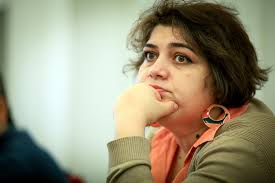
Khadija Ismayilova (Credit: euroasian.net.org)
Khadija Ismayilova
(Credit: euroasian.net.org)

The U.S. government spends millions each year on programs to improve the skills of foreign reporters, but rarely have its efforts helped produce such a media superstar as Khadija Ismayilova in Azerbaijan.

Ismayilova was 27 when she enrolled in her first U.S.-funded investigative workshop in Baku in 2003. At 30, she moved to Washington to work for the government’s Voice of America, which trained her in broadcasting. Two years later, she returned home as bureau chief of the U.S.-funded Radio Free Europe/Radio Liberty (RFE/RL) and later, became a talk-show host and investigative reporter there.

Beginning in 2010, Ismayilova uncovered secret ownership amid government dealings in the telecommunications, construction, gold mining, hotel, media and airline services industries. Her bombshells won international awards and high praise from some in the State Department as well as anti-corruption groups worldwide.

But in Azerbaijan, in December, she was arrested and imprisoned. The hidden fortunes she revealed were those of Azerbaijan’s president, Ilham Aliyev, and his family. She reported that they used their positions to vastly enrich themselves with public funds.

The charges against her — tax evasion, illegal entre­pre­neur­ship, embezzlement, inciting a suicide attempt and misuse of authority — did not cite her reporting. But U.S. and European officials and her employer say they are retribution for her articles, designed to quash her investigations and growing pro-democracy activism.

Earlier this month, Ismayilova was found guilty of all but the suicide charge and sentenced to 7 1/2 years in prison. She told the court that the government “won’t be able to force me to stay silent, even if they sentence me to 15 or 25 years.”

U.S. officials condemned the verdict.

“This sentence is clearly retribution for Khadija exposing government corruption and sends a warning shot to other journalists in the country,” said Jeff Shell, chairman of the Broadcasting Board of Governors, an independent federal agency that supports independent media abroad. “The Azeri government has demonstrated to the international community that it disdains press freedom, supports its own impunity and has little regard for human rights.”

Khadija Ismayilova’s journey from U.S.-sponsored journalism workshops to a jail cell in Central Asia is also a tale of U.S. policy at odds with itself.

On the one hand, U.S. agencies and their affiliates train, fund and publish investigative reporters such as Ismayilova, who provide some of the last remaining independent news reports in Central Asia and Russia. Congress appropriated an estimated $64 million this fiscal year for programs to promote “media freedom and freedom of information” worldwide, according to State Department records.

But on the other hand, press freedom and human rights usually take a back seat in U.S. foreign relations to military, intelligence, oil or other business interests.

“The U.S. government isn’t doing anything in terms of pressure and sanctions against the government of Azerbaijan to make it clear the jailing of Khadija and other journalists there is unacceptable,” said David J. Kramer, a human rights specialist at the McCain Institute for International Leadership and former president of Freedom House. “There are other interests with Azerbaijan that have crowded out human rights concerns.”

In March, two officials from RFE/RL and the International Broadcasting Bureau, an independent U.S. agency that oversees Voice of America, flew to Baku to discuss Ismayilova’s case with the foreign minister, national security adviser, two other senior presidential advisers and the prosecutor and tax offices.

“I said, ‘If you have specific information that contradicts her reporting . . . give it to us,’ ” said Jeffrey N. Trimble, deputy director of the IBB. He got nothing, he added, and “no hint of flexibility.”

The Embassy of Azerbaijan declined to comment on questions submitted by The Washington Post.

Ali Hasanov, the presidential aide for public and political affairs, told media in Baku after the verdict that “Ismayilova faced criminal charges for committing concrete criminal acts unrelated to her journalistic activities. During the trial, the charges were fully proved and the adequate decision was made. That is why attempts to politicize the court’s verdict about Ismayilova by some international organizations, officials of different countries and a number of international human rights organizations are unacceptable.”

Before Ismayilova’s arrest, Azerbaijani officials portrayed her as an enemy of the state because of her reporting and on-air commentary.

In a 60-page statement issued days before her arrest, Presidential Chief of Staff Ramiz Mehdiyev said Ismayilova “makes absurd statements, openly demonstrates destructive attitude towards well-known members of the Azerbaijani community and spreads insulting lies. It is clear this sort of defiance pleases Ms. Ismayilova’s patrons abroad.”

Ismayilova, 39, is being held in Kurdakhani prison, 30 miles north of Baku and home to some of the 80 other journalists and pro-democracy activists identified by U.S. and European governments. Speaking through intermediaries, she answered questions in writing for this article.

“We publish investigations because we value peoples’ right to know,” she said. “I expect people to struggle for their right to know, to try to hold corrupt politicians responsible.”

Today the government owns all television stations, and virtually all newspapers are allied with the president.

“Azerbaijan has been a friend to the United States and a partner in the battle against radical Islam, but mostly it’s their oil. It’s important that [the oil] remains in a Western direction,” said Rep. Steve Cohen (D-Tenn.), co-chair of the Congressional Azerbaijan Caucus.

Even so, Cohen said, President Aliyev “has talked about human rights, but we haven’t really seen it.” Cohen recently co-signed a letter to Aliyev, asking him to reconsider the closing of RFE/RL, which the police shuttered in December, and assure justice to Ismayilova, whose arrest the letter called “politically motivated.”

Ask anyone who knows Ismayilova to describe her, and they usually chuckle to themselves first. “She gives you a healthy amount of headache,” said Ayaz Ahmedov, a co-worker.

“She is the most courageous man in Azerbaijan!” said Altay Goyushov, a professor at Baku State University.

Ismayilova was raised in an intellectual household. Her mother was an engineer, and her father was the president of a company that made machinery for the oil industry. Their daughter was a stellar student. Khadija graduated from Baku State University with a master’s degree in the Turkish language and literature and also speaks Russian.

She came onto the job market shortly after Azerbaijan gained its independence from the Soviet Union in 1992, and for the first time independent news outlets began springing up in the former Soviet republic.

Her first jobs were at alternative monthly newsletters for nonprofit organizations; then covering politics for a Russian-language paper; then as a deputy editor in chief of an English-language newspapers’s Azerbaijan section.

Alakbar Raufoglu, a fellow journalist, first met her in the mid-1990s. “Sometimes people don’t like her because she says everything to your face; she will not talk behind your back.”

Ismayilova’s exposure to U.S. journalistic techniques and mind-set came in 2003 amid a dynastic transition in Azerbaijan. That year, Ilham Aliyev replaced his father, Heydar, a former chief of the KGB branch in Azerbaijan and first secretary of the Communist Party there, as president of the country.

With Western help and investment, Ilham Aliyev developed Azerbaijan’s oil and gas infrastructure and turned a country the size of Maine with a population of 9.6 million into a player at the center of multiple geopolitical competitions. Glass skyscrapers and garish displays of wealth sprang up in the otherwise crumbling downtown.

Sandwiched between Iran and Russia, Aliyev increased intelligence cooperation with Israel and the United States and allowed the U.S. military to use commercial airports to ferry troops and supplies into Afghanistan.

Ismayilova’s pedigree can be traced to some of the finest American investigative reporting minds in the industry, a small, sometimes awkward group of junkyard dogs. They were among the first to realize the golden nuggets of information that could be found within banal government documents.

Her teachers included people like Don Ray, a California-based broadcast journalist famous among U.S. reporters as a pioneering document sleuth. Beginning in 2006, he taught Ismayilova and her colleagues to conduct what he calls a “bottoms-up investigation” that begins with a search of standard corporate, tax and property records.

Another teacher was Drew Sullivan, a onetime city hall reporter at the Tennessean, who founded the Organized Crime and Corruption Reporting Project (OCCRP), a nonprofit group that receives U.S. and other funding to teach reporters mostly in Central Asia and Eastern Europe how to do cross-border investigations. She also worked with a U.S.-trained Romanian computerized-records wizard, Paul Radu. Radu had built an online tool called Investigative Dashboard that contains corporate registries and company records worldwide, and much more.

Ismayilova would eventually combine Ray’s scrutiny of documents, Sullivan’s cross-border capabilities and Radu’s Dashboard to produce the half-dozen fact-filled stories about the Aliyev family that got her in so much trouble. The training that all three men provided to Ismayilova was partly subsidized by U.S. government funds.

But one more thing was required to turn her into a full-fledged investigative reporter: passion.

In March 2005, a friend, investigative reporter Elmar Huseynov, who had published stories linking Aliyev to hidden business holdings, was shot dead at his doorstep in Baku by assailants who have still not been identified.

“That was the moment when I felt guilty,” Ismayilova later told Ray in an interview. “I started crying — I just couldn’t control it. I couldn’t stop crying.”

Ismayilova had dismissed Huseynov’s work because he didn’t document most of the allegations made about the Aliyev family, Ray said.

Only later did she realize that “he was a one-man band going after the powers that be” with none of the training she had to find the necessary paper trail, Ray said. “She did some self-assessment and realized that the spirit of what he was doing was correct, but he didn’t know the best way to do it.”

Deeply regretful, she promised herself that she would honor him by continuing his work and training others to do the same.


The turning point for Azerbaijani investigative journalism came only in mid-2010. In March, The Post published an article by one of its correspondents about an 11-year-old boy with the same name and birth date as the president’s son who had spent $44 million on nine Dubai mansions.

Ismayilova had helped with the story but for safety reasons had asked that her name not be used.

The article, according to Raufoglu, the fellow journalist, “made the local media wake up. . . . We were asking ourselves, ‘Why can’t we write like this?’ ”

Ismayilova, he recalled, told colleagues: “Okay, we will call our colleagues abroad. We will figure out a way to prove everything we know.”

Ismayilova’s first bylined investigation was vetted and published by RFE/RL, once a Cold War propaganda outlet that has since evolved into the last remaining source of independent news in much of Central Asia and Russia. By then it broadcast only on the Internet, having been banned by the government from airwaves.

In August 2010, using documents from the State Committee on Financial Securities, Ismayilova and a colleague reported that an Azerbaijani holding company called SW Holdings had a near monopoly on recently privatized airline services to the state airline company, Azerbaijan Airlines (AZAL), including ticket sales, in-flight meals, technical upkeep, duty-free stores and taxi service.

SW Holdings, they wrote, was partly owned by Aliyev’s then 21-year-old daughter, Arzu, and by the wife of AZAL’s president.

“It is unclear where Arzu Aliyeva — who until now was best known for her role in an Azerbaijani tourism ad aired on CNN — may have acquired the estimated . . . $7.8 million . . . she used to acquire her initial stake of 29.08 percent” in SW Holdings, they wrote.

As president, her father, Ilham Aliyev, earns $230,000 a year.

The next article documented the meteoric success of Azerfon, a mobile phone company. Within three years, it had 1.7 million subscribers and was the only company licensed to provide 3G services. The government had insisted that the company was owned by Siemens, the German conglomerate.

Using Azerbaijani tax documents and the Panama State Registry of companies, Ismayilova walked readers through a trail of documents leading to three companies registered in Panama and the Caribbean tax haven of Nevis Island, and then to Leyla Aliyeva, 25, and Arzu Aliyeva, 22.

Every investigation drew threats and invectives from Azerbaijanis defending the president. In March 2012, Ismayilova received a letter containing still images from a video of her having sex with her then-boyfriend in her apartment. The letter writer threatened to air it if she didn’t stop her reporting.

She immediately posted the threat on Facebook. “If they think they will stop me this way, they are wrong.”

The video was aired two days later, but the tactic backfired. Even radical Muslims in the mostly secular Muslim country condemned what they said was the government’s attempt to smear her.

Looking at the video, Ismayilova determined the camera angles and discovered phone wiring in her bedroom where the cameras had been, and followed it into her living room and bathroom. She found the installer, who recalled bringing the line to the apartment for a mysterious customer. Ismayilova asked prosecutors to investigate, but nothing came of it.

Two months later, she published two more investigative stories, jointly reported with OCCRP. One article probed the hidden ownership of a gold mining company which was widely believed to be British. Using official documents again, she reported that the president’s two daughters owned part of the firm through four Panamanian corporations.

“The UK company is actually a front for the first family,” Ismayilova wrote, “who stand to add to their already enormous wealth.”

The second article revealed that a $134 million glass-and-steel auditorium rising up from downtown Baku for the upcoming Eurovision Song Contest 2012 was largely constructed by a company secretly connected to the president’s wife and two daughters.

After those stories, parliament passed a law ruling that ownership of private companies could no longer be made public except by court order, by police investigators or with the owner’s consent. Another law granted all presidents, ex-presidents and first ladies lifelong immunity from prosecution.

Ismayilova’s articles fueled small pro-democracy protests in Azerbaijan calling for the Aliyev government to step down. She joined in, crossing a line that her Western mentors found uncomfortable.

Sullivan tried to get Ismayilova to stick to journalism, but she “felt she was in an historic time and needed to come out and explain what the government was doing” in a plain-spoken way people could understand, he said.

“She felt the government was so evil and abusive of the people that she had to pick sides,” Sullivan said.

In early 2013, Ismayilova was arrested with other protesters in Baku and sentenced to community service, which she turned into another protest by sweeping the streets, joined by groups of her supporters. The government also questioned her about allegations that she passed secret documents to U.S. congressional staffers.

By now, the threats to Ismayilova had become routine but still worried her, friends said. Her tactic was always to publish them on social media, thinking that the publicity would give her protection.

But the threats escalated. Her mother’s address was printed in a prominent newspaper, SES, under the headline: “Khadija’s Armenian Mother Should Die.” Armenia is considered Azerbaijan’s main enemy.

It had become clear to Ismayilova that she would be arrested soon, a dozen of her colleagues said in interviews.

In September 2014, Thomas Melia saw her while he was serving as the U.S. envoy to an annual high-level European human rights meeting in Poland. As usual, they joked and laughed, then shared stories of how many more Azerbaijani journalists and activists they knew who had been imprisoned since the last time they met.

“I told her, ‘Why don’t you not go home,’ ” Melia recalled. “ ‘Stay here or go to D.C. Let things cool off.’ ”

She refused.

Melia recalled the last thing she told him before returning to Baku:

“ ‘If they arrest me, please speak out,’ ” he recalled her saying.

Sure enough, on Dec. 6, she was arrested and denied bail.

“I knew that I would be arrested,” Ismayilova later said from prison in response to questions by The Post. “I am not a running-away type of person.”

She was charged with driving her former boyfriend to attempt suicide. He drank rat poison, he said, but later confessed he had “defamed” Ismayilova because police forced him into it. After his about-face, he was charged with tax evasion.

Two weeks later, police stormed RFE/RL’s bureau in Baku. They searched the safe, confiscated computers and sealed the office for reasons they have yet to clarify.

The raid came six days after Secretary of State John F. Kerry, who oversees $14 million in mostly economic assistance to Azerbaijan each year, telephoned Aliyev to complain about his human rights practices.

The president also then banned all foreign aid to independent media outlets and signed a law shuttering those accused of defamation twice in one year. Ismayilova’s news outlet moved its operations to Prague. Some of its Azerbaijani journalists left with it for safety reasons; a handful remain in the country, keeping a low profile but reporting nonetheless.

In February, Ismayilova was charged with four other crimes — embezzlement, tax evasion, misuse of authority and illegal entrepreneurship — and denied bail again.

Kenan Aliyev, who hired her as RFE/RL bureau chief in 2008, said, “She’s like this woman who’s being insulted by the government, but she’s still fighting back; like she’s being raped, but she still fights back,” he said. “She’s saying. ‘We shouldn’t be afraid of this.’ . . . She’s now the symbol of Azerbaijan.”

While she sits in prison, 20 of her OCCRP colleagues from 11 countries have banded together to carry on her work. A series of articles posted on the nonprofit organization’s Web site under The Khadija Project further documents the wealth of the Aliyev family and their lobbying in the United States.

Ismayilova’s imprisonment illustrates the limits of U.S. support for independent media as a critical part of durable civil societies worldwide. The Voice of America, whose editorials reflect U.S. policy and where Ismayilova was widely respected as a reporter when she worked there, did not editorialize on her behalf until she was sentenced on Sept. 1.

“The United States is deeply troubled by today’s decision of an Azerbaijani court to sentence prominent investigative journalist Khadija Ismayilova to 7 1/2 years in prison,” State Department spokesman Mark Toner said after the sentencing.

Previously, the State Department had issued only brief statements of support for Ismayilova, usually in response to a question posed at a briefing.

Colleagues and some members of Congress criticize the State Department for not doing more to gain her release, saying it has let oil and security interests dominate the relationship. The Senate Appropriations Committee has demanded an accounting of the department’s steps to seek her release and that of a handful of other political prisoners.

Pro-democracy Azerbaijanis are particularly angered by what they see as Washington’s inaction. “This back-door, under-the-table diplomacy just is not working anymore, and everyone is realizing this,” said Arzu Geybullayeva, who fled under threats and is currently a Vaclav Havel journalism fellow at RFE/RL in Prague.

Tom Malinowski, the State Department’s human rights envoy, defended the department’s actions. “We have been pushing hard, and they have pushed back hard in ways that have affected the relationship,” he said, but refused to give examples. “They understand what steps will be required to improve the climate, and the ball is in their court.”

Ismayilova has her own opinion on the U.S. response to her predicament.

“Western politicians, who have compromised human rights and democracy values for energy and security cooperation, should know that corruption and organized crime does not know borders,” she said from prison. “By tolerating these diseases in other countries, they open their own country for corruption.”

Komuves is a Hubert H. Humphrey fellow at the Philip Merrill College of Journalism at the University of Maryland. Mabeus is a graduate student there. OCCRP’s Khadija Project is edited by Drew Sullivan, whose brother, John, is a Washington Post investigative reporter. One of the project’s editors is on the faculty with Dana Priest at the University of Maryland but was not involved with this article.

 

Egyptian Billionaire Offers to Buy Island to Resettle Middle East Refugees

Naguib Sawiris (Credit: euronews.com)
Naguib Sawiris
(Credit: euronews.com)

Egyptian billionaire Naguib Sawiris has offered to buy an island off Greece or Italy and develop it to help hundreds of thousands of people fleeing from Syria and other conflicts.

The telecoms tycoon first announced the initiative on Twitter.

“Greece or Italy sell me an island, I’ll call its independence and host the migrants and provide jobs for them building their new country,” he wrote.

More than 2,300 people have died at sea trying to reach Europe since January, many of them Syrians who fled their country’s four-and-a-half year conflict.

Sawiris said in a television interview that he would approach the governments of Greece and Italy about his plan.

Asked by AFP whether he believed it could work, he said: “Of course it’s feasible.”

“You have dozens of islands which are deserted and could accommodate hundreds of thousands of refugees.”

Sawiris said an island off Greece or Italy could cost between $10 million and $100 million, but added the “main thing is investment in infrastructure”.

© Getty Images Egyptian billionaire Naguib Sawiris has offered to buy an island for migrants.

There would be “temporary shelters to house the people, then you start employing the people to build housing, schools, universities, hospitals.

“And if things improve, whoever wants to go back (to their homeland) goes back,” said Sawiris, whose family developed the popular El Gouna resort on Egypt’s Red Sea coast.

He conceded such a plan could face challenges, including the likely difficulty of persuading Greece or Italy to sell an island, and figuring out jurisdiction and customs regulations.

But those who took shelter would be treated as “human beings,” he said. “The way they are being treated now, they are being treated like cattle.”

Sawiris is the chief executive of Orascom TMT, which operates mobile telephone networks in a number of Middle Eastern and African countries plus Korea as well as underwater communications networks.

He also owns an Egyptian television channel.


‘People in Europe are full of fear’ over refugee influx

Refugees in Hungary (Credit: news.vice.com)
Refugees in Hungary
(Credit: news.vice.com)

BRUSSELS, Sept 4 — The European Union’s sharpening divisions over a spiraling refugee crisis broke into the open Thursday with two leaders strongly disagreeing in public over whether the asylum-seekers were threatening “Europe’s Christian roots.”

That was the language used by Hungarian Prime Minister Viktor Orban as he warned Europe against allowing in mostly Muslim families. A day after a drowned Syrian toddler washed up on the Turkish coast, another European leader retorted that Christian values demanded helping the less fortunate.

The furious exchange — a rare breach of the E.U.’s buttoned-down decorum — came as Hungarian authorities apparently laid a trap for thousands of asylum-seekers who had packed Budapest’s central train station after days of worsening conditions outside the station. Police had blocked them from entering the station for days but allowed them in early Thursday.

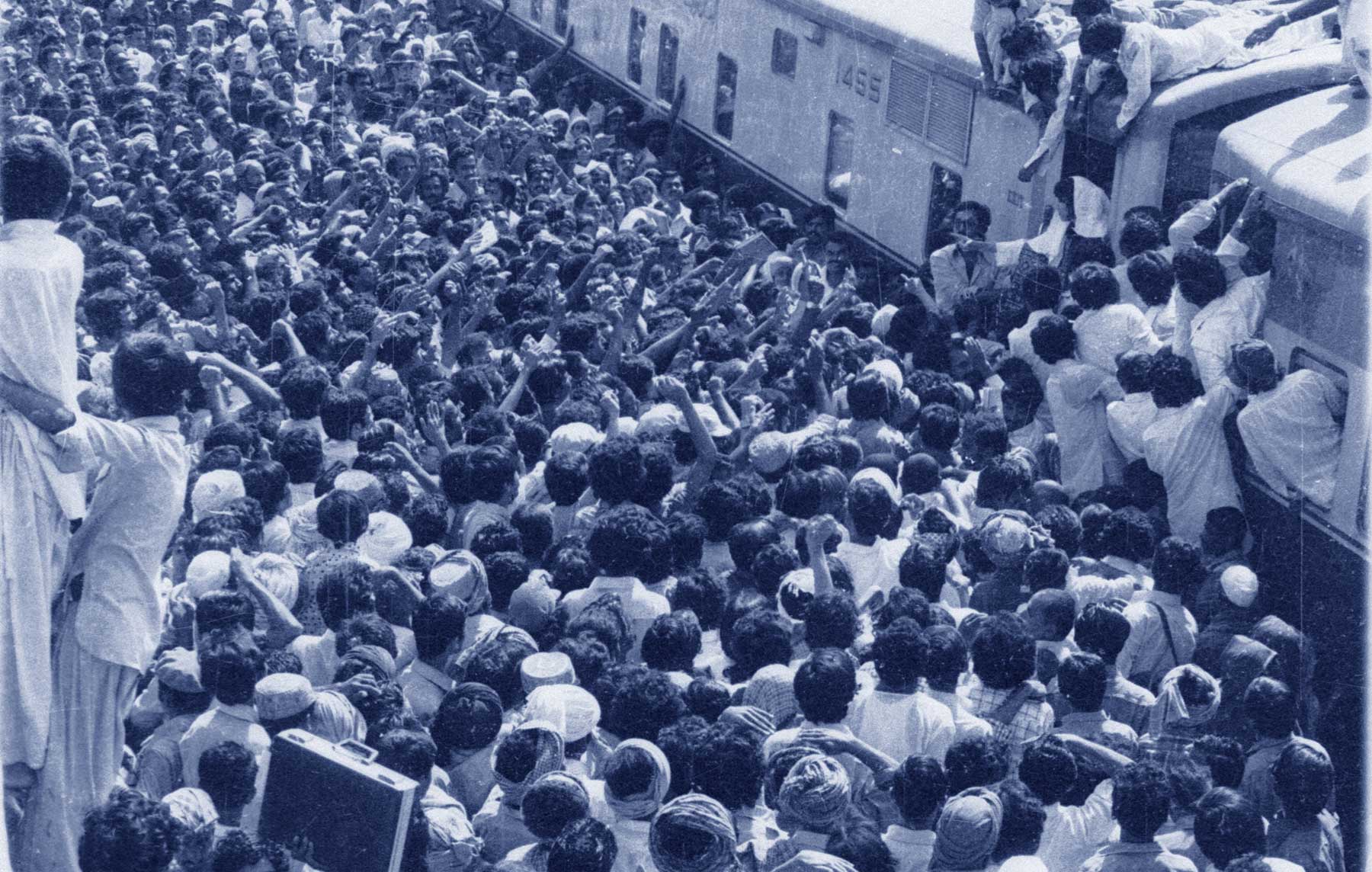
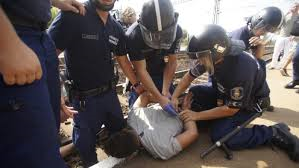
But a refugee-packed train apparently bound for the Austrian border came to a halt just west of Budapest, in a small town where dozens of police officers were waiting on the platform. They tried to force people off the train to take them to a migrant-processing center, threatening their chances to make it onward to Western Europe.

By day’s end, there was a standoff, with the packed train surrounded by police and the migrants refusing to budge. Some of the passengers received medical treatment on the platform.

Orban, Hungary’s nationalist leader who has spearheaded attempts to turn back the migrants, said Thursday that he had little choice but to seal his nation’s border with razor wire, soldiers and a high fence.

“We Hungarians are full of fear, people in Europe are full of fear, because we see that the European leaders, among them the prime ministers, are not able to control the situation,” he said in Brussels in a raw joint appearance with European Parliament President Martin Schulz. Orban and Schulz, a veteran politician from Germany, made no attempt to paper over their differences or their distaste for each other.

The Hungarian leader blamed Germany for the crisis, saying that its open-door policy toward Syrian asylum-seekers was propelling a wave of migrants to undertake dangerous journeys toward Europe’s heart. Germany expects 800,000 asylum-seekers this year, and it has said that it does not plan to turn away Syrians.

“The moral, human thing is to make clear: ‘Please don’t come. Why do you have to go from Turkey to Europe? Turkey is a safe country. Stay there. It’s risky to come,’ ” Orban said.

Hundreds of thousands of people fleeing war in Syria, Iraq and Afghanistan have overwhelmed Europe’s capacity to respond in recent months, opening stark divisions. Some leaders believe that the world’s largest economic bloc — a vast territory of 503 million residents — is more than capable of accommodating refugees. Others, including Hungary’s Orban, believe the continent’s population is in a far more delicate state.

The divisions could threaten some of the most basic tenets of the E.U., an alliance built on the ashes of World War II in a bid never again to allow such destruction. German Chancellor Angela Merkel said this week that a Europe with no internal borders — a key achievement of European unification — could be in question if no solution to the refugee crisis is found.

Schulz called Orban’s approach “wrong.”

He warned that the splits emerging during the refugee crisis could do lasting damage to the 28-nation alliance, which was founded on a spirit of consensus and burden-sharing.

“This is a crucial moment for the European Union,” Schulz said. “A deeper split of the union is a risk we cannot exclude.”

Orban’s fears are shared by many Eastern European nations, which have pushed hard against any attempt to require them to take in asylum-seekers. Slovakia has said it will accept only Christians. In Estonia, where fewer than 100 migrants have been resettled, police on Thursday were investigating a suspicious early-morning fire at a dormitory that was housing victims of Syria’s war.

[Britain takes in so few refugees from Syria they would fit on a subway train]

But the concerns also extend to Britain. There, fewer Syrians than would fit in a London subway train have been accepted this year. British media reported Thursday that Prime Minister David Cameron would soon announce plans to take in “thousands” more Syrian refugees, a striking turnaround for a leader who a day earlier had said that the answer to the crisis was not simply taking in “more and more” refugees.


Elsewhere in Europe, the refusals brought mounting anger from leaders who are more sympathetic to the growing crowds of asylum-seekers.

“For a Christian, it shouldn’t matter what race, religion and nationality the person in need represents,” European Council President Donald Tusk said Thursday, launching into Orban before the two met in Brussels. Tusk, a former prime minister of Poland, proposed resettling at least 100,000 refugees across Europe.

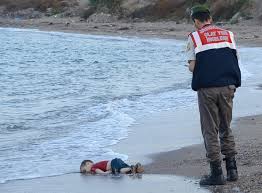
In France, President François Hollande said the death of the toddler is “a tragedy, but it’s also a call to the European conscience. Europe is made of values and principles.” Images of the child’s body lying facedown and partly in the water on a Turkish beach evoked consternation around the world.

Hollande said he had just reached an agreement with Germany on a proposal for mandatory quotas to more equitably spread refugees across the E.U. Some European countries “are not shouldering their moral obligations,” he said.

Merkel, meanwhile, said she understood that not every nation was prepared to take on as large a burden as her country was doing. But she said it was impossible for Germany, Sweden and Austria alone to continue taking in the vast majority of the incoming asylum-seekers.

“The Geneva Convention does not apply only to Germany but also to every state,” she said, referring to the international treaty that requires countries to take in refugees of war.

Orban has vowed to seal Hungary’s borders by Sept. 15, empowered by emergency measures expected to be approved by the country’s parliament in the coming days. The measures would give authorities broad powers to crack down on illegal migration.

Outside Budapest’s elegant stone-and-glass-fronted station Thursday evening, people living in tents and atop worn woolen blankets sprawled across a vast public plaza and into an adjacent subway concourse. Tourists carrying frame backpacks slipped into the station entrance past women cradling babies, men pacing anxiously and children arguing over the few available toys.

Refugees expressed a keen awareness that Hungary does not want them — and said the feeling is mutual.

“Hungary is a poor country. They can’t give us the life we’re looking for. They can’t even give us food or water,” said Yahya Lababidi, a tank-top-wearing 21-year-old law student from the northern Syrian province of Idlib. “We want to go to the rich countries.”

Lababidi said he had been traveling for a month, passing along “the usual route” — through Turkey, Greece, Macedonia and Serbia — with a plan ultimately to settle in the Netherlands. But he said that when he tried to enter the train station in Budapest five days earlier, police officers barred his path. Since then, he’s been sleeping on the cold stone of the plaza.

“I escaped from war,” he said. “I thought things would be better than this.”

Hungarian leaders “have done all they can to stir up popular sentiment against immigrants and refugees,” said Marta Pardavi, a co-chair of the Hungarian Helsinki Committee, a group that offers legal advice to asylum-seekers. “This has become a totally divided issue. Friendships break up over this.”

Critics of the European response said the continent’s 20th-century history of dictatorships and wars should instill in it more sympathy for others in need.

“We are facing a historical moment, perhaps one of the biggest the E.U. has had to face over the last couple of decades,” said Yves Pascouau, director of migration and mobility policies at the Brussels-based European Policy Center. “European citizens have fled dictatorships and wars. This is a part of our history. We’ve been able to be protected elsewhere in our countries.”

Witte reported from Budapest. Karla Adam in London contributed to this report.


Image of a Small, Still Syrian Boy Brings Migration Crisis Into Focus

Drowned Syrian boy (Credit: guardian.com)
Drowned Syrian boy
(Credit: guardian.com)

ISTANBUL, Sept 3 — The smugglers had promised Abdullah Kurdi a motorboat for the trip from Turkey to Greece, a step on the way to a new life in Canada. Instead, they showed up with a 15-foot rubber raft that flipped in high waves, dumping Mr. Kurdi, his wife and their two small sons into the sea.

Mr. Kurdi tried to keep the boys, Aylan and Ghalib, afloat, but one died as he pushed the other to his wife, Rehan, pleading, “Just keep his head above the water!”

Only Mr. Kurdi, 40, survived.

“Now I don’t want anything,” he said a day later, on Thursday, from Mugla, Turkey, after filling out forms at a morgue to claim the bodies of his family. “Even if you give me all the countries in the world, I don’t want them. What was precious is gone.”

It is an image of his youngest son, a lifeless child in a red shirt and dark shorts face down on a Turkish beach, that appears to have galvanized public attention to a crisis that has been building for years. Once again, it is not the sheer size of the catastrophe — millions upon millions forced by war and desperation to leave their homes — but a single tragedy that has clarified the moment. It was 3-year-old Aylan, his round cheek pressed to the sand as if he were sleeping, except for the waves lapping his face.

Rocketing across the world on social media, the photograph has forced Western nations to confront the consequence of a collective failure to help migrants fleeing the Middle East and Africa to Europe in search of hope, opportunity and safety. Aylan, perhaps more even than the anonymous, decomposing corpses found in the back of a truck in Austria that shocked Europe last week, has personalized the tragedy facing the 11 million Syrians displaced by more than four years of war.

The case of this young boy’s doomed journey has landed as a political bombshell across the Middle East and Europe, and even countries as far away as Canada, which has up to now not been a prominent player in the Syria crisis. Canadian officials were under intense pressure to explain why the Kurdi family was unable to get permission to immigrate legally, despite having relatives there who were willing to support and employ them. So far, the government has only cited incomplete documents, an explanation that has done little to quiet the outrage at home and abroad.

Advertisement

Continue reading the main story

Mr. Kurdi, a Syrian Kurdish barber, and his brother Mohammad wanted to immigrate under the sponsorship of their sister, Tima Kurdi, 43, who lives in a suburb of Vancouver, British Columbia. She had invited Mr. Kurdi to live in her basement with his family and work in her hair salon.

“They can work with me, doing hair, I can find them a job, and then when they are financially O.K., they can move out and be their own,” she said by phone on Thursday.

Mr. Kurdi, too, said his sister had told Canadian authorities that she would be “responsible for our expenses,” but that “they didn’t agree.”

In fact, Ms. Kurdi said, she had applied at first only for Mohammad’s family, teaming up with friends and relatives to make bank deposits to prove she could support the family.

Advertisement

Continue reading the main story

But in June, she said, Mohammad’s application was rejected for lack of a required document proving he had refugee status. But under Turkish refugee policies, such documents are nearly impossible for Syrians to come by. In any case, the experience persuaded the family that neither brother would ever get a Canadian visa.

That, Ms. Kurdi said, was when she offered to help her brothers finance the boat trip — something, she said through tears, “I really regret.”

I

Aunt of Drowned Syrian Boys Comments

Teema Kurdi, the aunt of two Syrian boys who drowned off the coast of Turkey, said that their mother told her she didn’t know how to swim before the family attempted to cross the Mediterranean.

Now, she said, “All what I really need is to stop the war. That’s all. I think the whole world has to step in and help those Syrian people. They are human beings.”

Aylan was named after a cousin, Ms. Kurdi’s son Alan, she said. She had never met Aylan or his brother Ghalib, 5, but saw and talked to them often on video chat. Aylan’s father grew up in Damascus, the Syrian capital, in the neighborhood of Rukineddine, but was originally from the Kurdish city of Kobani near the Turkish border. A year or so ago, he said in a telephone interview, he moved his family to Kobani because of increasing strains in Damascus. But he said it was not safe there either, with the Islamic State increasingly attacking the area.

The family eventually moved to Istanbul, but it was difficult for Mr. Kurdi to support himself, and he had to borrow money from his sister for rent.

Ms. Kurdi turned to her local member of Parliament, Fin Donnelly, who hand-delivered a letter appealing for help to Chris Alexander, the citizenship and immigration minister.

“We waited and waited, and we didn’t have any action,” he said

In Canada, a country that has long prided itself on openness to refugees but has shifted that policy under a conservative government, this amounts to a campaign issue; Mr. Alexander had promised to admit 10,000 refugees from Syria, just over 1,000 had arrived by late August, and opposition parties like Mr. Donnelly’s say more should be welcomed. On Thursday, Mr. Alexander rushed back from the campaign trail to Ottawa, the capital, to deal with the family’s case, declaring that it “broke hearts around the world.”

Mr. Kurdi said he tried several times to cross to Europe on his own. He almost drowned trying to cross the river at Edirne, in Turkey, he said, “and once from the borders with Bulgaria and I got caught and sent back.”

Then he paid 4,000 euros, about $4,450, for the sea crossing — paying extra supposedly to avoid using a rubber raft.

Mr. Kurdi said the family had life jackets that were lost in the accident, but a senior Turkish security official said they were unavailable.

“Instead of focusing on the real issues, people blame the father for not putting a life jacket on his children,” the official said, noting that Turkish patrols have seen countless similar tragedies pass unnoticed. “Well, I’ll tell you this: Life jackets in sizes that small simply aren’t available here.” Indeed, many refugees buy plastic beach toys for flotation.

Advertisement

Continue reading the main story

The voyage started in the middle of the night, around 3 a.m. in five-foot seas, he said. It is the season of the relentless Meltemi winds, when the waves can be 15 feet high.

Choking back emotion as he spoke, Mr. Kurdi described how he had flailed about while trying to find his children as his wife held on to the capsized boat.

“I started pushing them up to the surface so they could breathe,” he said. “I had to shift from one to another. I think we were in the water for three hours trying to survive.”

He watched helplessly as one exhausted child drowned, spitting up a white liquid, he said, then pushed the other toward the mother, “so he could at least keep his head up.”

Mr. Kurdi then apologized, saying he could no longer speak, and ended the conversation with one parting message.

“What I really want now is for the smuggling to stop, and to find a solution for those people who are paying the blood of their hearts just to leave,” he said.

“Yesterday I went to one of the smuggling points and told people trying to get smuggled at least not to take their kids on these boats. I told them my story, and some of them changed their minds.”

Karam Shoumali reported from Istanbul, and Anne Barnard from Beirut, Lebanon. Reporting was contributed by Ceylan Yeginsu from Istanbul; Ben Hubbard, Hwaida Saad and Maher Samaan from Beirut; and Ian Austen from Canada. Bernadette Murphy contributed research.


Taliban Present Gentler Face but Wield Iron Fist in Afghan District

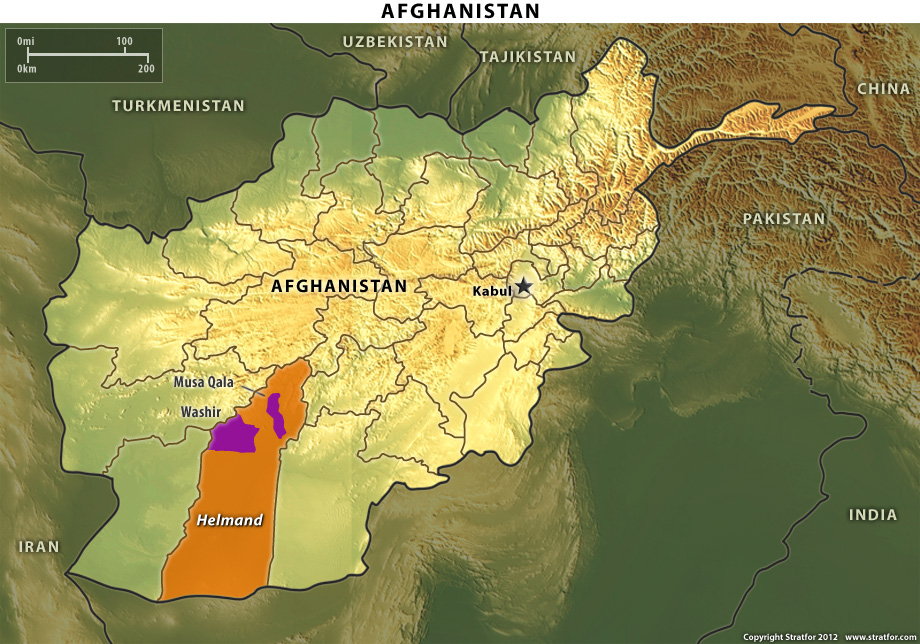
Baghran, Helmand (Credit: snipnews.com)
Baghran, Helmand
(Credit: snipnews.com)

LASHKAR GAH, Aug 14 — As they have captured more territory in Afghanistan this year, the Taliban have twinned their military offensive with a publicity push. Their pitch goes something like this: We’ve learned the lessons from our time in power, and we’re ready to moderate a bit.

At international conferences, delegates from the Taliban — infamous for outlawing girls’ schools during their rule from 1994 to 2001 — have made a point of being willing to meet and talk with female officials. Old hard-line stances against music and photography have been softening.

But for insight into how the Taliban might rule if they succeed in holding large stretches of Afghanistan, consider Baghran district, in the southern province of Helmand.

There, where the Taliban were scarcely ever out of power, the harsh old policies of the ’90s are still in full swing. Men are hauled into jail if they shave beards, and spot turban checks are still in place to expose any fancy haircuts. And there is still no freedom for women to travel or learn.

The Taliban in Baghran are not an insurgent force but the government, and a long-established one at that.

“In Baghran, you feel like you are in a mini-emirate of the Taliban,” said a 45-year-old shopkeeper, Esmatullah Baghrani, referring to the Taliban’s formal name, the Islamic Emirate of Afghanistan. “When I am out of Baghran, I feel like I am in a different world.”

There is no cellphone service in Baghran, reflecting the Taliban’s wishes. Instead, people communicate with the outside world through a handful of “public call offices” — phones in stores near the bazaar.

Through more than a dozen interviews with the men who answered these phone lines, as well as men standing nearby, a rare sketch of life in the Taliban’s most secure stronghold began to emerge. The New York Times also interviewed Baghran residents in person in Lashkar Gah, the provincial capital.

There is probably nowhere else in Afghanistan more completely under Taliban rule. Officially, the Afghan government acknowledges having lost only four out of roughly 400 districts to the Taliban. Of these, Baghran was the first to fall, about a decade ago.

Advertisement

Continue reading the main story

“You have to obey the rule of the Taliban, and you have to be a good man and not even think of bad things,” said Omar Khan, a shopkeeper. “You have to live the way Taliban want you to live: You have to wear the proper clothing, and a turban, and grow your beard, and offer your prayers in a mosque five times a day, avoid listening to music, and avoid unnecessary chats with people. You can’t meet friends at night for card games.”

But the Taliban’s rule has still proved attractive, or at least tolerable, to many rural Afghans who have endured decades of war. Residents of other parts of Helmand, who find themselves caught in the cross hairs of the war, have sought out Baghran’s relative security, migrating away from the front lines.

“People are suffering under constant war, but we don’t suffer those kinds of problems,” said Hasti Khan, a farmer in Baghran.

Advertisement

Continue reading the main story

Some things have changed. Public executions, a feature of the Taliban’s national rule, were halted in Baghran in 2007 after an American airstrike killed a large number of Taliban fighters and residents who had assembled for one, residents recalled.

But in most ways, the social restrictions that made the Taliban international pariahs during their reign have been resurrected in full in Baghran. Women leave home only with their husbands or male family members, and then only to visit a doctor or a few other authorized destinations. There are no girls’ schools, and education for boys is limited, too. The Taliban here converted schools to madrasas, which boys typically attend for perhaps three years before returning to family farms.

The Ministry for the Promotion of Virtue and the Prevention of Vice, once famous for pummeling women who went out and men who played music, is back on patrol in Baghran. Vice-prevention officers often carry scissors so that they can deal, on the spot, with haircuts deemed excessively vain.

Despite the rules, many in Baghran take a few risks, here and there, continuing to meet for card games. Radios are ubiquitous and tolerated for their news stations like BBC Pashto, Mashal radio and even Voice of America. “We are not supposed to listen to music, but sometimes when the Taliban are all inside we do listen to music,” one man in Baghran said.

But Baghran’s main mud-brick prison often has 100 and sometimes twice that many transgressors, like Nazir Ahmad, 19, who served three days for his curly bangs. “It’s a style I like,” he said in an interview in Lashkar Gah, where he had come to find work.

The Taliban, which have a robust propaganda arm and a news website featuring lengthy interviews with local commanders across Afghanistan, rarely talk about Baghran.

That may be in part because of its importance in the insurgency’s lucrative narcotics business. For years, it was home to an unusual concentration of heroin processing plants, so many, in fact, that they occasionally attracted Afghan military and counternarcotics raids. As the raids intensified, the Taliban ordered heroin production to move out of Baghran so as not to undermine security there, one local man explained.

Baghran has not been entirely untouched by the war. Western and Afghan troops have occasionally conducted forays into Baghran, initially in search of Mullah Muhammad Omar, the Taliban’s supreme leader, who Western military officials suspected might have sought refuge there after his government was toppled in late 2001. Mullah Omar died more than two years ago in a Pakistani hospital, the Afghan government recently announced.

The post-2001 Afghan government lost Baghran in a matter of three years. When a Taliban insurgency began to take shape, elders simply asked the 15 police officers in the province to quit and return home, recalled a tribal elder, Hajji Wali Mohammad, an uncle of one of those officers. With that, the Taliban became the dominant force.

Advertisement

Continue reading the main story

Advertisement

Continue reading the main story

“The government did not last long,” Omar Khan, a 35-year-old shopkeeper in Baghran, said. “People were getting used to democracy, and then the Taliban came again.”

Some Taliban officials, particularly those sent to international conferences, have grown savvier during their long exile, and they suggest that the movement has grown more moderate.

For example, the group no longer puts much effort into stamping out television or music recordings now that cellphones have become a fact of life across much of Afghanistan. Taliban-themed ringtones have become common. And the Taliban’s own propaganda wing, which provides battlefield videos and photographs of insurgent commanders and suicide bombers, makes a mockery of the old prohibition on photography and other depictions of the human form.

Where the Taliban remain an insurgency competing with the government for the people’s loyalties, the group’s social restrictions do in fact appear to have mellowed slightly, particularly in the country’s north.

“The Taliban have realized imposing Islamic laws by force will not make people admire us,” a Taliban commander named Fazlullah, who operates in Afghanistan’s far northwest, said in a recent phone interview. “It is our good governance and performance that will win people’s hearts and minds.”

Although the harsher ways have prevailed in Baghran, residents’ complaints often had less to do with the Taliban’s treatment of them than the deprivations that have taken hold: the lack of good doctors and the need to travel to other districts to buy staples, like cooking oil. And some said they were saddened by the lack of opportunities for their children, many of whom tend to work in the opium fields alongside their fathers.

Many residents who were interviewed said they were mostly satisfied with the Taliban’s rule. Some agree with the Taliban’s principles, others have come to accept them.

“I think I like the way of the Taliban,” Mr. Baghrani, the shopkeeper, said. “You live simply, the way you have been created.”

Not everyone, however, has been able to live simply. Ethnic Hazaras had been allowed relatively safe passage through Baghran, on several important market roads, in recent years. But over a month ago that suddenly changed: Hazara elders and other residents said that the Taliban’s district commander, Mullah Ghulam Hazrat Shahidmal, warned that Hazaras would no longer be allowed through, in what was seen as a troubling step back toward the targeting of minorities by the insurgents.

The only link remaining between the Kabul government and Baghran is symbolic: The government still assigns district officials to Baghran. They all serve in exile. “I have never been to Baghran,” said the district governor of Baghran, Salim Rodi, who lives in Lashkar Gah. “This job is a joke.”

His main responsibility is to occasionally remind others that the government lost Baghran long ago. He did so last year, when a new security adviser for Helmand Province complained that Mr. Rodi was not sending regular updates about the functioning of local government, like other district governors.

“I told this man: ‘You are an amazing security adviser. You don’t even know which districts are under the control of the Taliban.’ ”

Joseph Goldstein reported from Lashkar Gah, and Taimoor Shah from Kandahar,


Al Qaeda Chief Purportedly Pledges Loyalty to Mullah Mansoor

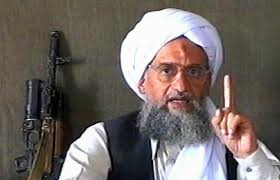
Al Qaeda chief Ayman Zawahiri (Credit: huffingtonpost.com)
Al Qaeda chief Ayman Zawahiri
(Credit: huffingtonpost.com)

ISLAMABAD, Aug 13 —A recording posted online Thursday appears to show al Qaeda chief Ayman al Zawahiri vowing loyalty to the new leader of the Afghan Taliban, as the Kabul government demanded that neighboring Pakistan crack down on Taliban operations there.

Mullah Akhtar Mansour took the reins of the militant Taliban organization amid a swirl of controversy late last month when it emerged that the movement’s founder, Mullah Mohammad Omar, had been dead for more than two years.

“We pledge allegiance to you on establishing the Shariah [Islamic law] until it rules the lands of the Muslim—ruling and not ruled, leading and not led,” said the recording, in a translation circulated by SITE Intelligence Group, which monitors global jihadist activity.

SITE said the recording was distributed on Twitter and that the voice sounds like Mr. al Zawahiri’s. This would be his first audio release in nearly a year, SITE said, and would end his longest public silence in more than a decade

Mullah Mansour, the Afghan Taliban’s former deputy, has enjoyed the support of most of the movement, but has faced opposition from rivals including his predecessor’s family.

Al Qaeda’s allegiance to the Taliban wouldn’t have much impact on the battlefield in Afghanistan, home to no more than a few hundred al Qaeda fighters, an Afghan intelligence official said. But he added that it would lend Mullah Mansour greater credibility as he battles for the support of his rivals.

It also could heighten concerns in the Kabul government that the Taliban will pursue war instead of continuing tentative Pakistan-brokered peace talks. The cutting of ties with al Qaeda is also a condition of U.S. support for peace talks between the Afghan government and the Taliban.

In the weeks since Mullah Mansour ascended to the Afghan Taliban’s top post, a period of relative calm in the restive Afghan capital has been shattered by car bombings, which the Afghan government blamed on Pakistan-based Taliban operatives.

An Afghan delegation led by Foreign Minister Salahuddin Rabbani was in Islamabad on Thursday for talks with the Pakistani government. During the negotiations, they veered from recent requests that Pakistan use its influence to bring the Taliban to the negotiating table, demanding instead that Islamabad take action against Taliban based in Pakistan, Afghan officials said.

“The delegation demands Pakistan crack down on the Taliban, deny them sanctuaries, shut their training camps, and stop supporting and financing them,” an Afghan official said.

But Pakistan has maintained that peace talks with the Taliban are the most effective way to stabilize Afghanistan, which has sunk further into violence since the withdrawal of U.S. troops began last year. Pakistan’s foreign policy chief, Sartaj Aziz, said before Thursday’s meeting that the talks were “the best option.”

The Afghan and U.S. governments have long pressed Islamabad to prevent the Taliban from operating from Pakistan, with little success. Pakistani officials insist that they don’t support the Taliban insurgency in Afghanistan, but have said that their priorities are combating the homegrown militants staging terror attacks in the country.


Afghan War’s Convenient Myth: A Living Mullah Omar

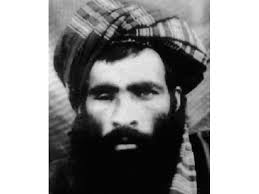
Afghan Taliban chief Mullah Omar
Afghan Taliban chief
Mullah Omar

KABUL, Afghanistan — The Taliban, it turns out, had been sending the world messages from a dead man. And the world kept answering him.

It continued until last month, when the Taliban issued a statement in the name of their supreme leader, Mullah Muhammad Omar, intended to “elucidate some issues about the previous and present ongoing jihadi struggle.” In it, Mullah Omar seemed open to the idea of peace negotiations, raising hopes in Kabul.

The reclusive Mullah Omar, of course, had not been seen in public in nearly 14 years, and some of his commanders, having last heard from him around 2008 or 2009, had been demanding proof of life.

Mullah Omar, according to the Afghan spy service and some Taliban officials, had already been dead for more than two years — as many Afghan officials strongly suspected.

Still, President Ashraf Ghani, who had gone all out for months to open talks with the Taliban, said before news cameras that he was encouraged by Mullah Omar’s latest words, characterizing him as having said that “negotiation is the solution.”

For every major player in the Afghan war — the Afghan government, the Taliban, the United States and Pakistan — Mullah Omar and the unity his name imposed on the Afghan insurgency became convenient in some way, either politically or militarily.

How the insurgent leader’s death remained a secret for so long is a striking phenomenon that illuminates some of the murkier dynamics of the war in Afghanistan.

For the Taliban, news of Mullah Omar’s death risked fracturing an insurgency that has not just held together, but grown over a decade. No successor was likely to be as unifying in life as Mullah Omar proved to be even in death.

His name, and his rank — emir of the faithful — became a kind of talisman against defection to competing groups. When some Taliban-allied commanders finally began jumping ship this past year, some to pledge loyalty to the Islamic State, they cited growing evidence of Mullah Omar’s death as the reason.

Mullah Omar’s deputies drew much of their authority from their association, real or perceived, with the cleric, who the Afghan spy service said died in a Pakistani hospital in April 2013.

So until last month, the Taliban continued to issue in Mullah Omar’s name intermittent statements, marking holidays, bolstering morale and excoriating the government in Kabul and foreign invaders.

The more complicated part is that Afghan, American and European officials largely went along, even though many privately acknowledged that Mullah Omar, alive or dead, was completely emeritus.

Back in January, after the official end of the NATO combat mission in Afghanistan, the Pentagon hinted that Mullah Omar possibly remained a dangerous enemy. “To the degree he is still targeting our Afghan allies and U.S. troops, yes, he remains a threat,” the Pentagon’s press secretary said.

Diplomats made talking about Mullah Omar a kind of parlor game, compulsively discussing the latest official statements.

“If you had never gotten confirmation that Mullah Omar had died, this would have gone on until he was 110,” said the European Union’s representative to Afghanistan, Franz-Michael Mellbin. “When they would say ‘Mullah Omar issued this statement,’ I would say, ‘No, he didn’t; he’s not around.’ That’s been my line.”

Some Afghans wondered why the Taliban’s enemies seemed willing to keep breathing life into Mullah Omar.

“America especially should have undermined the notion that Mullah Omar was alive,” said Hajji Atta Mohammad Ahmadi, the head of Kandahar’s peace council. He said this would have helped uncover who actually led the Taliban, important information to “conduct peace talks from the standpoint of reliable knowledge.”

Yet for officials seeking peace negotiations, which are central to the long-term American hopes for Afghanistan, it was preferable that the insurgency possessed a clear hierarchy that could choose negotiators and decide terms. With Mullah Omar’s myth intact, the Taliban possessed that.

Moreover, any Taliban statements that sounded remotely like a peace overture were usually said to have Mullah Omar’s imprimatur. There was the time Mullah Omar was said to have sanctioned the opening of a political office in Qatar. And this year, Mullah Omar’s name was invoked during a nascent peace process, which stalled when his death was acknowledged last week.

“It doesn’t make sense to undermine a leader who sounds as though he is coming around to the idea of peace,” a senior analyst at the International Crisis Group in Kabul, Graeme Smith, said, offering an explanation for why diplomats might have gone along with treating Mullah Omar as alive and relevant.

Pakistani officials have also invoked Mullah Omar’s name. As Pakistani officials told Afghanistan in recent months that they would try to get a Taliban delegation to meet with the Afghan government, the Pakistanis, perhaps to lower expectations, added a caveat: It depended on Mullah Omar’s blessing, two Afghan officials familiar with the discussions said, speaking on the condition of anonymity to discuss diplomacy.

Pakistani officials deny that Mullah Omar ever lived in their country. But American and some, though not all, Afghan officials claim he had been living there for years. If it is true that Mullah Omar died in a Karachi-area hospital two years ago, it seems unlikely that Pakistani security officials would not have known he was dead even when they were evoking his name in the peace process.

Again, the myth of an engaged Mullah Omar proved handy. It bolstered Pakistan’s public argument that the Afghan Taliban were autonomous, even while the Pakistani security forces kept themselves at the center of the peace talks by pressuring senior Taliban members to take part.

Some Western officials suggest that Mullah Omar’s myth became somewhat comfortable for a few reasons. No one knew what might come after. And over the course of a long war it helped obscure a discomfiting truth: The identities and motives of the insurgents, and their various factions, often remained opaque.

At times, the idea of Mullah Omar helped keep “hidden a simple truth that we don’t really know what’s going on or who we’re fighting on any given day, and who their backers are,” a Western official in Kabul said, speaking on the condition of anonymity to avoid angering colleagues.

Underlying it all, too, was the difficulty of getting reliable intelligence on a man who, even when known to be alive, had cloaked himself in a calculated unapproachability.

“It was not out of convenience so much as the fact that while there wasn’t hard evidence he was alive, there certainly wasn’t any he was dead,” said James F. Dobbins, who was the State Department’s special representative to Afghanistan and Pakistan in 2013 and 2014. “We wondered, but in the absence of any evidence that he passed away, we simply operated under the assumption that he might still be living.”

Mr. Dobbins was not surprised at how little was ever learned about Mullah Omar’s whereabouts.

“Look how long it took us to find Bin Laden, and we were looking a lot harder for him,” said Mr. Dobbins, who is now at the RAND Corporation. Asked why the search for Mullah Omar had not taken on greater urgency, Mr. Dobbins replied, “I guess the answer is: What difference would it have made?”

He added, “Whether he was alive or not, the Taliban was operating in a coherent, unified fashion in his name.”

All that raises the question: If the United States government had learned of Mullah Omar’s death, would it have acknowledged it?

“We would have had to decide whether to announce it or not,” Mr. Dobbins said. “We never faced that.”

Taimoor Shah contributed reporting from Kandahar, Afghanistan.

Afghan Talks Postponed Amid Fall out of Taliban Leader’s Death

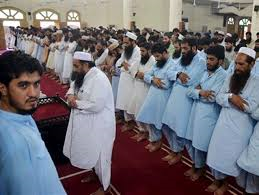
Prayers for Mullah Omar (Credit: commercialappeal.com)
Prayers for Mullah Omar
(Credit: commercialappeal.com)
KABUL, July 30 — Taliban officials Thursday confirmed the death of the group’s founder and picked his former deputy as successor even as they put the brakes on peace talks with Afghan leaders.

A series of moves — which included strengthening ties with a militant faction that has al-Qaeda links — pointed to possible rifts within the Taliban and a potential major blow to hopes for negotiating an end Afghanistan’s 14-year conflict.

Yet the Taliban also offered some rare hints at outreach and self-reflection by apologizing for “mistakes” under the rule of the late Mohammad Omar, who Afghan officials said died more than two years ago.

A second round of peace talks between the Taliban and the government in Kabul had been scheduled to begin Friday in Pakistan, which hosted the opening session this month.

A statement from Pakistan’s foreign minister said the Taliban had requested the postponement amid “uncertainty” following confirmation of the death of Omar.

A spokesman for the Afghan government says it is investigating reports that Mullah Omar, the reclusive leader of the Afghan Taliban, may have died in 2013. (Reuters)

Taliban officials did not publicly announce their intention to snub the planned talks, but envoys at their political office in Qatar — the base for one major faction of the group — said earlier that they knew of no upcoming talks.

Seeking an end to the 14-year insurgency by Taliban forces is a major priority for Afghan President Ashraf Ghani. The Taliban leadership shifts put in motion by the formal announcement of Omar’s death, however, could raise new complications for the peace bid.

It also could deepen divisions between Taliban factions supporting the peace initiative and those seeking to press ahead with the insurgency, which has included stepped-up attacks in Kabul and gains by Taliban fighters in Afghanistan’s north.

In an e-mail to journalists, Taliban spokesman Zabiullah Mujahid said Omar had “abandoned this mortal world” as the result of an illness. It gave no further details, and the circumstances and location of Omar’s death remain murky.

On Wednesday, Afghan officials said Omar died in April 2013 in a hospital in the southern Pakistani city Karachi, but they left open speculation that the death carried what they called a “suspicious nature.”

It remains unclear how widely the knowledge of Omar’s death had spread among the Taliban’s ranks since April 2013. But the acknowledgment brought a quick response from the Taliban to proclaim its new leaders.

In comments to the Associated Press, Taliban officials said the group’s supreme council had met in Pakistan and picked Akhtar Mohammad Mansour, Omar’s longtime senior aide, to replace him. Mansour was widely considered a top candidate for the post, but his selection is likely to be controversial.

Although the Taliban said Omar had died of an illness, a rival militant faction accused Mansour and another aide of killing him. Also, Mansour is said to be close to Pakistan’s government. Leaders of several other factions — including those based in Qatar — distrust Pakistan’s powerful intelligence services.

Analysts and political leaders in Kabul said the tumult erupting within the Taliban could potentially empower hard-liners and derail the Afghanistan’s hopes for peace.

“The Taliban are much bigger troublemakers now than they were two years ago. They are more violent, more organized and causing more harm,” said Shukria Barakzai, a member of parliament who met with Taliban officials in Oslo several months ago as part of preparations for the talks.

Omar’s death, she said, “could encourage them even more in this direction. The peace process will take much longer now.”

In another leadership shift, the Taliban gave the No. 2 post to the head of the Haqqani network, a militant group that has connections to al-Qaeda. Sirajuddin Haqqani’s group is thought to be linked to a series of attacks, including an assault on the U.S. Embassy in Kabul in 2011.

Haqqani-linked fighters captured Army Sgt. Bowe Bergdahl in June 2009 when he disappeared from his base in eastern Afghanistan. Bergdahl was freed last year in a swap for a group of Guantanamo detainees.

“The Taliban are fighting very hard now, and the situation is getting more complicated than ever,” said Barakzai. “Only a powerful international presence can keep the talks going and keep the Taliban from veering in a very dangerous direction.”

The Taliban statement Thursday — issued in the name of Omar’s son and his brother, Abdul Manan — also apologized for “any mistakes” made by Omar during his “rule of Afghanistan.”

Omar was toppled by U.S. and allied forces after the Sept. 11, 2001, terrorists attacks on the United States for not surrendering al-Qaeda leader Osama bin Laden. During its six years in control, the Taliban imposed strict Islamic rule that included banning education for girls, and carrying out acts of cultural purging such as the destruction of ancient Buddha statues.

Murphy reported from Washington. Shaiq Hussain in Islamabad contributed to this report.

Mullah Omar’s Dramatic Emergence; An Impetus to Talks

Afghan Taliban chief Mullah Omar
Afghan Taliban chief
Mullah Omar

Undoubtedly the incumbent government in Kabul takes security a top most precedence. It’s not surprising to learn –the onset of regular talks between Afghan government and Taliban leaders are heading towards some resilience if not concrete solution. It worth noticing with succession of talks the degree of uncertainty associated with it went colossal, notwithstanding its credibility diminished. It’s widely considered Taliban’s’ central leadership might not be in the line with the aforesaid developments. Hence, the talks were deemed as individual efforts –faraway from bearing the expected fruits, as the central leadership had not broken the silence to talk on the subject.

The emergence of Taliban’s de facto leader, Mullah Omar first ever surprising message let the dust of ambiguity settle. This has been the subject of greater interests reflecting Taliban’s twin unilateral and uniform stance evident. In the latest development, talks between Taliban representatives and members of Afghan society, focusing on women’s rights in Afghanistan has taken place in Norwegian capital, Oslo. Reportedly, Taliban has demonstrated willingness to let women partake in socio-political endeavors and chase their academic goals unhampered. Will Taliban surrender to equal rights for women?

Earlier, in the latest round of talks Taliban while responding to demands of ceasefire Taliban conditioned it to formation of United National Government. It is an evident shift as earlier it was conditioned to complete withdrawal of international forces from Afghanistan. Hitherto, the details of this government is uncertain –however following the political temperament of Taliban, the demand of reservation of lion’s share in the current democratic setup, may be a credible guess.

Mullah Omar also said they formally recognized the legitimate rights of all afghan including minorities as their religious duty. The timing of this message is centrally important –where Mullah Omar seems to be quite optimistic about the forthcomings changes that are likely to materialize. “No one should fear about what will happen if the Islamic emirate comes to power. I assure you that the upcoming changes will in no way resemble the situation following the collapse of the communist regime when everything turned upside down” said Taliban’s Supreme leader. It is found the de facto leader giving assurances as if they have made their way to greater share in the altered forthcoming setup. The degree of confidence demonstrates Taliban will join the government and the peace talks crystallize given their demands of giant share are okayed.

Omar’s statement comes days after Taliban representatives and Afghan officials held first direct talks in Pakistan and agreed to meet again after the fasting month. Mullah Omar confirms Taliban’s political office in Doha for tackling political affairs and was entrusted with the responsibility of monitoring and conducting all political activities. It depicts the said office established years ago contained Taliban representatives set free from Guantanamo bay and Bagram prison for political purpose. It was following this development that the US unbranded Taliban as a terrorist outfit separating it from Al Qaeda. The distinction carved underlines; the US’s deep rooted global interests are endangered by later than former. Broadly speaking it seems to be a sub plan of another master plan where Taliban are given space to join back the political domain and disband militancy. It is this plot that is seemingly crystallizing imminently.

Mullah Omar in his statements confirms the political talks alongside the jihad a legitimate Islamic discourse. He said, “Concurrently with armed Jihad, political endeavors and peaceful pathway is a legitimate Islamic principle and an integral part of Prophetic politics.” He said the objective behind their political endeavors as well as contacts and interactions with countries of the world and Afghans was to bring an end to the occupation and to establish an independent Islamic system in Afghanistan. This is not a genuine claim retracing the footprints of history we hold Taliban a foreign element the sole factor behind foreign occupation –whose oust is demanded at present. This is nothing more than a political statement to drive them to political privileges in the incumbent government in Kabul.

The masses find it hard to unlearn the grave human right violation and women right suppression at the hand of Taliban. The history bears Taliban apolitical say prior to its aristocratic regime and has hardly used legal course to get their political dreams come true.  Even hitherto, Taliban resorted to momentous violence when peace talks are underway. It’s whether a shift or diplomacy Taliban leader calling in for oversized confidence in the ongoing political process. He said, “All Mujahidin and countrymen should be confident that in this process, I will unwaveringly defend our legal rights and viewpoint everywhere.” Taliban should be grateful of democratic setup in practice in Afghanistan that even gives Taliban an opportunity to partake in political maters but it also demands they must be tried for some if not all mass massacres executed across the length of Afghanistan.

Conciliating with political stance of Taliban that make further peace talks, Jihad renders equally unacceptable and illegitimate. Who are they, Taliban have had waged jihad with? They are none expect the innocent civilian who due to bear the brunt of butchery. This tale is confirmed by credible report that lists over 200,000 people killed in war against terror.  Who should be held accountable for these mass killings? The report alleges them for most of casualties. We are peace seekers. We negotiate peace, even with the assassins of humanity, peace and tranquility. This very stance is stressed by both head of government and political leadership of Afghanistan with variant degree of assertion. Awfully peace is talked to those who have killed over hundred thousands of innocents and physically impaired even a multiplied number since the beginning of war launched against terror. Its appreciable Mr. Omar recognizes the legitimate rights of all Afghans including minorities a religious duty –nonetheless prior to asking forgiveness for the past atrocities and submitting to free trial the moral responsibility does not end –Taliban and its politics might not find acceptance.

In spite of differences, let’s put our finger cross for the success and fruitful finalization of negotiations. But, there are some hard born queries to be sought out prior to making any deal. Should Taliban be given amnesty seeing them executed mass massacre of innocent people? Can Taliban get them adjusted with democracy, who are born and raised in dictatorial setup?

These queries might meet their fates as the time advance. After all, the dramatic emergence of Mullah Omar proves to be an impetus for the ambiguous peace talks.

Vulnerable NGO Sector

THERE is a point at which legitimate national security concerns tip over into paranoia, xenophobia and insularity. The Pakistani state, including the civilian government, appears to be dangerously close to that point.

Interior Minister Nisar Ali Khan’s ongoing war on INGOs and local NGOs with external funding and links increasingly appears to be about some misguided sense of nationalism as opposed to anything to do with genuine security. Thousands — thousands — of foreigners have over the years come to Pakistan in the guise of NGO workers to undermine the national interest and harm the country’s security, the interior minister told the Senate on Thursday.

That is preposterous. The interior minister’s aggressive rhetoric has deliberately and very provocatively equated virtually anyone in the NGO sector, though especially those linked to the West, with a threat to this country.

The NGO community may well be wondering if Chaudhry Nisar’s rhetoric has crossed the line into incitement — after all, NGOs often operate in insecure areas at great personal threat to their employees from all manner of violent elements in society. Should the interior minister not feel a sense of responsibility towards the many good, decent, hardworking and honourable men and women who have dedicated their professional lives to improving the lot of Pakistan’s most vulnerable citizens?

The problem though goes far beyond the interior minister and his crusade. A narrow, security-centric worldview was once upon a time something that mostly existed in the security establishment. Over the years, however, politicians have increasingly begun to mimic their military counterparts in terms of viewing the Western world with suspicion. The public at large too appears to have increasingly conspiratorial views about an international plot, devised by the West of course, to undermine the security and stability of Pakistan. Anyone who hails from a Western country is viewed as a potential enemy out to destabilise the state.

Contrast that with the regional experience — whether in South Asia or the Gulf. Foreigners are welcomed, indeed eagerly recruited, for their productivity and skill sets. Those countries have security concerns of their own, but they aren’t allowed to overwhelm all other considerations.

Why is Pakistan so bent on being the exception? The political leadership could have tried to shape public opinion in a responsible way. Instead, it appears to be content with pandering to fear and paranoia — and maligning a sector that fills many of the gaps left by the state.

Published in Dawn, July 12th, 2015