After Rancor, Afghans Agree to Share Power

KABUL, Sept 21 — Their campaign workers traded blows over ballot boxes during an election widely seen as fraudulent. Some of the warlords backing them have muttered about starting a parallel government, a potential recipe for civil war in Afghanistan. And they’ve just come out of a vote so discredited that some officials don’t want the final tallies announced.

Now Ashraf Ghani, Afghanistan’s new president-elect, and his opponent, Abdullah Abdullah, have joined together in a national unity government in which they will share power.

After eight months of enmity over the protracted presidential election, with two rounds of voting, an international audit and power-sharing negotiations finally behind them, they will have to confront the challenges of jointly governing a country that in many ways is far worse off than it was before the campaign began last February.

The Taliban have had one of their most successful fighting seasons since the beginning of the war, and the security forces are reeling from heavy casualties, a high desertion rate and poor morale. The Afghan economy is battered by election uncertainty and rising unemployment, and in desperate need of emergency financing from the United States and other donors.

But both Mr. Ghani and Mr. Abdullah are expected to bring a welcome change from the confrontational relationship between the incumbent, President Hamid Karzai, and his American allies. Their relationship with the Americans will be one of the points of concord in what could well turn into a discordant and possibly unstable government.

In an interview with The New York Times last month, Mr. Ghani cited a parable to describe the problem confronting them. “Two people are riding in a boat and one of them took a chisel and started making a hole in the bottom and the other one said, ‘What are you doing? You’re going to drown us.’ And the other said, ‘I’m making the hole in my part of the boat.’ ”

“That captures it,” he said. “There are not two boats.”

The agreement forming the new government, brokered by Secretary of State John Kerry, who led an intense diplomatic effort over the past month, makes Mr. Abdullah or his nominee the chief executive of the government, with the sort of powers a prime minister normally has. While reporting to the president, the chief executive will handle the daily running of the government. At the same time, Mr. Ghani keeps all the powers granted to the president by the Afghan Constitution.

Already, supporters for each side have debated whether Mr. Ghani will have more power, or whether Mr. Abdullah will be an equal partner.

That does not bode well. Neither did the brief ceremony Sunday afternoon during which the two men signed the power-sharing agreement in front of President Karzai and their top supporters.

They hugged one another stiffly afterward, to decidedly tepid applause, and the entire event lasted less than a quarter-hour. They failed to show up for a planned joint news conference on Sunday, sending spokesmen instead.

While Mr. Ghani and Mr. Abdullah have known one another for many years, having served together in various positions in Afghan governments under Mr. Karzai, they have long had relations widely described as strained.

“They have created a fabricated national unity government, and I don’t think such a government can last,” said Wadir Safi, a political analyst at Kabul University.

At the same time, a national unity government is not a completely alien idea here. Mr. Karzai adroitly brought leaders from diverse ethnic and political groups into his government, and the security ministries especially — defense, interior and intelligence — were usually headed by northern Tajiks rather than Mr. Karzai’s fellow Pashtuns.

The two new leaders have plenty of common ground as well. Both are generally pro-American in their views; Mr. Ghani lived and worked there for many years, and Mr. Abdullah was a frequent visitor, and a close ally when the United States invaded Afghanistan alongside his Northern Alliance.

They both say they plan to sign the bilateral security agreement with the United States the moment they take office. Delayed a year because Mr. Karzai refused to sign it, the agreement is necessary if American troops are to remain in Afghanistan after the end of the current combat mission this year.

With 30,000 Americans and 17,000 other coalition troops still here, planning a sudden withdrawal by the end of the year would have been a challenge, but neither leader wants to renegotiate the agreement. Only a handful of Afghan military and police units are rated as completely self-sufficient without coalition support, which would potentially make a total pullout a disaster that neither leader wants.

There are strong indications, too, that the Taliban have taken advantage of the power vacuum caused by the long election imbroglio to step up their campaign, carrying out 700 ground offensives in the first six months of the current Afghan year, which began March 21, and killing 1,368 policemen and 800 soldiers, more than in any similar period.

Both Mr. Ghani and Mr. Abdullah have similar views on fighting the Taliban, agreeing that the country needs the sort of wartime commander in chief it has not had under Mr. Karzai, who has long seemed as if he simply wanted to wish the war away.

American diplomats who worked closely with both men in recent months, setting up and attending many meetings between the two, say their understanding of one another has grown greatly, and differences have increasingly been greater among some of their harder-line staff members than with each other.

A European official and a former Afghan official said that powerful backers of each candidate appeared to be making no moves to stand down the militias they control, preferring to see what happens in the coming months before sending home the gunmen they had raised over the summer.

“We’ve seen no moves in the north or outside Kabul or in eastern areas where these illegal armies are concentrated,” said the European official, who spoke on condition of anonymity because he did not want to further inflame tensions in Afghanistan.

“There are going to be lots of centers of power in the government. Who will dominate? Abdullah’s people are worried that he’s going to be relegated to being nothing more than a senior adviser, and they’ll all be shoved aside by Ghani’s supporters, who want to be able to protect their claims on power and businesses,” the European official said.

In addition to wartime concerns, their government will have to tackle an economy in deep crisis. The election impasse chased away investment, slowed economic activity and worsened an already growing unemployment problem as the military has been greatly reducing its presence.

By midyear, the Ministry of Finance was reporting net income of less than zero, as the cost of collecting taxes and customs duties exceeded the revenue raised. Afghanistan seemed unlikely to meet even its projected revenue goal of $2 billion this year, which already was $5 billion short of its needs, according to American officials. This month, teachers and other public workers were facing a payless payday, while the government asked donors for $537 million in emergency funding so it could meet its payrolls.

Less quantifiable would be the damage to the reputations of Afghanistan and its supporters in creating a viable democracy — although that, too, could have a price, since donor countries have made a free and fair election and a democratic, peaceful transfer of power the basis for continued aid. In Tokyo last year, for instance, donor nations made satisfactory elections a precondition for $16 billion in development assistance.

Despite as much as a half-billion dollars in international support for the elections and the audit (even the lowest estimates exceed $200 million), in the end the two candidates cut a political deal before the vote totals were even announced.

At the last minute, Mr. Abdullah had threatened to boycott the deal altogether unless the Independent Election Commission did not release the vote totals, and that is what happened Sunday. The commission merely announced that Mr. Ghani was the winner, without citing any numbers.

The European Union’s observer mission, which had more than 410 people here, called the United Nations-supervised audit “unsatisfactory” and expressed “regrets that no precise results figures have been published.”

“Many people risked their lives to vote, some lost their lives and this is a very bad precedent,” said Nader Nadery, the head of the Free and Fair Election Foundation of Afghanistan, a respected Afghan monitoring group. “To persuade people to come back and vote again will be very hard.”

Mr. Nadery, whose organization monitored the vote, said it had estimated that the final total would be about 54 percent to 45 percent in favor of Mr. Ghani, even after fraudulent votes were discounted. He said there was clearly large-scale fraud on both sides.

American officials were eager to portray Sunday’s outcome as an important milestone, and proof that the country could weather its first change of power peacefully and democratically.

It was emblematic of the confused ending to the election ordeal that no one was even sure when President-elect Ghani would be inaugurated. Under the deal, he is obliged to appoint Mr. Abdullah as chief executive at that inauguration, so they will both be in the same boat immediately.

Matthew Rosenberg contributed reporting from Washington.
The England That Is Forever Pakistan

London, Sept 15 — A man recently came to visit the member of Parliament for Rotherham, Yorkshire, and he had a question. Now in his late 50s, he had arrived from Pakistan three decades earlier. After a lifetime of hard work, he could not understand why his boys did not display the same Muslim values he had, why they did not show respect or want to work as hard as he did.

“I tried really hard to bring them up right,” the man told the M.P., “and I don’t know what has gone wrong.”

What has gone wrong in Rotherham, and what is wrong with its Pakistani community, are questions much asked in recent weeks: How could this small, run-down town in northern England have been the center of sexual abuse of children on such an epic and horrifying scale?

According to the official report published in August, there were an estimated 1,400 victims. And they were, in the main, poor and vulnerable white girls, while the great majority of perpetrators were men, mainly young men, from the town’s Pakistani community. Shaun Wright, the police commissioner who was responsible for children’s services in Rotherham, appeared before Parliament after his refusal to resign over the scandal. The scandal has cost both the chief executive and the leader of the council their jobs, and four Labour Party town councilors have been suspended.

A popular explanation for what Home Secretary Theresa May has described as “a complete dereliction of duty” by Rotherham’s public officials is that the Labour-controlled council was, for reasons of political expediency and ideology, unwilling to confront the fact that the abusers were of Pakistani heritage. Proper investigation, it is said, was obstructed by political correctness — or, in the words of a former local M.P., a culture of “not wanting to rock the multicultural boat.”

This, however, is only a partial explanation, and a partisan one. It fails to account for how a community once lionized as “more British than the British” — pious, unassuming and striving — is now condemned for harboring child abusers in its midst.

Pakistanis first came in significant numbers to Rotherham in the late 1950s and early ’60s, in the wave of immigration that brought men from the Indian subcontinent to Britain, largely to do work that the indigenous white working class no longer wanted. My father was part of this first wave. He worked on the production line of the Vauxhall car factory in Luton, an unlovely town north of London. In Rotherham, many Pakistani men ended up doing dirty, dusty work in the steel foundry.

The new immigrants were from rural villages, typically in Kashmir, the northern province bordering India; they were socially conservative and hard-working. When I was growing up in the ’80s, the stereotype of Pakistanis was that we were industrious and docile.

The Pakistani community in Rotherham, and elsewhere in Britain, has not followed the usual immigrant narrative arc of intermarriage and integration. The custom of first-cousin marriages to spouses from back home in Pakistan meant that the patriarchal village mentality was continually refreshed.

Continue reading the main story Continue reading the main story Britain’s Pakistani community often seems frozen in time; it has progressed little and remains strikingly impoverished. The unemployment rate for the least educated young Muslims is close to 40 percent, and more than two-thirds of Pakistani households are below the poverty line.

My early years in Luton were lived inside a Pakistani bubble. Everyone my family knew was Pakistani, and most of my fellow students at school were Pakistani. I can’t recall a white person ever visiting our home.

Rotherham has the third-most-segregated Muslim population in England: The majority of the Pakistani community, 82 percent, lives in just three of the town’s council electoral wards. Voter turnout can be as low as 30 percent, so seats can be won or lost by a handful of votes — a situation that easily leads to patronage and clientelism.

Rotherham is solidly Labour; the last Conservative M.P. lost his seat a month after Adolf Hitler was elected the chancellor of Germany. The Labour politicians who governed Rotherham in the last decade came into politics during the anti-racism movement of the ’70s and ’80s. Their political instinct — and self-interest — was not to confront or alienate their Pakistani voters. Far easier to ally themselves with socially conservative community leaders, who themselves held power by staying on the right side of the community.

These dynamics help explain why so few spoke out about the culture that produced the crimes — a culture of misogyny, which Baroness Sayeeda Warsi, a Conservative politician who was raised near Rotherham, criticized in 2012, saying that it permits some Pakistani men to consider young white women “fair game.” It would be a brave leader, Pakistani or otherwise, who would tell the Pakistani community that it needed to address such issues, or that the road to progress required Pakistani parents to relax their strictures and allow their sons and daughters to marry out.

If working-class British Pakistanis had been better represented in the groups that failed them — the political class, the police, the media and the child protection agencies — it is arguable that there would have been a less squeamish attitude toward the shibboleths of multiculturalism. British Pakistanis may be held back by racism and poverty, but by cleaving so firmly to outmoded prejudices and fearing so much of the mainstream culture that swirls around them, they segregate themselves.

I owe much to the fact that my family moved from a Pakistani monoculture in Luton to a neighborhood that was largely white, where I learned to challenge many of the attitudes and expectations my parents had instilled. An enlightening breeze of modernity needs to blow through those pockets of England that remain forever Pakistan.

The grim fact of child sex abuse is that it is not limited to any country, community or creed — witness the cases of leading white television stars who have been convicted of the crime in Britain, and the experience of the Catholic Church in Ireland and America. Most Pakistani men, in Rotherham or elsewhere, do not, of course, turn to criminality or become child abusers. But Rotherham’s abusers found that their ethnicity protected them because they belonged to a community few wished to challenge.

What may seem like a story about race and religion, however, is as much one about power, class and gender. The Pakistanis who raped and pimped got away with it because they targeted a community even more marginal and vulnerable than theirs, a community with little voice and less muscle: white working-class girls.

In the rush to denounce multiculturalism, it would be wise to consider not only what gave the perpetrators the license to abuse, but also to reflect on what led to the victims being so undervalued that their cries were ignored.

Sarfraz Manzoor is the author of the memoir “Greetings From Bury Park.”

China Cancels Trip to `All Weather Friend,’ Pakistan

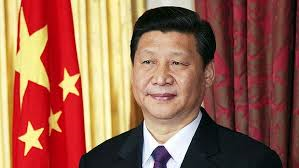
Chinese president Xi Jinping (Credit: asianet.com)
Chinese president Xi Jinping
(Credit: asianet.com)

NEW DELHI, Sept 5: Chinese President Xi Jinping has cancelled his mid-September trip to Pakistan amid political chaos in Islamabad, in what could be a strong signal to Beijing’s allweather friend that it must get its act together before hosting a big visit.

This would be music to India’s ears which had long opposed clubbing of visits to India and Pakistan every time a Chinese President or premier came to the sub-continent. It is no secret that Delhi has strong reservations against the Sino-Pak nuclear axis and Beijing’s support for infrastructure projects in Pakistan Occupied Kashmir.

Their decadesold defence partnership has been India’s Achilles heel. Xi’s visit was crucial for Pakistan, during which a number of economic and defence deals were expected to be signed between the two countries. Xi was scheduled to lay the foundation stone of the Lahore-Karachi motorway section, launch power projects and give final touches to the proposed Pakistan-China railway link.

The two countries are finalising plans to build an economic corridor between China’s Xinjiang and Pakistan’s Gwadar Port which is being developed by Chinese firms. China has announced $32 billion to be invested in next seven years in various Pakistani projects for infrastructure building and power During the September trip, Xi had planned to visit India and then Pakistan followed by Sri Lanka.

However, his proposed dates were clashed with President Pranab Mukherjee’s trip to Vietnam from September 14-17. As India was unwilling to reschedule the President’s trip to Hanoi, Xi decided to first visit Pakistan, followed by Sri Lanka and then reach India. This will be Xi’s first visit to the subcontinent after taking over as president.

Xi may announce big support for Indian infrastructure sector during his trip from September 17-19. Former High Commissioner G Parthasarathy told ET, “there would have been serious security concerns for a Chinese President to cancel his trip to Pakistan, a close partner for Beijing. By taking this step, he is trying to send a strong signal to Islamabad to strengthen architecture to address security concerns and also control extremist forces.”

Xi’s security delegation was in Islamabad on Wednesday to review the security situation in the light of the protests, and was not satisfied with the arrangement. Instead, it was suggested that he should visit Lahore instead of Islamabad.

However, his security team did not give clearance for that either. Last month, Sri Lankan President Mahinda Rajapaksa also cancelled his visit to Pakistan in the wake of the country’s political situation. The cancellation was seen as a major blow to the Pakistan government.

Afghanistan Could Unravel Faster than Iraq

Having spent several weeks auditing ballots in Afghanistan’s fraud-plagued presidential vote, election officials there are expected to declare a winner within days. If the two candidates vying for the post fail to reach a power-sharing deal beforehand, the announcement could easily kick off a wave of unrest that would all but guarantee a catastrophic wind-down to America’s longest war.

The window of opportunity to strike a compromise is narrowing dangerously. Without a new government in place, the Obama administration may well pull back on plans to keep a military contingent in Afghanistan beyond 2014, and without that force, the international community will cease bankrolling the impoverished nation.

Abdullah Abdullah, the former foreign minister, not without reason, is fighting the outcome of an election in which his rival, former finance minister Ashraf Ghani, is widely expected to be declared the winner. Western officials say that the audit of millions of ballots cast on June 14 has made clear that the scope and sophistication of fraud was staggering even for Afghan standards. Having ceded another fraud-plagued election to President Hamid Karzai in 2009, Mr. Abdullah and his powerful backers are not willing to concede defeat in another corrupt election.

But they ought to understand that they stand to lose far more by being intransigent. The Taliban are fighting hard to retake crucial urban areas, and the country’s anemic economy is likely to collapse amid the uncertainty.

The Obama administration, which had preferred to limit its involvement in the election, has sensibly offered a power-sharing structure under which the losing candidate, or a designee, would hold a chief executive position with considerable authority.

A senior American official said that Mr. Ghani and Mr. Abdullah appear close to signing off formally on the deal, but they remain at odds over just how much power the losing candidate would wield. One sticking point is whether ministers would report to the chief executive, rather than to the president.

Continue reading the main story 25Comments Continue reading the main story

Recent Comments

iona

1 hour ago

Everybody OUT. Let them deal with their own problems we only make things worse because we are there to support either thug and get those…

Prof.Jai Prakash Sharma,

1 hour ago

The entire history of Afghanistan being full of external power rivalry, bloody tribal feuds and wars, how could it deviate from its…

FXQ

4 hours ago

Flip a coin, whoever wins is the president, and the other is vice president for the first term. Then, the roles are switched for the second…

  • See All Comments
  • Write a comment

Mr. Ghani and Mr. Abdullah have displayed considerable pragmatism in recent weeks as the electoral dispute has dragged on, raising hopes that they could in fact govern jointly. This week, the two men sent a letter to NATO leaders meeting in Wales, pledging that they are committed to forming a “government of national unity that will honor the epic participation of our people in the electoral process.” The message shows that both men understand continued international support to be indispensable for the fledgling state they aspire to lead.

A solution to the government crisis will take more than pragmatism, though. Both candidates must rein in their most reactionary constituents and work hard to manage expectations in the days ahead. The power-sharing deal will need to be detailed, clear and public to reduce the temptation for the winner to sideline his rival after taking office.

In this crisis, the Obama administration has had to take on a broker’s role. It must remain engaged and patient in helping the Afghans avert the chaos of a government rived by ethnic or sectarian divisions. The alternative could look much like Iraq’s unraveling. Except in Afghanistan, it would almost certainly come quicker

Pakistan, Its Own Worst Enemy

Pakistan faces very big problems: a failing economy; a Taliban insurgency; and persistent tension with India, which has resulted again in exchanges of cross-border fire. The country’s leaders and citizens obviously need to join in common cause to put the country on a steadier course.

Alas, this is Pakistan. For the past two weeks, thousands of protesters in Islamabad have been demanding the resignation of Prime Minister Nawaz Sharif. His critics have every right to express their views peacefully. But forcing his resignation is the last thing Pakistan needs.

It would further polarize society, weaken the fragile democratic institutions and strengthen a powerful military, which says it wants to be out of politics but has regularly staged coups and otherwise sought to control civilian governments for three decades.

Mr. Sharif came to office in a parliamentary election 15 months ago, the first peaceful, democratic transition of power between civilian leaders in the country’s history. It was a hopeful moment; some 60 percent of voters turned out, and most people seemed willing to accept his victory.

The current anti-Sharif anger is being stoked by two men. Imran Khan, a prominent cricketer turned politician, wants new elections. Muhammad Tahir-ul Qadri, a cleric of the Sufi Islam sect, is pushing for the creation of a unity government. The protesters have demanded electoral reforms and Mr. Sharif’s removal because of alleged corruption in the 2013 election. Some believe that the army, which has an uneasy history with Mr. Sharif, has had a hand in the crisis. Reports that Mr. Khan and Mr. Qadri are negotiating with the army chief of staff are unsettling.

Mr. Sharif’s brief tenure has been marked by sectarian tensions, power outages, insurgent-related violence and a failure to deliver on campaign promises of economic revival. He has also named cronies to high posts. But forcing him out now and in this way is not the answer. A smarter approach is to make democratic processes work through reforms to prevent electoral fraud and rampant cronyism. It will also require negotiation and compromise.

The United States, preoccupied with crises elsewhere, has shown little urgency in trying to calm the situation, even though Pakistan’s stability is crucial to regional order — especially as American troops withdraw from Afghanistan. It should be pressing Pakistan’s army, in particular, to reject any idea of staging a coup. Mr. Sharif should resolve to govern better while the military focuses on its primary concern, defeating the Taliban threat.

MQM UK member hauled up in London re Imran Farooq murder

London, Aug 27: Scotland Yard  late on Wednesday released a suspect arrested in connection with the murder of former Muttahida Qaumi Movement (MQM) leader Dr Imran Farooq, Express News reported.

The suspect has been asked to appear before the police again in mid-November this year.

Earlier, a spokesperson for the Scotland Yard confirmed to The Express Tribune that the suspect was arrested from East London this morning. He is currently being kept in custody where he is being interrogated. The suspect is reportedly a British Pakistani, but Scotland Yard did not confirm the nationality of the suspect.

He is said to be an MQM UK unit member, party officials told The Express Tribune.

The suspect is the second man to be arrested in the case so far. Last June, the Scotland Yard arrested a nephew of MQM chief Altaf Hussain, 52-year-old man Iftikhar Hussain. He was arrested on suspicion of conspiracy to murder and is currently on bail.

Further, in May, Scotland Yard released pictures of two suspects allegedly involved in the murder of Farooq.

Scotland Yard claimed that the two suspects, identified as Mohsin Ali Syed and Mohammed Kashif Khan Kamran, were believed to be in Pakistan and had traveled to London on student visas. They are also believed to be residents of Karachi.

Farooq, 50, was a former leader of MQM and had lived in London in self-imposed exile from 1999. He was on his way back from work when he was attacked outside his home in Edgware, north London, in September 2010. A post-mortem gave the cause of death as multiple stab wounds and blunt trauma to the head. A kitchen knife and a house brick used in the attack were recovered at the scene.

Govt Seeks to Evacuate Pakistanis from Libya

Expats leave Libya (Credit: todayzaman.com)
Expats leave Libya
(Credit: todayzaman.com)
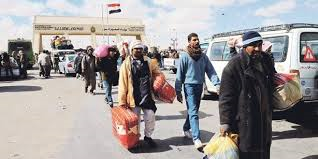
ISLAMABAD, Aug 4: With the situation in Libya deteriorating in recent days, the Pakistani mission there has been working to evacuate up to 6,000 citizens to neighbouring Tunisia for repatriation to Pakistan.

A statement from the Foreign Office on Monday evening said that the Pakistani embassy in Libya was in touch with the Pakistani community there and were making arrangements to evacuate between 3,000-6,000 citizens.

Clashes in troubled Libya have intensified over the week with a depot near the airport in Tripoli set ablaze over the weekend during clashes between rival groups. Citizens of a number of countries have been advised to leave as the situation turns tense, but evacuation has proved tricky with airports closed.

Since no airport in Libya is currently functioning, the government is working on arranging on-arrival visas for Pakistanis at the Tunisian border. Once in Tunisia, these Pakistanis can then be repatriated to Pakistan.

“Our Embassy in Tripoli has already registered a large number of Pakistanis and referred their documents to Tunisian authorities for visa on arrival,” the statement read.

The foreign office advised all Pakistanis in Libya to contact the embassy in Tripoli and Tunisia and inform the officials about their location and get registered.

Pakistan Embassy can be contacted on the following help lines:
–         No. 00218 922379368 (Ayaz Khan)
–         No. 00218 922555216 (Kamran)
–         No. 00218 213610937
–         No. 00218 213616581 (0900 to 1600 hours)

Rejection of Pak Asylum Seekers Keeping them Away from US

San Francisco, Aug 2: Although the number of Pakistanis seeking refuge in other countries is rising, those seeking asylum from the proverbial land of opportunity – the United States – are declining in number.

In the years before and shortly after the 9/11 attacks, the US was a country of choice for thousands of Pakistanis looking to emigrate. In 2002, close to 20% of the 7,000 Pakistanis wanting to leave their country applied to the US for asylum. In 2013, of over 26,000 Pakistanis seeking asylum, less than 2.5% were asking to enter the once-friendly United States.

“Muslims have been targeted by the Department of Homeland Security, and the United States is simply not hospitable to Muslim asylum-seekers,” observed Matthew L Kolken, a New York-based attorney and a senior member of the American Immigration Lawyers Association.

Among 44 industrialised countries with asylum-seekers, Pakistan currently ranks sixth, according to the United Nations High Commissioner for Refugees (UNHCR). Last year, Pakistan witnessed an 11 per cent rise in asylum-seekers, according to the agency.

The reasons for leaving Pakistan have become more urgent as the country continues to grapple with its fledgling democracy.

Generally, the applicants are claiming fear of persecution, from either terrorists or extremist groups, said Harnam S Arneja, a Washington DC-based lawyer who has taken on asylum cases.

But access to asylum in the US has become extremely difficult and cumbersome because of changes to the application standards and a decreased rate of approvals, explained Arneja. “Any applicant, including a Pakistani, has to prove credible fear of persecution, either in the past or in future if he or she returns to Pakistan.”

The US Citizenship and Immigration Services (USICS) and Department of Homeland Security data revealed that 4,113 applications of asylum-seekers were received from 2002 to April 2014. Around 1,736 applications were approved, 115 denied and 1,742 adjudicated referred. The ‘adjudicated referred’ column refers to cases that USICS is not able to approve. “Such cases are referred to federal immigration courts, where a judge makes the final determination on eligibility,” said Tim Counts, the USCIS spokesperson.

These statistics do not include all nationals from Pakistan who applied for asylum during these years, he explained.

Separately, US Department of State’s Bureau of Population, Refugees and Migration (PRM) Public Affairs Officer Christine Getzler Vaughan told The Express Tribune that since 2002, America has resettled 927 refugees from Pakistan. She, however, explained that these statistics do not include those who may have immigrated to the US via other means or sought asylum after arrival.


Pakistani jurist Majid Bashir, who deals with asylum-seekers’ cases, has listed several reasons for the declining trend in asylum-seeking in the United States.

The US imposed restrictions on Pakistan by putting her on the watch list when it comes to dealing with trade and intellectual property rights, he said, pointing to some. “New laws and Muslims’ alleged involvement in security-related issues and incidents could be the major reason behind it,” he added.

And it seems like the trend of declining asylum-seekers is here to stay – Pakistanis have made the choice of not seeking opportunities in the ‘land of opportunity’.

Published in The Express Tribune, August 2nd, 2014.

US Mentors Prepare to Let Afghan Forces Go it Alone

US mentors in Afghanistan (Credit: nytimes.com)
US mentors in Afghanistan
(Credit: nytimes.com)

KOH-E-SAFI, Afghanistan, July 21 — The small and cherubic governor of Koh-e-Safi District was struggling to compute the meaning of the American troop withdrawal.

He had just finished crediting a young American Special Forces captain for improved security in his district, an area near Kabul that has been a busy staging ground for insurgent attacks. Now, suddenly, he was trying to talk about his plans for when the team of Green Berets leaves in August.

“Well, we hope it will not happen,” he said, flattening his hands on his desk. “We think the Americans will find a way to stay.”

The captain, having been through this routine before, interjected: “We are out of here by the end of the summer. It’s happening. And if there’s no plan to fill that void, then that’s what people in this room need to be talking about right now.”

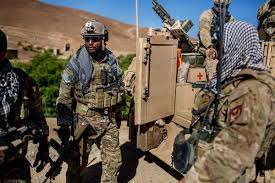
The American Special Forces teams have over the past decade become a central part of the local security landscape in Afghanistan. The 12-man teams are embedded in remote areas with a high insurgent threat, and they train indigenous police and elite Afghan units while coordinating the efforts of the local government and security bureaucracies. They also hunt down Taliban figures.

For many Afghans, they have been the face of the American military presence, for better or worse. But they are leaving. Even if a long-term security agreement is signed with the United States, these teams in their current form will not be part of the tiny force that will remain.

Whether the Afghan forces can sustain themselves in the critical districts the Green Berets will be ceding to them is an urgent question all over the country. The answer will help define America’s legacy in Afghanistan, much as it has in Iraq, where the Iraqi forces have fallen apart in combat.

The void in some places will be hard to fill. Beyond being a deterrent to the Taliban, the teams grant a measure of confidence to the Afghan forces they fight alongside. That confidence is already being tested: In the past few months, the Taliban have been aggressively going after the security forces in places the Americans have left.

In places like Koh-e-Safi, a district of ashen mountains of silt, rock and chromite, there is worry about what will come after the Americans.

“I’m not sure they have the confidence to do this once we leave,” said the Green Beret team captain, who spoke on the condition of anonymity because of military rules. “Over the last few years, they have come to rely on Americans’ solving their problems.”

The sentiment is shared, to some degree, among the other team members, most of whom have deployed several times in Afghanistan.

“This country is going to turn into a warlord environment,” said one sergeant on his fifth tour. “Until these guys are willing to fight for a sense of nationalism, I don’t see how this changes.”

But sustainability is more than fighting. It is a matter of logistics: feeding and fueling forces spread across the country, perhaps the greatest challenge for the Afghan forces.

“We have modeled them so much on us that they have taken on more logistical requirements than they need,” the team sergeant said.

As a result, it is likely that the Afghan Army Special Forces team, which is meant to do the same thing for the district that its American counterparts do, will go elsewhere when the Americans depart. There simply will not be the logistical support for it in Koh-e-Safi.

During the meeting in his office, the governor, Saifullah Bedar, raised another issue that has increasingly been on Afghans’ minds: Iraq’s rapid disintegration after the American withdrawal there.

“What is the difference between Iraq and Afghanistan?” Mr. Bedar asked the captain.

“I was in Iraq near the end,” the team leader fired back. “When we left, they were set up for success. The decisions they made in the following three years left them where they are now.”

An American Special Forces captain observes how his Afghan trainees do on their own as they meet villagers near Taliban territory in Parwan Province. Credit Diego Ibarra Sanchez for The New York Times

The room was silent, everyone fidgeting in the suffocating heat.

“The same thing can happen in Koh-e-Safi if the government and security forces don’t make the right decisions,” the captain warned.

By most accounts, the American team in Koh-e-Safi has done well. It has brokered relationships with local leaders, trained nearly 130 police officers, and mentored two Afghan Special Forces teams. It has also helped keep the Taliban mostly confined to the remote southern half of the district, but there are worries here that the militants will find a way to creep back after the Americans leave.

The commander of one of the local police checkpoints here, Shaman Gul, visited the Americans last month on a hill overlooking his village, Damdar. From the hilltop, plots of emerald farmland could be seen in the valley basins below, rare flashes of color in an otherwise gray-brown tableau.

I wish all involved well but, naturally, there are doubts. The performance of the South Vietnamese Army in 1975 and that of the Iraqi Army…The only thing that the Afghans will miss is the free and easy money that is being funneled into their country.

Mr. Shaman Gul, who also owns a tailoring shop in Damdar, said he recently got a call from the Taliban, who reminded him that the Americans would be leaving soon. While he insists he is unafraid, he knows that things will change soon.

On the walk around his base, a ramshackle affair fortified with barriers and wire, he began noting deficiencies the Americans might help resolve.

“We only have 120 bullets a man,” he told the captain, shrugging.

“When is the last time you guys were in a firefight?” the captain asked, knowing it had been months. Mr. Shaman Gul shrugged again.

More than ever, the Special Forces are trying to have their Afghan counterparts take the lead. While that has always ostensibly been the plan, it only really began to be a focus this year, when it dawned on commanders that one way or another they were leaving. The American team captain in Koh-e-Safi acknowledged that it had been hard to keep his men from going out on missions.

On a recent operation near Chanerai, a small village of mud homes arranged in a valley near the edge of Taliban territory, the Green Berets tested their resolve to allow their Afghan comrades to operate alone. From the top of a barren ridgeline, the captain peered through binoculars, watching as the Afghan team organized a meeting, or shura, with the locals.

“I want to know what’s going on in there,” the captain said, pulling the binoculars away, impatience creeping into his voice. “I want to see firsthand how the Afghan soldiers are handling the shura.”

In a departure from past missions, the Americans would not go into the village. They would not press the Afghans to ask direct questions. They would not challenge dismissive answers from villagers. They would, instead, stand on the peripheral ridgeline, peering down at the village and scanning the valley for ambushes.

“When the Americans go in, the villagers act differently,” the captain said. “We become the focus of attention.”

A few of the men drove all-terrain vehicles along the ridgeline. But one soldier, angling around a truck on the side of a ravine, lost control. As the vehicle turned down the hill, the sergeant quickly hopped off.

Everyone stood silently, watching weaponry, tarps and other equipment catapulted off the four-wheeler as it cartwheeled down the hill. Its broken body somehow landed upright.

Airlines Scale Back Flights to Pakistan

Emirates Comment
Emirates Comment

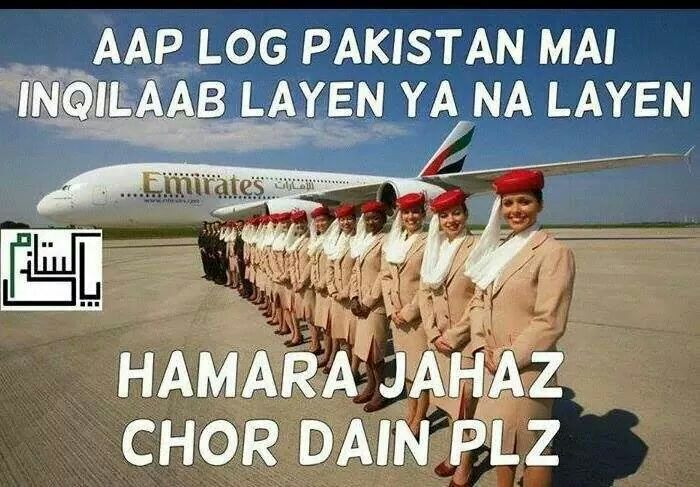
KARACHI, June 25: Emirates said on Wednesday that it was suspending flights to and from Peshawar, just hours after bullets pierced through a Pakistan International Airlines (PIA) plane near the airport, killing one female passenger.

The Dubai-based airline said flights have been suspended from June 25 until further notice due to the security situation at the Peshawar airport.

“Passengers booked to travel between June 25 and 27 can cancel their booking, rebook to travel at a later date, or fly to another Emirates destination in Pakistan,” the airline said in a brief statement on its website.

Emirates operate five weekly flights to Peshawar. Moreover, it has a schedule of 66 weekly flights to Pakistan. It could not be immediately confirmed when flights will resume.

Untitled-1

Etihad Airways also suspended one of its Abu Dhabi to Peshawar flight on Wednesday citing security concerns. “The airline’s next flight to Peshawar, scheduled to depart from Abu Dhabi on Thursday night, June 26, is still under review.”

Senior CAA, security and administration officials were busy in a meeting late into the evening to discuss what measures could be taken to beef up monitoring around the airport.

A similar suspension followed a militant attack on the Peshawar airport in 2012 when besides Emirates, all Middle East carriers, including Qatar and Etihad Airways, had stopped their flights.

Pakistan’s Civil Aviation Authority (CAA) has allowed Emirates to operate additional flights to Islamabad to facilitate its passengers, a senior official of the aviation regulator told The Express Tribune.

“The last time these airlines stopped coming to Peshawar, the operations remained suspended for one month. We are not sure how long this latest episode will continue,” he said.

The CAA has come under immense pressure since the ferocious attempt by armed militants to take over Karachi airport ended in the death of over two dozen people and pushed a leading airline to roll back operations to Pakistan.

Hong Kong-based Cathay Pacific has already announced that its flight taking off from Karachi on June 29 would be the last, more than 13 years after it started flying to Pakistan.

Leading airlines, including British Airways, Singapore Airlines, Lufthansa and Malaysian Airlines, have scaled back their operations since 2012 in part due to concerns related to the security of their employees.

British Airways suspended operation following a deadly attack on Islamabad’s Marriott Hotel in 2008.

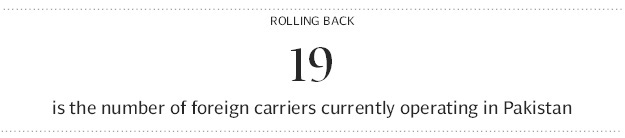
Currently, only 19 foreign carriers come to Pakistan.

The gun attack on PIA aircraft so near the runway is of particular concern especially when congested residential colonies have sprouted up around Peshawar, Karachi and Lahore airports.

“This was not the first time bullets were fired upon on a landing plane at the Peshawar airport,” said CAA officials. “Pilots have reported similar incidents before.”

Regarding the latest attack, Pakistan International Airlines (PIA) Managing Director Junaid Yunus praised senior pilot Captain Tariq Chaudhry who was commanding the Riyadh-Peshawar flight for ensuring a safe landing.

“It is very important for us to realise the fact that our pilot didn’t lose his nerves,” he said. “Things could have gone horribly wrong if the firing incident had confused him.”

Published in The Express Tribune, June 26th, 2014.