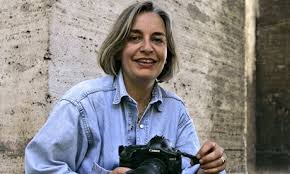
KABUL, April 4— For the two seasoned war correspondents, it was not an unusually risky trip. Getting out to see Afghanistan up close was what Anja Niedringhaus, a Pulitzer Prize-winning photographer for The Associated Press, and Kathy Gannon, a veteran reporter for the news agency, did best.
The eastern province of Khost, where Ms. Niedringhaus and Ms. Gannon traveled to cover Afghanistan’s presidential election on Saturday, is considered dangerous, still plagued by regular Taliban attacks. But they had carefully plotted their trip, arranging to move beyond the relatively safe confines of the provincial capital under the protection of Afghan Army troops and the police.
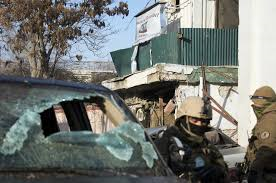
Yet it was those precautions that proved fatal for Ms. Niedringhaus on Friday morning. As she and Ms. Gannon waited outside a government compound, a police commander walked up to their idling car, looked in at the two women in the back seat, and then shouted “Allahu akbar!” — God is great — and opened fire with an AK-47, witnesses and The Associated Press said.
Ms. Niedringhaus was killed instantly, and Ms. Gannon, shot three times in the wrist and shoulder, was severely wounded. In the span of a few muzzle flashes, the two women, who had covered the war since it began in 2001, became victims of another attack that blurred friend and foe.
For both Afghans and Westerners, the list of adversaries has expanded beyond the resilient Taliban, who have staged a series of attacks in an attempt to disrupt the election. Afghan soldiers and the police have repeatedly turned on one another and their foreign allies. The squabbling between President Hamid Karzai and American officials has grown into a deep-seated animosity.
At the same time, Afghans have seen scores of their fellow citizens killed by errant American airstrikes. And even as the United States pushes for a long-term security deal that would allow it to keep troops here beyond the end of this year, it does so with the understanding that its forces will be largely hidden away behind the high walls of fortified bases.
Ms. Niedringhaus, 48, and Ms. Gannon, 60, had no desire to hunker down. The focus of their work over the past dozen years has been putting a human face on the suffering inflicted by the war. As a pair, they often traveled to remote corners of Afghanistan to report articles, and Ms. Niedringhaus also spent significant time embedded with coalition forces.
Many of their colleagues noted sadly that they were attacked by a police officer who appeared to have seen in the back seat of the journalists’ Toyota Corolla a pair of anonymous Westerners on whom to vent his rage. If Afghans have a dominant complaint about the West, it is that they are often treated as faceless, dismissed as nonentities by the people who say they are here to help.
That was not the case with Ms. Niedringhaus and Ms. Gannon.
In this March 30, 2003 photo by Anja Niedringhaus, Iraqi women lined up for a security check by British soldiers on the outskirts of Basra. Credit Anja Niedringhaus/Associated Press
“They just seemed so bravely willing to go into these kinds of situations and get to the places that you needed to get to tell stories that weren’t being told,” said Heidi Vogt, a reporter who worked for The A.P. in Afghanistan until last year.
“They’re the last two people you’d expect this to happen to,” she added. “It felt like they had a little protective force field around them.”
Ms. Niedringhaus, a German citizen who was based in Geneva, first came to Afghanistan after joining The A.P. in 2002, and she quickly formed a partnership with Ms. Gannon. They were among a band of female photographers and correspondents who persevered through many years of conflict in Iraq as well as in Afghanistan.
In the process, they helped redefine traditional notions of war reporting. Even as they covered the battlefield, they also focused attention on the human impact of conflicts known for their random, unpredictable violence against civilians.
Ms. Niedringhaus’s fascination with Afghanistan continued to grow even as she was pulled away to other trouble spots, including Iraq, where she was part of a team of A.P. photographers who won a Pulitzer Prize in 2005.
“If I’d told her, ‘You don’t need to do this anymore, you’ve earned your spurs, leave it to another generation,’ ” said Tony Hicks, a photo editor at The A.P., “the response would have been a series of expletives, then laughing and another pint.”
But, Mr. Hicks pointed out, Ms. Niedringhaus was equally at home at major sports events and other less high-stakes diversions, such as the Geneva auto show.
Hundreds of U.S. Marines gathered at Camp Commando in Kuwait in 2002. Credit Anja Niedringhaus/Associated Press
She was on the finish lines when Usain Bolt, the Jamaican sprinter, broke the world record for the 100-meter dash. And “she loved Wimbledon,” he said. “It was almost her second home.”
Ms. Gannon, a Canadian who is a senior writer for The A.P., arrived in Peshawar, Pakistan, in 1986 when the Afghan mujahedeen were battling the forces of the Soviet Union. She went on to serve as The A.P.’s bureau chief in Islamabad, and she was one of the few Western reporters whom the Taliban permitted to work in Kabul when they ruled Afghanistan.
Ms. Gannon was in Kabul during the American invasion in 2001, and she wrote of covering the Taliban’s last days in the city with her Afghan colleague, Amir Shah. The two cowered in the basement of a house during air raids, often working by candlelight or lantern. They tried to avoid members of Al Qaeda, who were much more hostile than the Taliban. When a bomb struck nearby, she was thrown across the room — and then went straight back to work.
“She knows Afghanistan very well,” said Mr. Shah, an A.P. reporter in Kabul, according to an article by the news agency. “She knows the culture of the people.”
But the divide between Afghans and Westerners has been deepening for years, and so-called insider attacks in which Afghan security forces turn on their coalition counterparts or one another have been the most visible symptom. Afghan and Western officials say they believe that most of the attacks are driven by personal animosity or anger about the war in Afghanistan, where many have come to view foreign forces as occupiers.
Though Western civilians working with the coalition have at times been killed in such attacks, the shooting on Friday was believed to be the first time an Afghan police officer had intentionally killed a foreign journalist.
Afghan security officials said they believed that the shooting was an opportunistic attack, not the work of the Taliban, who offered no comment.
A Marine on his way to pick up food supplies in June, 2001. Credit Anja Niedringhaus/Associated Press
The police commander, whom officials identified as Naqibullah, 50, was known for his anti-Western views, one official said. The officials did not believe he had advance notice that Ms. Niedringhaus or Ms. Gannon was headed his way.
The two spent Thursday night at the compound of the provincial governor in Khost, and they left on Friday morning with a convoy of election workers delivering ballots to an outlying area in the Tanai district, The A.P. and Afghan officials said.
The convoy was protected by the Afghan police, soldiers and operatives from the National Directorate of Security, Afghanistan’s main intelligence agency, said Mubarez Zadran, a spokesman for the provincial government. Ms. Niedringhaus and Ms. Gannon were in their own car, traveling with a driver and an Afghan freelance journalist who was working with the news agency.
Mr. Naqibullah, the police commander, surrendered to other officers immediately after shooting the journalists and was arrested.
Ms. Gannon was taken to a hospital in Khost. She underwent surgery before being evacuated to one of the main NATO bases in the country, where there is a hospital equipped to handle severe battlefield trauma. She was said to be in stable condition.
Yet even as Friday’s shooting provided a stark reminder of how broader tensions can set off violence at the most personal level, its aftermath also highlighted the bonds between old friends and strangers alike, be they Afghans or foreigners.
Aides to Mr. Karzai, who has known Ms. Gannon for years, said he tried to get her on the phone to see she how she was doing after he heard about the attack. He later spoke with her husband, and his office then put out a statement condemning the attack.
The doctor who first treated Ms. Gannon, Muhammad Shah, was distressed by the shooting.
“Not only me, but all Afghans are disappointed and sorry for this loss of life,” he said by phone Friday night from Khost Provincial Hospital, between operations. “She was a guest here in Afghanistan, a foreigner.”
Matthew Rosenberg reported from Kabul, and Farooq Jan Mangal from Khost Province, Afghanistan.
The book, by poet Boris Pasternak, had been banned from publication in the Soviet Union. The British were suggesting that the CIA get copies of the novel behind the Iron Curtain. The idea immediately gained traction in Washington.
“This book has great propaganda value,” a CIA memo to all branch chiefs of the agency’s Soviet Russia Division stated, “not only for its intrinsic message and thought-provoking nature, but also for the circumstances of its publication: we have the opportunity to make Soviet citizens wonder what is wrong with their government, when a fine literary work by the man acknowledged to be the greatest living Russian writer is not even available in his own country in his own language for his own people to read.”
The memo is one of more than 130 newly declassified CIA documents that detail the agency’s secret involvement in the printing of “Doctor Zhivago” — an audacious plan that helped deliver the book into the hands of Soviet citizens who later passed it friend to friend, allowing it to circulate in Moscow and other cities in the Eastern Bloc. The book’s publication and, later, the awarding of the Nobel Prize in Literature to Pasternak triggered one of the great cultural storms of the Cold War.
Because of the enduring appeal of the novel and a 1965 film based on it, “Doctor Zhivago” remains a landmark work of fiction. Yet few readers know the trials of its birth and how the novel galvanized a world largely divided between the competing ideologies of two superpowers. The CIA’s role — with its publication of a hardcover Russian-language edition printed in the Netherlands and a miniature, paperback edition printed at CIA headquarters — has long been hidden.
The newly disclosed documents, however, indicate that the operation to publish the book was run by the CIA’s Soviet Russia Division, monitored by CIA Director Allen Dulles and sanctioned by President Dwight D. Eisenhower’s Operations Coordinating Board, which reported to the National Security Council at the White House. The OCB, which oversaw covert activities, gave the CIA exclusive control over the novel’s “exploitation.”
The documents were provided at the request of the authors for a book, “The Zhivago Affair,” to be published June 17. Although they were redacted to remove the names of officers as well as CIA partner agencies and sources, it was possible to determine what lay behind some of the redactions from other historical records and interviews with current and former U.S. officials. Those officials spoke on the condition of anonymity to discuss material that remained classified.
Tim Gressie
The title page from a 1958 Russian-language edition of “Doctor Zhivago” that the CIA arranged to have secretly printed in the Netherlands and distributed to Soviet tourists at the 1958 world’s fair in Brussels.
A voice from the past
During the Cold War, the CIA loved literature — novels, short stories, poems. Joyce, Hemingway, Eliot. Dostoevsky, Tolstoy, Nabokov.
Books were weapons, and if a work of literature was unavailable or banned in the Soviet Union or Eastern Europe, it could be used as propaganda to challenge the Soviet version of reality. Over the course of the Cold War, as many as 10 million copies of books and magazines were secretly distributed by the agency behind the Iron Curtain as part of a political warfare campaign.
In this light, “Doctor Zhivago” was a golden opportunity for the CIA.
Both epic and autobiographical, Pasternak’s novel revolves around the doctor-poet Yuri Zhivago — his art, loves and losses in the decades surrounding the 1917 Russian Revolution. At times, Zhivago is Pasternak’s alter ego. Both the character and the writer, who was born in 1890, were from a lost past, the cultured milieu of the Moscow intelligentsia. In Soviet letters, this was a world to be disdained, if summoned at all.
Pasternak knew that the Soviet publishing world would recoil from the alien tone of “Doctor Zhivago,” its overt religiosity, its sprawling indifference to the demands of socialist realism and the obligation to genuflect before the October Revolution.
But Pasternak had long displayed an unusual fearlessness: visiting and giving money to the relatives of people who had been sent to the gulag when the fear of taint scared so many others away, intervening with authorities to ask for mercy for those accused of political crimes, and refusing to sign trumped-up petitions demanding execution for those designated enemies of the state.
“Don’t yell at me,” he said to his peers at one public meeting where he was heckled for asserting that writers should not be given orders. “But if you must yell, at least don’t do it in unison.”
Pasternak felt no need to tailor his art to the political demands of the state. To sacrifice his novel, he believed, would be a sin against his own genius. As a result, the Soviet literary establishment refused to touch “Doctor Zhivago.”
Fortunately for Pasternak, a Milan publisher had received a copy of the manuscript from an Italian literary scout working in Moscow. In June 1956, Pasternak signed a contract with the publisher, Giangiacomo Feltrinelli, who would resist all efforts by the Kremlin and the Italian Communist Party to suppress the book.
In November 1957, an Italian-language edition of “Doctor Zhivago” was released.
In a memo in July 1958, John Maury, the Soviet Russia Division chief, wrote that the book was a clear threat to the worldview the Kremlin was determined to present.
“Pasternak’s humanistic message — that every person is entitled to a private life and deserves respect as a human being, irrespective of the extent of his political loyalty or contribution to the state — poses a fundamental challenge to the Soviet ethic of sacrifice of the individual to the Communist system,” he wrote.
In an internal memo shortly after the appearance of the novel in Italy, CIA staff members recommended that “Doctor Zhivago” “be published in a maximum number of foreign editions, for maximum free world distribution and acclaim and consideration for such honor as the Nobel prize.”
While the CIA hoped Pasternak’s novel would draw global attention, including from the Swedish Academy, there was no indication that the agency’s motive for printing a Russian-language edition was to help Pasternak win the prize, something that has been a matter of speculation for some decades.
Associated Press
Giant stars hanging over broad promenades added a bright touch to the Brussels Universal and International Exposition in 1958.
Associated Press
Prince Rainier III of Monaco, holding his glasses and looking skyward, and Princess Grace, with a bouquet, at the Vatican pavilion at the Brussels exposition.
As its main target for distribution, the agency selected the first postwar world’s fair, the 1958 Brussels Universal and International Exposition. Forty-three nations were participating at the 500-acre site just northwest of central Brussels.
Both the United States and the Soviet Union had built huge pavilions to showcase their competing ways of life. What was especially interesting to the CIA: The fair offered one of those rare occasions when large numbers of Soviet citizens traveled to an event in the West. Belgium had issued 16,000 visas to Soviet visitors.
After first attempting to arrange a secret printing of the novel through a small New York publisher, the CIA contacted the Dutch intelligence service, the BVD. Agency officials had been following reports of the possible publication of “Doctor Zhivago” in Russian by an academic publishing house in The Hague and asked whether it would be possible to obtain an early run of copies.
The two intelligence agencies were close. CIA subsidies in 1958 paid for about 50 of the BVD’s 691 staff members, and new Dutch employees were trained in Washington. Joop van der Wilden, a BVD officer, was dispatched to the U.S. Embassy at The Hague to discuss the issue with Walter Cini, a CIA officer stationed there, according to interviews with former Dutch intelligence officials.
Cini told him it would be a rush job, but the CIA was willing to provide the manuscript and pay well for a small print run of “Doctor Zhivago.” He emphasized that there should be no trace of involvement by the U.S. or any other intelligence agency.
Tim Gressie
The blue linen cover of the 1958 Russian-language edition of “Doctor Zhivago.”
In early September 1958, the first Russian-language edition of “Doctor Zhivago” rolled off the printing press, bound in the signature blue linen cover of Mouton Publishers of The Hague.
The books, wrapped in brown paper and dated Sept. 6, were packed into the back of a large American station wagon and taken to Cini’s home. Two hundred copies were sent to headquarters in Washington. Most of the remaining books were sent to CIA stations or assets in Western Europe — 200 to Frankfurt, 100 to Berlin, 100 to Munich, 25 to London and 10 to Paris. The largest package, 365 books, was sent to Brussels.
“Doctor Zhivago” could not be handed out at the U.S. pavilion at the world’s fair, but the CIA had an ally nearby: the Vatican.
The Vatican pavilion was called Civitas Dei, the City of God, and Russian emigre Catholics had set up a small library “somewhat hidden” behind a curtain just off the pavilion’s Chapel of Silence, a place to reflect on the suppression of Christian communities around the world.
There, the CIA-sponsored edition of “Doctor Zhivago” was pressed into the hands of Soviet citizens. Soon the book’s blue linen covers were littering the fairgrounds. Some who got the novel were ripping off the cover, dividing the pages, and stuffing them in their pockets to make the book easier to hide.
The CIA was quite pleased with itself. “This phase can be considered completed successfully,” read a Sept. 10, 1958, memo.
In the Soviet Union, meanwhile, word of the novel’s appearance quickly reached Pasternak. That month, he wrote to a friend in Paris, “Is it true that Doctor Zhivago appeared in the original? It seems that visitors to the exhibition in Brussels have seen it.”
Associated Press
Children view a statue of Pope Pius XII at the Vatican pavilion at the world’s fair in Brussels.
Contractual problems
There was only one problem: The CIA had anticipated that the Dutch publisher would sign a contract with Feltrinelli, Pasternak’s Milan publisher, and that the books handed out in Brussels would be seen as part of that print run.
The contract was never signed, and the Russian-language edition printed in The Hague was illegal. The Italian publisher, who held the rights to “Doctor Zhivago,” was furious when he learned about the distribution of the novel in Brussels. The furor sparked press interest and rumors, never confirmed, of involvement by the CIA.
The spies in Washington watched the coverage with some dismay, and on Nov. 15, 1958, the CIA was first linked to the printing by the National Review Bulletin, a newsletter supplement for subscribers to the National Review, the conservative magazine founded by William F. Buckley Jr.
A writer using the pseudonym Quincy observed with approval that copies of “Doctor Zhivago” had been quietly shipped to the Vatican pavilion in Brussels: “That quaint workshop of amateur subversion, the Central Intelligence Agency, may be exorbitantly expensive but from time to time it produces some noteworthy goodies. This summer, for instance, [the] CIA forgot its feud with some of our allies and turned on our enemies — and mirabile dictu, succeeded most nobly. . . . In Moscow these books were passed from hand to hand as avidly as a copy of Fanny Hill in a college dormitory.”
The CIA concluded that the printing was, in the end, “fully worth trouble in view obvious effect on Soviets,” according to a Nov. 5, 1958, cable sent by Dulles, the director. The agency’s efforts, after all, had been re-energized by the awarding of the Nobel Prize in Literature to Pasternak the previous month.
The Kremlin treated the award as an anti-Soviet provocation, vilified the author, and forced Pasternak to turn it down.
The CIA provided elaborate guidelines for its officers on how to encourage Western tourists to talk about literature and “Doctor Zhivago” with Soviet citizens they might meet.
“We feel that Dr. Zhivago is an excellent springboard for conversations with Soviets on the general theme of ‘Communism versus Freedom of Expression,’ ” Maury wrote in a memo in April 1959. “Travelers should be prepared to discuss with their Soviet contacts not only the basic theme of the book itself — a cry for the freedom and dignity of the individual — but also the plight of the individual in the communist society.”
Courtesy of the CIA
The miniature paperback edition of “Doctor Zhivago” that the CIA printed at its headquarters in 1959.
Clandestine edition
Prompted by the attacks on Pasternak in Moscow and the international publicity surrounding the campaign to demonize him, the CIA’s Soviet Russia Division began to firm up plans for a miniature paperback edition. In a memo to the acting deputy director for plans, the chief of the division, Maury, said he believed there was “tremendous demand on the part of students and intellectuals to obtain copies of this book.”
Officials at the agency reviewed all the difficulties with the Mouton edition published in the Netherlands and argued against any outside involvement in a new printing. “In view of the security, legal and technical problems involved, it is recommended that a black miniature edition of Dr. Zhivago be published at headquarters using the first Feltrinelli text and attributing it to a fictitious publisher.”
The agency already had its own press in Washington to print miniature books, and over the course of the Cold War it had printed a small library of literature — each book designed to fit “inside a man’s suit or trouser pocket.”
By July 1959, at least 9,000 copies of a miniature edition of “Doctor Zhivago” had been printed “in a one and two volume series,” the latter presumably to make it not so thick and easier to split up and hide. The CIA attempted to create the illusion that this edition of the novel was published in Paris by a fictitious entity, the Société d’Edition et d’Impression Mondiale. A Russian emigre group also claimed it was behind the publication.
CIA records state that the miniature books were passed out by “agents who [had] contact with Soviet tourists and officials in the West.” Two thousand copies of this edition were also set aside for dissemination to Soviet and Eastern European students at the 1959 World Festival of Youth and Students for Peace and Friendship, which was to be held in Vienna.
There was a significant effort to distribute books in Vienna — about 30,000 in 14 languages, including “1984,” “Animal Farm,” “The God That Failed” and “Doctor Zhivago.” Apart from a Russian edition, plans also called for “Doctor Zhivago” to be distributed in Polish, German, Czech, Hungarian and Chinese at the festival.
The New York Times reported that some members of the Soviet delegation to the Vienna festival “evinced a great curiosity about Mr. Pasternak’s novel, which is available here.” Occasionally it was not only available, but unavoidable. When a Soviet convoy of buses arrived in sweltering Vienna, crowds of Russian emigres swarmed them and tossed copies of the CIA’s miniature edition through the open windows.
On another occasion, a Soviet visitor to the youth festival recalled returning to his bus and finding the cabin covered with pocket editions of “Doctor Zhivago.”
“None of us, of course, had read the book but we feared it,” he wrote in an article many years later.
Soviet students were watched by the KGB, who fooled no one when these intelligence operatives described themselves as “researchers” at the festival. The Soviet “researchers” proved more tolerant than might have been expected.
“Take it, read it,” they said, “but by no means bring it home.”
As the 2014 Nuclear Security Summit gets underway in The Hague, Netherlands, world leaders and nuclear security experts will ponder the future of nuclear security in the Indian subcontinent. Nuclear-armed neighbors India and Pakistan both score poorly on several important indicators for the security of nuclear materials and their ability (or inability) to regulate their supply of both fissile material and weaponized nuclear systems is a continued cause of concern for nuclear security advocates.
The Nuclear Threat Initiative‘s 2014 Security Index, “a unique public assessment of nuclear materials security conditions in 176 countries, developed with the Economist Intelligence Unit (EIU),” scored both India and Pakistan rather poorly for nuclear material security. The NTI’s ranking examines nuclear material security indicators among the 25 countries known to possess weapons-usable nuclear material and this year’s ranking put India in 23rd place and Pakistan in the 22nd place. Only Iran and North Korea — two nations largely ostracized by the international community for their nuclear programs — scored lower. Despite its higher internal instability, Pakistan came out ahead of India on the NTI 2014 Security Index.
India’s low score on the NTI Security Index is mostly due to a series of bureaucratic failures and delays. India remains a relative newcomer to the community of normal nuclear weapon states. Despite the fact that India never signed the Nuclear Non-Proliferation Treaty, its landmark 2006 civil nuclear cooperation deal with the United States and its eventual receipt of a waiver from the Nuclear Suppliers Group in 2008 made it the first nuclear weapon state outside of the NPT framework to engage in civil nuclear commerce.
India’s nuclear security problems are myriad. Despite having excellent multilateral compliance, including fully implementing UN Security Council resolution 1540, poor regulations and laws that merely suggest but do not require oversight keep India’s nuclear security provisions below optimal levels. Two years ago, at the last Nuclear Security Summit in Seoul, India pledged to establish an independent regulatory agency for nuclear material security but has failed to do so. Other major shortcomings for India include a failure to hedge against insider threats to nuclear materials and protect materials during transport. While India’s threat environment is far less dangerous than Pakistan’s, terrorist groups have plotted to acquire nuclear materials in India.
According to India’sEconomic Times, the Indian delegation to the Nuclear Security Summit in The Hague will focus on “gaps” in the international nuclear security legal framework — an area in which India is rather exemplary — to avoid drawing attention to India’s enduring shortcomings in nuclear materials security. Given India’s looming elections and the probability of the incumbent coalition falling from power, it is unlikely that the institutional and legislative changes needed will occur anytime soon (P.R. Chari has a piece over at the Carnegie Endowment for International Peace that examines the reasons for this in greater detail).
Pakistan, despite being ranked a notch above India on the 2014 NTI Security Index and winning the honor of “most improved nuclear-armed state,” comes short on nuclear security in several areas. Pakistan has the world’s fastest growing nuclear arsenal, a maturing tactical nuclear weapon program, a history of supporting insurgents against India, and a highly unstable internal threat environment. Pakistan scored the lowest for “Political Stability” on the 2014 NTI Index while taking first place for “Domestic Nuclear Materials Security Legislation” and “Independent Regulatory Agency” — scoring high on some of the areas where India has shortcomings.
Pakistan’s nuclear weapons program and nuclear security is fiercely independent of its national politics and alliance with the United States — for better and worse. Additionally, Pakistan’s Inter-Services Intelligence’s association with anti-India militant groups raises concerns of state-sponsored nuclear terrorism, even though state agents have very good reasons not to hand off a nuclear device to a terrorist group. Furthermore, we’ve seen the Pakistani Taliban and other insurgent groups within the country target military facilities in recent years — the potential of an attack succeeding against a Pakistani facility containing nuclear weapons or nuclear materials is remote but worth considering. The United States has contingency plans for precisely such an event occurring within Pakistan.
South Asia remains the world’s likeliest nuclear flash point given the high level of mutual mistrust and enmity between India and Pakistan. While the risk of an imminent strategic nuclear weapon exchange remains low given each nation’s deterrents, Pakistan’s development of tactical nuclear weapons could reduce barriers for a nuclear event in the subcontinent. Beyond nuclear weapons, the security of nuclear materials in both these countries remains inadequate. Given the multitude of variables involved in establishing a robust nuclear security architecture for these countries, domestic developments alone can do little to reduce the chance of a nuclear event. A general reduction in tensions between India and Pakistan — eventually leading to the normalization of bilateral relations — is just as important.
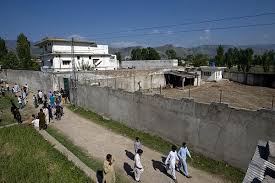
Bin Laden home in Abbotabad (Credit: csmonitor.com)
Shortly after the Sept. 11 attacks, I went to live and report for The New York Times in Afghanistan. I would spend most of the next 12 years there, following the overthrow of the Taliban, feeling the excitement of the freedom and prosperity that was promised in its wake and then watching the gradual dissolution of that hope. A new Constitution and two rounds of elections did not improve the lives of ordinary Afghans; the Taliban regrouped and found increasing numbers of supporters for their guerrilla actions; by 2006, as they mounted an ambitious offensive to retake southern Afghanistan and unleashed more than a hundred suicide bombers, it was clear that a deadly and determined opponent was growing in strength, not losing it. As I toured the bomb sites and battlegrounds of the Taliban resurgence, Afghans kept telling me the same thing: The organizers of the insurgency were in Pakistan, specifically in the western district of Quetta. Police investigators were finding that many of the bombers, too, were coming from Pakistan.
In December 2006, I flew to Quetta, where I met with several Pakistani reporters and a photographer. Together we found families who were grappling with the realization that their sons had blown themselves up in Afghanistan. Some were not even sure whether to believe the news, relayed in anonymous phone calls or secondhand through someone in the community. All of them were scared to say how their sons died and who recruited them, fearing trouble from members of the ISI, Pakistan’s main intelligence service.
After our first day of reporting in Quetta, we noticed that an intelligence agent on a motorbike was following us, and everyone we interviewed was visited afterward by ISI agents. We visited a neighborhood called Pashtunabad, “town of the Pashtuns,” a close-knit community of narrow alleys inhabited largely by Afghan refugees who over the years spread up the hillside, building one-story houses from mud and straw. The people are working class: laborers, bus drivers and shopkeepers. The neighborhood is also home to several members of the Taliban, who live in larger houses behind high walls, often next to the mosques and madrasas they run.
The small, untidy entrance on the street to one of those madrasas, the Jamiya Islamiya, conceals the size of the establishment. Inside, a brick-and-concrete building three stories high surrounds a courtyard, and classrooms can accommodate 280 students. At least three of the suicide bombers we were tracing had been students here, and there were reports of more. Senior figures from Pakistani religious parties and provincial-government officials were frequent visitors, and Taliban members would often visit under the cover of darkness in fleets of S.U.V.s.
We requested an interview and were told that a female journalist would not be permitted inside, so I passed some questions to the Pakistani reporter with me, and he and the photographer went in. The deputy head of the madrasa denied that there was any militant training there or any forced recruitment for jihad. “We are educating the students in the Quran, and in the Quran it is written that it is every Muslim’s obligation to wage jihad,” he said. “All we are telling them is what is in the Quran. Then it is up to them to go to jihad.” He ended the conversation. Classes were breaking up, and I could hear a clamor rising as students burst out of their classrooms. Boys poured out of the gates onto the street. They looked spindly, in flapping clothes and prayer caps, as they darted off on their bikes and on foot, chasing one another down the street.
The reporter and the photographer joined me outside. They told me that words of praise were painted across the wall of the inner courtyard for the madrasa’s political patron, a Pakistani religious-party leader, and the Taliban leader Mullah Muhammad Omar. This madrasa, like so many in Pakistan, was a source of the Taliban resurgence that President Hamid Karzai and other Afghan leaders had long been warning about. In this nondescript madrasa in a poor neighborhood of Quetta, one of hundreds throughout the border region, the Taliban and Pakistan’s religious parties were working together to raise an army of militants.
“The madrasas are a cover, a camouflage,” a Pashtun legislator from the area told me. Behind the curtain, hidden in the shadows, lurked the ISI.
The Pakistani government, under President Pervez Musharraf and his intelligence chief, Lt. Gen. Ashfaq Parvez Kayani, was maintaining and protecting the Taliban, both to control the many groups of militants now lodged in the country and to use them as a proxy force to gain leverage over and eventually dominate Afghanistan. The dynamic has played out in ways that can be hard to grasp from the outside, but the strategy that has evolved in Pakistan has been to make a show of cooperation with the American fight against terrorism while covertly abetting and even coordinating Taliban, Kashmiri and foreign Qaeda-linked militants. The linchpin in this two-pronged and at times apparently oppositional strategy is the ISI. It’s through that agency that Pakistan’s true relationship to militant extremism can be discerned — a fact that the United States was slow to appreciate, and later refused to face directly, for fear of setting off a greater confrontation with a powerful Muslim nation.
On our fifth and last day in Quetta, four plainclothes agents detained my photographer colleague at his hotel. They seized his computer and photo equipment and brought him to the parking lot of the hotel where I was staying. There they made him call and ask me to come down to talk to them. “I’m in trouble here,” he told me. It was after dark. I did not want to go down to the parking lot, but I told my colleague I would get help. I alerted my editor in New York and then tried to call Pakistani officials.
Before I could reach them, the agents broke through the door of my hotel room. The lintel splintered, and they burst in in a rush, snatching my laptop from my hands. There was an English-speaking officer wearing a smart new khaki-colored fleece. The other three, one of whom had the photographer in tow, were the muscle.
They went through my clothes and seized my notebooks and a cellphone. When one of the men grabbed my handbag, I protested. He punched me twice, hard, in the face and temple, and I fell back onto the coffee table, grabbing at the officer’s fleece to break my fall and smashing some cups when I landed. For a moment it was funny. I remember thinking it was just like a hotel-room bust-up in the movies.
Then I flew into a rage, berating them for barging into a woman’s bedroom and using physical violence. The officer told me that I was not permitted to visit the neighborhood of Pashtunabad and that it was forbidden to interview members of the Taliban. As they were leaving, I said the photographer had to stay with me. “He is Pakistani,” the officer said. “We can do with him whatever we want.” I knew they were capable of torture and murder, especially in Quetta, where the security services were a law unto themselves. The story they didn’t want out in the open was the government’s covert support for the militant groups that were propagating terrorism in Afghanistan and beyond.
Six months later, Pakistan blew up. In the spring of 2007 in Islamabad, female students from a madrasa attached to the Red Mosque were staging a sit-in to protest the demolition of several illegal mosques in the city. The Red Mosque stood at the center of Pakistan’s support for jihad in Afghanistan and throughout the Muslim world. It was founded by a famed jihadi preacher, Maulana Muhammad Abdullah, who was assassinated in 1998, not long after he visited Osama bin Laden in Afghanistan. Al Qaeda blamed the killing on the Pakistani government at the time.
Abdullah’s sons inherited the mosque and continued its extremist teachings. The eldest, Maulana Abdul Aziz, delivered fiery Friday sermons excoriating Musharraf for his public stance on the fight against terrorism and his dealings with the American government. Despite an earlier reputation as a nonreligious bureaucrat, the younger brother, Abdul Rashid Ghazi, spoke of undergoing a conversion after his father’s death and a meeting with Bin Laden, and by 2007 he would not leave the Red Mosque compound for fear of arrest. He warned that ranks of suicide bombers would retaliate if the government moved against the student protesters.
With such leaders behind them, the students began staging vigilante actions in the streets. They were radical and obsessive, vowing to die rather than give up their protest. The government’s inaction only encouraged them. Several months after the protest began, a group of students made a midnight raid on a massage parlor and abducted several Chinese women.
Remonstrations from China, Pakistan’s most important regional ally, pushed Musharraf to take action. Pakistani Army rangers occupied a school across the street, and police officers and soldiers moved in to surround the mosque on July 3. Armed fighters appeared from the mosque, carrying rockets and assault rifles and taking up sandbagged positions on the mosque walls. Loudspeakers told the students that this was the time for bravery. A female student took over the microphone. “Allah, where is your help?” she asked in a quavering voice. “Destroy the enemies. Tear their hearts apart. Throw fireballs on them.”
Islamabad is a green, tranquil home for civil servants and diplomats, but for several days it resounded with gunfire and explosions. Crowds of worried parents arrived from all over the country to try to retrieve their children. The Red Mosque leaders tried to make the students stay. “They said if the women and others die, the people will take their side,” one father told me, and I realized then how premeditated this all was, how the girls were pawns in their plan to spark a revolution.
A week after the siege began, there was a ferocious battle. Elite Pakistani commandos rappelled from helicopters into the mosque and were raked with machine-gun fire. Perched in the mosque’s minarets and throughout its 75 rooms, the militants fought for 10 hours. They hurled grenades from bunkers and basements, and suicide bombers threw themselves at their attackers. The commandos found female students hiding in a bricked-up space beneath the stairs and led 50 women and girls to safety. Ghazi retreated to a basement in the compound. He died there as the last surviving fighters battled around him.
More than 100 people were killed in the siege, including 10 commandos. The ISI — despite having a long relationship with the mosque and its leaders, as well as two informers inside providing intelligence — played a strangely ineffective role. In a cabinet meeting after the siege, ministers questioned a senior ISI official about the intelligence service’s failure to prevent the militant action. “Who I meet in the evening and what I discuss is on your desk the next morning,” one minister told the official. “How come you did not know what was happening a hundred meters from the ISI headquarters?” The official sat in silence as ministers thumped their desks in a gesture of agreement.
“One hundred percent they knew what was happening,” a former cabinet minister who attended the meeting told me. The ISI allowed the militants to do what they wanted out of sympathy, he said. “The state is not as incompetent as people believe.”
The Pakistani military faced an immediate and vicious backlash. In the months that followed, there were strikes against convoys of soldiers in the northwest and a wave of suicide bombings against government, military and civilian targets throughout the country, including the army’s headquarters and the main ISI compound in Rawalpindi. After years of nurturing jihadists to fight its proxy wars, Pakistan was now experiencing the repercussions. “We could not control them,” a former senior intelligence official told a colleague and me six months after the Red Mosque siege.
Yet even as the militants were turning against their masters, Pakistan’s generals still sought to use them for their own purpose, most notoriously targeting Pakistan’s first female prime minister, Benazir Bhutto, who was preparing to fly home from nearly a decade in exile in the fall of 2007. Bhutto had forged a deal with Musharraf that would allow him to resign as army chief but run for another term as president, while clearing the way for her to serve as prime minister. Elections were scheduled for early 2008.
Bhutto had spoken out more than any other Pakistani politician about the dangers of militant extremism. She blamed foreign militants for annexing part of Pakistan’s territory and called for military operations into Waziristan. She declared suicide bombing un-Islamic and seemed to be challenging those who might target her. “I do not believe that any true Muslim will make an attack on me because Islam forbids attacks on women, and Muslims know that if they attack a woman, they will burn in hell,” she said on the eve of her return.
She also promised greater cooperation with Afghanistan and the United States in combating terrorism and even suggested in an interview that she would give Western officials access to the man behind Pakistan’s program of nuclear proliferation, A. Q. Khan.
President Karzai of Afghanistan warned Bhutto that his intelligence service had learned of threats against her life. Informers had told the Afghans of a meeting of army commanders — Musharraf and his 10 most-powerful generals — in which they discussed a militant plot to have Bhutto killed.
On Oct. 18, 2007, Bhutto flew into Karachi. I was one of a crowd of journalists traveling with her. She wore religious amulets and offered prayers as she stepped onto Pakistani soil. Hours later, as she rode in an open-top bus through streets of chanting supporters, two huge bombs exploded, tearing police vans, bodyguards and party followers into shreds. Bhutto survived the blast, but some 150 people died, and 400 were injured.
Bhutto claimed that Musharraf had threatened her directly, and Karzai again urged her to take more precautions, asking his intelligence service to arrange an armored vehicle for her equipped with jammers to block the signals of cellphones, which are often used to detonate bombs. In the meantime, Bhutto pressed on with her campaign, insisting on greeting crowds of supporters from the open top of her vehicle.
In late December, a group of militants, including two teenage boys trained and primed to commit suicide bombings, arrived at the Haqqania madrasa in the northwestern town of Akora Khattak. The madrasa is a notorious establishment, housing 3,000 students in large, whitewashed residence blocks. Ninety-five percent of the Taliban fighting in Afghanistan have passed through its classrooms, a spokesman for the madrasa proudly told me. Its most famous graduate is Jalaluddin Haqqani, a veteran Afghan mujahedeen commander whose network has become the main instrument for ISI-directed attacks in Kabul and eastern Afghanistan.
The two young visitors who stopped for a night at the madrasa were escorted the next day to Rawalpindi, where Bhutto would be speaking at a rally on Dec. 27. As her motorcade left the rally, it slowed so she could greet supporters in the street. One of the two teenagers fired a pistol at her and then detonated his vest of explosives. Bhutto was standing in the roof opening of an armored S.U.V. She ducked into the vehicle at the sound of the gunfire, but the explosion threw the S.U.V. forward, slamming the edge of the roof hatch into the back of her head with lethal force. Bhutto slumped down into the vehicle, mortally wounded, and fell into the lap of her confidante and constant chaperone, Naheed Khan.
As Bhutto had long warned, a conglomeration of opponents wanted her dead and were all linked in some way. They were the same forces behind the insurgency in Afghanistan: Taliban and Pakistani militant groups and Al Qaeda, as well as the Pakistani military establishment, which included the top generals, Musharraf and Kayani. A United Nations Commission of Inquiry into the circumstances of Bhutto’s death found that each group had a motive and merited investigation.
Pakistani prosecutors later indicted Musharraf on charges of being part of a wider conspiracy to remove Bhutto from the political scene. There was “overwhelming circumstantial evidence” that he did not provide her with adequate security because he wanted to ensure her death in an inevitable assassination attempt, the chief state prosecutor in her murder trial, Chaudhry Zulfiqar Ali, told me. (Musharraf denied the accusations.) A hard-working, hard-charging man, Ali succeeded in having Musharraf arrested and was pushing to speed up the trial when he was shot to death on his way to work in May 2013.
Ali had no doubts that the mastermind of the plot to kill Bhutto was Al Qaeda. “It was because she was pro-American, because she was a strong leader and a nationalist,” he told me. A Pakistani security official who interviewed some of the suspects in the Bhutto case and other militants detained in Pakistan’s prisons came to the same conclusion. The decision to assassinate Bhutto was made at a meeting of the top council of Al Qaeda, the official said.
It took more than three years before the depth of Pakistan’s relationship with Al Qaeda was thrust into the open and the world learned where Bin Laden had been hiding, just a few hundred yards from Pakistan’s top military academy. In May 2011, I drove with a Pakistani colleague down a road in Abbottabad until we were stopped by the Pakistani military. We left our car and walked down a side street, past several walled houses and then along a dirt path until there it was: Osama bin Laden’s house, a three-story concrete building, mostly concealed behind concrete walls as high as 18 feet, topped with rusting strands of barbed wire. This was where Bin Laden hid for nearly six years, and where, 30 hours earlier, Navy SEAL commandos shot him dead in a top-floor bedroom.
After a decade of reporting in Afghanistan and Pakistan and tracking Bin Laden, I was fascinated to see where and how he hid. He had dispensed with the large entourage that surrounded him in Afghanistan. For nearly eight years, he relied on just two trusted Pakistanis, whom American investigators described as a courier and his brother.
People knew that the house was strange, and one local rumor had it that it was a place where wounded Taliban from Waziristan recuperated. I was told this by Musharraf’s former civilian intelligence chief, who had himself been accused of having a hand in hiding Bin Laden in Abbottabad. He denied any involvement, but he did not absolve local intelligence agents, who would have checked the house. All over the country, Pakistan’s various intelligence agencies — the ISI, the Intelligence Bureau and Military Intelligence — keep safe houses for undercover operations. They use residential houses, often in quiet, secure neighborhoods, where they lodge people for interrogation or simply enforced seclusion. Detainees have been questioned by American interrogators in such places and sometimes held for months. Leaders of banned militant groups are often placed in protective custody in this way. Others, including Taliban leaders who took refuge in Pakistan after their fall in Afghanistan in 2001, lived under a looser arrangement, with their own guards but also known to their Pakistani handlers, former Pakistani officials told me. Because of Pakistan’s long practice of covertly supporting militant groups, police officers — who have been warned off or even demoted for getting in the way of ISI operations — have learned to leave such safe houses alone.
The split over how to handle militants is not just between the ISI and the local police; the intelligence service itself is compartmentalized. In 2007, a former senior intelligence official who worked on tracking members of Al Qaeda after Sept. 11 told me that while one part of the ISI was engaged in hunting down militants, another part continued to work with them.
Soon after the Navy SEAL raid on Bin Laden’s house, a Pakistani official told me that the United States had direct evidence that the ISI chief, Lt. Gen. Ahmed Shuja Pasha, knew of Bin Laden’s presence in Abbottabad. The information came from a senior United States official, and I guessed that the Americans had intercepted a phone call of Pasha’s or one about him in the days after the raid. “He knew of Osama’s whereabouts, yes,” the Pakistani official told me. The official was surprised to learn this and said the Americans were even more so. Pasha had been an energetic opponent of the Taliban and an open and cooperative counterpart for the Americans at the ISI. “Pasha was always their blue-eyed boy,” the official said. But in the weeks and months after the raid, Pasha and the ISI press office strenuously denied that they had any knowledge of Bin Laden’s presence in Abbottabad.
Colleagues at The Times began questioning officials in Washington about which high-ranking officials in Pakistan might also have been aware of Bin Laden’s whereabouts, but everyone suddenly clammed up. It was as if a decision had been made to contain the damage to the relationship between the two governments. “There’s no smoking gun,” officials in the Obama administration began to say.
The haul of handwritten notes, letters, computer files and other information collected from Bin Laden’s house during the raid suggested otherwise, however. It revealed regular correspondence between Bin Laden and a string of militant leaders who must have known he was living in Pakistan, including Hafiz Muhammad Saeed, the founder of Lashkar-e-Taiba, a pro-Kashmiri group that has also been active in Afghanistan, and Mullah Omar of the Taliban. Saeed and Omar are two of the ISI’s most important and loyal militant leaders. Both are protected by the agency. Both cooperate closely with it, restraining their followers from attacking the Pakistani state and coordinating with Pakistan’s greater strategic plans. Any correspondence the two men had with Bin Laden would probably have been known to their ISI handlers.
Bin Laden did not rely only on correspondence. He occasionally traveled to meet aides and fellow militants, one Pakistani security official told me. “Osama was moving around,” he said, adding that he heard so from jihadi sources. “You cannot run a movement without contact with people.” Bin Laden traveled in plain sight, his convoys always knowingly waved through any security checkpoints.
In 2009, Bin Laden reportedly traveled to Pakistan’s tribal areas to meet with the militant leader Qari Saifullah Akhtar. Informally referred to as the “father of jihad,” Akhtar is considered one of the ISI’s most valuable assets. According to a Pakistani intelligence source, he was the commander accused of trying to kill Bhutto on her return in 2007, and he is credited with driving Mullah Omar out of Afghanistan on the back of a motorbike in 2001 and moving Bin Laden out of harm’s way just minutes before American missile strikes on his camp in 1998. After the Sept. 11 attacks, he was detained several times in Pakistan. Yet he was never prosecuted and was quietly released each time by the ISI.
At his meeting with Bin Laden in August 2009, Akhtar is reported to have requested Al Qaeda’s help in mounting an attack on the Pakistani army headquarters in Rawalpindi. Intelligence officials learned about the meeting later that year from interrogations of men involved in the attack. Information on the meeting was compiled in a report seen by all of the civilian and military intelligence agencies, security officials at the Interior Ministry and American counterterrorism officials.
At the meeting, Bin Laden rejected Akhtar’s request for help and urged him and other militant groups not to fight Pakistan but to serve the greater cause — the jihad against America. He warned against fighting inside Pakistan because it would destroy their home base: “If you make a hole in the ship, the whole ship will go down,” he said.
He wanted Akhtar and the Taliban to accelerate the recruitment and training of fighters so they could trap United States forces in Afghanistan with a well-organized guerrilla war. Bin Laden said that Afghanistan, Pakistan, Somalia and the Indian Ocean region would be Al Qaeda’s main battlefields in the coming years, and that he needed more fighters from those areas. He even offered naval training for militants, saying that the United States would soon exit Afghanistan and that the next war would be waged on the seas.
Akhtar, in his mid-50s, remains at large in Pakistan. He is still active in jihadi circles and in running madrasas — an example of a militant commander whom the ISI has struggled to control yet is too valuable for them to lock up or eliminate.
In trying to prove that the ISI knew of Bin Laden’s whereabouts and protected him, I struggled for more than two years to piece together something other than circumstantial evidence and suppositions from sources with no direct knowledge. Only one man, a former ISI chief and retired general, Ziauddin Butt, told me that he thought Musharraf had arranged to hide Bin Laden in Abbottabad. But he had no proof and, under pressure, claimed in the Pakistani press that he’d been misunderstood. Finally, on a winter evening in 2012, I got the confirmation I was looking for. According to one inside source, the ISI actually ran a special desk assigned to handle Bin Laden. It was operated independently, led by an officer who made his own decisions and did not report to a superior. He handled only one person: Bin Laden. I was sitting at an outdoor cafe when I learned this, and I remember gasping, though quietly so as not to draw attention. (Two former senior American officials later told me that the information was consistent with their own conclusions.) This was what Afghans knew, and Taliban fighters had told me, but finally someone on the inside was admitting it. The desk was wholly deniable by virtually everyone at the ISI — such is how supersecret intelligence units operate — but the top military bosses knew about it, I was told.
America’s failure to fully understand and actively confront Pakistan on its support and export of terrorism is one of the primary reasons President Karzai has become so disillusioned with the United States. As American and NATO troops prepare to withdraw from Afghanistan by the end of this year, the Pakistani military and its Taliban proxy forces lie in wait, as much a threat as any that existed in 2001.
In January 2013, I visited the Haqqania madrasa to speak with senior clerics about the graduates they were dispatching to Afghanistan. They agreed to let me interview them and gave the usual patter about it being each person’s individual choice to wage jihad. But there was also continuing fanatical support for the Taliban. “Those who are against the Taliban, they are the liberals, and they only represent 5 percent of Afghans,” the spokesman for the madrasa told me. He and his fellow clerics were set on a military victory for the Taliban in Afghanistan. Moreover, he said, “it is a political fact that one day the Taliban will take power. The white flag of the Taliban will fly again over Kabul, inshallah.”
Pakistani security officials, political analysts, journalists and legislators warned of the same thing. The Pakistani military was still set on dominating Afghanistan and was still determined to use the Taliban to exert influence now that the United States was pulling out.
Kathy Gannon of The Associated Press reported in September that militants from Punjab, Pakistan’s most populous province, were massing in the tribal areas to join the Taliban and train for an anticipated offensive into Afghanistan this year. In Punjab, mainstream religious parties and banned militant groups were openly recruiting hundreds of students for jihad, and groups of young men were being dispatched to Syria to wage jihad there. “They are the same jihadi groups; they are not 100 percent under control,” a former Pakistani legislator told me. “But still the military protects them.”
The United States was neither speaking out against Pakistan nor changing its policy toward a government that was exporting terrorism, the legislator lamented. “How many people have to die before they get it? They are standing by a military that protects, aids and abets people who are going against the U.S. and Western mission in Afghanistan, in Syria, everywhere.”
When I remember the beleaguered state of Afghanistan in 2001, I marvel at the changes the American intervention has fostered: the rebuilding, the modernity, the bright graduates in every office. Yet after 13 years, more than a trillion dollars spent, 120,000 foreign troops deployed at the height of the war and tens of thousands of lives lost, Afghanistan’s predicament has not changed: It remains a weak state, prey ambitions of its neighbors and extremist Islamists. This is perhaps an unpopular opinion, but to pull out now is, undeniably, to leave with the job only half-done.
The blockage of Marx’s visa is seen as the latest in a series of moves by the Pakistani government to discourage journalists from covering the region.
Balochistan is a region that sits in parts of Pakistan, Iran and Afghanistan. It has long been unstable and mired in political violence over its autonomy. The Pakistani government has been accused of “forced disappearing” and other human rights violations in the region.
“Balochistan: At a Crossroads,” a collaborative effort of Marx and French photojournalist Marc Wattrelot, was published earlier this month. The two traveled extensively in Balochistan to capture all aspects of life in the contested area. All of the proceeds are being donated to UNICEF to polio eradication efforts in Quetta, the capital of the Balochistan province.
Marx and other journalists have accused the Pakistani government of blocking information coming out of the region. Balochistan, like most regions outside of major Pakistani urban areas, can only be visited with permission from Pakistani security agencies.
A representative for Marx said he has been detained in the past and has had tapes confiscated by Pakistani authorities. New York Times reporter Carlotta Gall was assaulted and detained by Pakistani officials in 2006 after a report she did in Quetta. In at least one occasion, Marx was able to travel to the region and report by saying he was writing on economic topics.
The government is also accused of blocking access to Balochistan-related information within the country. When asked, Marx said, “It’s like a hidden secret. I cannot get a single person to sell this book. It’s quite bizarre. It’s not because the booksellers don’t want to sell it. They are worried that they will have their premises investigated. No wholesaler will import it. It’s really extraordinary.”
Yesterday, U.S. Representative Louie Gohmert spoke out about the violence in Balochistan and criticized the welcoming of Pakistani officials by the U.S. State Department.
The State Department heavily disagrees. It released a statement soon after, saying that “the United States respects the territorial integrity of Pakistan. It is not the policy of the administration to support independence for Balochistan.”
Erin White & Bunty Sharma (Credit: timesofindia.com)
A devoted American social worker has been stabbed to death by her Indian husband of five months – who then returned to their home and blew himself up.
Erin Willinger, 35, a yoga teacher and psychologist from New York, was found dumped in a bush with multiple stab wounds to her face and body in the city of Agra on Thursday night, according to Indian news reports.
Her husband, 32-year-old Bunty Sharma, returned to their home, where he is believed to have ignited cooking gas, causing a massive explosion that killed him.
The tragedy comes just months after the couple met and married – but accused each other of lying about previous marriages, while Willinger also accused her new husband of infidelity.
Willinger had visited Agra – which is about 120 miles south of New Delhi – with a group of Americans in July and chose to stay after telling the Indo-Asian News Service she wanted to help make the city worthy of ‘such a beautiful monument as the Taj Mahal’.
But within weeks, their marriage began to crumble and by December, they started living separately.
Both accused the other of hiding previous marriages and Willinger, who went by the alias Kiran Sharma and also uses the name Erin White, accused her new husband of greed, infidelity and cruelty, the Hindustan Times reported.
White approached the Agra Police’s Mediation Cell for Family Matters in January, asking for help and the couple was put in touch with a counselor, who encouraged them to start living together again.
But the arguments continued and on Thursday evening, Bunty reportedly drove Willinger to a quieter section of the city and stabbed her to death in his taxi cab.
He then shoved her body in bushes along the road, the Hindustan Times reported.
He then returned home and locked himself in his room on the second floor.
Local residents then said they heard a loud explosion and saw flames erupting from the room. When they rushed inside to rescue him, they found his charred body on the floor.
Authorities believe Bunty sparked the blast by igniting gas he had released from a cooking gas cylinder in the apartment.
The union home ministry and the American embassy in New Delhi have been informed.
A State Department official confirmed Willinger’s death.
‘We offer our condolences to her family and loved ones on their loss,’ the official told MailOnline.
‘We are in contact with her family and are providing all appropriate consular assistance. Out of respect for the privacy of those affected, we decline further comment.’
Before her death, Willinger had revealed that she was deeply in love with Indian culture and wanted to improve civic conditions in Agra.
On the day she was killed, she addressed a press conference to promote her campaign ‘Agra Sunder Hai’, and several local NGOs pledged support to her.
She had said she hoped to help Agra with improving its water, plastic waste and garbage disposal.
She said that she wanted to stay in Agra until ’60 or maybe more – as long as the body permits’.
‘This city needs a push,’ she said. ‘The city is dirty and no one wants to stay back here for a night. You have to teach people to be conscious of hygiene, health and sensibilities of others. You have to build trust and reach out.’
She spoke of taking money from the rich to give resources to the poor, and said she hoped to get actors and other celebrities on board to help make programs more attractive.
And she was confident that her idea was going to be a success.
‘I am talking with so many [students, businessmen and professionals] and they all agree that the time for change has indeed come,’ she said.
‘You need role models. A democratic society needs inspiring heroes to move ahead. You need success stories to diffuse the clouds of negativity all around.
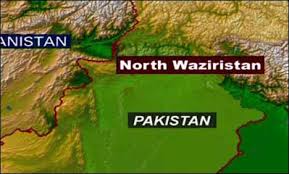
ISLAMABAD: The government is all set to launch a ground offensive in North Waziristan Agency, signalling a paradigm shift in its policy. Talking to The Express Tribune, both government and security officials confirmed that the civil and military leaderships have finally concluded that a targeted military operation is now ‘unavoidable’.
A high-level meeting chaired by Prime Minister Nawaz Sharif and attended by army chief General Raheel Sharif and other senior officials on Thursday discussed several options to deal with the Taliban in the face of a recent surge in attacks carried out by the group.
One official, who asked to remain anonymous, disclosed that there was a ‘greater realisation’ among all stakeholders that certain groups will never enter into dialogue and will have to be dealt with the use of force. Sources said the decision to initiate a ground offensive in March is believed to be taken on account of the challenge posed by the harsh winter in North Waziristan to security personnel operating in the agency. However, surgical strikes may soon be carried out against Taliban hideouts ahead of the targeted operation in the tribal region.
When asked a security official pointed out that the military was ready to take on the challenge. “We [the army] have the capacity and the will to eliminate all such groups which are not willing to reconcile,” said the official.
Pakistan has long resisted foreign pressure to launch a ground offensive in North Waziristan, which is considered a safe haven not only for TTP, but several other groups, such as the Haqqani Network.
It is unclear, however, whether the March operation will also target the Haqqani Network.
One retired officer, who is still closely connected with the security establishment, said the Haqqanis by now probably understand that the operation in North Waziristan is inevitable.
“The Haqqanis have strongholds in Afghanistan’s three provinces and they will definitely move out of North Waziristan before the start of any operation,” the retired two-star army officer told The Express Tribune.
However, he said a military operation should have been carried out much earlier and a lot of time had already been wasted in the name of peace talks.
The Express Tribune has also learnt that the recent air strikes in North Waziristan were carried out after security agencies exploited divisions within various outfits operating in the region. Some of the groups, which are willing to hold peace talks, had provided ‘key intelligence’ about the presence of senior TTP commanders and other foreign fighters in Mir Ali and Miramshah.
On the other hand, a senior cabinet member said the government would still hold talks with groups willing to reconcile. “But those who are not willing to accept our peace offers will have to be dealt with accordingly,” he added.
UK prosecutors have asked Pakistan to trace two suspects believed to have been involved in the 2010 murder of Imran Farooq, a senior leader of the Muttahida Qaumi Movement (MQM).
He was stabbed outside his home in Edgware, London, close to the Pakistani political party’s international HQ.
Documents obtained by BBC Newsnight name the suspects as Mohsin Ali Syed and Mohammed Kashif Khan Kamran.
They are believed to be in Pakistani custody but not under formal arrest.
The investigation into Mr Farooq’s murder has seen more than 4,000 people interviewed, but so far the only person arrested in the case has been Iftikhar Hussain, the nephew of MQM’s London-based leader Altaf Hussain.
Iftikhar Hussain was arrested on suspicion of conspiracy to murder, but is now on police bail. It is an arrest the party says was based on wrong information.
MQM senator Farogh Naseem has described Iftikhar Hussain as “not a person who is really with himself mentally”. He said Iftikhar Hussain had suffered at the hands of the Pakistani authorities.
In November 2011 – 14 months after the murder – Metropolitan Police chief Bernard Hogan-Howe said his force was liaising with Pakistani authorities over two arrests believed to have been made in Karachi.
Since then, however, the force has refused to confirm or deny that it is seeking Pakistani assistance.
The Pakistani government has denied anyone has been arrested and officials have failed to respond to questions about the request from the UK’s Crown Prosecution Service.
The documents, obtained by Newsnight from official sources in Pakistan, suggest Mohsin Ali Syed and Mohammed Kashif Khan Kamran secured UK visas on the basis of being granted admission to the London Academy of Management Sciences (LAMS), in east London.
The documents name two other men. One is Karachi-based businessman Muazzam Ali Khan, of Comnet Enterprises, who is believed to have endorsed the suspects’ UK visa applications and was in regular contact with Iftikhar Hussain throughout 2010.
In 2011, police released an e-fit image of a suspect in the murder case
The other is Atif Siddique, an educational consultant in Karachi, who is believed to have processed them.
Atif Siddique said he was not the agent of LAMS and did not know the two suspects.
Mr Ali Khan has not responded to e-mails and phone calls offering him the chance to respond.
A director of the college, Asif Siddique – Atif Siddique’s brother – has confirmed the two students were meant to study there. One of them registered, but failed to attend.
LAMS is designated as a “highly trusted” partner of the UK Border Agency, which means it is supposed to report the non-attendance of students within 10 days of the 10th missed student encounter with staff. Asif Siddique said the college had reported one of the student’s non-attendance to the UK authorities in May 2012.
‘Under surveillance’
The Home Office has refused to say whether or not it believes LAMS broke the rules for reporting non-attendance, but has said it is not currently investigating the college.
Mohsin Ali Syed, in his late 20s, arrived in the UK in February 2010. He moved between a number of London addresses, including bedsits in Tooting, in south London, and Whitchurch Lane, in Edgware.
Mohammed Kashif Khan Kamran arrived in the UK in early September 2010. Phone records indicate the two moved around together and it is believed they kept Mr Farooq under surveillance.
Altaf Hussain has widespread support in Karachi but is based in Edgware
The murder weapons were left at the scene of the crime and the documents seen by Newsnight state that the British authorities are seeking DNA samples as evidence that could be used in a British court.
Records show that both men left the UK on 16 September 2010, a few hours after the murder had happened, and flew to Sri Lanka, and then on to Karachi on the 19 September.
According to immigration officials in Pakistan, security officials picked them up on the tarmac before they left Karachi airport. Pakistani security sources deny that the men were picked up as a result of a British tip-off.
Whereabouts unknown
Documents lodged with Sindh High Court refer to another man, Khalid Shamim, who is believed to have helped the two suspects return to Pakistan. His wife has started legal proceedings in the court in an attempt to trace his whereabouts.
The MQM, Karachi’s dominant political party, describes itself as a modern, secular and middle class party. Senior party figures say it offers the best chance of opposing the rise of the Taliban in Pakistan’s largest city.
It insists it is a peaceful party, but its opponents complain that the UK allows it to use London as a safe haven from which it can organise its violent control of Karachi.
The party says it wants to co-operate with the murder inquiry, but insists it has nothing to do with the case and accuses UK police of harassment.
Last month, Altaf Hussain complained police were making his life “hell”.
KARACHI, Jan 30: The Muttahida Qaumi Movement (MQM) said on Thursday it had no links with the two persons identified in a BBC programme as suspects in the murder of Dr Imran Farooq, a senior leader of the party.
The party criticised BBC for making a documentary against the MQM and its chief Altaf Hussain and said the purpose of “the media trial” was to “influence the courts as well as the murder investigation in the UK”.
In its Newsnight programme, the broadcaster named Pakistani students Mohsin Ali Syed and Mohammad Kashif Khan Kamran as the suspects. It said the record showed that the two left the UK on Sept 16, 2010, a few hours after the assassination, and flew to Sri Lanka and then on Sept 19 to Karachi. They were detained in the city.
Mr Farooq was stabbed outside his home in Edgware, London, near the MQM’s international headquarters.
At a press conference in Karachi, MQM leader Dr Khalid Maqbool Siddiqui made it clear that the party had no links with the two “suspects” and that it was the responsibility of the British government to charge them with the murder.
He said the MQM also did not know Atif Siddique, the person named as the sponsor of the two men for their UK visa.
The MQM leader wondered why the British authorities had allowed Mr Syed and Mr Kamran to leave the UK if they were wanted for their involvement in Dr Farooq’s assassination.
Accompanied by Dr Farooq Sattar and Barrister Farogh A. Nasim, Dr Siddiqui said that the MQM was being victimised in the UK. He said Mr Hussain was a coin collector, but the British investigators had seized his collection and also the laptop of his daughter.
Rejecting the report, the MQM leaders said that Muttahida believed in freedom of the press, but the BBC programme was aimed at spreading false propaganda and “we believe it is the media trial of the MQM and Mr Hussain”. Barrister Nasim said the report was based on speculation and contained no fact.
He said he had responded to the allegation of money laundering in the BBC programme, but that part was edited out. He said BBC was being fed misleading information by the MQM’s opponents and announced that a legal course of action would be adopted against it.
PROSECUTORS’ REQUEST: According to the BBC report, British prosecutors have asked Pakistan to trace Mr Syed and Mr Kamran, who are believed to be in Pakistani custody but not under formal arrest.
The investigation has seen more than 4,000 people interviewed, but so far the only person arrested has been Iftikhar Hussain, nephew of the MQM’s chief.
Iftikhar Hussain was arrested on suspicion of conspiracy to murder, but is now on police bail. It is an arrest the MQM says was based on wrong information.
Barrister Nasim described Iftikhar Hussain as “not a person who is really with himself mentally” and added that Iftikhar Hussain had suffered at the hands of the Pakistani authorities.
In November 2011, Metropolitan Police chief Bernard Hogan-Howe said his organisation was liaising with Pakistani authorities over the arrests.
The Pakistan government has denied anyone has been arrested and officials had not replied to questions about the request from the UK’s Crown Prosecution Service.
Documents obtained by BBC from official sources in Pakistan suggest Mr Syed and Mr Kamran secured UK visas on the basis of admission to the London Academy of Management Sciences (Lams).
The documents name two other men. One is Karachi-based businessman Muazzam Ali Khan, who is believed to have endorsed the suspects’ UK visa applications and was in contact with Iftikhar Hussain throughout 2010
The other is Atif Siddique, an educational consultant in Karachi, who is believed to have processed them. Mr Siddique said he was not the agent of Lams and did not know the two suspects.
Mr Syed arrived in the UK in February 2010 and Mr Kamran in early September 2010.
Phone records indicate the two moved around together and it is believed they kept Mr Farooq under surveillance.
Washington, Jan 19: On a recent Friday evening in Kabul, I gathered with friends at the Lebanese restaurant that had long been a convivial and secure oasis in a harsh and unpredictable country. The occasion was a farewell meal before I left for the States — a cherished ritual in my many visits to Afghanistan over the past decade.
As always, after an abundant assortment of mezze, we raised our discreet cups of “white tea” and promised to meet there next time. As always, the proprietor, Kamel Hamade, a dapper businessman from Beirut, refused to let us pay. “Give the money to help the animals instead,” he would insist.
Kamel was an animal lover, political gadfly and the genial host of La Taverna du Liban, a cozy bistro that catered to the foreign and local elite — Western aid workers, Middle Eastern entrepreneurs, Afghan ministry officials. There was a frisson of intrigue amid the hookah smoke and hushed chatter. We jokingly called it the “Rick’s Café” of Kabul.
There was also real danger lurking outside, we all knew. Taliban militants often targeted establishments where Westerners worked or met, and Kamel had beefed up security repeatedly against possible attacks. He was a gentleman, but also a survivor of civil war and a scrappy businessman who never shied from a fight. He kept a loaded gun in his room upstairs and a formidable mastiff named Jeff in a pen by the front door.
“I’ve got to get out of here,” he swore to me a dozen times in the past several years. “There’s too much tension, too much difficulty. I’m going to open a restaurant somewhere nice, like Geneva or New Zealand.”
But although he often travelled home to Beirut or abroad on business, Kamel never did abandon Kabul and La Taverna. He stayed on, even as foreign missions began closing in anticipation of Western troop withdrawals, political instability and growing violence. He stayed on even after other restaurants folded, reservations flagged due to diplomatic security alerts, and a business dispute led to a shootout at the restaurant and landed him briefly in an Afghan jail.
As long as La Taverna remained open — as long as Kamel was there in his favorite corner, smoking cigarettes and counting change and yelling at the waiters and surveying his domain and leaping up to greet old friends — I felt as if I still had a familiar sanctuary, a small zone of comfort in Kabul.
On Friday evening, that illusion was violently shattered. At 7 p.m., the busiest dinner hour of the week, a Taliban suicide bomber detonated himself outside the front gate, right next to Jeff’s pen, and two gunmen shot their way inside, raking the dining room with gunfire. By the time Afghan security forces stormed the premises and shot them, at least 21 people were dead, including Kamel and dinner guests from half a dozen countries. So was Jeff.
I was back in Washington by then, working at my desk, when a colleague called unexpectedly from Kabul, then a friend e-mailed. A loud blast had been heard. More messages and news bulletins followed, the focus narrower, the details still sketchy but horrific. It was La Taverna. There was shooting and commotion outside but no news, nothing, from inside.
I reached an Afghan friend whose brother was a cook. He had escaped over the back wall and had seen Kamel running into the dining room with his gun. My stomach knotted in dread. I imagined him plunging into a scene of chaos and screams and blood, defending his guests and his property to the death.
Within two hours, those fears were confirmed. My friend was dead, my convivial war-zone sanctuary a charnel house. I also knew this attack had changed everything for me, my friends and the entire international community in Kabul.
There had been other Taliban assaults in the capital over the years — against international hotels and agencies and military compounds. But this was more intimate, more savage, more personal. The Taliban crowed in an e-mail Friday about eliminating foreign “occupiers,” but all I could think about was Kamel fretting over his ailing orange cat, Boy, or trying to find Jeff a mate to make him less ferocious, or refusing to let his friends pay for a meal.
I also thought about the dozens of wonderful evenings over the past decade I had shared at La Taverna with friends and colleagues and fellow animal rescuers — a veterinarian from Maine, an aid supervisor from France, an engineer from Prague, a security contractor from Australia, a diplomat from Canada, a nurse from Nashville, a lawyer from Ireland, an anthropologist from Rome, and many Afghan friends and co-workers. Now, the Taliban had made sure we would never meet there again.
On Saturday, I found my e-mail inbox flooded with messages from these now-scattered friends, some wondering if I was safe, some recounting memories of Kamel’s attentiveness to us and his beloved four-legged companions.
One close friend in Kabul wrote what we were all thinking: “Is this a horrid, isolated incident, or does it have greater long-term consequences and ramifications?”
Of Kamel, she wrote, “he still remains perhaps the kindest, most gentle, and respected of men I have met in this city. He created a unique space for himself, for the restaurant, and for all of us — expat and Afghan alike. A culture, a sanctuary and a place of civility have been lost, and will not be replaced.”